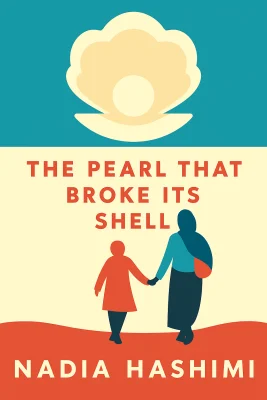
The Pearl That Broke Its Shell
Categories
Fiction, Audiobook, Historical Fiction, Asia, Adult, Book Club, Historical, Contemporary, Literary Fiction, Middle East
Content Type
Book
Binding
Hardcover
Year
2014
Publisher
William Morrow
Language
English
ASIN
0062244752
ISBN
0062244752
ISBN13
9780062244758
File Download
PDF | EPUB
The Pearl That Broke Its Shell Plot Summary
Introduction
# Pearls Breaking Free: Women's Defiance Across Afghan Generations The razor blade caught the morning light as it sliced through nine-year-old Rahima's black hair. Each severed strand fell to the dusty floor like a prayer, like a sacrifice to necessity. Her mother's hands trembled as she worked, transforming her daughter into the son their family desperately needed. In Afghanistan, where daughters were burdens and sons were salvation, some families turned to an ancient deception—the bacha posh, girls dressed as boys to navigate a world that offered women nothing but walls and silence. But as Rahima's reflection shifted from girl to boy in the cracked mirror, she was unknowingly following the footsteps of her great-great-grandmother Shekiba, another woman who had lived between genders, between survival and surrender. Both would learn that changing clothes could not change fate, that in a land where women were currency to be traded, even the strongest pearls eventually broke free from their shells—or shattered in the attempt.
Chapter 1: Borrowed Freedom: The Sacred Deception of Living as Boys
The streets opened like magic when Rahima became Rahim. At nine years old, she discovered the intoxicating power of walking without fear, of looking men in the eye, of claiming space in a world that had previously offered her none. Her short hair caught the wind as she ran errands for shopkeepers, her loose pants allowing her legs to move freely for the first time in her life. Her father Arif, broken by war and drowning in opium, finally had something to be proud of. "My son bargains better than his mother," he would say, ruffling Rahima's cropped hair. The praise felt like sunlight after years of shadow. At school, she sat with the boys, played soccer in dusty alleys, and felt herself becoming valuable in ways she had never imagined possible. But bodies betray secrets. As Rahima approached thirteen, her chest began to swell despite the tight bindings her mother wrapped around her torso each morning. Her voice cracked at unexpected moments, and her friend Abdullah's arm around her shoulder began to feel dangerous in ways she couldn't name. During their wrestling matches, when he pinned her to the ground, something stirred inside her that made her mother gasp from doorways. The end came swiftly. Her father's debts had mounted, his mind fracturing further with each dose of opium. The family needed money, and daughters—even ones disguised as sons—had only one value in Afghanistan. The black SUVs arrived like storm clouds, kicking up dust and fear as they rolled to a stop outside their compound. Rahima watched from behind the gate as Abdul Khaliq stepped out, his presence filling their small courtyard like smoke, his calculating eyes already claiming what he intended to buy.
Chapter 2: Stolen Daughters: When Girls Become Currency in Marriage Markets
Abdul Khaliq's proposition was simple and brutal. He would take three daughters as wives—Rahima and her two older sisters—solving the family's financial problems in one transaction. The bride price was more money than their father had ever seen, accompanied by promises of steady opium supplies that made his eyes glaze with anticipation. The wedding ceremony was a mockery of tradition. Shahla, fifteen and dignified even in her terror, was claimed first. Parwin, fourteen and limping from a birth defect, was handed to Abdul Khaliq's cousin despite her obvious vulnerability. When Rahima's turn came, she fought like the boy she had pretended to be, clawing and kicking as her father dragged her from her mother's arms. The assembled men watched with amusement as she struggled against her fate. That night, in Abdul Khaliq's bedroom, Rahima learned what it truly meant to be a woman in Afghanistan. The warlord's hands were rough, his breath sour with tobacco and power. He took what he wanted with the casual brutality of a man accustomed to conquest, leaving her broken and bleeding on silk sheets that cost more than her family's annual income. The confident boy Rahim died in that room, replaced by a frightened girl who understood that her childhood was over. The compound walls closed around her like a fist. Abdul Khaliq's four wives lived in separate houses within the same fortress, each woman ruling her own small kingdom of servants and petty tyrannies. Bibi Gulalai, her new mother-in-law, made it clear that the former bacha posh was the lowest in this hierarchy, useful only for the sons she might bear and the labor she could provide.
Chapter 3: Gilded Cages: Life Behind Compound Walls and Palace Gates
A century earlier, in the royal palace of Kabul, another woman had learned to navigate the treacherous waters of masculine disguise. Shekiba's face bore the melted scars of childhood burns, her left cheek twisted into permanent disfigurement that made her unmarriageable by conventional standards. When King Habibullah's men came seeking women to guard his harem, her ugliness became her salvation. Dressed in men's clothing with her hair shorn short, Shekiba became Shekib, one of five women who protected the king's concubines while disguised as male guards. The irony was not lost on her—women guarding women from men, all while pretending to be men themselves. The palace was a maze of deception where everyone wore masks, literal or figurative. In the harem, twenty-nine women lived lives of gilded captivity. They bathed in marble pools, wore silk gowns, and bore the king's children in chambers more luxurious than most Afghans could imagine. Yet they were prisoners nonetheless, their beauty their only currency, their wombs their only value. Shekiba watched them compete for the king's attention like exotic birds in a cage, each hoping to birth a son who might secure their future. The most beautiful was Benafsha, whose dark eyes held secrets that would eventually destroy her. She had caught the attention of not only the king but also a young nobleman named Agha Baraan, whose midnight visits to the harem would set in motion a chain of events that would shatter Shekiba's carefully constructed world. Love, Shekiba learned, was the most dangerous luxury of all in a place where women belonged to one man alone.
Chapter 4: Scars as Testimony: Bodies Bearing Witness to Survival
In Abdul Khaliq's compound, Rahima's body became a battlefield. Each night brought new bruises, new humiliations, new reminders that she existed solely for her husband's pleasure. When she gave birth to Jahangir, her son became both her salvation and her chain—proof of her value as a wife, but also another soul bound to this place of beautiful imprisonment. The child was everything to her. She sang to him in the darkness, told him stories of brave ancestors, and promised him a future different from the one she had inherited. But when Abdul Khaliq's political ambitions required his first wife Badriya to serve in parliament, Rahima saw an opportunity. Despite the agony of leaving Jahangir behind, she convinced her husband to let her accompany the illiterate Badriya to Kabul as her assistant. The capital was a revelation. In parliament buildings and training centers, Rahima encountered women who spoke with authority, who commanded respect, who moved through the world as if they belonged there. She learned to use computers, practiced English with American instructors, and felt her mind expanding for the first time since her marriage. But even as she tasted this new freedom, her heart ached for her son. When she returned from her second trip to find Jahangir dead from fever, something inside her shattered completely. The child who had been her reason for living was gone, taken by illness while she was away pursuing dreams of freedom. Abdul Khaliq made sure she understood that her absence had contributed to their son's death, that a proper mother would never have left her child to chase after foolish ambitions.
Chapter 5: Forbidden Voices: Speaking Truth in a World of Silence
In the palace, Shekiba had discovered that knowledge was the only currency women truly controlled. When she witnessed Agha Baraan's secret visits to Benafsha, she understood that this information was dangerous but potentially valuable. The affair was a death sentence for the concubine and a political disaster for the nobleman, but it was also leverage for a scarred guard who had learned to survive by staying invisible. The discovery came too late to save anyone. King Habibullah's rage was terrible when he learned of the betrayal. Benafsha was buried to her chest in the palace courtyard, her blue burqa soon stained with blood as stones found their mark. Her final screams echoed across the palace grounds, a reminder to every woman present of the price of defiance. Shekiba received a hundred lashes for her supposed negligence as a guard. The whip tore her back to ribbons, each strike a lesson in the cost of survival. But even as her flesh split and bled, she endured, knowing that death was not her fate. Agha Baraan, seeking to atone for his sins while securing a wife who might bear him sons, claimed her as his bride. In Kabul, Rahima found her own voice among the women of parliament. She watched Zamarud Barakati stand before hundreds of men and denounce their corruption, her words ringing out like battle cries despite the threats and insults hurled back at her. When a car bomb targeted Zamarud for her outspoken criticism, leaving her scarred but unsilenced, Rahima understood that some voices could not be destroyed, only temporarily muffled.
Chapter 6: Breaking Chains: The Dangerous Dance of Escape and Liberation
The moment of truth came when Rahima overheard her husband's guards discussing his plans to divorce her and take a fifth wife. She had become expendable—the barren woman who had failed to give him living sons after Jahangir's death. The conversation filled her with terror, but it also crystallized her resolve. She would not wait passively for Abdul Khaliq to decide her fate. Working with her allies in Kabul—parliamentarians Hamida and Sufia, and the American teacher Ms. Franklin—Rahima devised a desperate plan. During their next trip to the capital, she would disappear, shedding her female identity once again to become Rahim, the confident boy who could move freely through the world. It was a dangerous gamble that could cost her everything. The escape itself was terrifying. Rahima bound her breasts, cut her hair, and donned men's clothes, transforming herself back into the boy she had once been. She slipped past her husband's guards and made her way across Kabul to a women's shelter, where other refugees from domestic violence had found sanctuary. For the first time in years, she felt the exhilarating rush of freedom. At the shelter, she met women who had made similar escapes—mothers who had fled with their children, wives who bore the scars of their husbands' brutality, girls who had refused to accept the fate society had chosen for them. Their stories gave her strength and reminded her that she was not alone in her struggle. As she helped care for the other residents and slowly began to heal from her own trauma, Rahima started to believe that perhaps there was life beyond the walls that had confined her.
Chapter 7: Seeds of Change: A Legacy Written in Courage and Hope
Shekiba's story had ended differently, but no less courageously. Though she never escaped her circumstances entirely, she had survived them, raising children and finding small moments of joy even in the darkest times. When King Amanullah and Queen Soraya began implementing reforms that gave women new rights, Shekiba dared to hope that future generations might live in a better world than the one she had known. The changes came slowly and were often met with violent resistance, but they came nonetheless. Schools for girls opened in Kabul, women began to work in government offices, and the rigid traditions that had confined generations of Afghan women started to crack under the pressure of modernity. Each small victory was built on the sacrifices of women like Shekiba, who had endured so that others might one day be free. Rahima, benefiting from the groundwork laid by her ancestor, had managed to achieve what Shekiba could not—actual escape from the bonds that held her. At the shelter, she continued her education, learning skills that would allow her to support herself independently. She grieved for the son she had lost and the family she had left behind, but she also celebrated the life she was building for herself, one choice at a time. The letter she sent to her aunt Shaima, signed with Shekiba's name, spoke of fresh air and birdsong, of hope for the future and the possibility of freedom. Though the old woman could not read the words, their meaning lived on in the stories that continued to be told, passed down from one generation of women to the next like precious heirlooms, each tale a seed of rebellion planted in fertile ground.
Summary
In the end, both Rahima and Shekiba discovered that survival itself could be a form of victory. Though their circumstances were different, both women had refused to be completely broken by the forces that sought to destroy them. Shekiba had endured her captivity with dignity, protecting what remained of her humanity while laying the groundwork for future generations. Rahima had taken the more radical step of breaking free entirely, using the strength and knowledge passed down through her family's stories to forge a new path. Their legacy lives on in the countless women who continue to fight for freedom in Afghanistan and around the world. Some find their courage in endurance and small acts of resistance, like Shekiba guarding her inner flame through decades of oppression. Others risk everything for the chance at true liberation, like Rahima transforming herself once again to claim the life she deserved. Both paths require immense bravery, and both contribute to the slow but inexorable progress toward a world where daughters are valued as highly as sons, where women can choose their own destinies, and where the pearl of human potential can emerge from even the most restrictive shells. The stories of these remarkable women remind us that hope, once planted, can survive even the harshest winters, waiting for the right moment to bloom into something beautiful and transformative.
Best Quote
“This life is difficult. We lose fathers, brothers, mothers, songbirds and pieces of ourselves. Whips strike the innocent, honors go to the guilty, and there is too much loneliness. I would be a fool to pray for my children to escape all of that. Ask for too much and it might actually turn out worse. But I can pray for small things, like fertile fields, a mother’s love, a child’s smile—a life that’s less bitter than sweet.” ― Nadia Hashimi, The Pearl that Broke Its Shell
Review Summary
Strengths: The review highlights the novel's engaging narrative style and excellent translation, noting the seamless transition between the stories of Shekiba and Rahima. It praises the book's ability to evoke strong emotions, such as empathy and sorrow, and its exploration of women's struggles in Afghanistan across generations. Weaknesses: The reviewer mentions a lack of emotional connection with the main characters, Rahima and Shekiba, describing them as flat. This disconnect led to a decision not to finish the book, despite its compelling subject matter. Overall: The review presents a mixed sentiment. While the book is praised for its storytelling and thematic depth, the lack of character engagement detracted from the overall experience. The reviewer refrains from rating due to not completing the book, suggesting a cautious recommendation.
About Author

Nadia Hashimi
Hashimi delves into the complexities of Afghan culture and the resilience of women through her multifaceted career as a pediatrician, novelist, and advocate. Her literary work connects deep-rooted themes such as forced migration, conflict, and gender roles to illustrate the struggles and strength of Afghan women across generations. Through her novels like "The Pearl That Broke Its Shell" and "Sparks Like Stars," she reframes narratives around the experiences of women under oppressive circumstances, highlighting their enduring spirit and quest for identity.\n\nHer dual career in medicine and writing deeply informs her perspective, whereas her experience as a pediatrician brings a unique lens of empathy and care to her storytelling. Beyond novels, Hashimi has authored children’s books that explore themes of identity and acceptance, thus engaging younger readers with cultural and social issues. Her active role in advocacy, including serving on boards for Afghan children's education and participating in the US-Afghan Women’s Council, further underscores her commitment to humanitarian causes.\n\nReaders benefit from Hashimi's work through its rich, emotional storytelling and its exploration of universal human experiences amid socio-political challenges. Her books have gained international acclaim and have been translated into multiple languages, appealing to audiences interested in cultural narratives and the human condition. This bio summarizes an author whose work transcends borders, combining her medical expertise and literary craft to shed light on poignant global issues.
Read moreDownload PDF & EPUB
To save this Black List summary for later, download the free PDF and EPUB. You can print it out, or read offline at your convenience.
The Pearl That Broke Its Shell
by Nadia Hashimi
