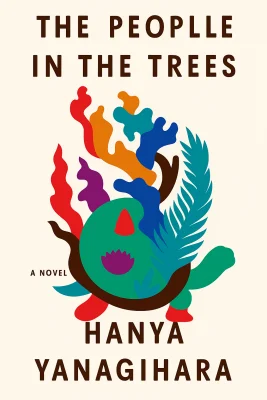
The People in the Trees
Categories
Fiction, Science Fiction, Historical Fiction, Fantasy, Book Club, Historical, Contemporary, Magical Realism, Novels, Literary Fiction
Content Type
Book
Binding
Hardcover
Year
2013
Publisher
Doubleday
Language
English
ASIN
0385536771
ISBN
0385536771
ISBN13
9780385536776
File Download
PDF | EPUB
The People in the Trees Plot Summary
Introduction
# The Price of Forbidden Knowledge: A Journey into Scientific Darkness The needle pierced the turtle's ancient shell with surgical precision. Norton Perina watched the sacred creature's eyes dim as he extracted the tissue that would make him famous—and damn him forever. In the sterilized halls of Stanford University, surrounded by the hum of centrifuges and the scratch of his pen documenting another breakthrough, the young doctor had no idea he was crossing a line that would transform him from healer into predator. It began on a forgotten island in the Pacific, where immortal beings wandered through jungle shadows like living ghosts. The villagers called them dreamers—humans who had consumed the flesh of sacred turtles and gained eternal life at the cost of their sanity. What Norton discovered in that green hell would revolutionize science, destroy a civilization, and ultimately reveal the monster lurking beneath his own skin. Some knowledge, he would learn too late, comes with a price that no amount of fame or glory can justify.
Chapter 1: The Lure of the Unknown: From Mediocrity to Adventure
Norton Perina's childhood in rural Indiana was painted in shades of disappointment and death. His mother drifted through their farmhouse like a sleepwalker, speaking to shadows before an aneurysm claimed her at thirty-two. His father, a man whose greatest achievement was inherited wealth, died years later trapped in their collapsing home. Norton felt more relief than grief at both funerals. Death was a puzzle to be solved, not a tragedy to be mourned. Harvard Medical School should have been paradise, but Norton found himself drowning in mediocrity. His classmates were either dull memorizers or social climbers more concerned with presentation than truth. The real revelation came working in Gregory Smythe's laboratory, where Norton spent his days infecting mice with experimental viruses, watching them sicken and die, then harvesting their organs for study. He learned to kill efficiently—a quick twist of the neck, a satisfying crack of vertebrae. The invitation arrived on gray February morning in 1950. Paul Tallent, a charismatic anthropologist with dangerous beauty, needed a doctor for his expedition to U'ivu, a remote Micronesian archipelago where legends spoke of immortal beings. For Norton, trapped between his father's lazy contentment and his own burning ambition, the choice was inevitable. He would follow this golden stranger into the unknown, trading Boston's brick buildings for the Pacific's treacherous embrace. Within weeks, Norton found himself aboard a rickety plane flying toward an emerald speck in the vast ocean. Below them, the sea stretched endlessly, hiding beneath its surface the extraordinary discovery that would make him famous and destroy everything he claimed to love. The young doctor who left America was ambitious but essentially harmless. The man who would return would be something else entirely.
Chapter 2: Paradise Found: Discovering the Immortal Dreamers of Ivu'ivu
The jungle of Ivu'ivu swallowed them whole. Norton stumbled through oppressive heat, his Western clothes clinging like wet bandages while their guide Fa'a moved with silent efficiency through invisible paths. The forest pulsed with alien life—trees bearing fruit that writhed with parasitic worms, flowers that snapped at insects with carnivorous hunger. Days blurred into weeks as they climbed higher into the island's heart, following whispered legends of the opa'ivu'eke, sacred turtles so revered that touching them meant death. Then, on a morning when mist clung to the trees like ghostly fingers, they found her. Eve, as Norton would name her, emerged from the forest like something from a fever dream. Naked, filthy, her hair matted with debris, she moved with the shambling gait of the very old. Yet her body appeared strong, muscles firm beneath weathered skin. She stared at them with vacant eyes, making sounds that barely qualified as human speech. Behind Eve came others—eight figures stumbling from the green shadows. They called themselves by names that meant nothing to Norton, but their condition spoke volumes. These were the dreamers, the lost ones, people caught between human and animal. Fa'a recoiled in horror, recognizing them as mo'o kua'au, cursed beings who wandered the forest until death claimed them. Norton saw something else entirely—bodies that defied every law of aging he had learned. Through painstaking interviews with Mua, their apparent leader, an impossible story emerged. These people claimed ages that spanned centuries, speaking casually of events from decades past. Mua insisted he was over one hundred years old, his father Vanu even older. Most shocking was Ika'ana, who claimed to remember the great earthquake of 1779. Norton felt his pulse quicken with scientific excitement as he realized he was witnessing the ultimate curse disguised as the ultimate blessing.
Chapter 3: The Turtle's Curse: Unveiling the Secret of Eternal Life
Deep in the island's heart lay a hidden lake, its surface broken by creatures that held the key to immortality. The opa'ivu'eke were unlike any turtle Norton had ever seen—ancient, wise-eyed beings that seemed to carry centuries in their steady gaze. The villagers approached them with reverence bordering on terror, for these creatures were both salvation and damnation made flesh. The ritual of vaka'ina occurred only when villagers reached sixty, and only for those brave enough to choose eternal life over natural death. Norton watched in fascination as the village chief consumed the turtle's flesh in a ceremony that was part communion, part funeral. The creature's blood splattered Norton's clothes as its severed head rolled into his lap, eyes still staring with reptilian wisdom. But immortality came with a terrible price. Those who ate the turtle lived on and on, but their minds slowly crumbled. Memory failed first, then speech, then basic human functions. Eventually they became mo'o kua'au, neither fully human nor animal, banished to wander the forest in twilight existence that could last centuries. Norton realized he was witnessing humanity's greatest dream transformed into its most terrible nightmare. In the darkness of his tent, Norton made a decision that would echo through decades. He carefully preserved portions of turtle flesh, hiding them from Tallent and the other researchers. This was his discovery, his path to immortality, and he would not share it with anyone who lacked vision to understand its significance. As the expedition prepared to leave, Norton also convinced four dreamers to come with him, promising them nothing because they were beyond the reach of promises. They followed with docile compliance, unaware they were leaving their ancestral home forever.
Chapter 4: Scientific Triumph: Fame, Glory, and Hidden Horrors
Back at Stanford, Norton faced his greatest challenge. The four dreamers sat in their artificial jungle, a pathetic recreation of their lost home. Mua, once capable of conversation, now stared blankly at walls. Eve had regressed even further, barely responding to her own name. Their bodies remained remarkably healthy while their minds increasingly absent. Norton's hands trembled as he prepared the first experiment. Hidden in his laboratory freezer lay pieces of opa'ivu'eke flesh, stolen during a midnight raid on the sacred lake. He had violated every taboo, betrayed every trust, but science demanded sacrifice. Twenty-five mice received portions of sacred turtle while twenty-five others ate ordinary turtle meat as controls. Months passed. The control group aged and died according to nature's schedule, but the experimental mice lived on. At eighteen months they should have been dead. At twenty-four months they began showing signs of the curse Norton had witnessed in the dreamers. The mice ran in frantic circles, pressing their noses into corners for hours, their behavior becoming increasingly erratic. They had achieved immortality but lost their essential selves. The scientific world erupted when Norton's results were published. Overnight he transformed from unknown graduate student into the man who had discovered immortality's secret. Letters poured in from pharmaceutical companies and government agencies, all desperate to unlock the mystery. But Norton knew what they did not—immortality without consciousness was not blessing but curse more terrible than death itself. The mice that lived beyond their natural span were no longer truly mice, just as the dreamers were no longer truly human.
Chapter 5: Collecting Souls: Building a Family from Broken Children
Success brought Norton wealth, fame, and crushing loneliness that no professional recognition could fill. His colleagues respected him but few could claim to truly know him. He had no wife, no children, no family beyond his estranged brother. The empty rooms of his grand house echoed with silence of a life lived entirely in service to ambition. During a return visit to the now-devastated Ivu'ivu, Norton found his solution. The paradise he had first encountered was gone, stripped bare by pharmaceutical companies desperate to harvest more turtles. The villagers lived in squalor, their traditional way of life destroyed by the outside world's hunger for immortality. Children wandered the ruins like ghosts, their parents dead from disease or despair. Norton began taking them home, one by one, then in groups. He told himself it was humanitarian work, rescuing orphaned souls from poverty and neglect. But the truth was more complex and selfish. These children filled the silence in his house, provided family connections he had never been able to form naturally. They called him Papa and depended on him completely, offering unconditional love he craved. His house became a small United Nations of displaced children, each carrying trauma of their origins but slowly adapting to American life. Norton provided education, healthcare, opportunities their birth families could never have imagined. He was, by any objective measure, saving their lives. But he was also collecting them like specimens, each one a small piece of the world he had helped destroy. The children grew and thrived under his care, but they also began asking uncomfortable questions about his connection to the island that haunted their dreams.
Chapter 6: The Descent into Darkness: Power, Control, and Violation
Among all the children Norton collected, Victor stood apart—not for beauty or intelligence, but for his absolute refusal to be grateful. Found as a diseased, half-starved child on a forgotten airstrip, Victor had been transformed by Norton's care into a healthy, educated young man. But where other children eventually came to appreciate their salvation, Victor remained defiant, suspicious, and increasingly dangerous. The battle between them began over something as simple as a name. Victor demanded to be called Vi, rejecting the Western identity Norton had imposed. What started as adolescent rebellion escalated into psychological warfare, with Victor systematically challenging every aspect of Norton's authority. He broke precious objects, disrupted family dinners, and seemed to take genuine pleasure in causing his adoptive father pain. Norton responded with increasing severity, his paternal mask slipping to reveal something far more sinister underneath. He locked Victor in the basement for days without food, telling himself it was necessary discipline. But discipline gradually transformed into something else entirely—a twisted expression of love and rage that had been building in Norton's heart for decades. On a cold Christmas night, after Victor had locked him outside his own house, Norton crossed a line from which there would be no return. He entered Victor's bedroom not as a father but as a predator, using violence and manipulation to take what he had always secretly wanted. Night after night Norton returned to Victor's room, telling himself this was love, that he was giving the boy something precious and necessary. He whispered endearments as he committed his crimes, convinced that his feelings somehow justified his actions. The other children sensed something wrong but could not name it, while the house grew quieter, more tense, as if everyone was holding their breath.
Chapter 7: Fall from Grace: Exposure, Trial, and the Price of Truth
The end came not with dramatic revelation but with a simple phone call. Victor, now in college and finally free from Norton's direct control, found courage to speak the truth he had carried in silence for years. The police arrived at Norton's house on a spring afternoon, their faces grim with knowledge of what they had come to investigate. The trial was a media sensation that destroyed everything Norton had built over five decades. The Nobel laureate who had unlocked immortality's secrets was revealed as a predator who had used his position to abuse the children he claimed to protect. Witness after witness took the stand, painting a picture of a man whose humanitarian facade concealed appetites both monstrous and insatiable. Norton maintained his innocence even as evidence mounted against him. He spoke of his love for the children, his sacrifices on their behalf, the opportunities he had provided them. But the jury saw through his self-serving narrative to the truth underneath—that he had collected these vulnerable souls not to save them but to satisfy his own twisted needs. The sentence was surprisingly light—just two years in federal prison. But for a man who had spent his life accumulating power and respect, the fall was devastating. His colleagues abandoned him, his remaining children were taken into protective custody, and his name became synonymous with betrayal and abuse. The discoverer of immortality would spend his final years as a pariah, his scientific achievements forever tainted by his crimes. In his prison cell, Norton continued writing, crafting a memoir that portrayed himself as a misunderstood visionary destroyed by lesser minds, showing no genuine remorse for his actions or understanding of the harm he had caused.
Chapter 8: The Final Reckoning: Legacy of a Corrupted Genius
Norton Perina died as he had lived—alone, unrepentant, and convinced that history would vindicate him. His memoir, published posthumously, revealed the full scope of his corruption while maintaining the fiction that he was somehow the victim of his own story. The man who had discovered the secret of immortality could not grant himself the one thing he truly needed—redemption. The dreamers he had brought from Ivu'ivu outlived their captor, sitting in their sterile rooms like broken monuments to scientific hubris. Their bodies remained strong while their minds continued their slow fade into oblivion, living proof that some gifts are too terrible to accept. The mice in Norton's laboratory continued their endless, mindless existence, spinning in circles until they collapsed, then rising to spin again. The island of Ivu'ivu became a cautionary tale, its people scattered by the hurricane of progress Norton had unleashed. The village that had existed in perfect harmony for centuries was now a tourist destination, its sacred sites marked with plaques and its traditions performed for cameras rather than gods. The pharmaceutical companies that had stripped the island bare moved on to other projects, leaving behind only scars and empty promises. In the end, Norton achieved a form of immortality—not through turtle flesh or scientific breakthrough, but through the indelible mark of his crimes on those who survived to remember them. His discovery of eternal life became a warning about the price of forbidden knowledge, a reminder that the greatest monsters often wear the masks of saviors.
Summary
Norton Perina's story stands as a chilling reminder that scientific progress without moral boundaries leads inevitably to corruption and destruction. His discovery of immortality—humanity's oldest dream—came at a price that extended far beyond the madness accompanying eternal life. In his relentless pursuit of glory, Perina destroyed not only the paradise island that revealed its secrets to him but also the innocence of dozens of children who trusted him to protect them. The true horror of Perina's tale lies not in the supernatural elements of his discovery but in the all-too-human corruption that followed. Power unchecked by conscience inevitably seeks new forms of domination. The man who could grant immortality to laboratory mice could not grant dignity to the children in his care. The scientist who unlocked nature's greatest mystery remained forever blind to the darkness in his own heart, proving that some knowledge is too dangerous to possess and some prices too terrible to pay.
Best Quote
“Sometimes I would have to take my glasses off simply so the world would smudge and recede for a moment and cease to seem so relentlessly present tense.” ― Hanya Yanagihara, The People in the Trees
Review Summary
Strengths: The book is praised for its exploration of moral ambiguity and its ability to challenge readers intellectually. The narrative is compelling, particularly with its anthropological and scientific elements, and it effectively pushes readers out of their comfort zones. The novel is also noted for its realistic portrayal and thought-provoking themes, such as the ethical implications of scientific progress. Weaknesses: A notable criticism is the shift in tone throughout the book, which creates a disconnect between the professional and personal aspects of the protagonist, Norton Perina. This tonal inconsistency may affect the reader's engagement with the character's moral complexities. Overall: The review conveys a generally positive sentiment, recommending the book to readers who appreciate complex moral questions and are comfortable with challenging, thought-provoking narratives. It is not recommended for those seeking light or feel-good stories.
About Author

Hanya Yanagihara
Yanagihara probes the intricacies of human resilience and the impact of cultural dynamics through her profound narratives. Her books often navigate the complexities of identity, suffering, and the quest for meaning, seamlessly intertwining intricate character studies with expansive thematic explorations. In her acclaimed work "A Little Life," Yanagihara delves into the depths of friendship and trauma, offering readers a challenging but rewarding exploration of life's darker dimensions. This novel, which became an international bestseller, is a testament to her ability to engage readers in confronting raw and often painful realities.\n\nHer writing method is rooted in meticulous research and empathy, allowing her to push the boundaries of conventional storytelling. Beyond "A Little Life," her debut novel, "The People in the Trees," reflects her keen observational skills, addressing themes of cultural collision and moral ambiguity. Meanwhile, her recent book "To Paradise" presents a multifaceted view of the American experiment across three centuries. These works collectively illustrate her commitment to narrative depth and cultural sensitivity, cementing her role as a vital figure in contemporary literature. Yanagihara's influence extends to inspiring new writers to explore the art of emotional storytelling, therefore enriching the literary landscape.
Read moreDownload PDF & EPUB
To save this Black List summary for later, download the free PDF and EPUB. You can print it out, or read offline at your convenience.
The People in the Trees
by Hanya Yanagihara
