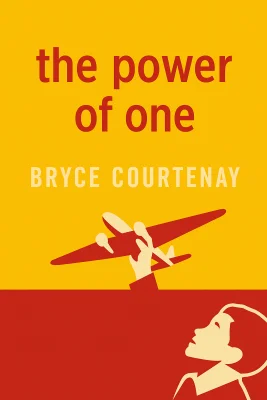
The Power of One
Categories
Fiction, Classics, Historical Fiction, Young Adult, Africa, Book Club, Historical, Novels, Coming Of Age, South Africa
Content Type
Book
Binding
Paperback
Year
1996
Publisher
Ballantine Books
Language
English
ASIN
034541005X
ISBN
034541005X
ISBN13
9780345410054
File Download
PDF | EPUB
The Power of One Plot Summary
Introduction
# The Power of One: From Victim to Champion The shower room stank of carbolic soap and terror. Five-year-old Peekay stood naked and trembling as warm urine streamed down his small body, christened "Pisskop" by twelve Afrikaner boys who saw in his English blood every historical grievance their grandfathers had nursed since the Boer War. The Judge, a hulking farm boy with a crude swastika carved into his arm, presided over this baptism of hatred with the casual cruelty of a child emperor. In that moment, as laughter echoed off granite walls and shame burned hotter than the African sun, something crystallized in the boy's mind—a promise whispered to a dead chicken named Granpa Chook, a dream planted by a railway guard named Hoppie Groenewald: he would become the welterweight boxing champion of the world. What followed was a journey through the brutal landscape of apartheid South Africa, where survival meant learning the art of camouflage and small had to find ways to defeat big. From the boxing rings of Barberton Prison, where a coloured convict named Geel Piet taught him that intelligence trumped strength, to the crystal caves hidden in mountain cliffs where an old German professor named Doc showed him that beauty could exist even in the darkest places, Peekay's story became a masterclass in resilience. This was not just about boxing—it was about the forging of a champion's soul in the furnace of a divided nation.
Chapter 1: The Making of Pisskop: Survival in the Belly of the Beast
The dormitory at night was a hunting ground where English blood marked you for slaughter. Peekay learned to read the subtle signs—the way shadows moved across moonlit walls, the particular silence that preceded violence, the rhythm of breathing that meant someone was only pretending to sleep. The Judge ruled this kingdom of cruelty with absolute authority, his storm troopers eager to please their Führer with increasingly creative torments. Mathematics became Peekay's secret weapon. While the Judge struggled with simple fractions, the small boy's mind danced through equations with surgical precision. He fed answers slowly, deliberately, making the bully appear brilliant while remaining invisible himself. It was a delicate manipulation that would have impressed Machiavelli—trading intellectual servitude for physical survival, one homework assignment at a time. The other boys began to see him differently. No longer just the hated Rooinek, he became useful. The Judge's sudden academic improvement earned praise from teachers, and Peekay's value as a secret asset grew. He negotiated his survival with the currency of intelligence, but the price was steep—every night brought fresh humiliations, every dawn another test of his will to endure. Then came the night they killed Granpa Chook. The scrawny rooster had been Peekay's only friend, a battle-scarred bird who performed tricks and offered unconditional loyalty. The Judge understood that love made you vulnerable, that the surest way to break someone was to destroy what they cherished most. As feathers scattered in the moonlight and his friend's blood pooled on concrete, Peekay made a promise that would define his life—someday, somehow, he would make them pay. The bed-wetting stopped that night, not through shame or fear, but through something deeper. The boy who should have been broken instead began to bend, his mind cataloging weaknesses and noting patterns. In the suffocating darkness of that dormitory, as the laughter of his tormentors faded and only the steady drip of water marked time, a fighter was born.
Chapter 2: Unlikely Teachers: Doc, Geel Piet, and the Art of Camouflage
The train to Barberton brought salvation in the form of Hoppie Groenewald, a railway guard with fists like lightning and a philosophy that would reshape Peekay's understanding of power. Small, compact, and fearless, Hoppie embodied everything the boy dreamed of becoming—living proof that brain could triumph over brawn, that the little guy could win if he was smart enough. "First with the head, then with the heart," Hoppie explained as his hands moved like striking snakes, throwing combinations that blurred the air. The upcoming fight against Jackhammer Smit became Peekay's first education in strategy—how a welterweight could defeat a light-heavyweight through superior tactics, speed over power, intelligence over brute force. When Hoppie's perfect left uppercut dropped the giant in the thirteenth round, Peekay witnessed the power of one idea, perfectly executed. Barberton Prison became his unlikely university. Professor Karl Von Vollensteen—Doc, as he insisted on being called—was a German botanist imprisoned as an enemy alien, a man who found beauty in the harshest places. Their friendship began with laughter on a hilltop, two outcasts sharing "Absoloodle!" as their secret handshake, their way of acknowledging that joy could exist even in darkness. Doc taught him that knowledge was power, but wisdom was something more precious still. Together they climbed into the mountains, searching for rare cacti while Doc shared his philosophy of life. "Always to ask questions, ja? The answers come slow, but always they are coming if you wait with your head and your eyes." In the crystal cave they discovered together, stalactites hanging like frozen lightning, Doc found his cathedral and Peekay found a sacred space where wonder could flourish. But it was Geel Piet, the small coloured convict with a face full of scars and a heart full of cunning, who taught Peekay the sweet science. Half-caste and permanently broken by the system, Geel Piet had transcended normal categories through sheer intelligence. His yellow skin and missing teeth told the story of a man who belonged nowhere in South Africa's racial hierarchy, yet had carved out his own sphere of influence through patience and guile.
Chapter 3: First with the Head, Then with the Heart: Learning to Fight
The prison gymnasium reeked of sweat and desperation, but to ten-year-old Peekay, it smelled like possibility. Captain Smit had reluctantly agreed to let the boy train with the prison squad, and Geel Piet emerged from the shadows like a broken-down guardian angel, ready to transform wild dreams into disciplined reality. "You must learn to box with your feet, small baas," Geel Piet whispered, his voice barely audible above the sound of gloves hitting leather. "A good boxer is like a dancer—he is still pretty to watch even if you look only at his feet." The old convict showed Peekay how to position his body so every ounce of weight went behind each punch, how to read an opponent's eyes, how to make them miss by fractions of inches. The medicine ball became Peekay's nemesis and obsession—a fifteen-pound leather sphere he could barely lift, let alone throw. Lieutenant Smit's challenge was simple: when you can throw that ball over Klipkop's head, you'll be ready to fight. Day after day, the boy struggled with the heavy ball while adult boxers sparred around him, his small muscles straining against the weight. Geel Piet's philosophy was built around survival rather than glory. He taught Peekay to think of boxing as chess played with fists, where intelligence and strategy mattered more than raw power. The old fighter's scarred face was testament to the dangers of relying on courage alone—every lesson carried the weight of hard-earned wisdom, passed down from a man who had learned the cost of mistakes in rings where defeat meant more than losing a fight. The contraband operation began almost by accident, with a single tobacco leaf hidden beneath cactus cuttings in Peekay's collection bucket. What started as simple compassion evolved into a sophisticated network spanning the length of South Africa. Letters flowed between prisoners and families through Mrs. Boxall's library, Doc served as scribe, and every cigarette became a lifeline to the outside world. In this shadow economy of hope, Peekay learned that sometimes the most important battles were fought not with fists, but with simple human kindness.
Chapter 4: The Prince of Wales: Mastering the System from Within
The scholarship to Prince of Wales School in Johannesburg represented everything Peekay had never known—privilege, wealth, and the casual confidence that came with being born into the right family. As a small-town boy with carefully mended clothes, he arrived carrying nothing but determination and the boxing skills Geel Piet had drilled into his bones. The school's rigid hierarchy placed new boys at the bottom, subject to prefects who wielded power with casual cruelty. Peekay became fag to Fred Cooper, learning to navigate complex social codes while the fagging system tried to break him down and rebuild him in the school's image. But he had already been broken and rebuilt in a much harsher forge—these privileged bullies were amateurs compared to the Judge. Hymie Levy appeared like a guardian angel wrapped in cynicism and sharp wit. The school's token Jew, brilliant and calculating, recognized in Peekay a kindred spirit—another outsider who refused to be crushed by the system. "We're odd-bods," Hymie declared on their first meeting. "You with only one name and me being Jewish. We'll need each other." Their friendship was forged in the crucible of schoolboy politics and cemented by shared determination to beat the system from within. Together they transformed the school's joke boxing team from wooden spoon holders into champions. Hymie's business acumen complemented Peekay's fighting skills—the Boarders' Bank provided loans to cash-strapped students while their bookmaking operation around Peekay's matches generated steady profits. Every transaction was calculated, every advantage exploited, every victory planned with mathematical precision. The boxing matches against Afrikaans schools became battles in an ongoing war between two white tribes. When Peekay stepped into the ring wearing Prince of Wales colors, he carried the weight of history and hatred on his shoulders. His speed and technique, honed by countless hours with Geel Piet, proved too much for bigger opponents who relied on brute force. But something unexpected happened—instead of sulking in defeat, his opponents began approaching him with respect, even friendship. Individual courage and honor could bridge even the deepest divides.
Chapter 5: Into the Darkness: The Copper Mines and Self-Discovery
The Rhodes scholarship rejection hit like a physical blow, not because Peekay couldn't handle failure, but because of what it represented. Captain Swanepoel's interference had poisoned his chances at Oxford—the system reaching out to crush him once again, just as it had when he was five years old and helpless. But this time would be different. This time, he would forge his own path. The copper mines of Northern Rhodesia called to him like a siren song of independence. Here was a place where a man's worth was measured not by connections or past, but by courage and willingness to face death for a wage. It was exactly what Peekay needed—a crucible where he could strip away accumulated expectations and discover who he truly was beneath the layers of performance. Hymie was devastated by the decision, offering his family's wealth to fund Oxford, but Peekay refused all help. The wounds from childhood ran too deep—he would never again place himself in a position where others controlled his destiny. The power of one demanded complete self-reliance, even if it meant walking away from everything he had worked toward. The school of mines was designed to break men before they ever set foot underground. Dai Thomas, the Welsh instructor, was a sadist with purpose—to weed out those who would die in the depths. At seventeen and barely one hundred thirty pounds, Peekay was the smallest and youngest in his class, a target for Thomas's particular brand of education. The work was backbreaking—eight hours underground, lashing ore in hundred-degree heat. The grizzly itself was a monster of tungsten steel and death. Six bars suspended over a sixty-foot shaft, with tons of rock constantly threatening to crush anyone foolish enough to work them. But Peekay found something pure in the danger. Here, stripped of all pretense, he was simply a man against the mountain. The African crew came to believe in his mystical protection, calling him by names that echoed the Tadpole Angel legend.
Chapter 6: The Crystal Cave Revelation: Finding True Independence
Rasputin was a mystery wrapped in silence and sorrow. The huge Georgian spoke little English, preferring to communicate through actions rather than words. Every evening he carved perfect wooden spheres while listening to Tchaikovsky, tears streaming down his face as he remembered a homeland he would never see again. Each sphere was a day in exile, a testament to enormous strength and skill. Their friendship was built on shared solitude and mutual respect. Peekay would sit on Rasputin's verandah, reading or playing chess while the giant carved his daily sphere. They understood each other without words—two men far from home who had learned to make the best of their circumstances. The accident came without warning. A massive hang-up of rock at the grizzly's mouth finally gave way, sending Peekay tumbling sixty feet through tungsten bars to land broken and unconscious in the shaft below. Ten tons of rock followed, burying him alive in what should have been his tomb. Only a dream of the black mamba from the crystal cave had saved him, providing split-second warning to dive for the one spot where survival was possible. Rasputin's response was immediate and heroic. The giant took control of the rescue operation, refusing to let anyone else near the grizzly. For seven hours he worked with superhuman strength, his hands torn to ribbons, his body streaming blood, driven by love that transcended language and nationality. When he finally reached Peekay's broken body, wedged miraculously under a protective ledge, Rasputin cradled his friend like a child. The effort cost him everything—his massive heart simply stopped, unable to sustain the incredible demands he had placed upon it. He died as he had lived, in service to someone he cared about, his sacrifice ensuring that Peekay would live to fight another day. In that moment, cradled in a dead giant's arms sixty feet underground, Peekay understood what Doc had tried to teach him in the crystal cave—that true strength came not from standing alone, but from the courage to love and be loved in return.
Chapter 7: The Final Reckoning: Confronting the Judge and Claiming Victory
The crud bar was a temple to human degradation where men from forty-two countries came to drink away their memories and pain. Peekay had come to raffle off Rasputin's remaining brandy for charity, a final gesture to honor his dead friend. He never expected to find his childhood tormentor waiting for him there. Botha the diamond driller was suffering from a powder headache—a condition caused by prolonged exposure to gelignite that could drive men temporarily insane. But when he turned to face Peekay, the young man saw something that made his blood freeze. High on Botha's left arm was a crudely tattooed swastika, and beneath years of hard living and physical decay, Peekay recognized the face that had haunted his nightmares. The Judge. Jaapie Botha. The Afrikaner boy who had terrorized him at boarding school, who had killed Granpa Chook and broken a five-year-old's spirit. Now grown into a massive, brutal man, driven mad by pain and brandy, he had become everything Peekay had feared and more. But this time, Peekay was no longer a helpless child. The fight was inevitable—a confrontation that had been building for twelve years. The Judge charged like a wounded bull, but Peekay was the matador, dancing away from each clumsy attack while landing precise, devastating blows. This was everything Geel Piet had taught him, everything Hoppie had shown him about using intelligence against brute force. The battle raged for twenty minutes, skill against strength, intelligence against madness. Peekay systematically destroyed his opponent, breaking his nose, splitting his lips, shattering his hand when the Judge tried to smash a bottle. Every punch was payment for years of fear, every combination a settling of old debts. When the Judge finally collapsed in his own vomit, unconscious and broken, Peekay wasn't finished. Doc's Joseph Rogers knife appeared in his hand, and with surgical precision, he carved a Union Jack over the swastika tattoo, adding his initials for good measure. The infection that would follow would leave permanent scars—a reminder that some sins can never be erased, only transformed. Standing over the Judge's broken body, Peekay felt the loneliness birds that had nested in his heart since childhood finally take flight, their rocky nests dissolved by the clean water of justice served.
Summary
From the brutal shower rooms of an Afrikaner boarding school to the crystal cathedrals hidden in mountain cliffs, Peekay's journey mapped the geography of resilience. Each loss—Granpa Chook's execution, Doc's disappearance into the mountains, Rasputin's heroic death—stripped away another piece of childhood innocence, yet somehow strengthened rather than broke him. The boy who began as a victim discovered he possessed something his tormentors lacked: the ability to adapt, to learn, to turn every defeat into education for the next battle. The power of one emerged not as solitary strength, but as the capacity to forge meaningful connections across barriers of race, age, and circumstance. Hoppie's boxing wisdom, Doc's botanical passion, Geel Piet's street cunning, even the Judge's cruelty—all became teachers in Peekay's unconventional education. He learned that survival wasn't about becoming hard, but about remaining open to possibility while developing the skills to protect what mattered most. In a world determined to crush the individual spirit, he discovered that one person, properly prepared and strategically thinking, could indeed move mountains. The welterweight championship of the world remained years away, but the foundation—built on intelligence, determination, and the unshakeable belief that small could triumph over big—was already solid as the granite cliffs that sheltered his crystal cave of Africa.
Best Quote
“First with the head, then with the heart.” ― Bryce Courtenay, The Power of One
Review Summary
Strengths: The review highlights the emotional depth and character development of Peekay, emphasizing his resilience and inspiring nature. The narrative's connection to the author's real-life experiences adds authenticity and emotional weight. The portrayal of Peekay's relationships with mentors and his growth through learning and boxing are also praised. Overall: The reviewer expresses a highly positive sentiment, finding the story both moving and impactful. The book is recommended for its powerful depiction of a young boy's journey through adversity, showcasing themes of survival, resilience, and personal growth.
About Author

Bryce Courtenay
Courtenay builds an intricate tapestry of human endurance and triumph, drawing heavily on his own life's challenges and transformations. Known for his seminal book "The Power of One", Courtenay connects his narratives to the landscapes of South Africa and Australia, blending historical events with romance and adventure. His works often explore the themes of personal resilience and societal change, echoing his own journey from an orphanage in South Africa to becoming one of Australia's best-selling authors. Through characters that embody courage and determination, Courtenay reframes the human condition as an epic battle where individuals overcome adversity, much like his personal story of self-reinvention.\n\nIn his late entry into the literary world at age 55, Courtenay's method involved an extraordinary work ethic, writing for 12 hours a day, and typically producing a book each year. This dedication allowed him to amass a prolific catalog of 21 books over 23 years. His novels, such as "Tandia", "The Potato Factory", and "Jessica", were both commercially successful and critically acclaimed, appealing to readers who appreciate narratives of human perseverance against formidable odds. His impact extended beyond book sales, as he regularly engaged with readers by giving away thousands of books annually, reinforcing his belief in the power of storytelling to bridge human connections.\n\nCourtenay's legacy is marked by his appointment as a Member of the Order of Australia, highlighting his significant contributions to literature and culture. His memoir, posthumously released in 2023, offers an intimate bio that delves into his remarkable life journey. Readers of his work gain not only entertainment but also profound insights into the capacity for change and resilience, underscoring the belief that one can always write their own destiny, much like Courtenay did throughout his life and career.
Read moreDownload PDF & EPUB
To save this Black List summary for later, download the free PDF and EPUB. You can print it out, or read offline at your convenience.
The Power of One
by Bryce Courtenay
