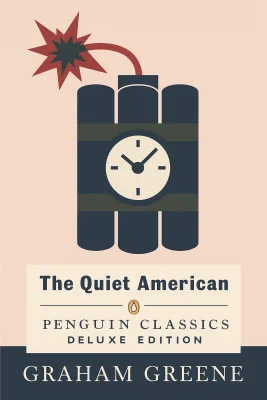
The Quiet American
Categories
Fiction, Classics, Historical Fiction, Literature, Asia, Novels, British Literature, War, Literary Fiction, Espionage
Content Type
Book
Binding
Paperback
Year
2004
Publisher
Penguin Classics Deluxe Editions
Language
English
ASIN
0143039024
ISBN
0143039024
ISBN13
9780143039020
File Download
PDF | EPUB
The Quiet American Plot Summary
Introduction
The body floated face-down in the muddy waters beneath Dakow bridge, a American passport wallet still clutched in lifeless fingers. Thomas Fowler, a British war correspondent weathered by decades in French Indochina, stared down at what remained of Alden Pyle—the earnest young operative from Boston who had arrived in Saigon with textbooks full of democratic theories and a dangerous certainty about saving Asia from itself. In the sweltering heat of 1952 Saigon, where French colonial power bleeds slowly into Communist insurgency, three lives had intersected with fatal consequences. Fowler, cynical and past fifty, had found unexpected love with Phuong, a delicate Vietnamese girl young enough to be his daughter. Pyle, armed with Harvard idealism and classified funding, had fallen for both the girl and the intoxicating notion of a "Third Force" that might prevent Communist victory without perpetuating colonial rule. What began as rivalry over a woman became something far more deadly—a collision between weathered pragmatism and lethal innocence, played out against the backdrop of a war where good intentions kill as efficiently as bullets.
Chapter 1: Death in Saigon: The Quiet American's End
Inspector Vigot's cigarette glowed in the police station darkness as he studied the corpse reports. The body had been discovered at dawn, stabbed and drowned in the brown waters where Saigon's French quarter met the lawless zones controlled by competing Vietnamese factions. Mud clogged the dead man's lungs—he had been alive when he hit the water. Thomas Fowler sat across from the French inspector, answering questions with the practiced indifference of a man who had witnessed too many deaths in Indochina's endless war. Yes, he had known Alden Pyle of the American Economic Aid Mission. Yes, they had been friends of a sort. No, he could suggest no obvious motive for murder. But Vigot sensed the evasions behind Fowler's casual responses. The inspector was a thoughtful man, one who quoted Pascal between interrogations and approached criminal investigation like a philosophical puzzle. Something in Fowler's manner suggested intimate knowledge carefully concealed. The Englishman claimed to have spent the previous evening alone at the cinema, then dining at the Vieux Moulin restaurant. Yet witnesses placed both men in heated conversation just hours before Pyle's death. In the morgue's refrigerated silence, they pulled out the drawer containing what remained of the quiet American. Pyle's young face, frozen in death, retained the earnest expression that had marked his every living moment—as if he had died still believing in the righteousness of his cause. Fowler looked down at the corpse without visible emotion, but Vigot detected something deeper than professional detachment. This was personal, complicated by emotions that extended far beyond friendship or politics into the dangerous territory of the heart.
Chapter 2: Colonial Entanglements: Fowler, Pyle, and Phuong
The story had begun months earlier in the Continental Hotel bar, where foreign correspondents gathered each evening to trade gossip and gin under slowly turning ceiling fans. Fowler, veteran of two decades reporting from Asia's bloody margins, had grown comfortable in his cynical routine—filing dispatches about French military failures while maintaining careful emotional distance from the suffering around him. Into this world came Alden Pyle, crew-cut hair still bearing traces of Boston snow, eyes bright with the dangerous enthusiasm of someone who believed democracy could be exported like Coca-Cola. At thirty-two, Pyle possessed the kind of earnest certainty that Fowler had learned to distrust. While other Americans talked loudly about superior firepower and industrial might, Pyle spoke quietly about winning hearts and minds through economic development and political reform. The young American carried dog-eared copies of books by York Harding, a correspondent-turned-theorist who advocated for indigenous "Third Forces" in Asian conflicts—nationalist movements that could provide alternatives to both Communist revolution and colonial rule. Pyle quoted Harding's ideas with religious devotion, convinced that Indochina's future lay neither with French imperialism nor Ho Chi Minh's Marxist guerrillas, but with some hybrid democracy that could emerge from careful American guidance. Fowler found Pyle's idealism simultaneously amusing and alarming. The Englishman had learned to navigate Saigon's complexities through studied neutrality, reporting facts without taking sides in a conflict where every faction claimed moral authority. But Pyle's innocent certainty threatened that carefully maintained equilibrium. The young American saw clear distinctions between good and evil where Fowler recognized only competing forms of human desperation, each justified by its own internal logic and each capable of monstrous acts when pressed by circumstances.
Chapter 3: Idealism's Battlefield: The Road to Phat Diem
The first test of their opposing philosophies came during the siege of Phat Diem, a Catholic stronghold north of Saigon where French forces found themselves surrounded by Vietminh guerrillas. Fowler traveled north to cover the story, expecting routine combat reporting. Instead, he discovered Pyle had somehow infiltrated the besieged garrison, arriving by river boat with characteristic disregard for conventional military wisdom. In the cathedral compound, refugees crowded together seeking sanctuary from the fighting that raged beyond the walls. Vietnamese Catholics and Buddhists huddled side by side, their religious differences temporarily forgotten in shared terror. French paratroopers maintained defensive positions while Communist mortars whistled overhead, each explosion sending shockwaves through the ancient wooden structures. Pyle moved among the wounded with medical supplies, his Harvard education proving less relevant than basic human compassion. But even in this humanitarian role, Fowler detected the underlying political agenda—Pyle was documenting the siege not merely as tragedy but as evidence supporting York Harding's theories about Third Force nationalism. The young American saw potential allies among the Vietnamese Catholics, imagining them as building blocks for some future democratic coalition. During one particularly intense bombardment, the two men found themselves trapped in a watchtower as Communist forces probed the defenses. In the darkness, with death close enough to taste, they spoke with unusual honesty about their conflicting worldviews. Pyle admitted his inexperience but maintained faith in American intentions. Fowler, older and more cynical, warned against the arrogance of trying to remake Asian societies according to Western blueprints. The conversation ended when Vietminh sappers breached the perimeter, forcing both men to flee through flooded rice paddies under covering fire from Foreign Legion machine guns.
Chapter 4: The Third Force: When Books Meet Blood
Back in Saigon, Pyle's activities took on increased urgency and secrecy. His official position with the Economic Aid Mission provided cover for meetings with Vietnamese political figures who might serve American interests. Among these contacts was General Thé, a former Caodaist military leader who had broken with both the French colonial administration and the Communist resistance to establish his own private army in the mountains northwest of the capital. Fowler watched Pyle's growing involvement with mounting unease. The young American's idealism blinded him to the moral ambiguities of his chosen allies. General Thé commanded loyalty through a mixture of religious mysticism and brutal pragmatism, maintaining power over his followers through carefully orchestrated violence against rival factions. His political program consisted mainly of personal ambition wrapped in nationalist rhetoric—hardly the foundation for York Harding's democratic Third Force. But Pyle saw only what he needed to see. In General Thé's anti-Communist credentials and independence from French control, the young American found confirmation of his theoretical frameworks. Money and weapons began flowing through diplomatic channels, ostensibly for humanitarian purposes but clearly intended to strengthen Thé's military capabilities. Pyle justified these arrangements as necessary investments in Indochina's democratic future, convinced that temporary compromises would yield long-term benefits for all concerned. Fowler's attempts to warn Pyle about General Thé's true nature fell on deaf ears. The young American possessed the convert's immunity to contradictory evidence, filtering all information through preconceived ideological categories. When reports surfaced of atrocities committed by Thé's forces against rival Vietnamese factions, Pyle dismissed them as Communist propaganda or French colonial disinformation. His faith in American good intentions extended automatically to American clients, regardless of their actual behavior.
Chapter 5: Love and War: The Personal Becomes Political
The political rivalry between Fowler and Pyle became personal when both men fell under the spell of Phuong, whose beauty carried the kind of timeless grace that made hardened correspondents forget their professional cynicism. She worked as a taxi dancer at the Grand Monde club in Cholon, moving through the crowded floor with liquid elegance that seemed to belong to some earlier, more innocent century. Fowler had been living with Phuong for over two years, finding in their relationship a refuge from the moral complexities of war reporting. She asked no difficult questions about his work, made no demands for emotional commitment beyond the present moment, and created around him an atmosphere of domestic tranquility that helped him forget the bodies floating in distant canals. Their relationship operated according to clearly understood terms—he provided security and protection, she offered companionship and physical comfort. But Pyle's arrival disrupted this careful equilibrium. The young American fell in love with Phuong's apparent innocence, seeing in her the same potential for redemption that he imagined in Vietnamese politics. Where Fowler appreciated Phuong's pragmatic acceptance of their arrangement, Pyle wanted to offer her something more ambitious—marriage, American citizenship, and entrance into middle-class respectability. Phuong's sister, a shrewd woman with keen awareness of economic realities, encouraged Pyle's courtship. She recognized that an American husband offered advantages that Fowler could never match—legal status, financial security, and potential escape from Indochina's uncertain future. The sister began orchestrating opportunities for Pyle and Phuong to spend time together, gradually undermining Fowler's domestic stability while building toward a more promising alternative arrangement.
Chapter 6: Plastic Death: The Square of Innocence
The abstract ideological conflict between Fowler and Pyle crystallized into horror on a morning when Saigon's commercial district erupted in coordinated explosions. Fowler was drinking coffee at the Pavilion café when the first bomb detonated in nearby Place Garnier, shattering windows and sending customers diving for cover behind overturned tables. In the square's center, the bombing had transformed the usual morning marketplace into a scene from hell. Bodies lay scattered among overturned bicycles and burning automobiles, the dead and wounded indistinguishable in the choking smoke. Women searched frantically for their children while French police established cordons and ambulance sirens wailed through the sweltering air. The bombs had been concealed in bicycle pumps distributed throughout the city—an ingenious terrorist innovation that turned everyday objects into instruments of mass murder. The timing had been calculated to maximize civilian casualties, striking during the morning shopping hours when Vietnamese women and children crowded the markets. Military targets remained untouched while innocent bystanders paid the price for someone else's political agenda. Fowler found Pyle standing amid the carnage, staring with apparent shock at the human cost of what he had helped unleash. The young American's shoes were stained with blood from victims whose only crime had been occupying the wrong place at the predetermined moment. This was the Third Force in action—General Thé's demonstration of power designed to prove his movement's capability and determination to potential American sponsors. But Pyle's reaction revealed the dangerous persistence of his idealism. Even confronted with the immediate consequences of his political meddling, he continued to rationalize the violence as regrettable but necessary. Democracy required sacrifice, he argued, and temporary suffering would be justified by eventual liberation from both colonial rule and Communist oppression.
Chapter 7: Complicity: The Bridge to Dakow
Fowler's decision to act came through an intermediary—Mr. Heng, a seemingly mild Chinese businessman who operated from a junk warehouse in Cholon. Heng represented interests that remained carefully undefined, but his knowledge of Pyle's activities suggested connections to the Communist underground. He approached Fowler with evidence of American complicity in the bicycle bombings—plastic explosive manufactured in the United States, distributed through Pyle's aid mission, and delivered to General Thé's operatives for assembly into terrorist weapons. The meeting took place in Heng's warehouse amid piles of discarded metal and broken machinery—the detritus of a colonial economy slowly collapsing under the weight of endless war. Heng spoke in careful euphemisms about the need to restrain dangerous American initiatives, but his meaning remained clear. Pyle had become too effective in his support for General Thé's violence, and someone needed to arrange a permanent solution. Fowler found himself caught between competing loyalties and moral obligations. His professional instincts demanded neutrality, but his human conscience recoiled from Pyle's complicity in civilian murders. The bicycle bombings had crossed lines that separated political violence from random terrorism, turning Saigon's streets into killing grounds where anyone might become collateral damage in America's cold war calculations. The arrangement required minimal involvement from Fowler—simply an invitation for dinner at the Vieux Moulin restaurant, located conveniently near the bridge connecting French-controlled Saigon with the lawless districts across the river. Pyle would have to cross that bridge to reach the restaurant, providing opportunity for Heng's associates to arrange their own form of political conversation. Fowler wrote the invitation and waited, knowing that his decision would determine whether Pyle lived to continue his dangerous idealism or died as consequence of its lethal contradictions.
Chapter 8: Aftermath: The Price of Engagement
The dinner never happened. Pyle disappeared somewhere between the American Legation and the bridge to Dakow, his body discovered hours later floating in the muddy water that served as Saigon's boundary between civilization and chaos. The murder bore professional signatures—clean, efficient, designed to appear as random violence rather than targeted assassination. Inspector Vigot's investigation probed the contradictions in Fowler's story without ever quite penetrating to the truth. The Frenchman understood that larger political forces were at work, but he lacked authority to challenge American diplomatic immunity or dig too deeply into classified operations. The case would be filed away as another unsolved wartime casualty, forgotten amid the larger carnage consuming Indochina. Phuong returned to Fowler as if nothing had changed, moving back into their shared routine with characteristic adaptability. She asked no difficult questions about Pyle's disappearance, accepting his death as another of those inexplicable events that punctuated life in wartime Saigon. Their relationship resumed its previous patterns, though Fowler detected subtle changes in her manner—a new watchfulness that suggested awareness of how quickly circumstances could shift. The bicycle bombings ended with Pyle's death, as did American support for General Thé's Third Force ambitions. The Vietnamese general disappeared back into the mountains, his brief moment as potential democratic leader concluded by the elimination of his foreign sponsor. The war resumed its familiar rhythms of French defensive operations and Communist guerrilla attacks, neither side capable of decisive victory but both unwilling to accept negotiated settlement.
Summary
In the end, Thomas Fowler achieved his objective—Pyle's dangerous idealism had been permanently silenced, and the flow of American money to General Thé's terrorist operations had ceased. But victory brought no satisfaction, only the hollow recognition that his own moral neutrality had been an illusion. By choosing to act against Pyle, he had become as "engaged" as the young American he had helped destroy, complicit in violence that could be justified but never fully cleansed from conscience. The quiet American's death resolved nothing essential about Indochina's future or America's role in Asian conflicts. Other Pyles would follow—earnest young men armed with theories and good intentions, convinced that foreign societies could be remade according to Western blueprints. The pattern would repeat across decades and continents, idealism and pragmatism locked in deadly embrace while innocent people paid the price for their collision. In Saigon's humid air, where colonial certainties dissolved into revolutionary chaos, Fowler had learned that even neutrality constitutes a form of moral choice—and that the consequences of such choices echo long after the immediate crisis has passed into history's unforgiving record.
Best Quote
“Innocence is a kind of insanity” ― Graham Greene, The Quiet American
Review Summary
Strengths: The review highlights the novel's educational value in understanding the First Indochina War, emphasizing its portrayal of American and British involvement. The characters are effectively used as symbols to critique the idealistic and detached attitudes of the respective nations. The review appreciates the author's subtle tone and thematic depth, drawing parallels with other literary works. Overall: The reviewer expresses a strong positive sentiment, ultimately upgrading their rating to 5 stars. They commend the novel for its insightful commentary on innocence and human nature, and express a desire to explore more works by the author, suggesting a high recommendation level.
About Author

Graham Greene
Greene delves into the intricate moral landscapes of the 20th century through his writing, challenging readers with tales that navigate the interplay of faith, doubt, and political turmoil. His books, such as "The Power and the Glory" and "The Heart of the Matter," highlight the tension between religious conviction and existential uncertainty, offering readers a deep dive into the psyche of characters caught in ethically ambiguous situations. Whereas Greene’s literary works are marked by their intellectual depth, they are also infused with the suspenseful elements of thrillers, which he referred to as “entertainments.” This dual approach allows him to connect with a broad audience, blending literary exploration with gripping narratives.\n\nBeyond thematic exploration, Greene's method of combining personal beliefs with narrative complexity provides a unique lens through which readers can examine their own moral compasses. His novel "The Quiet American," set against a backdrop of international conflict, encourages reflection on the broader implications of personal actions within political frameworks. Meanwhile, Greene’s own life experiences, including his conversion to Catholicism and work with British intelligence, imbue his characters with authenticity and depth. This multifaceted storytelling invites readers to interrogate the moral dilemmas that pervade their own lives, ensuring his work remains relevant.\n\nGreene’s impact extends beyond literature into film, with several novels adapted into acclaimed movies like "The Third Man." The author’s insightful portrayal of political and existential themes has solidified his place as a pivotal figure in literary history. His awards, including the Hawthornden Prize and the James Tait Black Memorial Prize, underscore his contributions to both literature and broader cultural conversations. Therefore, this bio provides a snapshot of Greene’s enduring influence, highlighting how his works continue to challenge and inspire new generations of readers.
Read moreDownload PDF & EPUB
To save this Black List summary for later, download the free PDF and EPUB. You can print it out, or read offline at your convenience.

The Quiet American
by Graham Greene
