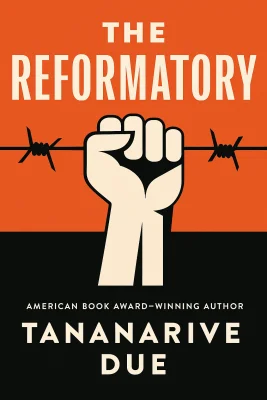
The Reformatory
Categories
Fiction, Audiobook, Horror, Mystery, Historical Fiction, Thriller, Adult, Book Club, Historical, Paranormal
Content Type
Book
Binding
Hardcover
Year
2023
Publisher
S&S/Saga Press
Language
English
ISBN13
9781982188344
File Download
PDF | EPUB
The Reformatory Plot Summary
Introduction
# Ghosts in the Soil: A Boy's Fight for Justice at the Reformatory The leather strap whistled through the suffocating Florida air, each strike painting fresh welts across twelve-year-old Elwood Curtis's back. Superintendent Spencer's eyes gleamed with practiced cruelty as he delivered the punishment in the concrete building they mockingly called the White House. This wasn't justice—this was something far darker, something that had been festering at the Nickel Academy for decades. Elwood had arrived at this hellish place for the simple crime of being in the wrong car at the wrong time, hitchhiking to his first day of college classes when the vehicle turned out to be stolen. But as the strap bit into his flesh, he began to understand that guilt or innocence mattered little within these walls. The Academy was a machine designed to break young souls, and he could feel them watching from the shadows—the spirits of boys who had died in this place, their whispers carried on the wind like smoke from an old fire. In this institution where children disappeared into unmarked graves, Elwood would learn that some sins echo through generations, and some ghosts refuse to rest until their stories are told.
Chapter 1: The Unjust Sentence: From Defender to Condemned
The courthouse steps blazed under the merciless Florida sun as seventeen-year-old Elwood Curtis climbed toward what he believed would be justice. His grandmother Harriet had raised him on the promise that America rewarded virtue, that education and moral character could overcome any obstacle. The acceptance letter to Melvin Griggs Technical College crinkled in his pocket—proof that he was different from the other colored boys in Frenchtown, destined for something better. The stolen car had been a trap disguised as kindness. When the clean-cut college student offered Elwood a ride to campus, it seemed like providence itself. But the screaming sirens and drawn guns revealed the truth—his benefactor was a thief, and Elwood was now an accomplice in the eyes of the law. The judge's gavel fell with the weight of inevitability, sentencing him to indefinite detention at the Nickel Academy until his eighteenth birthday. The intake process stripped away more than just his clothes. Superintendent Spencer studied the naked boy with calculating eyes, his questions probing like surgical instruments. When Elwood dared to mention his college acceptance, the man's smile never wavered, but something cold and predatory stirred behind his gaze. Education was a privilege, Spencer explained, one that had to be earned through suffering and submission. The dormitory assignment came with its own cruel logic. Cleveland dormitory housed the black students, while Lincoln held the whites—separate and decidedly unequal in every measurable way. Elwood's bunkmate Turner, a street-smart boy from Tampa, whispered the real rules as darkness fell over their concrete tomb. Forget everything you learned about right and wrong, Turner warned. Here, survival meant becoming someone else entirely. The first ghost appeared that night, standing at the foot of Elwood's bed with rope burns around his neck and accusation in his dead eyes. The spirit's mouth moved soundlessly, but Elwood understood the message perfectly. This place was a graveyard for dreams, and he had just become its newest resident.
Chapter 2: Haunted Grounds: Meeting the Spirits of the Lost
The kitchen work began before dawn, steam rising from industrial vats like incense in a temple of suffering. Elwood scrubbed pots alongside other Cleveland boys, their movements mechanical after months or years of identical mornings. But the routine shattered when he glimpsed the boy stirring soup at the far station—pale, translucent, with a kitchen knife protruding from between his shoulder blades like some macabre decoration. Turner noticed Elwood's sudden pallor, the way he stumbled backward into a rack of ladles. In this place, boys learned to hide their terrors behind masks of compliance, but Elwood's gift—or curse—made concealment impossible. The dead walked these grounds as surely as the living, their restless spirits drawn to anyone who could acknowledge their existence. The ghost introduced himself as Griff, though his real name had been lost to time and bureaucratic indifference. He had died in the ring during one of Spencer's boxing matches, beaten to death for the entertainment of wealthy donors who came to watch colored boys destroy each other. Now he haunted the kitchen where he had once worked, stirring eternal soup with methodical precision while blood seeped down his back in patterns that never quite reached the floor. Griff spoke of the others—dozens of spirits trapped on the Academy grounds by the violence of their deaths and the injustice of their forgotten lives. They had been waiting for someone who could see them, someone who might finally expose the truth about what happened in the shadows of this supposed reform school. The official records called their deaths accidents or natural causes, but the ghosts knew better. They all knew better. As Elwood learned to navigate between the world of the living and the realm of the dead, he began to understand the true scope of the Academy's evil. This wasn't just a school that failed to educate—it was a systematic machine for destroying young lives, feeding on their suffering while the outside world looked away. The spirits whispered of secret graves, of boys who had simply vanished from the rolls, of horrors that made the daily beatings seem merciful by comparison.
Chapter 3: The Devil's Bargain: Hunting Ghosts for Freedom
Superintendent Spencer's office reeked of bourbon and old leather, the walls lined with photographs that documented decades of institutional horror. The man himself sat behind his mahogany desk like a spider in his web, pale eyes studying Elwood with the intensity of a collector examining a rare specimen. Word had spread about the boy's supernatural encounters, and Spencer saw opportunity in what others might consider madness. The proposition came wrapped in honeyed words about special privileges and early release. Elwood possessed a gift, Spencer explained, a rare ability to communicate with the restless spirits that plagued the facility. These ghosts were dangerous, the superintendent insisted, spreading lies and encouraging boys to attempt escape. Someone needed to convince them to move on, to find peace in whatever came after death. But Spencer's true intentions became clear when he introduced Elwood to Maynard, the Academy's groundskeeper and unofficial executioner. The massive man carried a leather pouch filled with graveyard dirt and bone dust—ingredients for trapping spirits in glass containers. When properly applied, the mixture created supernatural snares that compressed ghostly forms into tiny piles of ash, eliminating troublesome spirits permanently. The demonstration made Elwood's stomach churn. Griff materialized above the circle of dust, his form dissolving into swirling motes that settled into a small mountain of gray powder. His scream echoed not through the air but directly into Elwood's mind, a sound of such anguish that it nearly drove him to his knees. Maynard collected the remains with scientific precision, adding them to Spencer's collection like a trophy hunter preserving his kills. The other boys celebrated Elwood's newfound status as ghost hunter, grateful for protection from the supernatural terrors that had plagued their sleep. They brought him extra dessert and shared their stories of spectral encounters, never suspecting that each successful hunt damned another innocent soul to oblivion. Elwood smiled and accepted their praise while his conscience withered, trapped between the living who trusted him and the dead who had begun to fear him.
Chapter 4: Blood and Betrayal: When Protection Fails
The plan seemed simple enough in its desperate logic. Elwood would pretend to hunt ghosts while actually protecting them, buying time until someone from the outside world could expose the Academy's crimes. But the supernatural realm operates by different rules than the living, and the spirits' hunger for justice proved stronger than their gratitude for his protection. When Elwood failed to deliver genuine ghost ash to Spencer's collection, the superintendent's rage fell upon Turner. The street-smart boy who had tried to teach Elwood the rules of survival found himself dragged to the White House, where Spencer's leather strap waited like a patient serpent. But this beating would be different—more savage, more personal, designed to break more than just flesh. Turner's screams echoed across the campus as Spencer worked with methodical precision, each strike calculated to inflict maximum agony without causing immediate death. The other boys huddled in their dormitories, listening to their friend's torture and understanding that any of them could be next. This was the price of defiance, the cost of believing that justice might somehow prevail in this godforsaken place. By morning, Turner lay broken in the infirmary, his back a map of wounds that would never fully heal. But the physical damage was nothing compared to the spiritual destruction Spencer had wrought. The boy who had once possessed enough courage to help newcomers navigate the Academy's dangers now flinched at shadows, his spirit crushed as surely as his ribs. Elwood knelt beside his friend's bed, guilt eating at him like acid. The ghosts had demanded his loyalty, but his refusal to betray them had cost Turner everything. As he watched his friend struggle to breathe through punctured lungs, Elwood began to understand that in this place, there were no good choices—only different forms of damnation. The spirits whispered of revenge, of a reckoning that would balance the scales of justice, but their promises felt hollow in the face of Turner's suffering.
Chapter 5: Stealing Truth: Evidence from the Heart of Evil
The key materialized in Elwood's footlocker like a gift from the beyond—small, brass, and perfectly fitted to unlock the secrets Spencer kept hidden in his office safe. The ghost of a boy named Jerome had placed it there, his spirit strong enough to manipulate physical objects despite being trapped on the Academy grounds for over a decade. Jerome had died in the White House, beaten to death for the crime of teaching other boys to read. Spencer's private collection told the true story of the Nickel Academy. Photographs documented decades of systematic abuse—children's broken bodies arranged like hunting trophies, their dead eyes staring accusingly from behind glass frames. Financial records revealed the embezzlement scheme that funded Spencer's lavish lifestyle, money meant for food and education diverted to his personal accounts while students starved. But the most damning evidence sat in glass jars arranged like specimens in a laboratory. Each container held the compressed essence of murdered spirits, their souls trapped by Maynard's dark magic and Spencer's insatiable need for control. The ash represented more than just destroyed ghosts—it was proof of a supernatural crime that extended the Academy's evil beyond the boundaries of life itself. The theft required supernatural coordination. Jerome's spirit manipulated the office locks while other ghosts created distractions throughout the campus. A fire in the laundry, a flood in the dining hall, a sudden infestation of rats in the administration building—each crisis drew staff away from Spencer's office while Elwood worked with trembling hands to photograph the evidence. As he stuffed the stolen documents into his shirt, Elwood felt the weight of responsibility settling on his shoulders like a lead blanket. These papers could bring down the entire system of horror that masqueraded as reform, but first he had to survive long enough to deliver them to the outside world. Behind him, the jars of compressed souls seemed to pulse with their own malevolent light, waiting for the moment when their trapped essence would finally be free to seek revenge.
Chapter 6: The Great Escape: Water, Woods, and Reckoning
The tunnel had been dug by generations of desperate boys, each adding inches to the passage that led from the Cleveland dormitory basement to the pine woods beyond the fence. Turner, despite his injuries, had insisted on joining the escape attempt, his broken body driven by a spirit that refused to surrender. Together with Elwood and three other boys, they crawled through the suffocating darkness while bloodhounds bayed in the distance. The woods offered temporary sanctuary but brought new terrors. Spanish moss hung like burial shrouds from ancient cypress trees while the sounds of pursuit grew closer with each passing hour. Spencer's voice echoed through the forest, taunting and threatening as the hunt closed in. The superintendent had turned the escape into a game, offering rewards to local hunters who could bring back the runaways alive—or explanations for why they couldn't. The confrontation came at Dozier Creek, where the boys had hoped to lose their scent in the muddy water. Spencer emerged from the tree line with Maynard and a pack of tracking dogs, his pale eyes blazing with fury at this challenge to his authority. The superintendent's rifle gleamed in the dappled sunlight as he took aim at Turner, the boy who had dared to dream of freedom. But the ghosts had been waiting for this moment. Decades of murdered spirits rose from the creek bed like a supernatural army, their forms coalescing from mist and memory into instruments of vengeance. Jerome led the charge, his rope-burned neck a testament to Spencer's cruelty, while Griff materialized beside the bloodhounds, his ghostly hands turning loyal animals into agents of retribution. The water turned crimson as supernatural justice claimed its due. Spencer's screams joined the chorus of boys he had tortured, his rifle useless against enemies that bullets could not touch. Maynard tried to use his grave dirt, but the spirits were too many and too angry to be contained by his primitive magic. The hunter became the hunted as the creek claimed both men, their bodies disappearing beneath the dark water while their souls faced judgment from those they had wronged.
Chapter 7: Justice Served: Supernatural Vengeance and Family Reunion
The aftermath of Spencer's death brought chaos to the Nickel Academy as state investigators swarmed the campus like antibodies fighting an infection. The stolen documents Elwood had hidden in the woods provided a roadmap to decades of corruption, while the empty jars in Spencer's office raised questions that no one could adequately answer. How do you explain the systematic imprisonment of souls to bureaucrats who barely believe in the systematic imprisonment of bodies? Turner survived his injuries but carried scars that would never fully heal, his street-smart confidence replaced by a haunted awareness of how close he had come to joining the Academy's ghostly population. The other escaped boys scattered to the winds, some returning to families who had given them up for lost, others disappearing into the anonymous masses of America's dispossessed youth. Elwood found himself in the strange position of being both hero and witness, his testimony crucial to the federal investigation that would eventually shut down the Academy. But his real vindication came from the spirits themselves, who appeared to him one final time as the demolition crews prepared to tear down the buildings that had housed so much suffering. Jerome stood at the head of the ghostly procession, no longer the angry spirit who had demanded vengeance but a peaceful boy ready to move on to whatever came next. The other ghosts followed—Griff with his kitchen knife finally removed, dozens of unnamed boys whose stories would never be fully known but whose deaths had finally been acknowledged. They faded into the morning light like mist before the sun, their long vigil ended at last. The letter from Melvin Griggs Technical College arrived three months later, offering Elwood a full scholarship and a chance to reclaim the future that had been stolen from him. As he walked across the campus where he should have started his education years earlier, he carried with him the memories of boys who would never have such opportunities. Their ghosts no longer haunted him, but their stories had become part of his own, a reminder that some battles are fought not just for the living but for the dead who demand to be remembered.
Summary
In the end, the Nickel Academy stood as a monument to institutional evil and the power of truth to overcome even the most entrenched corruption. Elwood's journey from idealistic teenager to hardened survivor illustrated how trauma can either destroy or transform, while his supernatural gift became a bridge between the world of the living and the realm of the unjustly dead. The ghosts who haunted the Academy grounds were not merely horror story elements but representations of systemic violence that creates its own haunting legacy. The novel's true power lies in its unflinching examination of how institutions designed to help children can become machines for destroying them, using the vulnerable as fuel for their machinery of control and profit. Yet it also celebrates the resilience of the human spirit and the possibility of justice, even when it comes from unexpected sources. In a world where the dead and the living unite against a common enemy, the story reminds us that some evils are so profound they transcend the boundaries between this world and the next, requiring all of creation to rise up in opposition. The Academy may have been a place of death, but from its ashes came a story of redemption that echoes across generations, proving that even the most silenced voices will eventually find a way to speak their truth.
Best Quote
“Florida’s soil is soaked with so much blood, it’s a wonder the droplets don’t seep between your toes with every step, Mama used to say.” ― Tananarive Due, The Reformatory
Review Summary
Strengths: The review highlights Tananarive Due's powerful storytelling and her ability to vividly depict the horrors of the Jim Crow South. The book is praised for its fast-paced narrative and its strong historical context, drawing from a personal family story. The author is commended for her masterful depiction of a difficult period in American history. Weaknesses: The review notes the book's heavy and potentially triggering content, including racism, child abuse, and severe violence, which may be difficult for some readers to handle. The explicit portrayal of these themes is emphasized as challenging to read. Overall: The reader expresses a strong positive sentiment, recommending the book for its impactful storytelling and historical significance, despite its challenging content. The book is seen as a powerful reminder of a dark period in history, with a high recommendation level for those prepared for its intensity.
About Author

Tananarive Due
Due synthesizes elements of Black speculative fiction and horror to illuminate themes of historical trauma and Black survival. Her work, such as the novel "The Reformatory," uses supernatural elements to explore difficult historical realities, drawing from her family’s deep roots in civil rights activism. Her mother's legacy as a civil rights activist significantly influences Due's storytelling, allowing her to weave personal and collective histories into her narratives. Her role as a Continuing Lecturer at UCLA, where she teaches Black Horror and Afrofuturism, complements her writing by expanding her impact beyond traditional literature, connecting with students and audiences interested in diverse narratives.\n\nIn collaboration with her husband, Steven Barnes, Due has ventured into screenwriting and producing, contributing to projects like "The Twilight Zone" and the graphic novel "The Keeper." Their podcast, "Lifewriting: Write for Your Life!", further showcases their dedication to storytelling across mediums. Readers of Due's work, including her acclaimed books "My Soul to Keep" and "The Good House," benefit from her ability to intertwine speculative fiction with real-world issues, creating stories that are both engaging and thought-provoking. Her achievements, recognized by awards such as the American Book Award and NAACP Image Award, affirm her influence in reshaping the landscape of speculative fiction.\n\nDue's literary endeavors provide a platform for exploring racial justice and Black literary traditions. Her approach not only broadens the narrative scope for her audience but also situates her as a key figure in contemporary discussions on race and history in speculative fiction. This bio captures the essence of an author whose commitment to storytelling challenges and enriches readers’ perspectives, offering narratives that are as impactful as they are imaginative.
Read moreDownload PDF & EPUB
To save this Black List summary for later, download the free PDF and EPUB. You can print it out, or read offline at your convenience.
The Reformatory
by Tananarive Due
