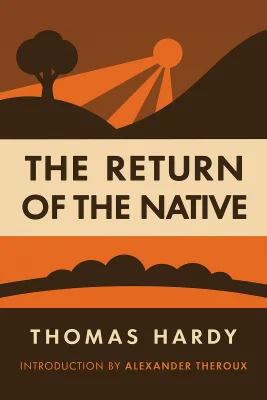
The Return of the Native
Categories
Fiction, Classics, Audiobook, Historical Fiction, Romance, Literature, 19th Century, Novels, British Literature, Victorian
Content Type
Book
Binding
Paperback
Year
2001
Publisher
Random House Publishing Group
Language
English
ASIN
037575718X
ISBN
037575718X
ISBN13
9780375757181
File Download
PDF | EPUB
The Return of the Native Plot Summary
Introduction
# Shadows on Egdon Heath: A Tale of Passion and Fate The ancient heath stretches endlessly under a November sky, its purple heather and windswept gorse holding secrets older than memory. On this wild expanse of Egdon Heath, where Celtic barrows rise like sleeping giants and the wind carries whispers of old sorrows, a woman stands silhouetted against a dying bonfire. Eustacia Vye burns with desires that this desolate landscape cannot satisfy, her dark beauty as untamed as the moor itself. When Clym Yeobright returns from the glittering salons of Paris, he carries dreams of enlightening the simple folk of his birthplace. But the heath has its own plans for the diamond merchant turned idealist. Three hearts will collide in a tragedy written in the very soil of Egdon—where love becomes obsession, where noble intentions pave the road to destruction, and where the ancient moor watches with indifferent eyes as human passion plays out its eternal, devastating dance.
Chapter 1: The Native's Return: Dreams of Enlightenment on Ancient Ground
The bonfire blazes against the November darkness, casting wild shadows across the faces gathered on Rainbarrow. It is Guy Fawkes Night, and the heath-dwellers have come to burn their effigies and share their gossip. Among them stands Eustacia Vye, her restless beauty stark against the flames, listening as the locals speak of one who will soon return. Clym Yeobright is coming home. The diamond merchant who left for Paris years ago now returns with revolutionary ideas about education and enlightenment. His mother, Mrs. Yeobright, waits at Blooms-End with a mixture of pride and apprehension. She has plans for her son—plans that involve his cousin Thomasin and a quiet life befitting his station. But Clym himself harbors different dreams. The glitter of Parisian society has left him hollow, yearning for something more meaningful than commerce and social climbing. He envisions himself as a teacher, bringing knowledge to the simple folk of Egdon, lifting them from their rustic ignorance into the light of learning. His face bears new lines of thought and purpose, but also a weariness that troubles his mother's heart. The heath receives him with its usual indifference. Ancient and unchanging, it has witnessed the rise and fall of civilizations, the brief flicker of human ambition against its eternal backdrop. Clym walks its familiar paths, breathing the sharp air of his childhood, unaware that his return has set forces in motion that will reshape not just his own destiny, but the lives of all who dwell in this wild place. When Eustacia first glimpses him at a Christmas gathering, her breath catches. Here is no simple heath-dweller, but a man who has walked the boulevards of Paris, who speaks of art and philosophy with the ease of one born to greater things. In his eyes she sees her own desperate hunger for escape, for a life beyond the confining boundaries of Egdon Heath. The sight of him ignites something dangerous in her restless heart.
Chapter 2: Hearts Entwined: Love Built on Dangerous Illusions
Eustacia pursues Clym with the single-minded intensity of a huntress. Through winter nights she signals to him from her grandfather's house at Mistover Knap, using the ancient language of bonfires and coded messages. Their courtship unfolds against the stark beauty of the heath, where purple heather gives way to golden gorse, and the wind carries secrets across miles of open moorland. She even disguises herself as the Turkish Knight in a Christmas mumming play, desperate to enter his mother's house undetected and observe him closely. The masquerade succeeds beyond her wildest hopes—when Clym discovers her deception in the moonlit garden, their eyes meet with electric recognition. Something passes between them that will prove impossible to break. Clym finds himself bewitched by this strange, passionate creature. Eustacia is unlike any woman he has known, wild and untamed as the heath itself, yet possessing a fierce intelligence that matches his own. When she speaks of her dreams of Paris, of theaters and salons and the glittering life of the city, he believes he has found a kindred spirit who understands the suffocating limitations of provincial existence. But their love is built on a fundamental misunderstanding. Eustacia believes she has found her ticket to freedom, a man who will carry her away from this hated place to the sophisticated world she craves. Clym, meanwhile, sees in her the perfect companion for his mission of rural enlightenment, someone who will share his vision of bringing culture to the countryside. Mrs. Yeobright watches this romance with growing alarm. She recognizes Eustacia as the woman who once entangled Damon Wildeve, the innkeeper who married Clym's cousin Thomasin out of wounded pride rather than love. When Clym announces his intention to marry Eustacia, his mother makes her opposition clear, driving a wedge between mother and son that will prove impossible to heal. The battle lines are drawn, and the heath prepares to witness another tragedy in its long, blood-soaked history.
Chapter 3: The Vision Crumbles: Blindness and Broken Ambitions
Marriage brings disillusionment swift as a heath storm. Clym throws himself into his educational schemes with desperate energy, but the strain of close reading and writing begins to tell on his eyes. The bright lights of Parisian salons have weakened his vision, and now the effort to prepare lessons and study texts brings stabbing pain and blurred sight. Eustacia watches her husband's decline with growing horror. This is not the sophisticated man of the world she married, but a half-blind rustic whose grand dreams are crumbling like sand castles before the tide. When his eyesight fails completely, forcing him to abandon his teaching ambitions, she sees her own hopes die with his vision. The cottage at Alderworth becomes a prison for them both. Clym, stripped of his educational dreams, finds solace in physical labor, rising before dawn to cut furze on the heath with leather gaiters and rough tools. He accepts his reduced circumstances with the contentment of a man who has made peace with limitation, but for Eustacia, each day brings fresh torment. She watches through the window as her husband trudges across the moor, his work clothes marking him as just another heath-dweller, indistinguishable from the laborers she has always despised. The man who had promised her escape from this place has become its very embodiment. Their conversations grow strained, filled with bitter recriminations and unspoken resentments. The heath watches their struggle with ancient patience. It has seen countless human dramas play out across its surface, has absorbed the blood and tears of generations into its peaty soil. The purple heather and golden gorse remain unchanged, indifferent to human suffering, as the forces set in motion by Clym's return begin to spiral toward their inevitable, tragic conclusion.
Chapter 4: The Fatal Visit: A Mother's Last Journey Across the Heath
The August heat lies heavy on the heath as Mrs. Yeobright sets out on her desperate mission of reconciliation. Despite her opposition to the marriage, maternal love has conquered pride, and she walks the dusty miles to Alderworth determined to heal the breach with her son. The sun beats down mercilessly as she struggles across the trackless moor, her aging body protesting every step. She carries with her a gift of guineas for the young couple, money that represents both practical help and symbolic forgiveness. The weight of the coins in her purse matches the weight of hope in her heart as she approaches the cottage where her son has made his home with the woman she has learned to hate. At Alderworth, Eustacia sits in the parlor while Clym sleeps off his morning's labor in the adjoining room. When the knock comes at the door, she freezes. Through the window she has glimpsed not just her mother-in-law approaching, but another figure—Damon Wildeve, the innkeeper who once courted her, standing in her garden like a ghost from her past. Wildeve has come with news of his inheritance, speaking casually of travels to Paris, of winters spent in sophisticated capitals. His newfound wealth makes him bold, and he paints pictures of the life that Eustacia has always craved. Their conversation crackles with unspoken tension, old desires rekindling like embers touched by wind. In panic, she hustles Wildeve out the back door, then hesitates at the front entrance. The knocking comes again, more insistent now, but Eustacia cannot bring herself to face Mrs. Yeobright's accusing eyes. She knows what the older woman thinks of her, knows she is blamed for Clym's reduced circumstances. The shame and anger war in her breast until the knocking stops, and she hears footsteps retreating down the path.
Chapter 5: Guilt and Recrimination: When Love Turns to Poison
Mrs. Yeobright stands at the garden gate, her heart breaking. She has seen a face at the window, has glimpsed her son's tools by the door, knows he is home. Yet no one comes to greet her, no voice calls her inside. The rejection cuts deeper than any physical wound, confirming her worst fears about her daughter-in-law's influence over Clym. The sun continues its pitiless assault as she begins the long journey home, but her strength is failing. The emotional blow has shattered something vital within her, and she stumbles along the heath paths like a wounded animal seeking shelter. An adder strikes her swollen ankle, its venom coursing through her weakened system, and she collapses on the open moor. When Clym finds her dying body and learns her final words—bitter accusations about being shut out by her son and his wife—the knowledge strikes him like a physical blow. His mother died believing herself rejected by the son she loved, cast off and abandoned in her hour of need. The guilt consumes him like acid, and in his fevered ravings, he accuses himself of matricide. But when the full truth emerges, when he learns that Eustacia was home that day and chose not to answer the door, his anguish transforms into something far more dangerous. The confrontation between husband and wife erupts with volcanic force, years of suppressed resentment finally finding voice. Their cottage becomes a battleground where two wounded souls tear at each other with words sharp as knives. Eustacia faces his accusations with the desperate courage of a cornered animal. She cannot deny the basic facts, cannot explain away her failure to open the door, but neither will she accept the full weight of blame he seeks to place upon her. When he demands to know who was with her that day, she maintains her silence with stubborn pride, protecting Wildeve even as her world crumbles around her. Their marriage, already strained to breaking point, snaps like an overstretched rope.
Chapter 6: Storm and Reckoning: The Night of Final Choices
November brings storm clouds gathering over Egdon Heath like harbingers of doom. Eustacia has made her choice, signaling to Wildeve from the hilltop with a burning brand that she is ready to flee. The innkeeper waits by Shadwater Weir with horse and cart, his pockets heavy with inheritance money, prepared to carry her away from this cursed place to whatever new life awaits beyond the heath's boundaries. But the night itself seems to conspire against them. Rain lashes the moor with vindictive fury, turning paths to streams and streams to torrents. The wind howls across the open spaces like the voices of the damned, and in the darkness shapes move that might be human or might be something else entirely. Eustacia struggles through the storm toward her rendezvous, her resolve wavering with each step. The weight of her choices presses down upon her like the lowering sky, and she begins to question whether escape is truly possible or merely another illusion. At Rainbarrow, the ancient burial mound where she once dreamed of better things, she pauses in the driving rain. The realization strikes her with crushing force. She has no money for independent flight, no means of survival beyond Wildeve's protection. To accept his help would make her his mistress, a kept woman dependent on his charity. The proud beauty who once commanded the heath like a queen faces the ultimate humiliation, and the prospect breaks something vital within her. At the weir, two men wait in the darkness. Wildeve keeps his vigil by the rushing water, while Clym searches desperately for his wife, his anger transformed to fear as the storm rages around them. The ancient stones of the heath watch silently as human passion reaches its crescendo, as the forces unleashed by love and betrayal finally converge in the swirling waters below the weir, where the river runs black and deep under the November storm.
Chapter 7: After the Deluge: Finding Purpose in the Ruins
Dawn breaks gray and terrible over Egdon Heath, revealing the price of the night's tragedy. The dark waters of Shadwater Weir have claimed their victims—Eustacia and Wildeve found their escape at last, but not the kind either had dreamed of. Their bodies lie still in death, pulled from the rushing current that carried away their hopes and fears together. Clym survives his desperate plunge into the weir, dragged back from the edge of death to face a world emptied of both love and hatred. The fever of guilt and rage has burned away, leaving behind something harder and clearer. He sees now the futility of his grand schemes, the vanity of his educational dreams, but also the possibility of a different kind of purpose. The heath-dwellers gather in hushed groups, speaking in whispers of the night's events. Some call it fate, others folly, but all recognize the hand of something larger than human will in the tragedy that has unfolded. The ancient moor has claimed its victims as it always does, absorbing their stories into its endless chronicle of human ambition and failure. From the ashes of his old ambitions, Clym finds a new calling. He becomes a preacher, not in the churches of the towns, but on the open heath itself. From the summit of Rainbarrow, where bonfires once blazed and lovers once met, he speaks to the simple folk of Egdon about life and death, about the acceptance of fate and the finding of peace within limitation. His words carry the weight of hard-won wisdom, the authority of one who has looked into the abyss and returned. The heath listens to his voice as it has listened to so many others, neither approving nor condemning, simply enduring. In that endurance there is a kind of peace, a recognition that human passion, however fierce, is but a brief flame against the eternal darkness.
Summary
In the end, Egdon Heath stands unchanged, its purple heather and golden gorse unmarked by the human drama that has played out across its surface. The ancient burial mounds keep their silent watch, having witnessed another cycle of love and loss, ambition and defeat. Clym Yeobright, the native who returned with dreams of transformation, has found his true calling not in changing others, but in accepting the immutable truths of existence. The tragedy of Eustacia and Wildeve serves as a stark reminder that the heart's desires, however passionate, cannot always overcome the constraints of circumstance and character. Their deaths in the dark waters mark not just the end of their individual stories, but the completion of a larger pattern, one as old as the heath itself. In seeking to escape their fate, they ran headlong into it, discovering too late that some prisons are built not of stone and iron, but of the choices we make and the prices we refuse to pay. The heath endures, patient and eternal, ready to witness whatever new dramas the turning seasons will bring to its timeless stage.
Best Quote
“Why is it that a woman can see from a distance what a man cannot see close?” ― Thomas Hardy, The Return of the Native
Review Summary
Strengths: The review highlights the vivid characterization of Eustacia Vye, emphasizing her beauty and the evocative imagery associated with her presence. The descriptive language used to portray her is noted as a strength, capturing the reader's imagination. The nostalgic tone regarding simpler romantic gestures, such as hand-holding, adds a layer of emotional depth to the review. Overall: The review conveys a positive sentiment towards the book, particularly appreciating the complexity of emotions and character dynamics on the moors. The reviewer refrains from discussing the plot in detail but suggests a rich tapestry of passion and longing, recommending the book for its evocative portrayal of characters and setting.
About Author
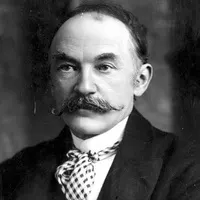
Thomas Hardy
Hardy probes the human condition through narratives that deftly weave the inexorable forces of nature with societal constraints. Deeply rooted in the pastoral landscapes of Dorset, his literary canvas reflects an intrinsic connection to the rural world, which permeates his storytelling with themes of fate and existential struggle. His dual interest in the naturalist movement and romanticism enabled him to explore the supernatural forces shaping human destiny. This duality is manifest in his renowned works like "Tess of the D’Urbervilles," which dissects the moral intricacies and societal pressures of Victorian England, presenting readers with poignant critiques of conventional norms.\n\nIn Hardy's novels, the setting of Wessex serves as a semi-fictional backdrop where the tension between individual passions and societal expectations unfolds. His method of leaving a character's fate unresolved, as seen in the serialized "A Pair of Blue Eyes," introduced the narrative device known as the "cliffhanger," thereby influencing the lexicon of suspense. While primarily identified as a novelist, Hardy's profound psychological insight and rich descriptive prose extend to his poetry, published later in his life. This body of work gained substantial recognition during the mid-20th century, particularly influencing The Movement, thus reinforcing his status as a versatile author who bridges narrative with existential depth.\n\nReaders gain from Hardy's exploration of human experience as a tapestry interwoven with chance and inevitability, providing a mirror to the complexities of life. His ability to interrogate the unseen forces and moral dilemmas resonates with those intrigued by the philosophical dimensions of literature. Whether one delves into his novels or poetry, Hardy offers a timeless reflection on the interplay of destiny and personal choice, making his works a crucial part of any literary exploration. His bio encapsulates a legacy of profound narrative impact, ensuring that his contributions to literature continue to engage and inspire scholars and readers alike.
Read moreDownload PDF & EPUB
To save this Black List summary for later, download the free PDF and EPUB. You can print it out, or read offline at your convenience.
The Return of the Native
by Thomas Hardy
