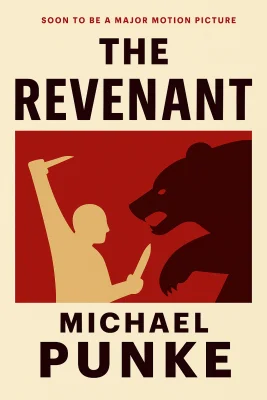
The Revenant
Categories
Fiction, Audiobook, Historical Fiction, Thriller, Westerns, Book Club, Historical, Novels, Adventure, Survival
Content Type
Book
Binding
Hardcover
Year
2015
Publisher
Picador
Language
English
ASIN
125006662X
ISBN
125006662X
ISBN13
9781250066626
File Download
PDF | EPUB
The Revenant Plot Summary
Introduction
# Revenant: The Forging of Hugh Glass Through Betrayal and Survival The grizzly's claws tore through flesh like paper, ripping Hugh Glass from the world of the living into something far darker. Blood sprayed across the morning frost as eight hundred pounds of fury drove him into the earth, jaws clamping down on his throat with bone-crushing force. In that moment, as consciousness flickered and death whispered promises of peace, Glass could never have imagined what lay ahead. This was 1823, when the American frontier stretched endless and unforgiving beyond the Missouri River. Here, in this vast wilderness where civilization ended and savagery began, men learned the true weight of trust and betrayal. What followed Glass's mauling would become legend—not merely a tale of survival, but a testament to the terrible power of abandonment and the even more terrible power of the human will to endure. Across three hundred and fifty miles of hostile territory, one man's refusal to die would echo through the ages, transforming him from victim into something altogether more dangerous: a revenant, crawling back from the grave with unfinished business.
Chapter 1: The Bear's Embrace: Mauling and Abandonment
Hugh Glass moved through the morning mist like a ghost, his prized Anstadt rifle balanced across his forearm. At forty, he was older than most in Captain Andrew Henry's fur brigade, his weathered face carrying stories of pirates and Pawnee captivity that few would believe. The Rocky Mountain Fur Company expedition had been following the Grand River for days, and Glass had volunteered to scout ahead for game to feed twenty hungry men. The she-bear emerged from the thicket without warning. Glass barely registered the massive form before six hundred pounds of maternal fury crashed into him. His rifle discharged harmlessly skyward as claws longer than his fingers shredded his buckskin shirt. The bear's breath was hot and rank against his face as its jaws found his throat, crushing down with the force of a steel trap. Glass felt his ribs crack under the animal's weight. Blood filled his mouth as he gasped for air that wouldn't come. The bear shook him like a child's doll, then released him only to swipe again with devastating force. His scalp split open, sending warm blood streaming down his face. Somehow, his hand found the knife at his belt. With the last of his strength, he drove the blade deep into the bear's chest. The animal roared and stumbled backward, then collapsed with a shuddering breath. When his companions found him an hour later, Captain Henry took one look and shook his head. John Fitzgerald, a man with a hook-shaped scar curling from his mouth to his ear, knelt beside Glass and felt for a pulse. Young Jim Bridger, barely nineteen with the soft face of a boy pretending to be a man, stared in horror at the mangled form of their scout. Glass lay pinned beneath the dead bear, more corpse than man, his throat torn open so deep that air bubbled through the blood with each labored breath. For five days they waited, carrying Glass on a makeshift litter while winter's approach pressed against their backs like a blade. The Arikara war parties stalking them wouldn't pause for one dying man. Finally, Henry made his choice. He offered eighty dollars to any two men who would stay behind to wait for Glass's death and give him proper burial. Fitzgerald stepped forward first, his scarred face calculating the odds. Bridger followed, desperate to prove himself worthy of the company. The expedition moved out, leaving the three of them beside a hidden spring in the shadow of twisted pines. For three more days they waited as Glass drifted between consciousness and delirium. On the morning of the fourth day, when Glass's breathing grew stronger instead of weaker, Fitzgerald made his decision. While Bridger gathered firewood, he stripped the dying man of everything that might keep him alive—the rifle, the knife, the fire-making tools. When Bridger returned and protested weakly, Fitzgerald's answer was simple: the dead have no need of weapons. They mounted their horses and rode away, leaving Glass with nothing but his wounds and his rage.
Chapter 2: Crawling from Death: The Impossible Journey Begins
Death would have been mercy, but mercy was not offered. Glass lay in the clearing for hours after his abandoners vanished, his body a catalog of agony that should have killed him twice over. The bear's claws had laid his back open in five parallel furrows deep enough to hold a man's fist. His throat was a ruin of torn flesh and severed muscle. His right leg hung useless, and his shoulder screamed with every breath. But rage was powerful medicine. It burned away self-pity and cauterized despair. Glass had survived pirates in the Gulf of Mexico, had lived among the Pawnee on the great plains, had faced down storms at sea and hostile tribes on land. Two cowards with the moral backbone of carrion birds would not write his ending. He began to move. Not walking, for his leg would not bear weight, but crawling on his belly like some primordial thing emerging from the swamp. Every yard was purchased with blood and will. The makeshift bandages Henry had applied came loose, and fresh wounds opened on his palms and knees. But he moved, following a creek that he prayed would lead to the Missouri River. The first day he made perhaps a mile. The second day, less. His body was consuming itself, burning muscle for fuel as starvation set in. At a stagnant pool he found cattail roots and chewed them raw, gagging on their bitter taste. Wild onions and dandelion greens followed, anything to keep the spark of life flickering in his chest. On the third day he found a rattlesnake, fat and sluggish from a recent meal. Glass killed it with a stone and ate it raw, too weak to make fire. For weeks he crawled across the endless prairie, his wounds festering in the heat. Maggots infested the deepest cuts on his back, and rather than fight them, Glass understood instinctively that they might save his life by eating away the dead flesh. His beard grew wild and his hair turned gray, but his eyes burned with an unquenchable fire. Every painful step forward was fueled by a single thought: John Fitzgerald and Jim Bridger had left him to die, but Hugh Glass was still alive. And he would find them.
Chapter 3: Allies in the Wilderness: Healing Among Enemies
The burned ruins of the Arikara village stood like blackened teeth against the sky when Glass found the old woman. She was blind and abandoned, nothing but skin and bones wrapped in a tattered blanket, clutching a small dog like a child. Glass could have killed the animal for meat, but something in the woman's dignity stayed his hand. Instead he built a fire and made broth, feeding her with gentle patience until she slept. By morning she was dead, and Glass built a funeral pyre overlooking the Missouri River. Four Sioux warriors found him there, standing vigil over the flames. They could have killed him easily—this scarred white man, broken and alone—but something in the scene gave them pause. Here was an enemy honoring the death of their enemy's grandmother, showing respect where none was required. Their leader, Yellow Horse, dismounted and approached with cautious curiosity. The warriors examined Glass's wounds with professional interest, particularly the festering gashes on his back. What they found there made them recoil in disgust and wonder. Maggots crawled through the deepest cuts, eating away dead flesh. To the Sioux, this was powerful medicine indeed. A man who could survive such wounds, who could carry death itself in his body and still walk, was touched by the spirits. They took him to their medicine man, an ancient shaman whose face was painted half black with death. The old man's cure was brutal but effective. He poured a mixture of buffalo urine and gunpowder into the wounds, burning out the infection with liquid fire. Glass bit down on a stick and endured, knowing that this agony was the price of continued life. For three days he lay in the medicine lodge, drifting between sleep and waking as his body fought its final battle with death. When he was strong enough to travel, Yellow Horse offered him a horse and escort to Fort Brazeau. Glass accepted both, but before leaving he gave the warrior his most precious possession: the grizzly claw that hung around his neck, stained with his own blood. The Sioux had shown him kindness where his own people had shown only betrayal. It was a lesson he would carry with him to the end of his days.
Chapter 4: The River's Path: Pursuing Those Who Betrayed Him
Fort Brazeau squatted on the banks of the Missouri like a wooden toad, neither fort nor town but something in between. Kiowa Brazeau, the French trader who ran the place, barely recognized the scarred wreck that Yellow Horse delivered to his door. But when Glass spoke his name in a voice made harsh by his wounded throat and mentioned Ashley's company, the pieces fell into place. The story Glass told was sparse, delivered in clipped sentences that carried the weight of unspeakable suffering. A grizzly attack on the Grand River. Two men left to bury him who chose instead to rob him. A crawl across two hundred miles of wilderness that should have been impossible. Brazeau listened with growing amazement, occasionally translating for the French voyageurs who gathered to hear the tale. When Glass announced his intention to continue north to Fort Union, Brazeau thought him mad. Winter was coming, the river would soon freeze, and hostile tribes controlled the territory ahead. But Glass would not be dissuaded. He had business to finish with John Fitzgerald and Jim Bridger, business that could not wait for spring thaw. Fortune smiled on him in the form of Antoine Langevin and his crew of voyageurs heading upriver on a diplomatic mission to the Mandan villages. Their boat could use another gun, and Glass could use the passage. Brazeau outfitted him with everything he had lost and more—a military musket to replace his beloved Anstadt, powder and shot, knife and tomahawk, warm clothes and a Hudson Bay blanket. Glass signed a note promising payment from his wages, knowing he might not live to honor it. The voyageurs launched their boat into the Missouri's current on a crisp October morning, their paddles flashing in unison as they fought the river's flow. Glass sat in the stern, watching Fort Brazeau disappear around a bend. For the first time since the attack, he was moving toward his enemies instead of away from them. The thought warmed him more than the morning sun, feeding the cold fire that had kept him alive through impossible odds.
Chapter 5: Confronting the Past: Finding Bridger and Fitzgerald
Winter closed around the Mandan villages like a fist of ice and snow. The diplomatic mission had succeeded—the Arikara refugees agreed to end their war against American traders—but Glass cared nothing for commerce or diplomacy. His business was older and more personal. When the Missouri froze solid, trapping their boat in ice thick enough to walk on, the voyageurs settled in to wait for spring. Glass would not be deterred. On a morning when the wind cut like knives and snow fell thick as wool, Glass shouldered his pack and walked out onto the frozen river. Behind him lay warmth and safety, the company of civilized men and the promise of spring. Ahead lay only ice and darkness and the distant possibility of justice. The Mandans watched him disappear into the storm, certain they would not see him again until spring, if ever. But Hugh Glass was no longer entirely human, no longer bound by the limitations of mortal flesh. He was something new, forged in pain and tempered by betrayal. Two hundred miles of frozen wilderness lay between him and Fort Union, but he had already crawled farther than that on his belly. This time he walked upright, a revenant returning from the grave. Fort Union stood abandoned when he finally reached it, the gates hanging open like a mouth frozen in a scream. Captain Henry had moved his operation to the Big Horn River, deeper in the mountains. Glass pressed on, following the Yellowstone through a landscape of stunning beauty and deadly cold. He found them on New Year's Eve, 1823. The sound of gunfire and drunken laughter led him to the fort where Henry's men were celebrating. Glass stood in the doorway like an apparition, snow and ice coating his beard, his scarred face illuminated by firelight. The room fell silent as the men recognized the ghost they thought they had left for dead. Jim Bridger sat frozen with terror, seeing his worst nightmares made flesh. Glass walked slowly toward him, his hand moving to the knife at his belt—his knife, now hanging from Bridger's belt. The young man made no move to defend himself, accepting what he saw as just punishment for his betrayal.
Chapter 6: Beyond Vengeance: The Choice of Mercy Over Justice
Glass raised his fist and struck, the blow sending Bridger reeling with blood streaming from his broken nose. Again and again he hit him, pouring months of rage and pain into each punch. The other men watched in silence, understanding that this was justice being served in the only court that mattered on the frontier. But as Glass drew the knife—his own knife, stolen from his dying body—something unexpected happened. Looking down at Bridger's battered face, he saw not the calculating betrayer he had imagined, but a terrified boy who had made a terrible mistake. The young man's eyes held no defiance, only acceptance of his fate and something that might have been relief. Glass hesitated, the knife trembling in his hand. In that moment, he realized that killing Bridger would not heal his wounds or restore what had been taken from him. It would only add another death to the wilderness's bloody toll. The rage that had sustained him through his impossible journey suddenly felt hollow, a fire that had burned too long and consumed too much. Slowly, he lowered the blade and stepped back. "Keep the knife," he said, his voice barely a whisper. "But remember what it cost." Bridger nodded, tears streaming down his face, understanding that he had been given something more precious than his life—he had been given forgiveness by a man who had every right to take his revenge. The search for John Fitzgerald led Glass to Fort Atkinson, where military records showed the man had enlisted in the army after deserting from the fur company. Glass found him in the stockade, awaiting trial for assault after a barroom brawl. When Fitzgerald looked up and saw his victim standing there, alive and whole, he smiled as if greeting an old friend rather than the man he had left to die. But Glass no longer burned with the need for vengeance. The fire that had carried him across three hundred miles of wilderness had transformed into something else—not forgiveness, exactly, but understanding. Fitzgerald was what he was, a man who would always choose survival over honor. Killing him would change nothing. Glass turned and walked away, leaving his betrayer to face whatever justice the army saw fit to dispense.
Summary
Hugh Glass emerged from his ordeal transformed, no longer the man who had set out with Captain Henry's brigade but something harder and more terrible. His journey across the wilderness had stripped away everything soft and civilized, leaving only the essential core of will and purpose. Yet when he finally confronted his betrayers, he discovered that survival was not about the strength of the body but the strength of the spirit, not about the weapons a man carried but the fire that burned within him. The frontier had taught him that true power lay not in taking revenge but in choosing mercy when vengeance was within his grasp. In forgiving Jim Bridger and walking away from John Fitzgerald, Glass found something more valuable than satisfaction—he found his humanity intact, scarred but unbroken. His story became legend not because he survived the impossible, but because he emerged from it with his soul still his own, a testament to the indomitable nature of the human spirit when tested by the ultimate extremes of betrayal and endurance.
Best Quote
“there are none so deaf as those that will not hear.” ― Michael Punke, The Revenant
Review Summary
Strengths: The review praises Michael Punke's novel for its riveting tale of survival and revenge, drawing comparisons to notable authors like Larry McMurtry, Jack London, and Cormac McCarthy. The narrative is highlighted for its raw and powerful prose, enriched by tragi-comic scenes and backstory, which add depth and humanity. The setting in the early 1800s western wilderness is effectively portrayed, emphasizing the primal and resilient nature of its characters. Overall: The reader expresses a highly positive sentiment, recommending the book as a great read. The novel is commended for its compelling storytelling and strong character development, making it a standout in the western genre.
About Author

Michael Punke
Punke delves into the intersections of historical narrative and policy analysis, revealing the complex dynamics of human struggle against the backdrop of the American frontier. His book, "The Revenant: A Novel of Revenge", encapsulates these themes by diving into the perilous journey of Hugh Glass, a fur trapper seeking vengeance in the early 19th-century American West. Meanwhile, Punke's nonfiction works like "Last Stand" and "Fire and Brimstone" explore environmental conservation and labor tensions, respectively. These narratives underscore his commitment to unpacking historical events with a nuanced perspective, weaving rich storytelling with meticulous research.\n\nBeyond his literary pursuits, Punke's career spans significant roles in public policy, trade law, and academia. As a policy analyst and attorney, he has contributed to U.S. international trade policy and served as the U.S. Ambassador to the World Trade Organization. These roles reflect his capacity to navigate complex global issues, an experience mirrored in the layered storytelling of his writings. His legal background, underscored by his time at Cornell Law School and later work with the U.S. Senate, adds depth to his understanding of socio-economic factors, which informs the intricate plots and themes of his books.\n\nReaders benefit from Punke's work through a deeper appreciation of historical narratives enriched by his multifaceted expertise. His ability to connect past and present challenges offers valuable insights to those interested in history, policy, and human resilience. This brief bio illustrates Punke's influence as an author whose storytelling not only entertains but also educates, providing a rich tapestry of American history interwoven with enduring themes of survival and conservation.
Read moreDownload PDF & EPUB
To save this Black List summary for later, download the free PDF and EPUB. You can print it out, or read offline at your convenience.
The Revenant
by Michael Punke
