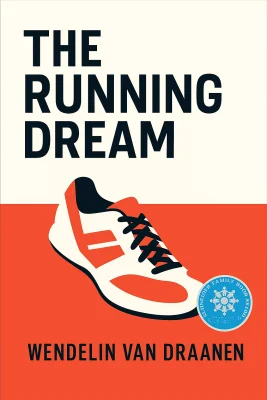
The Running Dream
Categories
Sports, Fiction, Audiobook, Young Adult, Contemporary, Disability, Realistic Fiction, Middle Grade, Friendship, Teen
Content Type
Book
Binding
Hardcover
Year
2011
Publisher
Knopf Books for Young Readers
Language
English
ASIN
0375866671
ISBN
0375866671
ISBN13
9780375866678
File Download
PDF | EPUB
The Running Dream Plot Summary
Introduction
Jessica Carlisle's spikes cut into the track surface as she powered through the final curve, her body burning with that familiar fire that separated champions from pretenders. The seventeen-year-old sprinter had just shattered the league record in the 400-meter dash, crossing the finish line in a blazing 55.0 seconds flat. Her teammates erupted in celebration as she gasped for air, sweat glistening on her face in the afternoon sun. This was supposed to be the beginning of everything—college scouts, scholarships, a future built on the foundation of her incredible speed. Two hours later, Jessica lay unconscious in the twisted wreckage of the team bus, her right leg crushed beyond repair beneath tons of metal and shattered dreams. The drunk driver who had barreled into their vehicle was already dead, taking with him not only his own life but that of Lucy Sanders, a sweet freshman runner who had joined the team just to make friends. When Jessica finally awakened in the hospital three days later, morphine couldn't dull the devastating reality: her running career, her identity, her entire future had been severed along with her leg. What followed wasn't just a story of physical recovery, but a brutal journey through the darkest valleys of despair toward an impossible dream—the chance to run again.
Chapter 1: Shattered Dreams: The Aftermath of Tragedy
The morphine dreams offered Jessica brief escapes from the nightmare that had become her reality. Each time consciousness returned, she faced the same devastating truth: her right leg had been amputated just below the knee. Dr. Wells, maddeningly cheerful in his white coat, spoke of healing and progress while Jessica stared at the gauze-wrapped stump that had once been part of her most prized possession—her speed. Her parents hovered in the sterile hospital room, her mother's eyes swollen from crying while her father maintained a grim silence that spoke volumes. They tried to offer comfort with empty reassurances, but Jessica could see through their forced optimism. The accident had claimed more than her leg; it had shattered the dreams they'd all built around her athletic prowess. Days blurred into nights as Jessica cycled through stages of grief and rage. Physical therapists forced her to perform exercises that felt meaningless. Visitors brought flowers and balloons that seemed to mock her situation with their artificial cheerfulness. The most crushing moments came when she'd wake from dreams where she still had both legs, only to rediscover her loss with fresh, stabbing pain. Her best friend Fiona tried to maintain normal conversation, but even she couldn't hide her horror when Jessica finally pulled back the hospital blankets to reveal the stark reality of her amputation. The pipe-like temporary prosthetic that followed weeks later offered mobility but felt like a cruel joke—a mechanical substitute for something that had been graceful and powerful. The accident's aftermath brought more devastating news. Lucy Sanders was dead, killed instantly in the crash. The uninsured driver who had caused the collision left behind a legal and financial nightmare that would haunt Jessica's family for years to come. Insurance companies pointed fingers while medical bills mounted, forcing her parents to mortgage their future to pay for her present survival.
Chapter 2: First Steps: Navigating a New Reality
Jessica's return home after two weeks in the hospital felt like entering a foreign country where she no longer understood the language. Her parents had transformed the downstairs family room into a makeshift bedroom, complete with a hospital bed and medical equipment that served as constant reminders of her changed circumstances. The house she'd grown up in now felt like an obstacle course designed to highlight everything she could no longer do. Simple tasks that had once been automatic became monumental challenges. Using the bathroom required careful planning and crutches. Showering meant sitting on a plastic chair and maneuvering around safety rails her father had installed. Even getting dressed became a complex procedure involving pinned-up pant legs and the constant awareness that something fundamental was missing. Her younger sister Kaylee tiptoed around her with uncomfortable politeness, while Jessica withdrew deeper into herself. Pain medication became both a necessity and a trap, offering the only relief from physical discomfort while threatening to become another prison. When her father finally cut off her access to the pills, Jessica faced withdrawal and emotional turmoil without chemical buffers. The prosthetist, a stocky man named Hank whom Jessica privately dubbed "Hankenstein," fitted her with a basic walking prosthetic that attached to her leg with suction sleeves and mechanical connections. The device functioned adequately but felt foreign and clunky, a poor substitute for the lightning-fast limb she'd lost. Learning to walk again proved both easier and harder than expected. The mechanics came back quickly, but the emotional weight of each step felt crushing. Jessica found herself counting every movement, hyper-aware of her altered gait and the curious stares of strangers. Independence, once taken for granted, now required constant conscious effort and planning. Sleep brought no peace. Dreams of running haunted her nights, vivid memories of soaring around tracks and racing through morning streets with her dog Sherlock. She'd wake in tears, reality crashing down like a physical blow each time she remembered that those days were forever behind her.
Chapter 3: Return to School: Facing the World Again
Three weeks after the accident, Jessica faced her next major hurdle: returning to Liberty High School. The familiar campus felt transformed into a gauntlet of pitying stares, whispered conversations, and architectural barriers she'd never noticed before. Fiona pushed her wheelchair through crowds of students who either gawked openly or worked too hard to pretend they didn't see her. The track team had organized a surprise welcome-back party in Coach Kyro's classroom, complete with balloons and a banner. Their enthusiasm felt simultaneously heartwarming and heartbreaking as Jessica realized she was now the object of their charity rather than their teammate. Kyro himself looked aged by the accident, wearing a bracelet with Lucy's name that served as a constant reminder of what they'd all lost. Classroom dynamics shifted uncomfortably around Jessica's presence. Teachers spoke to her with exaggerated gentleness while classmates maintained careful distances, unsure how to interact with someone who had become a living reminder of life's fragility. Jessica found herself placed at a table with Rosa Brazzi, a freshman with cerebral palsy who used a motorized wheelchair. Rosa proved to be an unexpected bright spot in Jessica's dark world. Despite her speech difficulties caused by her condition, Rosa possessed a sharp mathematical mind and an even sharper insight into human nature. She helped Jessica navigate algebra problems while quietly observing the social dynamics that swirled around students with disabilities. The girl wrote notes during class that went beyond mathematical formulas. Her observations about life, perseverance, and the nature of challenges began to chip away at Jessica's protective shell of bitterness. Rosa had lived her entire life with physical limitations yet maintained an optimism that both inspired and puzzled Jessica. Academic work provided some distraction from emotional turmoil, but every passing period brought fresh reminders of Jessica's altered status. The track where she'd once dominated now felt like hallowed ground she'd been banished from visiting. Her former life seemed to mock her from every corner of the campus where she'd once moved with confident purpose.
Chapter 4: Unexpected Connections: Finding Friendship in Unlikely Places
As weeks passed, Jessica's relationship with Rosa deepened beyond shared math homework and classroom notes. Rosa lived just a few blocks away from Jessica's house, in a home with a distinctive mermaid fountain that Jessica had jogged past hundreds of times during her morning runs. Rosa revealed that she'd watched Jessica train from her porch, admiring the effortless grace with which the older girl had moved through the streets. Rosa's questions about running weren't casual curiosity but deep philosophical inquiries about freedom, movement, and the sensation of crossing finish lines. She spoke about these experiences she'd never had with the wistful longing of someone who understood their profound significance. Her notes in math class often contained observations about perseverance, progress measured in small increments, and the importance of looking beyond surface appearances. The friendship provided Jessica with something she'd been missing since the accident: a sense of being needed for something other than pity or inspiration. Rosa genuinely valued Jessica's tutoring help, while Jessica found Rosa's unique perspective on challenges and limitations both humbling and motivating. Rosa never treated Jessica's amputation as a tragedy to be mourned but rather as simply one characteristic among many. During lunch periods in Room 402, Jessica discovered a community of students with various disabilities who had formed their own supportive ecosystem. They joked with each other, complained about the same mundane school problems as everyone else, and treated each other with the casual familiarity that came from shared understanding rather than shared sympathy. Ms. Rucker, Jessica's formerly stone-faced algebra teacher, began showing subtle signs of approval as Jessica's grades improved under Rosa's tutelage. The mathematical concepts that had once seemed impossibly abstract began making sense through Rosa's patient explanations and the discipline Jessica had learned from athletic training. These small victories in academics and friendship provided Jessica with the first glimmers of hope since the accident. She began to see that identity could extend beyond physical capabilities and that meaningful connections didn't require perfect bodies or complete understanding of another person's challenges.
Chapter 5: Running Reimagined: The Promise of a Specialized Prosthesis
Coach Kyro appeared in Jessica's life at exactly the right moment, arriving with his laptop and a revelation that would change everything. He showed her YouTube videos of amputee runners competing at the highest levels of international competition, their carbon-fiber running prosthetics propelling them forward with shocking speed and grace. Oscar Pistorius blazed around tracks on curved metal blades, while other single-leg amputees maintained marathon paces that would challenge most able-bodied runners. The technology seemed like science fiction: specialized prosthetics designed specifically for running that could store and release energy like natural tendons. These weren't the mechanical walking legs Jessica knew, but sleek, aerodynamic devices that transformed their users into something between human and machine. The price tag was equally shocking: twenty thousand dollars for a running-specific prosthetic. Kyro had already mobilized the entire track program into a fundraising campaign called "Help Jessica Run." Four divisions of runners had organized themselves into committees focused on bake sales, car washes, raffles, and community outreach. Their enthusiasm was infectious, but Jessica struggled with the reality of asking others to finance her impossible dream. Media attention followed, bringing both opportunity and unwanted scrutiny. Local television news covered Jessica's story, generating donations but also exposing her family's financial struggles to public view. Insurance companies continued their bureaucratic battles while medical bills mounted, forcing difficult conversations about priorities and realistic expectations. The fundraising efforts revealed both the generosity and limitations of community support. Bake sales and car washes generated hundreds rather than thousands of dollars. A newspaper article written by classmate Gavin Vance brought some additional donations but fell far short of the massive sum needed for specialized equipment. Despite the financial challenges, something had shifted in Jessica's mindset. The knowledge that running again wasn't physically impossible planted a seed of hope that began growing despite her attempts to maintain protective pessimism. She started paying attention to her body's capabilities rather than just its limitations, noticing strength returning to her remaining limbs and balance improving with her prosthetic.
Chapter 6: Training for Two: Preparing for Rosa's First Race
Jessica's morning encounter with Rosa on her porch planted the seed of an audacious idea. If she couldn't immediately afford a running prosthetic for herself, perhaps she could use her returning strength to give Rosa an experience the younger girl had only dreamed about. The concept was simple in theory: push Rosa in a racing wheelchair through a 10-mile community run, allowing her friend to experience the sensation of speed and the triumph of crossing a finish line. The practical challenges proved enormous. Jessica began training with her family's old wheelchair loaded with sandbags to simulate Rosa's weight. Even short distances left her exhausted and questioning the feasibility of her plan. Her father, ever the problem-solver, retrofitted the wheelchair with larger wheels, better padding, and safety features that would make the long distance more manageable for both girls. Rosa's enthusiasm for the project was infectious and unwavering. Despite her mother's initial concerns about safety and practicality, Rosa embraced the idea with the joy of someone being offered their most treasured dream. Her excitement motivated Jessica through the grueling training sessions that gradually built her endurance from blocks to miles. Gavin Vance, the student journalist who had written about Jessica's story, began joining her training runs. His presence transformed from awkward charity into genuine friendship and eventually into something more meaningful. Their morning runs became opportunities for conversation, shared goals, and the development of trust that extended beyond athletic pursuits. The training regimen pushed Jessica's body in entirely new ways. Rather than developing the explosive speed that had defined her identity as a sprinter, she now focused on endurance, upper body strength, and the sustained power needed to propel both herself and Rosa across ten challenging miles. The discipline felt familiar even as the specific demands were foreign. Community members began recognizing Jessica during her training runs, offering encouragement and asking about her unusual preparation routine. Word spread about the planned participation in the River Run, generating both support and skepticism about whether such an ambitious undertaking was realistic for a recent amputee and her friend with cerebral palsy.
Chapter 7: The River Run: Crossing a Different Kind of Finish Line
Race morning arrived with perfect weather and Jessica's mixture of confidence and terror. Months of preparation had built her strength and endurance, but the reality of pushing Rosa's full weight across ten miles remained daunting. The starting area buzzed with over a thousand runners wearing everything from high-tech gear to grass skirts and costume accessories. Rosa glowed with excitement in her racing wheelchair, wearing a specially designed "Hello! I'm Rosa" t-shirt while Jessica and their support crew sported "Team Rosa" gear. Fiona, Mario, and Gavin had committed to running alongside them for the entire distance, carrying flags and noise-makers to ensure Rosa received the attention and encouragement she deserved. The first miles proved deceptively easy as adrenaline and slight downhill grades allowed them to maintain an ambitious pace. Rosa waved enthusiastically at spectators while calling out thanks to everyone who cheered. The experience clearly exceeded her wildest dreams as strangers shouted her name and treated her like a celebrated athlete rather than someone to be pitied. As the course flattened and miles accumulated, Jessica felt the true weight of her commitment. Her arms and hips ached from the sustained effort while her prosthetic leg generated heat and friction warnings she had to ignore. The halfway point at Queensland Bridge provided temporary relief, but the return journey tested every ounce of strength and determination she'd developed. The final miles became an exercise in pure will as Jessica's body screamed for rest while Rosa continued her joyful engagement with spectators. When they passed the cemetery where Lucy Sanders lay buried, Jessica and her friends called out to their lost teammate, carrying her memory forward toward the finish line she would never cross. The last stretch brought them through crowds of supporters that had grown throughout the morning. Familiar faces appeared in the throngs: family members, teammates, teachers, and community members who had invested in their success. Ms. Rucker stood among them wearing a Team Rosa shirt, revealing herself as a serious runner who understood the magnitude of what Jessica had accomplished. As the balloon arch marking the finish line came into view, Jessica found reserves of strength she hadn't known existed. Rosa's excitement reached fever pitch as they crossed the timing mat together, officially completing her first race while giving Jessica something she hadn't expected to find: a new sense of purpose and identity beyond her lost speed.
Summary
The finish line Jessica crossed with Rosa wasn't an ending but a transformation. The girl who had once defined herself entirely through her ability to run faster than others had discovered that strength could take many forms. Her journey from despair through adaptation to triumph had revealed capabilities she'd never known she possessed. The community that had rallied around her fundraising efforts had witnessed something more valuable than record-breaking times: they had seen what became possible when human determination refused to accept limitations as permanent. Jessica's story resonated far beyond the boundaries of their small town because it spoke to universal truths about resilience and redefinition. The accident that had seemed to destroy everything had actually cleared space for growth in directions she'd never considered. Rosa's friendship had taught her that worth didn't depend on physical perfection, while the grueling preparation for their shared race had proven that new dreams could be as meaningful as abandoned ones. The girl who had lost a leg had gained a deeper understanding of what it meant to truly run—not just with speed, but with purpose, courage, and love for others who needed someone to believe in their impossible dreams. Her finish line had become her starting line, launching her toward a future filled with possibilities she was only beginning to imagine.
Best Quote
“If the mind's not strong, the body acts weak, even if it's not. If the mind says it's too cold or too rainy or too windy to run, the body will be more than happy to agree. If the mind says it would be better to rest or recover or cut practice, the body will be glad to oblige.” ― Wendelin Van Draanen, The Running Dream
Review Summary
Strengths: The review highlights the book's compelling moral about not judging others based on appearances and its inclusion of a character with cerebral palsy, which is described as eye-opening. The narrative of recovery and friendship is praised, along with the motivational journey of the protagonist, Jessica. The portrayal of supportive parental roles is also appreciated. Overall: The reader expresses a highly positive sentiment, finding the book addictive and exceeding expectations. It is recommended for its beautiful storytelling, inspiring themes, and educational insights into living with disabilities.
About Author

Wendelin Van Draanen
Van Draanen reframes the landscape of young adult literature by intertwining humor and resilience in her storytelling, often spotlighting protagonists who tackle personal and social challenges head-on. Her works, such as the "Sammy Keyes" series, engage readers with their adventurous plots and relatable characters, portraying a teenage girl solving mysteries while navigating the intricacies of middle school life. This series not only captivates but also inspires young readers to embrace their individuality and confront adversity with determination. Van Draanen’s method of addressing complex themes—like disability in "The Running Dream" and family dynamics in "Flipped"—through accessible narratives empowers her audience to find courage and resilience within themselves.\n\nThe author’s approach is both innovative and relatable, making her books appealing to young readers who are at pivotal stages of personal growth. Her ability to integrate serious issues within engaging plots enables readers to explore significant themes in a manner that is both enjoyable and enlightening. By weaving narratives that affirm the value of self-discovery and perseverance, Van Draanen’s work encourages her audience to actively shape their own destinies. The educational background and teaching experience she brings to her writing imbue her stories with authenticity and relatability, enhancing their impact on readers. This bio of Van Draanen highlights her success in connecting with her audience through a literary journey filled with adventure, empowerment, and heartfelt lessons.
Read moreDownload PDF & EPUB
To save this Black List summary for later, download the free PDF and EPUB. You can print it out, or read offline at your convenience.

The Running Dream
by Wendelin Van Draanen
