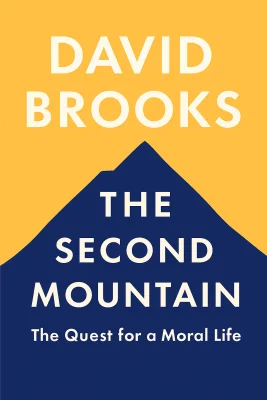
The Second Mountain
Categories
Nonfiction, Self Help, Psychology, Philosophy, Religion, Spirituality, Audiobook, Sociology, Personal Development, Faith
Content Type
Book
Binding
Hardcover
Year
2019
Publisher
Random House
Language
English
ASIN
0812993268
ISBN
0812993268
ISBN13
9780812993264
File Download
PDF | EPUB
The Second Mountain Plot Summary
Introduction
# The Second Mountain: Stories of Purpose Beyond Personal Success There was a moment when Sarah Adkins thought her world had ended forever. Returning home from a weekend trip, she found her husband had taken the lives of their two young sons before ending his own. Standing in that basement, touching her cold child's forehead, she experienced what she describes as a vision of gold, like sunshine, and knew somehow that her boy was with God. In the months that followed, thousands of people surrounded her with love, bringing meals, offering comfort, creating a cocoon of care that would sustain her through the unthinkable. What happened next reveals something profound about human nature and the journey we all must take. Rather than retreating into bitterness, Sarah chose to transform her devastating loss into a force for healing others. She started a foundation to help families who couldn't afford funerals after violence struck their homes, teaching at universities, working at free healthcare clinics. Her story illustrates the central truth this exploration reveals: that our greatest fulfillment comes not from climbing the mountain of personal success, but from descending into service, from moving beyond the narrow confines of self-interest toward something larger and more meaningful. This is the journey from the first mountain of achievement to the second mountain of commitment, where joy is found not in what we accomplish for ourselves, but in what we give away to others.
Chapter 1: When Success Feels Empty: Valley Moments of Crisis
Michael had spent fifteen years building his consulting empire, working eighteen-hour days and missing countless family dinners. His marriage was solid, his children were thriving, and his bank account was robust. Then came the phone call that shattered his carefully constructed world. His teenage daughter had been arrested for drug possession. As he sat in the police station at two in the morning, watching his daughter's tear-stained face, he realized that while he had been conquering the business world, he had become a stranger in his own home. The success he had chased so relentlessly suddenly felt hollow and meaningless. The crisis forced Michael into what many experience as the valley, that painful space between the life we thought we wanted and the life we're meant to live. For months, he questioned everything: his priorities, his values, his very identity. The achievements that once filled him with pride now seemed like elaborate distractions from what truly mattered. In this dark period, stripped of his usual confidence and certainty, Michael began to hear a different voice within himself, one that had been drowned out by the noise of ambition. This valley experience, though agonizing, often serves as the birthplace of authentic transformation. When our first mountain crumbles beneath us, whether through personal crisis, professional failure, or simply the gradual recognition that success hasn't delivered the satisfaction it promised, we're forced to confront fundamental questions about meaning and purpose. The valley teaches us that the ego's desires for status, recognition, and control can never fully satisfy the deeper longings of the human heart. Some people shrivel in the face of this suffering, becoming smaller and more resentful. But others discover that this season of pain becomes the making of them. They realize that their protective shells must sometimes crack open before they can become whole. The valley strips away illusions and reveals what really matters, preparing us for the more generous and satisfying phase of life that awaits on the second mountain, where we learn that what we truly want is not independence but interdependence, not individual freedom but intimacy and commitment.
Chapter 2: Called to Serve: Finding Vocation Through Commitment
When E. O. Wilson was seven years old, his parents sent him away during their divorce to stay with strangers at Paradise Beach in northern Florida. Every day, he would wander alone along the water, discovering creatures that cast a spell on him: crabs, needlefish, jellyfish, and one day, a gigantic ray that glided silently beneath his dangling feet. "I was thunderstruck," he would write decades later, "and immediately seized with a need to see this behemoth again." That summer, a naturalist was born, though Wilson wouldn't fully understand the significance until much later in life. George Orwell knew from an early age that he wanted to be a writer, but like many of us, he drifted away from his calling. After school, he worked as a policeman in India, then came home and "lay about." But throughout this period of wandering, he lived "with the consciousness that I was outraging my true nature and that sooner or later I should have to settle down and write books." At twenty-five, he finally surrendered to his destiny, making three crucial decisions that would define his vocation: he would live among the poor to understand their reality, he would invent a new way of writing that turned nonfiction into literature, and he would be ruthlessly honest even about people on his own side. These stories illustrate what happens when we encounter our annunciation moments, those sparks of interest that somehow prefigure much of what comes after in a life. They reveal something crucial about human nature: we are not primarily thinking beings, as our culture often suggests, but desiring beings. Our emotions and passions, not our analytical minds, are what truly guide us toward our deepest purposes. The difference between having a career and finding a vocation is profound. A career is about strategic thinking: identifying your talents, surveying the job market, following incentives toward success. But a vocation calls to you from the deepest level of your nature, demanding an active response to something that matters more than personal advancement. Finding your vocation requires staying awake to your desires, surrounding yourself with activities that engage your heart and soul, and paying attention to your moments of obligation when you feel called to address some injustice or need. The goal is not to find the biggest problem in the world, but to discover the place where your deep gladness meets the world's deep hunger.
Chapter 3: Love as Practice: Deep Relationships and Transformation
When Jack Gilbert's wife Michiko died of cancer at thirty-six, he wrote a poem about crawling around their apartment, searching for her hair in the drain, the vacuum cleaner, under the refrigerator. A year later, while repotting her avocado plant, he found "a long black hair tangled in the dirt." This image captures something essential about marriage: it's felt most powerfully not in its dramatic moments, but in the small, constant, particular acts of love that define daily life together. Marriage is knowing she likes to get to the airport early, taking time to make the bed even though you know she'd probably do it, the endless small gestures of tact and consideration. Emma had always prided herself on her independence. At twenty-eight, she had a successful marketing career, a beautiful apartment, and a wide circle of acquaintances. She dated regularly but kept relationships casual, believing that commitment would only limit her freedom and potential. Then she met James at a conference, and something unexpected happened. Their conversation flowed effortlessly, moving from professional topics to childhood memories to dreams for the future. For the first time in years, Emma found herself wanting to know everything about another person and wanting to be truly known in return. The relationship that developed challenged every assumption Emma had held about love and commitment. She discovered that true intimacy required a kind of vulnerability she had spent years avoiding. It meant sharing not just her successes and strengths, but her fears, insecurities, and past mistakes. As their relationship deepened, Emma realized that the independence she had treasured was actually a form of isolation. The walls she had built to protect herself had also prevented her from experiencing the profound joy of genuine connection. Marriage works best when it's maximal, demanding nearly everything and giving nearly everything in return. It throws two people together in amicable collisions that chip away at their selfishness day after day. The person you thought was wonderful reveals their imperfections, just as you reveal yours to them. The couples who make it to the other shore, who become like a single divided being after decades together, have learned that marriage is not about finding happiness but about creating something larger than either person could achieve alone. They've discovered that the deepest joy comes not from being understood, but from the daily practice of understanding and serving another human soul.
Chapter 4: Beyond the Self: Spiritual Awakening and Intellectual Humility
Professor Williams had spent thirty years in academia, building his reputation as a brilliant scholar of medieval literature. His life was ordered, rational, and intellectually satisfying. He had little patience for what he considered the superstitions of religion, viewing faith as the enemy of clear thinking. Then, during a sabbatical in France, he found himself drawn repeatedly to Chartres Cathedral. Initially, he visited as a scholar, studying the architectural details and historical significance. But something about the soaring gothic arches and filtered light began to work on him in ways he couldn't explain or dismiss. Standing in that sacred space day after day, Williams felt something shifting in his carefully constructed worldview. The rational framework that had served him so well in his academic work suddenly seemed inadequate to explain the profound sense of presence he experienced in the cathedral. He began to recognize that his intellectual pride had blinded him to dimensions of reality that couldn't be measured or analyzed. The very certainty he had prized as a scholar became an obstacle to the kind of openness required for spiritual awakening. In 1943, a young Dutch woman named Etty Hillesum volunteered to work at Westerbork, a transit camp where Dutch Jews waited before being shipped to Auschwitz. She could have gone into hiding like thousands of others, but she felt called to stay with her people. In her letters home, she described caring for the sick, helping families send telegrams, walking from bed to bed in the hospital barracks. Other inmates described her as radiant and full of warmth. Despite the horror surrounding her, she wrote to a friend: "There are many miracles in a human life. My own is one long sequence of inner miracles." These transformations reveal that our deepest desires have an unquenchable quality that eventually demands attention. Like bamboo shoots pushing through concrete, our yearning for something greater than ourselves can never be permanently suppressed. The heart yearns for fusion with others, for the kind of love that makes us willing to lose ourselves in something greater. The soul yearns for righteousness, for alignment with what is good and meaningful. When we touch these deeper sources, we discover that our truest riches lie not in what we can accumulate for ourselves, but in our capacity to love and serve others.
Chapter 5: Weaving Connection: Building Community in Fractured Times
Kathy Fletcher and David Simpson started with one simple act: their son Santi invited a hungry friend named James to sleep over. James had a friend, and that friend had a friend, and now if you visit their house on any Thursday night, you'll find about twenty-six kids around the dinner table. There are usually four or five living with Kathy and David or nearby families. Every summer they take forty kids from the city on vacation to Cape Cod. Simply by responding to the needs in front of them, they've become the center of a sprawling extended family. The Thursday dinners follow a sacred rhythm. They eat the same meal every week: spicy chicken and black rice. Cellphones are banned. About a third of the way through, everyone shares something they're grateful for or something nobody knows about them. There are celebrations for small victories and support for big challenges. After dinner, they gather around the piano to sing. The dining table becomes the key technology of social intimacy, the stage where people turn toward each other for love like flowers seeking the sun. Most of the young people around this table have experienced the normal traumas of poverty in America: homelessness, foster care, absent or abusive fathers. But they've found something here that transforms everything: the experience of being truly seen and valued. As one young woman told Kathy, "Thank you for seeing the light in me." The adults, coming from the emotionally avoidant world of professional Washington, get to shed their armor. The kids call Kathy and David "Mom" and "Dad," their chosen parents. This community illustrates what happens when people quietly build healthy communities and heal lives. These weavers share certain characteristics. They've often experienced their own valleys of suffering, which opened their hearts to others' pain. They assume responsibility naturally, seeing persons and their needs rather than just passing forms. They use phrases like "radical hospitality" and "the whole person," believing that everyone deserves welcome and that human beings can't be divided into slices. Their work isn't heroic or cinematic; it's the patient practice of abiding with others, creating stability through the simple act of showing up, year after year, with love.
Chapter 6: From Individual to Relational: Choosing Interdependence Over Independence
Fred Swaniker grew up across four African countries, watching his mother build a school from five students while his father died young. After winning scholarships to American universities and landing prestigious jobs, he was haunted by a question: Why had he received these opportunities while hundreds of millions of young Africans just like him never would? This haunting led him to what he calls his "moment of obligation," the realization that Africa's biggest impediment to progress was the lack of a well-trained leadership class. Swaniker's response illustrates the three questions he believes we should ask when we feel called to address some injustice: Is it big enough? Am I uniquely positioned to make this happen? Am I truly passionate about it? His life experiences had prepared him perfectly for this mission. He'd lived across the continent, been raised by an educator, and seen his own life transformed by educational opportunity. The problem was audaciously large: creating an African Leadership Academy to train six thousand leaders over fifty years, then building a network of twenty-five universities across the continent. David had achieved everything he thought he wanted: a prestigious job as a columnist, recognition as a public intellectual, and the respect of his peers. Yet at fifty, he found himself profoundly lonely, going through the motions of a successful life while feeling increasingly disconnected from any deeper purpose. His marriage had ended, his children were grown and distant, and his work, while accomplished, felt like performance rather than genuine contribution. The individualistic culture that had rewarded his achievements had also isolated him from the very relationships that might have given his success meaning. This kind of commitment requires what we might call falling in love and then building a structure of behavior around it for those moments when love falters. A commitment is different from a contract because it changes who you are, embedding your identity into something larger. When you make a maximal commitment, you're not just agreeing to perform certain actions; you're surrendering part of yourself to create a higher entity that transcends your individual needs and desires. The committed life offers profound rewards that can't be achieved through individual striving alone, connecting us to the fundamental truth that we cannot give ourselves what we most deeply need: the experience of being needed by others, of mattering in ways that extend far beyond our own happiness and success.
Summary
The stories woven throughout this exploration reveal a profound truth about human flourishing: our deepest satisfaction comes not from climbing higher mountains of personal achievement, but from descending into service, from moving beyond the narrow prison of self-interest toward the expansive joy of commitment to others. Whether it's Sarah Adkins transforming devastating loss into healing for other families, Etty Hillesum radiating peace in a concentration camp, or Kathy and David creating a chosen family around their dinner table, these lives demonstrate that moral joy emerges when we align our daily actions with our ultimate commitments to something larger than ourselves. The path from the first mountain to the second requires courage to let parts of our old self die, wisdom to recognize that our ego's desires are actually quite small compared to the heart's yearning for connection and the soul's hunger for righteousness, and faith to make the leap from self-protection to radical vulnerability. This journey teaches us that we become lovely not by loving ourselves, but by loving others; that we find ourselves not through endless self-exploration, but by losing ourselves in service; and that the deepest freedom comes not from keeping our options open, but from making the kind of commitments that transform us into people capable of sustaining love across decades. The second mountain awaits all of us, offering not the temporary highs of personal victory, but the steady, unshakeable joy of a life given away in love.
Best Quote
“Joy tends to involve some transcendence of self. It’s when the skin barrier between you and some other person or entity fades away and you feel fused together. Joy is present when mother and baby are gazing adoringly into each other’s eyes, when a hiker is overwhelmed by beauty in the woods and feels at one with nature, when a gaggle of friends are dancing deliriously in unison. Joy often involves self-forgetting.” ― David Brooks, The Second Mountain: The Quest for a Moral Life
Review Summary
Strengths: The book is praised for being wise, humble, and thoughtful, with clear and accessible writing. It offers profound insights into living a life of joy through the concept of the "second mountain," focusing on four commitments: vocation, marriage, philosophy, and community. Some readers found it deeply resonant and impactful, with memorable quotes and a personal touch. Weaknesses: Criticisms include the book being preachy, stereotypical, and overly verbose. Some readers found it vague, directionless, and lacking in focus, making it difficult to draw conclusions or retain interest. The abundance of anecdotes and generalizations was seen as overwhelming. Overall: The book elicits mixed reactions, with some readers finding it deeply insightful and others feeling it lacks clarity and focus. It is recommended for those interested in personal growth and philosophical exploration, though it may not appeal to everyone.
About Author

David Brooks
Brooks navigates the intricate tapestry of social commentary and personal introspection, inviting readers to explore themes of moral philosophy and character development. His books, including "The Road to Character" and "The Second Mountain: The Quest for a Moral Life," delve into the pursuit of virtue and the quest for a meaningful existence, while "The Social Animal: The Hidden Sources of Love, Character, and Achievement" uncovers the psychological roots of human behavior. Brooks’s approach combines intellectual rigor with accessible prose, offering a nuanced examination of societal values and personal growth.\n\nThrough his multifaceted roles as a New York Times columnist, a PBS NewsHour commentator, and a member of the American Academy of Arts & Sciences, Brooks has established himself as a leading voice in American journalism. His work consistently balances cultural observations with moderate conservative principles, thereby appealing to a broad audience. Readers benefit from Brooks's insights as they reflect on their own life journeys, gaining a deeper understanding of the complexities of modern life and the enduring quest for personal fulfillment.\n\nBrooks’s literary contributions are characterized by narrative storytelling and philosophical inquiry, resonating with readers who seek to understand the dynamics of human connection and societal norms. His impactful works have not only achieved bestseller status but also fostered a wider discourse on character and ethics. This bio illustrates how Brooks's influential career and thought-provoking themes continue to shape contemporary discussions on identity and morality.
Read moreDownload PDF & EPUB
To save this Black List summary for later, download the free PDF and EPUB. You can print it out, or read offline at your convenience.
The Second Mountain
by David Brooks
