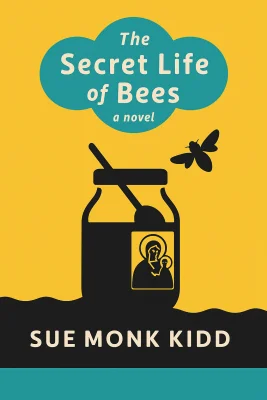
The Secret Life of Bees
Categories
Fiction, Classics, Historical Fiction, Young Adult, Adult, Book Club, Historical, Contemporary, Coming Of Age, Adult Fiction
Content Type
Book
Binding
Paperback
Year
2003
Publisher
Penguin Books
Language
English
ASIN
0142001740
ISBN
0142001740
ISBN13
9780142001745
File Download
PDF | EPUB
The Secret Life of Bees Plot Summary
Introduction
The bees came to Lily Owens in the summer of 1964, streaming through the cracks of her bedroom walls in the suffocating heat of a South Carolina peach farm. At fourteen, she lived with only fragments of memory and an aching void where her mother should have been. The day Deborah Owens died, Lily was four years old, and the gun that killed her mother had been in Lily's own small hands. Now, a decade later, those memories clawed at her like thorns. Her father T. Ray ruled their world with fists and fury, while Rosaleen, their black housekeeper, stood as the only barrier between Lily and complete despair. When T. Ray finally spoke the words that shattered what little hope remained—that her mother had abandoned them both—Lily's world cracked open like an eggshell. The truth she discovered would lead her on a desperate flight toward answers, carrying nothing but her mother's few belongings and a mysterious picture of a black Madonna marked "Tiburon, S.C." What awaited her in that distant town would transform everything she thought she knew about love, loss, and the fierce power of women who refuse to be broken.
Chapter 1: The Weight of Memory: Lily's Haunted Childhood
The gun felt impossibly heavy in four-year-old hands. Lily could still hear the explosion that tore through their house ten years ago, still see her mother's suitcase packed and waiting by the window. The memories came in fragments—her parents fighting, her mother reaching for something in the closet, the metallic weight of the weapon she'd picked up from the floor. T. Ray Owens had built his world from cruelty and peach orchards, ruling both with equal harshness. When Lily dared to ask about her mother, he'd force her to kneel on grits until her knees bled, the tiny kernels digging into her skin like broken glass. The only tenderness in her life came from Rosaleen, the black woman who'd raised her since that terrible day, whose fierce love wrapped around Lily like armor against T. Ray's rage. At night, bees poured through the cracks in Lily's bedroom walls, their wings catching moonlight like fragments of dreams. She'd watch them dance in the darkness, feeling something stir in her chest—a longing for flight, for escape, for answers to questions she didn't dare ask aloud. Hidden in the attic, she'd discovered her mother's few remaining possessions: a photograph of a beautiful woman leaning against a car, white cotton gloves yellowed with age, and most mysteriously, a small wooden picture of a black Virgin Mary with "Tiburon, S.C." written on the back. These treasures lived buried in a tin box beneath the peach trees, where Lily would steal away to hold them, pressing her mother's gloves to her face and breathing in the faintest ghost of perfume. The heat of that July pressed down like a coffin lid, and the bees grew restless. Lily captured them in mason jars, desperate to prove their existence to T. Ray, but they always vanished when he came looking. Everything in her world seemed to disappear when she needed it most.
Chapter 2: Breaking Chains: Escape from Sylvan and the Journey to Tiburon
The Civil Rights Act had just passed when Rosaleen decided to register to vote. Lily watched her practice writing her name in careful cursive, each letter a small act of defiance against a world that wanted her voiceless. They walked to town together on the Fourth of July, Lily's birthday forgotten in the heat and tension crackling through Sylvan's streets. At the Esso station, three white men waited like predators sensing wounded prey. Their taunts turned vicious when they saw Rosaleen's determination, their words cutting through the summer air like razors. When one called her nigger, Rosaleen lifted her snuff jug and poured the black juice across their shoes in slow, deliberate loops—writing her dignity in spit and defiance. The beating came swift and brutal. Lily watched helplessly as fists found their mark, splitting Rosaleen's forehead open, leaving her crumpled on the hot asphalt. The jail cell that followed stank of fear and old violence, but it was T. Ray's words that delivered the killing blow. Standing in their kitchen after posting Lily's bail, he spoke with casual cruelty about her mother: "She left you. The day she died, she'd come back for her things, that's all." The words hit harder than any physical blow. Every story Lily had built about maternal love crumbled to dust in an instant. That night, with Rosaleen still trapped in jail and threatened with worse violence, Lily made her choice. She crept to the hospital, slipped past the guard, and freed the only person who'd ever truly loved her. They fled under cover of darkness, two fugitives with nothing but hope and that mysterious picture of the black Madonna. A cantaloupe farmer took pity on them, his truck heavy with fruit and the sweet promise of escape. Miles fell away beneath singing tires, carrying them toward Tiburon and whatever answers waited in that unknown town.
Chapter 3: The Pink House: Finding Sanctuary Among the Bees and Sisters
The house stood like a fever dream against the South Carolina landscape, painted the most outrageous shade of pink imaginable. August Boatwright emerged from her beehives dressed in white, veils floating around her shoulders like she was some kind of benevolent spirit. Tall and graceful with skin the color of caramel, she moved with the quiet authority of someone who'd spent a lifetime commanding respect without demanding it. Her sisters completed the unlikely trinity: June, sharp-tongued and suspicious, whose cello sang lamentations for the dying; and May, sweet and simple-minded, whose heart broke so easily that every sorrow in the world seemed to flow through her like water through a broken dam. They called themselves the calendar sisters, each named for the month that held their birthday, living in their pink sanctuary surrounded by hives and honey. Lily's lies came easier than breathing. Dead father, orphaned state, an aunt in Virginia who might or might not exist—anything to buy time in this house that felt more like home than anywhere she'd ever lived. August's knowing eyes suggested she saw through every fabrication, but her hands were gentle when she showed Lily to the honey house, the converted garage where workers slept during harvest season. The statue in their parlor took Lily's breath away. Our Lady of Chains stood nearly three feet tall, carved from ship's wood and weathered by time into something both beautiful and terrible. Her black skin gleamed with age, her raised fist spoke of defiance, and the red heart painted on her chest seemed to pulse with its own fierce rhythm. This was no pale, passive Madonna from church windows—this Mary had survived storms and battles, had broken chains and lifted up the downtrodden. Each night they knelt before her, saying prayers that felt like incantations, their voices weaving together in languages older than the cotton that grew in nearby fields. Lily felt something stirring in her chest, some recognition she couldn't yet name.
Chapter 4: The Black Madonna's Daughters: Learning Love in Many Forms
The Daughters of Mary arrived like a carnival of faith and finery, their hats magnificent monuments to creativity and devotion. Queenie, Violet, Lunelle, Mabelee, and Cressie swept into the pink house bearing casseroles and stories, their love as abundant as their feathered headpieces. Sugar-Girl brought her husband Otis, the only son among all these daughters, and together they formed a congregation that worshipped at the altar of community. August told the story of Our Lady of Chains with the rhythmic power of ancient griots, her voice carrying across generations of pain and triumph. The statue had washed up on Charleston's shores during slavery times, found by a man named Obadiah who recognized divine intervention when he saw it. The slaves had touched her heart for strength, and she'd given them courage to flee north or endure with dignity. Even when their master chained her in the carriage house, she'd broken free fifty times, returning always to her people. Lily found purpose in the honey house, learning the ancient dance of beekeeping from August and Zach, the teenage boy whose smile could light up the darkest corners of despair. His dreams stretched beyond the confines of rural South Carolina—he wanted to be a lawyer, to fight injustice with words instead of fists. Working beside him in the golden haze of the honey house, Lily felt something dangerous blooming in her chest. Rosaleen flourished in May's gentle presence, the two of them bonding over cooking and laughter, over the simple pleasure of being valued for who they were. May taught her the honey song and the secret of leading roaches to freedom with trails of graham crackers and marshmallows. Even June began to soften, though her sharp edges remained, armor against old wounds that hadn't yet healed. In this house of women, Lily discovered forms of love she'd never imagined possible. Maternal without suffocation, passionate without possession, fierce without cruelty. These women loved like they breathed—naturally, necessarily, without conditions or demands for gratitude.
Chapter 5: Rivers of Sorrow: Confronting Death and Uncomfortable Truths
May's heart was too wide for the world's pain. She carried every injustice, every cruelty, every small tragedy as if it were her own cross to bear. When news came that Zach had been arrested—swept up in racial violence downtown when someone threw a bottle at a white man and all the black boys present were hauled to jail—May's fragile equilibrium shattered completely. The phone call from Zach's mother delivered the news like a death sentence. May stood in the den, staring at nothing, her eyes gone glassy and distant. She slid down the wall without making a sound, retreating into some unreachable place deep inside herself. When she finally spoke, her voice was flat and mechanical, her usual emotional storms replaced by an eerie calm that frightened everyone more than her tears ever had. She walked to her wailing wall as darkness fell, carrying her flashlight and the weight of a world that seemed determined to crush every beautiful thing. The wall stretched along the edge of the woods, built from stones she'd gathered from the river, its crevices stuffed with scraps of paper bearing the names of the hurt and lost. Birmingham, Sept 15, four little angels dead. Every tragedy had found its way into those rocks, absorbed by stone that asked nothing in return. August, June, Lily, and Rosaleen searched through the night, their voices hoarse from calling May's name. They found her in the river, weighted down with a massive stone pressed against her chest, her eyes wide open to the stars. The water had received her gently, carrying her pain away on currents that flowed toward the sea. The sight of May's hands floating just above the surface would haunt them all—those gentle hands that had kneaded bread and arranged flowers, now still as the moon's reflection on the dark water. She had chosen her own crossing, carrying her twin sister April's long-ago suicide to its final conclusion.
Chapter 6: Mothers Lost and Found: Uncovering Deborah's Story
May's death cracked open secrets that had been buried for years. As Lily helped prepare the honey cakes for Mary Day, performing ancient rituals of preservation and remembrance, she noticed May's technique for ridding the house of roaches—the same method T. Ray had once described her mother using. The connection hit like lightning, and when she asked May directly, the truth spilled out simple as rainwater. "Oh yes, Deborah Fontanel. She stayed out there in the honey house. She was the sweetest thing." August had known all along. She'd recognized Lily the moment she walked into the pink house, had seen Deborah's face shining through her daughter's features like sun through clouds. For ten years she'd carried the weight of not knowing what happened to the girl she'd helped raise, the child who'd called her on the phone crying that she didn't have anybody left in the world. The full story unfolded like a flower blooming in reverse, each petal a fresh wound. August had been Deborah's caretaker in Virginia, watching her grow from a four-year-old with an imaginary friend named Tica Tee into a young woman hungry for love and adventure. When Deborah's mother died, she'd fled south to Sylvan, drawn by August's steady presence and the promise of a fresh start. T. Ray had been different then—a war hero decorated for bravery, someone who treated Deborah like the princess she'd always dreamed of being. But fairy tales have a way of curdling in the heat of real life. By the time Deborah realized her mistake, she was pregnant and trapped on a peach farm with a man whose love was already turning to possession. The breakdown came years later, depression settling over her like a heavy blanket she couldn't shake. She'd left Lily with Mrs. Watson and fled to Tiburon, arriving at August's door thin as paper and shattered as glass. For three months, the calendar sisters had nursed her back to something resembling health, watching her slowly remember who she'd been before fear and loneliness had hollowed her out.
Chapter 7: The Final Reckoning: T. Ray's Return and Lily's Choice
T. Ray arrived at the pink house like a storm front, his presence darkening the air with old violence and fresh rage. The phone bill had betrayed Lily's location—that collect call to Clayton Forrest's office providing the thread he needed to pull her back into his web. He sat in the parlor rocking chair carving chunks from the wood with his knife, that familiar grin spreading across his face like poison. But when his eyes fell on the whale pin decorating Lily's shirt—the birthday gift he'd given Deborah years ago—something cracked inside him. The truth of where his wife had fled, the knowledge that she'd been so close to home while he searched everywhere else, hit him like a physical blow. His anger transformed into something rawer and more dangerous, a grief so long suppressed it had fermented into madness. He called Lily by her mother's name, his mind snapping back to that day ten years ago when Deborah had tried to pack her things and take her daughter away. The knife waved in front of Lily's face, his fist tangled in her hair, his voice breaking with the weight of abandonment he'd carried like a stone in his chest. "Daddy," Lily screamed, the word cutting through his delusion like a blade through silk. The fight went out of him all at once, leaving behind only the hollow shell of a man who'd loved someone beyond his capacity to understand or hold. When Lily asked him directly about that day—whether she'd really been the one to pull the trigger—he gave her the truth at last, clean and brutal as winter wind. August and the Daughters stood like guardian angels in their polka-dot dresses and fierce expressions, their love forming a wall no amount of masculine rage could breach. When T. Ray finally admitted defeat and drove away, Lily stood in the driveway watching his taillights disappear, feeling the weight of the past finally lifting from her shoulders. The bees hummed their ancient songs in the gathering dusk, and Lily turned toward the pink house where all those mothers waited, their arms open and their hearts ready to receive whatever broken thing she brought them.
Summary
In the honey-colored light of late summer, Lily Owens learned that love comes in forms too numerous to count, each one fierce and necessary as breath itself. The black Madonna stood in the parlor with her chained arms raised in defiance, reminding all who looked upon her that some bonds can never be broken while others must be shattered completely. Lily had fled from one kind of captivity only to discover the freedom that comes from choosing your own family, from recognizing the mother that lives not in blood or memory but in every woman who refuses to let a child face the world alone. The pink house became a sanctuary where damaged hearts could heal, where stories could be told without shame, and where the ancient art of beekeeping served as metaphor for the patient work of tending souls. August's wisdom flowed like honey from broken combs, sweet despite the cracks that let it pour. May's sacrifice became a prayer written in river stones, her pain absorbed by the earth so others might walk lighter. June's sharp edges softened into music that could carry the dying home. Even T. Ray's cruelty, viewed from the far shore of understanding, revealed itself as love corrupted by loss, twisted into shapes no heart should have to bear. The bees continued their eternal work, turning nectar into gold, their humming a reminder that some things endure beyond the reach of human failing, ancient and patient as the turning of seasons.
Best Quote
“Someone who thinks death is the scariest thing doesn't know a thing about life.” ― Sue Monk Kidd, The Secret Life of Bees
Review Summary
Strengths: The book is engaging and memorable, with a fresh take on a familiar genre. It successfully keeps readers interested, making it a suitable choice for light reading, such as a beach book. Weaknesses: The narrative relies on a clichéd formula where a white protagonist finds healing through minority cultures, which can be problematic. The portrayal of black women as nurturing figures for a young white girl is seen as a recurring and potentially limiting trope. The book does not significantly enrich the reader's thinking or offer profound insights. Overall: The reviewer finds the book enjoyable and engaging despite its reliance on familiar tropes. It is recommended for casual reading, though it may not offer deep intellectual or cultural insights.
About Author

Sue Monk Kidd
Kidd investigates the intersection of spirituality, feminism, and Southern identity through her work, crafting narratives that are both deeply personal and universally resonant. Her early works, such as "When the Heart Waits," delve into contemplative spirituality, serving as guideposts for those on a quest for spiritual direction. Meanwhile, "The Dance of the Dissident Daughter" marks a pivotal shift toward feminist theology, reflecting Kidd's journey from traditional Christian teachings to a more inclusive understanding of faith. This thematic evolution highlights her commitment to exploring complex issues surrounding identity and belief.\n\nIn her fiction, Kidd's novels are known for their rich exploration of the human condition, often set against the backdrop of the American South. "The Secret Life of Bees," a standout book in her oeuvre, intricately weaves themes of race, family, and self-discovery, earning a spot on the New York Times bestseller list for over two and a half years. Similarly, "The Mermaid Chair" and "The Invention of Wings" extend these thematic explorations, with strong female protagonists navigating personal and societal challenges. Her writing style, characterized by lyrical prose and a deep sense of place, invites readers to engage with complex narratives that resonate on multiple levels.\n\nReaders are drawn to Kidd's work for its ability to bridge personal reflection with broader social commentary, offering insights into the intersections of race, gender, and spirituality. Her books are widely taught in educational settings, reflecting their significant cultural impact. With numerous accolades, including her induction into the South Carolina Academy of Authors and the Georgia Writers Hall of Fame, Kidd's contributions to contemporary literature are both recognized and celebrated, ensuring her place as a vital voice in American fiction and spirituality.
Read moreDownload PDF & EPUB
To save this Black List summary for later, download the free PDF and EPUB. You can print it out, or read offline at your convenience.
The Secret Life of Bees
by Sue Monk Kidd
