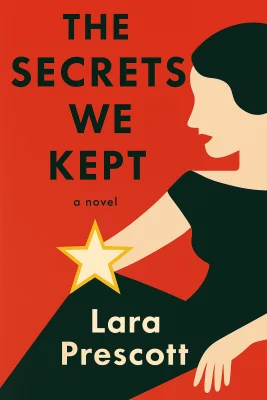
The Secrets We Kept
Categories
Fiction, Audiobook, Mystery, Historical Fiction, Thriller, Adult, Book Club, Historical, Russia, Books About Books
Content Type
Book
Binding
Kindle Edition
Year
2019
Publisher
Knopf
Language
English
ASIN
B07MD3B4F1
ISBN
0525656162
ISBN13
9780525656166
File Download
PDF | EPUB
The Secrets We Kept Plot Summary
Introduction
# Between Pages and Borders: A Cold War Literary Conspiracy The typewriter keys clattered like machine gun fire in the basement of CIA headquarters, each strike echoing through corridors where secrets flowed like blood through arteries. It was 1956, and America had just watched Sputnik streak across their skies—a metallic reminder that the Cold War was being fought not just with missiles, but with minds. In the gray offices of Langley, a different kind of weapon was being forged, one made of paper and ink, passion and betrayal. Across the world in Moscow, Boris Pasternak sat in his study, fingers trembling as he signed away his life's work to an Italian stranger. Doctor Zhivago, his masterpiece about love and revolution, would never see print in his homeland. But the CIA saw opportunity in this literary exile. They would smuggle the forbidden novel back behind the Iron Curtain, transforming Pasternak's words into bullets aimed at the heart of Soviet ideology. What began as one man's desperate attempt to share his truth with the world would become the most audacious propaganda operation of the Cold War, where love letters became state secrets, and literature became a weapon of mass destruction.
Chapter 1: The Agency's Hidden Arsenal: Women Behind the Typewriters
The typing pool hummed with the rhythm of a dozen Royal Quiet Deluxe machines, their mint-green shells gleaming under fluorescent lights. Behind each typewriter sat a woman who could type a hundred words per minute without missing a syllable, their fingers flying across keys while their minds absorbed secrets they were trained to forget. Irina Drozdova arrived on a humid September morning, her wool skirt clinging uncomfortably as she navigated the maze of identical desks. The daughter of Russian immigrants, she carried the weight of her father's death in a Soviet labor camp like a stone in her chest. The other women—Betty, Virginia, Norma—watched her with the careful assessment of a pack evaluating a newcomer. They had come from Radcliffe and Smith, armed with degrees that qualified them for so much more than taking dictation from men who called them "Blondie" depending on their mood. But these women were more than secretaries. Betty had run black ops during World War II, planting propaganda and blowing up bridges in Burma. Virginia had been called one of the most dangerous Allied spies by the Gestapo, her wooden leg nicknamed Cuthbert becoming legend among the resistance fighters she led to safety. Now they sat at desks, their war stories relegated to whispered conversations in the ladies' room, their expertise channeled into the endless task of transforming spoken words into classified documents. When Sputnik streaked across the October sky, the typing pool gathered around Anderson's radio, watching their male colleagues disappear into emergency meetings while they remained at their desks. The men would arrive around ten, pulling the women into their offices like props in their daily theater of importance. They would pace behind mahogany desks, speaking to the ceiling while the women recorded their memos, their lunch orders, their casual revelations about who was sleeping with whom and who was plotting against whom. But they knew something the panicking men didn't—that in the war of ideas, books could be more powerful than satellites. And soon, they would be called upon to help launch the most dangerous book of all.
Chapter 2: A Dangerous Manuscript: Pasternak's Fatal Gift to the West
Boris Pasternak stood in his garden at Peredelkino, silver hair catching the morning light as he worked the soil with hands more accustomed to holding a pen. At fifty-six, Russia's most famous living poet carried himself with the grace of a man who had survived Stalin's purges through a combination of genius and luck. The dictator had once called him untouchable, a "cloud dweller" too ethereal to pose a real threat. The manuscript of Doctor Zhivago lay in a wicker basket beneath his desk, pages filled with the story of Yuri Zhivago and Lara Antipova, their doomed love set against the backdrop of revolution and war. For ten years, Pasternak had poured his soul into this work, creating characters who lived and loved by their hearts' intent, independent of the State's crushing ideology. It was everything Soviet literature was not supposed to be—personal, spiritual, and quietly subversive in its refusal to celebrate the revolution that had torn Russia apart. His muse and lover, Olga Ivinskaya, had returned from three years in the Gulag, her beauty weathered but her devotion intact. She had been arrested because of their affair, because of the novel, because the State needed to punish Pasternak through the woman he loved. Now she lived in a small house near his dacha, close enough for secret meetings in the cemetery where they planned their future and his literary legacy. When the Italian agent Sergio D'Angelo appeared at his garden gate with promises of international publication, Pasternak felt the weight of destiny. The young man spoke of bringing Russian literature to the world, of a publisher named Feltrinelli who believed great art could only flourish in freedom. Against Olga's desperate pleas, against his wife's warnings, against every instinct for self-preservation, Pasternak handed over his life's work. "You are hereby invited to my execution," he called after the departing strangers, his words carrying on the spring wind like a prophecy. The die was cast. Doctor Zhivago would make its way to the West, where it would be transformed from a love story into a weapon, and its author from a protected poet into the most wanted man in the Soviet Union.
Chapter 3: Recruitment and Romance: The Making of Literary Spies
Walter Anderson studied Irina Drozdova across his coffee-stained desk, her personnel file thick with the kind of details that made the Agency's recruiters salivate. Her father, Mikhail Drozdov, had died during interrogation in Moscow after being caught trying to flee to America with his pregnant wife. The daughter carried that trauma like a loaded gun, her anger at the Soviet system burning just beneath her carefully composed surface. "Tell me about your father," Anderson began, watching her face carefully as he spoke the name she hadn't heard aloud in years. The color drained from her cheeks, but she held his gaze with the stubborn determination that had caught their attention. When he revealed the truth about her father's death—not a heart attack in the labor camps as she'd been told, but torture in a Moscow basement—her composure cracked just enough to reveal the fury beneath. That fury was exactly what they needed. Within weeks, Irina found herself in the basement office of Teddy Helms, a Georgetown graduate whose fluent Russian and easy charm made him perfect for handling assets. He taught her the art of sleight of hand, how to slip envelopes under tables and packages into purses without detection, how to spot surveillance and lose a tail in the crowded streets of Washington. Their cover story developed naturally—a romance that provided the perfect explanation for their frequent meetings. Teddy was everything Irina should have wanted: handsome, intelligent, kind, and genuinely interested in her thoughts and dreams. But as they played their roles at Agency parties and Georgetown soirées, she found herself waiting for a spark that never came, a passion that remained frustratingly elusive. The real training began when Sally Forrester arrived. Red-haired and dangerous, Sally was a veteran of the OSS who had seduced secrets from powerful men across three continents. She took Irina to parks and cafés, teaching her to read people like books, to spot the tells that revealed character and weakness. Under Sally's tutelage, Irina learned that becoming someone else required more than changing clothes or adopting an accent. It meant inhabiting a new soul, thinking different thoughts, wanting different things. The transformation had to be complete, because in the world they were entering, a single false note could mean the difference between success and a shallow grave.
Chapter 4: Operation Zhivago: Smuggling Words Across the Iron Curtain
The first copy of Il Dottor Živago arrived at CIA headquarters in a diplomatic pouch, its glossy cover depicting a sleigh making its way through a snow-covered landscape. Frank Wisner held the book like a sacred relic, understanding that in his hands lay the most potent propaganda weapon since the printing press. This wasn't just literature—it was a guided missile aimed at the heart of Soviet ideology. Sally Forrester had retrieved the book from Feltrinelli's celebration in Milan, where the Italian publisher had toasted Pasternak's courage while his wife glared daggers at any woman who dared approach her husband. The party had been a declaration of war disguised as a literary soirée, and Sally had played her part perfectly, charming information from loose-lipped intellectuals while memorizing faces and connections that might prove useful later. Back in Washington, teams of translators worked around the clock to render Pasternak's Russian prose into English. What they found was even more dangerous than they had hoped. Zhivago wasn't a political tract or a revolutionary manifesto—it was something far more subversive. It was the story of individuals who dared to love and dream and hope despite the crushing weight of history, who found meaning in personal relationships rather than state ideology. The printing presses ran day and night in a nondescript warehouse outside Munich, their mechanical rhythm like a heartbeat pumping life into the most dangerous book in the world. Each copy was a small masterpiece of clandestine publishing. The paper was chosen to match Soviet standards, the typeface carefully selected to appear authentically Russian. Even the binding was designed to look like something that might have emerged from an official Moscow publishing house. The smuggling routes were as varied as they were ingenious. Diplomatic pouches carried books to American embassies across Europe, where CIA station chiefs would arrange for their distribution to Soviet tourists and trade delegations. Copies were sewn into the linings of coats worn by businessmen traveling to Moscow, hidden in false bottoms of suitcases, even concealed inside hollowed-out technical manuals. At the Brussels World's Fair, Agency operatives set up a seemingly innocent book display, offering free copies to any Soviet visitor who wanted one. The books disappeared as fast as they could be restocked, carried back across the Iron Curtain by citizens hungry for forbidden literature.
Chapter 5: Hearts and Handlers: Love in the Shadow of Espionage
Irina's relationship with Sally deepened like a secret she was keeping from herself. Their training sessions became afternoon adventures through Washington's hidden corners—secondhand bookshops in Dupont Circle, art galleries near the White House, quiet cafés where Sally would teach her to read the subtle language of human behavior. Sally moved through the world with a confidence Irina envied, her red hair catching light like a flame as she transformed every mundane encounter into a lesson in espionage. The Halloween party at Leonard's Victorian mansion opened Irina's eyes to a world she had only heard whispered about in disapproving tones. Men danced with men, women with women, and everyone seemed gloriously free from the suffocating expectations that governed normal society. Dressed as Soviet space dogs in matching metallic jumpsuits, she and Sally wandered through rooms lit by black candles, past guests who had shed their daytime personas along with their inhibitions. In the garden behind the house, fairy lights twinkling in the oak trees like earthbound stars, Sally asked about Teddy with the directness that always caught Irina off guard. The question hung in the air between them, loaded with implications neither was quite ready to acknowledge. Their hands touched as Sally straightened Irina's costume ears, and something electric passed between them. It was the spark Irina had been waiting for with Teddy, the lightning bolt that romance novels promised but rarely delivered. But this was 1957, and such feelings were more dangerous than any state secret they might be asked to steal. Sally pulled away first, her professional mask sliding back into place with practiced ease. She had learned long ago that survival meant keeping certain truths locked away, even from herself. The Agency might use women like them as weapons, but it would destroy them without hesitation if their personal lives became a liability. The pressure mounted when Teddy proposed marriage. The engagement ring felt like a shackle, a cover story that would protect her from suspicion but trap her in a life she couldn't bear. Meanwhile, Sally watched from the shadows, knowing that to claim what she wanted would destroy them both. Their final night together was both beginning and ending, crossing the line they had been dancing around for months. But morning brought reality crashing back, and Sally ended things brutally, her indifference a cruel mask for her breaking heart.
Chapter 6: The Nobel Prize Trap: Triumph Becomes Persecution
The reporters found Boris Pasternak in his garden, tending his winter vegetables in the rain. "You've won," the young journalist announced. "You've won the Nobel Prize." Pasternak tilted his face to the gray sky, letting the cold drops mix with what might have been tears. This was the moment he had dreamed of his entire life, yet all he felt was the approaching shadow of doom. The news spread like wildfire through Moscow and beyond. Doctor Zhivago had become an international sensation, published in dozens of languages, praised by critics worldwide. The Nobel Committee had recognized Pasternak's "important achievement both in contemporary lyrical poetry and in the field of the great Russian epic tradition." But in the Soviet Union, the Prize was seen as a Western provocation, a slap in the face to the socialist state. Olga Ivinskaya knew immediately what the Prize would cost them. She found Pasternak in the cemetery where they often met, pacing among the graves like a man already dead. The Soviet machinery of persecution ground into motion with terrifying efficiency. Writers who had once celebrated Pasternak now lined up to denounce him. Students were forced to march with signs calling him a Judas, a traitor who had sold his country for Western gold. The newspapers branded him a pig who had defiled his own nest. The attacks came from every direction—former friends, literary colleagues, even strangers on the street who recognized his face from the endless newspaper photographs. The man who had survived Stalin's purges through a combination of luck and literary genius now faced a different kind of execution—death by a thousand cuts of public humiliation and official persecution. Under enormous pressure, Pasternak was forced to decline the Prize. In a telegram to Stockholm, he wrote that accepting would be impossible given the meaning his countrymen had attached to it. But the damage was done. The cloud dweller, as Stalin had once mockingly called him, had finally been brought to earth. His health began to fail under the relentless pressure, his hands shaking as he read each new attack in the morning papers, watching his world collapse around him one headline at a time.
Chapter 7: The Human Cost: When Literature Becomes Warfare
The black cars came for Olga Ivinskaya on a gray morning in 1961, eight months after Pasternak's death from heart failure. She had been expecting them, had even prepared tea knowing she wouldn't be there to drink it. They arrested her daughter Irina too, claiming both women had helped conceal foreign currency from Zhivago's royalties. The money was their evidence; the real crime was loving a man who had dared to tell the truth. In her labor camp cell, Olga wrote letters to her long-dead interrogator, pouring out the story of her love affair with the century's most dangerous poet. She had become Lara in the world's imagination, the inspiration for literature's most famous heroine. But as she worked in the frozen earth, digging latrines with bleeding hands, she wondered if that was how history would remember her—as a character in someone else's story rather than the author of her own. Meanwhile, in the West, the Zhivago operation was declared a stunning success. The CIA had weaponized literature, proving that books could be as powerful as bombs in the war for hearts and minds. Thousands of copies had made their way back into the Soviet Union, passed hand to hand in secret, challenging the official narrative of the revolution and its aftermath. Sally Forrester had disappeared into the shadows of the intelligence world, her true loyalties known only to herself. Some said she had defected; others claimed she had simply vanished into the gray zones between East and West where spies went to die or be reborn. Irina had also vanished from the official record, her file ending abruptly after a successful mission in Brussels. The typing pool at CIA headquarters eventually dispersed, the women moving on to marriages, careers, and new lives. But they never forgot the winter when literature became warfare, when a love story from Moscow nearly started World War III, and when they learned that the most dangerous secrets were often hidden in plain sight. In the end, they had all paid the price for turning words into weapons—some with their freedom, others with their lives, and a few with something even more precious: their ability to love without fear.
Summary
The story of Doctor Zhivago's journey from a Russian poet's study to the front lines of the Cold War reveals the complex human cost of ideological warfare. Pasternak's masterpiece became a weapon he never intended to forge, wielded by intelligence agencies that understood its power better than its creator. The CIA's literary warriors succeeded in their mission—the novel reached Soviet readers and became a symbol of artistic freedom—but their victory came at the price of destroying the man who made it possible. The women who carried the secrets—Sally, Irina, Olga—had paid the highest price for their involvement in this literary war. They had sacrificed love, freedom, and in some cases their lives for the chance to let truth speak to power. Their stories became whispers between the pages of history, footnotes in the grand narrative of the Cold War. But perhaps that was always the point. In a world where governments tried to control not just what people did but what they thought, the simple act of reading a forbidden book became an act of revolution. Doctor Zhivago proved that love stories could topple empires, that poetry could be more dangerous than plutonium, and that sometimes the most powerful weapon in any war is simply the truth, wrapped in beautiful words and passed from hand to hand in the darkness.
Best Quote
“We unveil ourselves in the pieces we want others to know, even those closest to us. We all have our secrets.” ― Lara Prescott, The Secrets We Kept
About Author

Lara Prescott
Prescott investigates the interplay between art and politics through her historical fiction, offering readers a feminist lens on espionage and political intrigue. Her debut novel, "The Secrets We Kept", intertwines the CIA’s clandestine efforts to disseminate Boris Pasternak's "Doctor Zhivago" during the Cold War with richly detailed narratives. The book's unique perspective is largely shaped by women, especially those in the CIA typing pool, and employs a distinctive first-person plural voice, thus providing depth and authenticity to the untold stories of women in history.\n\nPrescott’s work is celebrated for its meticulous research and layered storytelling, drawing inspiration from classic Russian literature and real-life espionage events. Her approach extends beyond mere retelling; she synthesizes historical facts with fiction, thereby challenging readers to reconsider the roles of women in significant historical events. Her writing not only entertains but also educates, offering insights into the often-overlooked contributions of women during tumultuous times. "The Secrets We Kept" has achieved notable recognition, becoming a "New York Times" bestseller, being translated into over 30 languages, and being selected for the Hello Sunshine x Reese Witherspoon Book Club. It has also garnered a $2 million advance, underscoring its substantial impact in the literary world.\n\nAs an author, Prescott appeals to readers interested in history, feminism, and political narratives, offering a unique vantage point on past events through her evocative prose. Her bio includes achievements such as winning the 2019 Writers’ League of Texas Book Award in Fiction and being nominated for the Edgar Award. Currently residing in coastal New Hampshire, Prescott continues to engage audiences with her compelling narratives and historical insights.
Read moreDownload PDF & EPUB
To save this Black List summary for later, download the free PDF and EPUB. You can print it out, or read offline at your convenience.

The Secrets We Kept
by Lara Prescott
