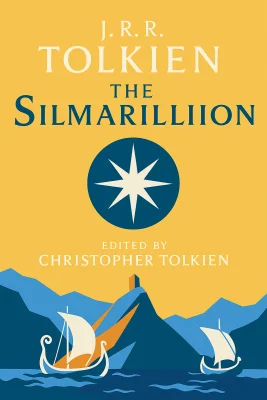
The Silmarillion
Categories
Fiction, Classics, Audiobook, Fantasy, Literature, Mythology, Science Fiction Fantasy, Adventure, High Fantasy, Epic Fantasy
Content Type
Book
Binding
Hardcover
Year
2004
Publisher
Houghton Mifflin Company
Language
English
ASIN
0618391118
ISBN
0618391118
ISBN13
9780618391110
File Download
PDF | EPUB
The Silmarillion Plot Summary
Introduction
# The Silmarillion: From Music of Creation to Shadow's End In the beginning, there was only silence. Then Eru Ilúvatar, the One, raised his hand and the Ainur began to sing. Their voices wove together in harmonies that had never existed, creating a music so beautiful it could birth worlds. But among the singers stood Melkor, mightiest of all, whose pride festered like an open wound. When the Great Music reached its crescendo, he wove discord into the melody, seeking to make the song his own. The music shattered. Competing themes clashed against each other as Melkor's rebellion spread through the choir. Yet Eru smiled, for even rebellion served his greater purpose. When the song ended, he showed the Ainur what their music had wrought: a vision of Middle-earth spinning in the void, beautiful beyond measure yet scarred by discord. Many Ainur descended into this world to shape it with their hands, becoming the Valar. But Melkor came too, and his presence would poison every age that followed. From the forging of the Silmarils to the drowning of Númenor, from the rise of Sauron to the Last Alliance, this is the tale of how light and darkness danced together across the ages, each victory shadowed by loss, each hope tempered by sacrifice.
Chapter 1: The Music of Creation and Melkor's Discord
The Ainur stood before their Creator like instruments waiting to be played. Each possessed a unique voice, a particular beauty that would contribute to the symphony Eru had conceived. When he lifted his hand, they began to sing, and their music was perfect. Themes rose and fell like waves upon an endless shore, each voice supporting the others in harmonious unity. But Melkor had wandered alone into the Void, seeking the Imperishable Flame that gave life to all things. He found only emptiness, and in that emptiness, his thoughts turned dark. When the Great Music commenced, he began to weave themes of his own devising. Discord crept into the symphony like poison in wine. The other Ainur faltered as Melkor's rebellion spread. Some fell silent in dismay. Others began to sing his themes instead of their Creator's. The music became a war of sounds, beautiful melody struggling against harsh clamor. Eru lifted his left hand, and a new theme arose, sad yet lovely. Melkor's discord raged against it but could not overcome it. Again Eru raised his hand, this time his right, and a third theme emerged, soft as a whisper yet impossible to silence. The music built to a crescendo that seemed to shake the very foundations of existence. Then Eru brought down both hands, and silence fell like a curtain. He spoke words that would echo through all ages: "Mighty are the Ainur, and mightiest among them is Melkor. But that he may know, and all the Ainur, that I am Ilúvatar, those things that ye have sung, I will show them forth." Before them appeared a vision of the world their music had created, a globe suspended in darkness. Even Melkor's discord had served to make it more beautiful, though he knew it not. The stage was set for the great drama that would unfold across the ages.
Chapter 2: The Light of Valinor and the Forging of the Silmarils
The Valar labored long to prepare the world for the Children who were yet to come. In their realm of Valinor, they planted two great Trees: Telperion the White and Laurelin the Golden. Silver and gold light waxed and waned in endless rhythm, illuminating a land of beauty beyond mortal comprehension. For ages uncounted, these Trees gave light to all the world. But Melkor brooded in the darkness beyond their borders. In his fortress of Utumno, he bred creatures of shadow and flame. Balrogs emerged from his furnaces, demons wreathed in fire. In mockery of the Children yet to come, he twisted captured spirits into Orcs, beings of malice and cruelty. War came to the young world as the Valar marched north to break his stronghold. The battle reshaped continents. Mountains fell and new seas carved themselves from wounds in the earth. At last Tulkas the Strong wrestled Melkor to the ground and bound him with the chain Angainor. For three ages he lay prisoner, but his malice only deepened. When his sentence ended, he came before the Valar with false repentance. Manwë, who could not comprehend evil, believed his lies and granted him freedom. In the halls of Tirion, Fëanor son of Finwë labored at his greatest work. Tall and dark-haired, with eyes that burned like stars, he surpassed all others in skill. From his forge came the Silmarils, three jewels that captured the light of the Trees and held it imperishable. They blazed with inner fire, holy and beautiful beyond description. Varda herself blessed them so that no evil thing could touch them without being burned. The sight of the Silmarils awakened terrible hunger in Melkor's heart. He began to whisper poison among the Noldor, claiming the Valar sought to keep them captive. His lies worked slowly but surely, turning brother against brother. The seeds of catastrophe had been planted in the very light of paradise.
Chapter 3: The Oath of Fëanor and the Flight of the Noldor
Melkor's poison bore bitter fruit when Fëanor drew his sword against his half-brother Fingolfin in their father's halls. For this crime, he was banished from Tirion and withdrew to his fortress of Formenos, taking the Silmarils with him. There Melkor came in secret, offering alliance in claiming freedom from the Valar's rule. But Fëanor saw through his fair words to the lust beneath and drove him away with curses. Melkor's rage knew no bounds. In the darkness beyond Valinor, he found Ungoliant, a creature of shadow and hunger in the form of a monstrous spider. Together they crept back during a great feast, when all the Valar were gathered on Taniquetil. Melkor struck down the Two Trees with his black spear while Ungoliant drank their light, leaving them withered husks. Then they fled to Formenos. Fëanor returned to find his father Finwë dead before his own doors and his greatest treasures stolen. His grief transformed into rage that would consume him and all his line. Before the great assembly of the Noldor, he spoke with such passion that even stones seemed to listen. He cursed Melkor, naming him Morgoth, the Black Enemy, and swore a terrible oath to pursue him to the ends of the earth. His seven sons leaped to his side and swore the same oath, their drawn swords red in torchlight. They called upon Eru himself to witness their vow, and upon Everlasting Dark to claim them if they failed. Many Noldor were caught up in Fëanor's passion and clamored to follow him back to Middle-earth. But ships they needed to cross the Great Sea, and the Teleri would not give them. At the haven of Alqualondë, the first blood was spilled between kindreds of Elves as the Noldor seized the swan-ships by force. The harbor ran red with Teleri blood. As stolen ships bore the Noldor north, Mandos himself spoke their doom: they would be shut out from Valinor, their oath would drive them to evil ends, and they would know death and betrayal before their exile ended. At Losgar, Fëanor burned the ships, abandoning half his people on the far shore. The die was cast, and there could be no turning back.
Chapter 4: The Wars of Beleriand and the Doom of Kingdoms
Fingolfin and his people faced a choice between shame and death. Rather than return to Valinor in defeat, they chose the path of ice and suffering. Across the Helcaraxë they marched, the Grinding Ice where sea froze between continents. Many perished in that terrible crossing, but those who survived were tempered like steel in fire. When they set foot in Middle-earth, they were harder and more terrible than any Elves before them. Fëanor had already met his doom. In his fury to reach Morgoth, he outran his own army and fell to Balrogs at Angband's gates. As he died, his body burned to ash, so fierce was the fire of his spirit. His son Maedhros was captured and hung by the wrist from Thangorodrim's face until Fingon rescued him at the cost of his right hand. This deed healed the breach between Noldor houses, and Maedhros yielded the crown to Fingolfin. The Noldor established realms across Beleriand like a great net to contain Morgoth's power. Fingolfin ruled in Hithlum while his son Turgon built hidden Gondolin. Finrod Felagund delved Nargothrond's halls, and Fëanor's sons held the eastern marches. For four hundred years they maintained the Siege of Angband, and Morgoth dared not venture forth. But the Dark Lord bred new horrors in Angband's depths. The peace shattered when he unleashed the Dagor Bragollach, the Battle of Sudden Flame. Rivers of fire poured from Thangorodrim, and Glaurung the dragon led Orc armies across burning plains. The siege was broken, and many Elven lords fell. Fingolfin, seeing ruin of all his hopes, rode alone to Angband's gates and challenged Morgoth to single combat. The duel shook earth's foundations. Seven times Fingolfin wounded the Dark Lord with Ringil, and seven times Morgoth cried out in pain. But the Elven-king's strength failed, and Morgoth crushed him beneath his foot. Even in death, Fingolfin struck one final blow, wounding Morgoth's foot so he went lame forever. The High King was dead, and darkness spread across the land like an unstoppable tide.
Chapter 5: The Rise and Downfall of Númenor
When Morgoth was finally cast down in the War of Wrath, the Valar rewarded the faithful Edain who had fought beside the Elves. From the sea's depths rose Númenor, a star-shaped island in the western waters, a gift beyond mortal dreams. Elros Half-elven became their first king, choosing mortality but granted years far beyond other men. Under his rule, the Númenóreans grew tall and fair, their lives spanning centuries. The island kingdom flourished like a garden of the Valar. In Armenelos the golden city rose the king's tower, while at the land's heart stood Meneltarma, the sacred mountain where Númenóreans worshipped Eru under open sky. Their ships carried them across all seas, and they became the greatest mariners the world had known. Yet they were forbidden to sail too far west, lest they glimpse Valinor's shores and be tempted by desires beyond their nature. For long years they were content, bringing aid to Middle-earth's forsaken peoples. But as their power grew, so did their pride. The Ban of the Valar, once accepted gratefully, began to chafe like chains. They murmured against death itself, questioning why they alone must die while Elves lived forever. The division came in Tar-Ancalimon's days, splitting them into King's Men who grew proud and estranged from Elves, and the Faithful who held to old wisdom. When Ar-Pharazôn the Golden became king, mightiest of tyrants, Sauron perceived Númenor's division. He allowed himself to be taken as hostage to the island, appearing fair and wise. With honeyed words he corrupted their hearts, speaking of Melkor who could grant freedom from death. A great temple rose in Armenelos where Númenóreans made sacrifice to Darkness, seeking to escape mortality. But death came swifter than before, and madness, and brother slew brother in the streets. At last Ar-Pharazôn, feeling death's shadow upon him, hearkened to Sauron's final counsel. The greatest fleet ever assembled darkened the western sea as the king led it against the Blessed Realm itself. When his feet touched Aman's shores, Manwë called upon Ilúvatar, and the Creator intervened. The world was broken and remade, Valinor removed beyond mortal reach, and Númenor fell into the abyss. Only nine ships escaped, bearing Elendil and his sons to Middle-earth as exiles bearing the memory of lost glory.
Chapter 6: The Rings of Power and Sauron's Deception
In the years following Morgoth's defeat, Sauron took fair form and walked among Middle-earth's Elves, calling himself Annatar, Lord of Gifts. To Lindon he could not come, for Gil-galad and Elrond saw through his disguise, but in Eregion the Noldor received him gladly. There Celebrimbor, greatest craftsman since Fëanor, led the Gwaith-i-Mírdain in works of surpassing skill. Under Sauron's guidance they wrought the Rings of Power. Nineteen Rings they made, but in secret Sauron forged the One Ring to rule them all, pouring into it much of his power and malice. In Mount Doom's fires he wrought it, and when first he set it upon his finger, all who wore lesser rings felt his presence and knew they had been betrayed. The Three Rings the Elves had made in secret they hid away, never again using them openly while Sauron held the Ruling Ring. War came to Eregion. Celebrimbor was slain and Moria's doors were shut. Sauron gathered the remaining Rings and dealt them out to other peoples. Seven he gave to Dwarf-lords, who used them to amass great hoards though they could not be enslaved. Nine he gave to Men, who proved most susceptible to his will. These became the Nazgûl, Ringwraiths neither living nor dead, bound to Sauron's will for all time. The Black Years began as Sauron's dominion spread like plague across Middle-earth. Only in Lindon did Gil-galad maintain his power, aided by Númenor's ships. But when the Downfall came and Sauron's physical form was destroyed in the ruin, his spirit fled back to Mordor. There he slowly took shape again, more terrible than before, and the Eye of Sauron became a thing of dread few could endure. The Nazgûl emerged from hiding and Minas Ithil fell to become Minas Morgul, Tower of Sorcery. The Third Age had begun, and already its end was foreshadowed in the growing darkness. The stage was set for the final confrontation between Light and Shadow, though victory would come from the most unexpected quarter.
Chapter 7: The Last Alliance and Isildur's Fateful Choice
When Sauron's power had grown beyond hope of single resistance, Gil-galad and Elendil made the Last Alliance of Elves and Men. From every free land came warriors to their banners. Noldor and Sindar, Númenóreans and wild men of the mountains, even Dwarves from Moria marched together. It was the greatest host assembled since the War of Wrath, and their march to Mordor shook earth's foundations. On Dagorlad, the Battle Plain before the Black Gate, Light and Shadow met in desperate combat. Against Aeglos, Gil-galad's spear, none could stand, and Narsil, Elendil's sword, filled enemies with terror. The Alliance had victory, but at grievous cost, and they laid siege to Barad-dûr for seven long years. There Anárion fell to enemy darts, and many others, but at last Sauron himself came forth in wrath and malice. The final battle was fought upon Mount Doom's slopes. Gil-galad and Elendil stood together against the Dark Lord, and both were slain, Narsil broken beneath Elendil's falling hand. But Sauron too was cast down, and Isildur cut the Ruling Ring from his finger with his father's broken hilt. In that moment, Sauron's form was destroyed and his armies fled in terror. It seemed the Shadow was ended forever. But the Ring's corruption was already at work. When Elrond and Círdan led Isildur to the Sammath Naur where the Ring could be unmade, he would not cast it in. "This I will have as weregild for my father's death," he declared, and the moment of salvation passed. Taking the Ring as his own, Isildur departed from Gondor but never reached his northern kingdom. At the Gladden Fields, Orcs fell upon his small company. There Isildur perished, the Ring slipping from his finger to lie hidden in Anduin's waters. The Third Age would be long indeed, and its ending would require courage greater than that of kings and lords. Victory would come from the simple heroism of the small and humble, who would succeed where the mighty had failed.
Chapter 8: The Passing of the Elder Days
The Elder Days ended not with triumph but with twilight. The Silmarils found their final resting places: one in earth's fires with Maedhros, one in the sea's depths with Maglor, and one in the heavens with Eärendil, who sails still as a star of hope. The light of Valinor was scattered beyond recovery, yet its radiance lived on in the choices of those who remembered what was lost. Gil-galad and Elendil fell as heroes, but their sacrifice was incomplete, victory tainted by the Ring's survival. The kingdoms they founded would endure, but under shadow, waiting for a final resolution that would not come for long ages. The Rings of Power brought both salvation and damnation, preserving the Elder Days' beauty while binding their bearers to endless struggle against darkness. In the end, it would not be the mighty who saved Middle-earth, but the meek. A hobbit from the Shire would succeed where Isildur failed, casting the Ring into the fires where it was made. The dominion of Men would begin, and the Elves would pass into the West, taking with them the last memories of the Elder Days. Yet Eärendil's light shines still, a reminder that even in the darkest hour, hope endures, and that the smallest light can drive back the greatest darkness. The music of creation plays on, and though the themes grow ever more complex, the final chord will be one of joy, when all discord is resolved and the world is made anew.
Summary
The tale of the Silmarils is ultimately the story of how light persists through darkness, how hope survives despair, and how even the greatest evil serves a purpose in the music of creation. From Melkor's first discord to Isildur's fateful choice, each tragedy contained within it the seeds of future redemption. The oath of Fëanor brought ruin to the Noldor, yet also drove them to deeds of glory that would be remembered when the world was young. Númenor's fall scattered the Faithful across Middle-earth, where they would build kingdoms that would stand against the Shadow for thousands of years. The Elder Days passed away, but their legacy endured in the courage of those who came after. The light of the Silmarils was not truly lost but transformed, living on in the choices of the humble and the faithful. In the end, the greatest victory would come not from the mighty Valar or the noble Eldar, but from a simple gardener and his master, two hobbits who carried the burden of the world to its destruction in the fires of Mount Doom. The music that began in the Timeless Halls would find its resolution in the Shire, and the discord that Melkor wove would at last be transformed into harmony. The light endures, and the music plays on, world without end.
Best Quote
“It is said by the Eldar that in water there lives yet the echo of the Music of the Ainur more than in any substance that is in this Earth; and many of the Children of Ilúvatar hearken still unsated to the voices of the Sea, and yet know not for what they listen.” ― J.R.R. Tolkien, The Silmarillion
Review Summary
Strengths: The review highlights Tolkien's meticulous worldbuilding, emphasizing his dedication to creating detailed universes with unique languages and cultures. It praises his use of linguistic expertise and academic knowledge to enhance the depth of his narratives, which has positively influenced the high fantasy genre. Weaknesses: The review notes that Tolkien's work can be challenging to read due to its complexity and the extensive detail involved. It suggests that the level of perfectionism and planning may not be appealing or accessible to all readers. Overall: The review conveys admiration for Tolkien's comprehensive approach to worldbuilding and linguistic creativity, recommending it to those interested in deep, immersive fantasy worlds. However, it cautions that the complexity may not suit every reader's taste.
About Author

J.R.R. Tolkien
Tolkien situates his imaginative works within the richly textured world of Middle-earth, addressing universal human concerns through fantasy narratives. His books, particularly "The Hobbit" and "The Lord of the Rings," explore themes such as love, loss, and courage, which resonate deeply with readers. These works are not merely escapist tales; they reflect the complexities of human nature and societal structures, making them relevant across different contexts. Tolkien's method of incorporating his expertise in ancient languages and literature enriches his storytelling, providing depth and authenticity to the cultures and languages of his fictional universe.\n\nBeyond his renowned tales of Middle-earth, Tolkien's contributions extend to academia and art. As a professor of Old and Middle English, as well as Old Norse, he delivered illuminating lectures on epic works like "Beowulf," offering new insights into ancient legends. Meanwhile, his role as an accomplished amateur artist allowed him to visualize scenes from his stories, often enhancing his creative process. This multifaceted approach to his work benefits readers who appreciate detailed world-building, while also drawing in those interested in the intersections of language, myth, and storytelling.\n\nThe impact of Tolkien's books is enduring, as they continue to inspire new generations of readers and writers alike. His creation of complex characters and expansive mythologies challenges readers to reflect on their own worldviews and ethical beliefs. This bio provides a glimpse into the author's profound legacy, highlighting how his blend of scholarly rigor and artistic imagination has left a lasting imprint on literature.
Read moreDownload PDF & EPUB
To save this Black List summary for later, download the free PDF and EPUB. You can print it out, or read offline at your convenience.
The Silmarillion
by J.R.R. Tolkien
