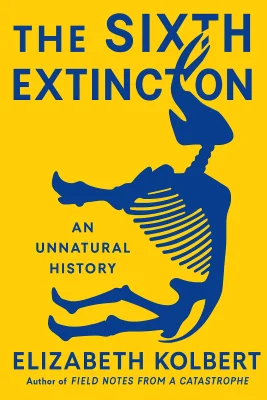
The Sixth Extinction
An Unnatural History
Categories
Nonfiction, Science, History, Animals, Nature, Audiobook, Biology, Book Club, Environment, Climate Change
Content Type
Book
Binding
Hardcover
Year
2014
Publisher
Henry Holt and Co. (Georg von Holtzbrinck)
Language
English
ASIN
0805092994
ISBN
0805092994
ISBN13
9780805092998
File Download
PDF | EPUB
The Sixth Extinction Plot Summary
Introduction
# The Sixth Extinction: Understanding Earth's Current Biodiversity Crisis Imagine walking through a museum where every third display case stands empty, its former contents vanished forever. This isn't a scene from a neglected institution, but rather a metaphor for what's happening to life on Earth right now. Scientists estimate that species are disappearing at rates hundreds or even thousands of times faster than they would naturally, creating what researchers call the sixth mass extinction. Unlike the asteroid that wiped out the dinosaurs or the massive volcanic eruptions that nearly ended all complex life 252 million years ago, this extinction event has a very different cause: us. The story of the sixth extinction is ultimately a story about change and consequence, about how a single species—humans—has gained the power to reshape the entire planet. From the warming oceans that are dissolving coral reefs to the fragmenting forests where isolated populations slowly fade away, we're witnessing transformations that will echo through geological time. Understanding these changes isn't just about cataloging loss; it's about grasping our role as both the primary driver of this crisis and potentially its solution. Through exploring how past extinctions reshaped life and how current pressures are overwhelming species worldwide, we discover what it means to live in an age where human choices determine the fate of millions of other species.
Chapter 1: Mass Extinctions Through Time: Earth's Five Great Catastrophes
To understand our current crisis, we must first journey back through Earth's tumultuous past. Our planet has experienced five major mass extinctions over the last 540 million years, each one fundamentally reshaping the trajectory of life. These weren't gradual declines but relatively sudden catastrophes that eliminated between 70 and 95 percent of all species, creating what paleontologists call the "Big Five" extinction events. The most famous of these ancient disasters struck 66 million years ago when an asteroid roughly six miles wide slammed into Earth near what is now Mexico's Yucatan Peninsula. The impact released energy equivalent to billions of nuclear bombs, hurling debris into the atmosphere and blocking sunlight for months. This cosmic collision didn't just kill the dinosaurs—it eliminated about three-quarters of all species on Earth, from tiny marine organisms to massive land animals. Yet this catastrophe, devastating as it was, wasn't even the worst extinction in our planet's history. That grim distinction belongs to the end-Permian extinction 252 million years ago, which scientists grimly call "The Great Dying." Massive volcanic eruptions in what is now Siberia pumped enormous quantities of carbon dioxide and toxic gases into the atmosphere for hundreds of thousands of years. The resulting global warming, ocean acidification, and atmospheric poisoning came closer than any other event to ending complex life entirely, eliminating roughly 96 percent of marine species and 70 percent of land species. What makes these ancient extinctions so significant isn't just their devastating scale, but their lasting impact on evolution's path. Each mass extinction acted like a cosmic reset button, eliminating dominant groups and creating opportunities for survivors to diversify and fill empty ecological roles. The mammals that inherited the Earth after the dinosaurs' demise had been small, nocturnal creatures for over 100 million years. Without that asteroid impact, we might still be tiny, furry animals scurrying between the feet of giant reptiles. The geological record reveals that mass extinctions share certain ominous characteristics: they happen relatively quickly in geological terms, they affect species across many different environments simultaneously, and they fundamentally alter which groups of organisms dominate the planet for millions of years afterward. By these criteria, the current wave of species loss qualifies as the sixth great extinction event in Earth's history, with one crucial difference—this time, the cause isn't a cosmic accident or geological catastrophe, but the activities of a single species that has gained unprecedented power over the planet's future.
Chapter 2: The Anthropocene Era: How Humans Became a Geological Force
Scientists have proposed a new name for our current geological epoch: the Anthropocene, meaning "the age of humans." This term reflects a startling reality—human activities have become so pervasive and powerful that we're literally rewriting the planet's geology, atmosphere, and biology. We've moved so much rock and soil through mining, construction, and agriculture that we now transport more sediment annually than all the world's rivers combined. The evidence of human influence will be visible to geologists millions of years from now. Future scientists studying rock layers from our era will find a distinctive signature: plastic particles scattered through sediments, radioactive isotopes from nuclear testing, and the fossilized bones of chickens and other domesticated animals that now vastly outnumber their wild relatives. We've altered the chemical composition of the atmosphere by burning fossil fuels, increasing carbon dioxide levels by over 40 percent since the Industrial Revolution, and we've changed the pH of the oceans by pumping this excess carbon into the air. Perhaps most dramatically, we've transformed Earth's surface itself. Humans now use about half of all ice-free land for agriculture, cities, and infrastructure. We've dammed most major rivers, cleared vast forests, and connected previously isolated continents through global trade networks that move millions of species around the world every year. In doing so, we've created a planet that's simultaneously more connected and more fragmented than ever before. This transformation has accelerated dramatically since World War II, during what scientists call the "Great Acceleration." This period has witnessed explosive growth in human population, resource consumption, and environmental impact. We've introduced thousands of synthetic chemicals into the environment, moved species around the globe at unprecedented rates, and begun changing the climate faster than at any time in human history. The scale is staggering—we now appropriate about 40 percent of all the energy captured by plants through photosynthesis on land. The Anthropocene represents more than just environmental change—it marks a fundamental shift in the relationship between humans and the rest of nature. For the first time in Earth's 4.5-billion-year history, a single species has gained the power to determine the fate of most other species on the planet. This unprecedented influence brings with it an equally unprecedented responsibility that we're only beginning to understand and grapple with.
Chapter 3: Ocean Acidification: The Silent Transformation of Marine Ecosystems
The world's oceans are undergoing a chemical transformation more rapid and severe than any in the past 300 million years, yet this crisis remains largely invisible to most people. As we pump carbon dioxide into the atmosphere, roughly a third of it dissolves into seawater, where it forms carbonic acid. This process, known as ocean acidification, is making seawater more corrosive to the shells and skeletons that countless marine creatures depend on for survival. To understand why this matters, imagine trying to build a house while someone constantly weakens your construction materials. Marine organisms like corals, mollusks, sea urchins, and many types of plankton construct their shells and skeletons from calcium carbonate, combining calcium and carbonate ions dissolved in seawater. But as oceans become more acidic, fewer carbonate ions are available, making construction increasingly difficult and energy-intensive. In the most acidic waters, existing shells and skeletons actually begin to dissolve, like chalk dropped in vinegar. The effects are already visible in natural laboratories around the world. Near underwater volcanic vents in the Mediterranean, where carbon dioxide bubbles up from the seafloor, scientists can observe what our oceans might look like in the coming decades. In these acidified zones, the diversity of life plummets dramatically. Barnacles, mussels, and sea urchins disappear entirely, replaced by a few hardy species of algae and simple organisms. The vibrant underwater communities that normally characterize these waters transform into something resembling biological deserts. Coral reefs, often called the rainforests of the sea, face a particularly dire threat from acidification. These underwater cities support about 25 percent of all marine species despite covering less than one percent of the ocean floor. Corals are actually animals that have formed partnerships with microscopic algae living in their tissues, but this delicate relationship can be disrupted by even small changes in water chemistry. As acidification makes it harder for corals to build their calcium carbonate skeletons, entire reef systems may begin dissolving within decades. What makes ocean acidification particularly insidious is its global reach and accelerating pace. The pH of seawater has already dropped by 0.1 units since the Industrial Revolution—a seemingly small change that actually represents a 30 percent increase in acidity. If current emission trends continue, oceans could become 150 percent more acidic by century's end, creating conditions not seen since the age of dinosaurs. Unlike oil spills or coastal pollution that affect specific regions, acidification is occurring everywhere oceans meet atmosphere, making it impossible for marine life to simply move elsewhere to escape its effects.
Chapter 4: Habitat Fragmentation: Creating Islands in a Connected World
Across the globe, human activities are slicing continuous habitats into ever-smaller patches, creating biological islands surrounded by seas of development. This fragmentation process is quietly driving species toward extinction by breaking apart the ecological networks that have sustained life for millions of years. The effects are both predictable and devastating, following patterns that scientists have studied in detail through some of the world's longest-running ecological experiments. The Amazon rainforest provides a stark illustration of fragmentation's consequences through research that began in the 1970s. Scientists created forest fragments of various sizes—from tiny one-hectare plots to larger hundred-hectare reserves—all surrounded by cattle pasture. These living laboratories revealed fragmentation's insidious nature: even large forest patches lose species steadily over decades, a process called "relaxation" that can continue for centuries after isolation occurs. The fragments don't simply become smaller versions of the original forest; they become fundamentally different ecosystems. The mechanisms driving this slow-motion extinction are both predictable and heartbreaking. Large predators like jaguars and harpy eagles disappear first, lacking sufficient territory to maintain viable populations. Birds that follow army ant swarms find their food sources disrupted when ant colonies can't complete their nomadic life cycles in confined spaces. Plants lose their pollinators and seed dispersers, leading to reproductive failure and gradual population decline. Each loss triggers cascading effects that ripple through the entire ecosystem, unraveling relationships built up over millions of years of evolution. Small populations trapped in fragments face what biologists call the "extinction vortex"—a downward spiral where random events become increasingly likely to eliminate species entirely. A single severe storm, disease outbreak, or breeding failure can doom a small population, while larger populations have better odds of weathering such disasters. It's like flipping coins: while unlikely sequences can occur, they become virtually inevitable given enough time and small enough populations. The problem extends far beyond tropical forests to every ecosystem on Earth. Urban sprawl fragments grasslands and wetlands, while roads slice through migration corridors used by everything from salamanders to grizzly bears. Even protected areas like national parks become islands if they're surrounded by incompatible land uses. Climate change compounds these challenges by forcing species to move across increasingly hostile landscapes to track suitable conditions, but fragmentation blocks these essential movements. Perhaps most troubling is how fragmentation interacts with other extinction drivers to create lethal combinations. A forest fragment might be too small to support a viable population of a particular bird species, but if that species could freely move between fragments, it might persist across the broader landscape. However, if climate change simultaneously forces the species to shift its range northward, and if agricultural development blocks movement between fragments, the combination of stresses becomes overwhelming. Modern extinction rarely has a single cause; instead, it results from multiple human impacts acting together to exceed species' capacity to adapt.
Chapter 5: Invasive Species: The Biological Reassembly of Earth
Millions of years ago, all the continents were joined together in a supercontinent called Pangaea, where species could freely mix and interact across vast landmasses. As the continents drifted apart over geological time, the plants and animals living on them evolved in isolation, creating the distinct regional differences in biodiversity we see today. Now, through global trade and travel, humans are essentially reassembling Pangaea, mixing together species that have been separated for millions of years and creating biological chaos in the process. Every day, thousands of species hitchhike around the world in cargo ships, airplanes, and trucks. Most of these accidental travelers die in their new environments, unable to survive in unfamiliar conditions. But some not only survive but thrive, establishing populations that grow and spread rapidly through their new homes. When a species becomes established in a new location and begins to cause ecological or economic harm, scientists classify it as invasive. These biological immigrants can wreak havoc on ecosystems that have no evolutionary experience dealing with them. The brown tree snake's invasion of Guam provides a dramatic example of how devastating invasive species can be. This snake, native to Australia and New Guinea, arrived on Guam sometime in the 1940s, probably hidden in military cargo during World War II. Guam's native birds had never encountered tree-climbing snakes before and had evolved no defenses against them. The result was an ecological catastrophe: the brown tree snake ate its way through virtually all of Guam's native forest birds, driving ten of twelve species to extinction within just a few decades. Invasive species succeed for several interconnected reasons that highlight their destructive potential. First, they often leave their natural predators, parasites, and diseases behind when they travel to new locations, a phenomenon scientists call "enemy release." This gives them a tremendous advantage over native species that must still cope with their full complement of natural enemies. Second, they encounter naive native species that haven't evolved defenses against the newcomers' hunting strategies, toxins, or competitive abilities. Third, human activities often create disturbed environments where fast-growing, adaptable invasive species can gain footholds more easily than native species adapted to stable conditions. The scale of biological mixing happening today is unprecedented in Earth's history. Ships' ballast water alone transports an estimated 10,000 species around the world every day, while global trade moves everything from insects hidden in wooden pallets to seeds stuck to travelers' shoes. Some invasions are intentional—people have deliberately introduced rabbits to Australia, starlings to North America, and countless ornamental plants to gardens worldwide, often with disastrous unintended consequences. This great mixing is creating a more homogenized world, where the same weedy, adaptable species appear on every continent while unique local species disappear, replaced by what scientists call a "McDonaldization" of global ecosystems.
Chapter 6: The Megafauna Collapse: Why Being Big Became a Liability
Throughout most of Earth's history, being big was generally a winning evolutionary strategy. Large animals were too formidable for most predators to attack, could travel vast distances to find food and mates, and could survive harsh conditions better than their smaller relatives. Massive dinosaurs ruled the planet for over 160 million years, while giant mammals like mammoths and ground sloths dominated landscapes after the dinosaurs' demise. But today, being big has become a dangerous liability, and large animals are disappearing at an alarming rate. The extinction of megafauna—animals weighing more than about 100 pounds—began long before the industrial age, following a predictable pattern as humans spread around the world. Australia lost its giant kangaroos, rhinoceros-sized wombats, and massive flightless birds within a few thousand years of human arrival 50,000 years ago. North and South America experienced similar waves of large animal extinctions shortly after humans crossed the Bering land bridge 13,000 years ago, losing their mammoths, giant ground sloths, saber-toothed cats, and dozens of other spectacular species. This pattern suggests that humans have been causing extinctions for tens of thousands of years, long before we developed modern technology or industrial agriculture. The reason large animals are so vulnerable to human hunting relates directly to their biology. Big animals reproduce slowly—elephants don't start breeding until their teens and produce only one calf every few years, while rhinos have even longer generation times. This means their populations can't recover quickly from hunting pressure, even if only a few animals are killed each year. It's like trying to fill a bathtub with the drain open: if water flows out faster than it flows in, the tub will eventually empty. Today's remaining megafauna face the same fundamental problem of slow reproduction, now compounded by habitat loss, climate change, and increasingly sophisticated hunting pressure. African elephants are being slaughtered for their ivory at rates that exceed their ability to reproduce, while rhinos are pushed toward extinction by demand for their horns in traditional medicine. Tigers, jaguars, and other large predators find their territories carved up by roads and development, leaving populations too small and isolated to maintain themselves over the long term. The loss of large animals creates cascading effects throughout entire ecosystems. Large herbivores like elephants and bison shape landscapes by eating vegetation, trampling soil, and dispersing seeds across vast distances. Large predators control prey populations and influence the behavior of other species—wolves in Yellowstone, for example, changed how deer behave, which allowed trees to recover along riverbanks, which changed the courses of streams themselves. When these keystone species disappear, entire ecosystems can collapse or transform into something completely different. Perhaps most sobering is the realization that this pattern of megafauna extinction included our own close relatives. Neanderthals, who lived in Europe and Asia for over 200,000 years, disappeared shortly after modern humans arrived in their territories. Recent genetic evidence shows that humans and Neanderthals interbred, but this mixing wasn't enough to save our sister species from extinction. The same fate befell other human relatives like the Denisovans and the diminutive "hobbits" of Indonesia, leaving modern humans as the sole survivors of what was once a diverse family tree of human species.
Chapter 7: Conservation Challenges: Science and Solutions for Earth's Future
As we stand at this critical juncture in Earth's history, the question isn't whether we're causing a mass extinction—the evidence is overwhelming that we are. The real question is what we can do about it and whether human ingenuity and determination can help life navigate the challenges of our human-dominated world. The choices we make in the coming decades will determine which species survive into the future and which disappear forever, making this perhaps the most consequential moment in the history of life on Earth. Conservation efforts have achieved some remarkable successes that offer hope for the future. The California condor was reduced to just 22 individuals in the 1980s, teetering on the absolute brink of extinction, but intensive captive breeding programs have brought the population back to over 500 birds. Yellowstone's wolves were completely eliminated from the park by the 1920s but were successfully reintroduced in the 1990s, and their return has helped restore the entire ecosystem's balance. These victories demonstrate that when we commit sufficient resources, expertise, and political will, we can sometimes pull species back from the edge of oblivion. However, traditional conservation approaches may not be sufficient for the unprecedented scale and speed of the current crisis. Climate change is forcing species to migrate faster than they can naturally disperse, while habitat fragmentation blocks their escape routes. Ocean acidification is changing marine chemistry faster than most species can adapt through evolution. Invasive species are homogenizing ecosystems worldwide, while emerging diseases like the fungal pathogen devastating amphibians are spreading rapidly through globally connected transportation networks. Some scientists are exploring radical new approaches that would have been unthinkable just a few decades ago. Genetic rescue techniques might help small populations by introducing genes from related populations, while assisted migration could help species reach suitable habitat faster than they could travel naturally. "Frozen zoos" now store tissue samples from thousands of species, creating genetic arks for an uncertain future. Some researchers are even working on "de-extinction" efforts to bring back recently lost species using preserved genetic material, though these technologies raise profound questions about what we mean by "natural" and how far we should go in managing the planet's biodiversity. The ultimate solution to the extinction crisis requires addressing its root causes: the growing human population's increasing consumption of resources and our collective impact on global systems like climate and ocean chemistry. This means transforming how we produce energy, grow food, design cities, and organize our economies. It means recognizing that human welfare and environmental health are inextricably linked—we cannot have a healthy human civilization on a degraded planet. The sixth extinction is ultimately a story about choices, and the choices we make today will echo through geological time, determining what kind of world we leave for all the species that come after us.
Summary
The sixth extinction reveals a fundamental truth about our moment in Earth's history: we have become the first species capable of both causing and potentially preventing a global biological catastrophe. Unlike the asteroid impacts and volcanic eruptions that drove previous mass extinctions, today's crisis stems from the accumulated effects of human activities that are reshaping every environment on the planet, from the deepest oceans to the highest mountains. The interconnected nature of modern extinction drivers—climate change, ocean acidification, habitat fragmentation, and species invasions—creates challenges that individual species and ecosystems have never before faced in Earth's 3.8-billion-year history of life. Yet understanding these processes also illuminates pathways for response and hope for the future. The same intelligence and technology that created this crisis might also provide solutions, from protecting and connecting habitats to developing new conservation techniques that help species adapt to rapid environmental change. The critical question facing our generation is whether we can transform human civilization quickly enough to prevent the worst outcomes while there's still time to act. How might we redesign human systems to work with rather than against the natural processes that sustain all life? What would it mean to become a species that enhances rather than diminishes the biological richness of our planet? The answers to these questions will determine not only which species survive the current crisis, but what kind of world we leave for future generations to inherit and explore.
Best Quote
“Though it might be nice to imagine there once was a time when man lived in harmony with nature, it’s not clear that he ever really did.” ― Elizabeth Kolbert, The Sixth Extinction: An Unnatural History
Review Summary
Strengths: The review highlights Elizabeth Kolbert's engaging writing style, characterized by dry wit and gallows humor, which makes complex scientific concepts accessible to a general audience. The book effectively uses historical context, referencing figures like Cuvier, Lyell, and Darwin, to explore the relatively new concept of extinction. Overall: The reviewer expresses a highly positive sentiment towards "The Sixth Extinction," recommending it as a compelling horror narrative where humanity is the antagonist. The book is praised for its insightful exploration of human impact on the environment, making it a thought-provoking read for those interested in environmental issues.
About Author

Elizabeth Kolbert
Kolbert investigates the pressing environmental challenges of our time by intertwining scientific research with narrative storytelling, thereby offering profound insights into human-induced ecological changes. Her work consistently addresses the themes of climate change, biodiversity loss, and environmental degradation, drawing from her experiences and observations in Williamstown, Massachusetts. Kolbert's writing in "The New Yorker" and her acclaimed books such as "Field Notes from a Catastrophe" and "The Sixth Extinction" aim to raise awareness about the impact of human activities on the planet, emphasizing the urgency of these issues for both the present and future generations.\n\nEmploying a method that balances rigorous scientific inquiry with compelling narratives, Kolbert's prose invites readers to explore complex ecological topics in an accessible manner. Her book "Under a White Sky: The Nature of the Future" continues this approach by examining technological solutions to environmental crises, thus engaging readers in a discourse on the paradoxes of human intervention. This method not only educates but also inspires readers to reflect on their ecological footprint and consider sustainable practices.\n\nAs a distinguished author and journalist, Kolbert has garnered numerous accolades, including the Pulitzer Prize for General Nonfiction for "The Sixth Extinction". Her work reaches a diverse audience, from environmental enthusiasts to policymakers, providing them with a deeper understanding of the ecological issues at hand. Through her insightful exploration of these themes, Kolbert challenges individuals to confront their role in environmental transformation, encouraging a broader conversation on conservation and sustainability.
Read moreDownload PDF & EPUB
To save this Black List summary for later, download the free PDF and EPUB. You can print it out, or read offline at your convenience.
The Sixth Extinction
by Elizabeth Kolbert
