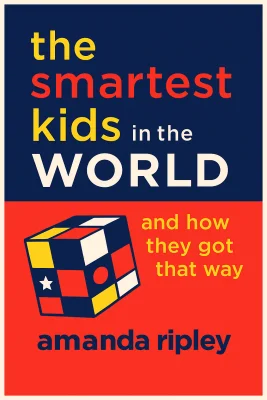
The Smartest Kids in the World
And How They Got That Way
Categories
Nonfiction, Psychology, Science, Parenting, Education, Politics, Audiobook, Adult, Book Club, Teaching
Content Type
Book
Binding
Hardcover
Year
2013
Publisher
Simon & Schuster
Language
English
ISBN13
9781451654424
File Download
PDF | EPUB
The Smartest Kids in the World Plot Summary
Introduction
# The Smart Edge: Global Lessons in Educational Excellence In a small town in Oklahoma, a fifteen-year-old girl named Kim stared at her test scores in disbelief. She had outperformed nearly half of college-bound seniors in her state, despite being just a seventh-grader. The revelation hit her like a cold wave of reality about the education system she had always accepted as normal. This moment of awakening would eventually lead Kim on an extraordinary journey to Finland, where she would discover what world-class education truly looks like and how dramatically different learning could be when expectations soared beyond comfortable mediocrity. Across the globe, millions of students navigate vastly different educational landscapes, some trapped in systems that underestimate their potential while others thrive in environments that challenge them to think critically and solve complex problems. The gap between these experiences reveals one of the most pressing questions of our time: why do some countries consistently produce students who can adapt and excel in the modern world, while others struggle with basic competency? Through the eyes of American exchange students living in the world's education superpowers, we uncover the surprising truths about what makes learning meaningful, transformative, and genuinely excellent.
Chapter 1: The Mystery: When Test Scores Reveal Hidden Truths
When researchers first mapped student performance across fifty years of international testing, they discovered something that challenged everything educators thought they knew about national achievement. Countries could dramatically transform their educational outcomes in just a few years, not through magic or cultural superiority, but through deliberate choices about what mattered most in education. Finland had rocketed from mediocrity to the top of global rankings. Poland had made stunning gains despite widespread poverty. Korea had transformed from a largely illiterate nation to an academic powerhouse in a single generation. Yet the United States remained stubbornly flat, spending more per student than almost any other country while achieving mediocre results. American teenagers ranked twenty-sixth in math, seventeenth in science, and twelfth in reading on the world's most comprehensive test of critical thinking skills. Even America's most privileged students, attending the richest schools in the world, performed below affluent children in countries like Belgium, France, and Korea. The data painted a troubling picture that wealth alone could not buy educational excellence. The mystery deepened when exchange students began reporting their experiences. Nine out of ten international students consistently said their American classes required less effort than what they were used to back home, while seven out of ten American students who studied abroad agreed they had been underchallenged in their home schools. These weren't isolated observations but systematic patterns that revealed fundamental differences in educational cultures and expectations. The most successful countries had cracked a code that others had missed, creating systems where virtually all children learned to think critically, regardless of their background or circumstances. They understood that in an economy increasingly rewarding the ability to think, adapt, and solve problems, educational excellence wasn't a luxury for the privileged few but an economic necessity for entire nations. The mystery wasn't just about test scores; it was about preparing young minds for a future that would demand far more than basic competency.
Chapter 2: Finland: Where Trust Meets Rigor in Snowy Classrooms
Kim's first day at Pietarsaari Lukio shattered every expectation she had about what school could be. Instead of the high-tech paradise she had imagined, she found herself in a gray, institutional building with outdated equipment and a broken clock that hadn't worked in years. But something extraordinary happened in her Finnish literature class that would never have occurred back in Oklahoma. When her teacher assigned the classic novel "Seven Brothers" to the class, she quietly approached Kim with a different book, a children's version with cartoon dogs on the cover. "I hope you don't think this is childish," the teacher said nervously. "It's just that I would love for you to be able to experience this story, because it is very important for us in Finland." This simple act of accommodation revealed the heart of Finnish education: teachers so well-educated and trusted that they could adapt their methods to meet each student's individual needs without seeking permission or following scripts. Kim's teacher, Tiina Stara, had fought fierce competition to enter one of Finland's elite teacher-training programs, where only one in ten applicants was accepted. She had spent six years earning her master's degree, including a full year of hands-on training in one of the country's best schools, receiving constant feedback from mentors who pushed her to improve every single day. The contrast with Kim's Oklahoma teachers was stark and illuminating. While Finnish teachers came from the top third of their high school classes and trained at universities as selective as MIT, many American teachers came from the bottom third and attended programs that admitted almost anyone who claimed to like children. This difference in preparation created a cascade of consequences that rippled through entire school systems. Finnish teachers commanded respect because their job was genuinely difficult and important, which gave them the autonomy to make professional decisions about how to teach without constant supervision or scripted curricula. In Kim's Finnish classroom, she witnessed something remarkable: teenagers who approached learning with the intensity and focus of athletes preparing for the Olympics. There were no participation trophies, no grade inflation, no constant entertainment to keep students engaged. Instead, there was something far more powerful at work. The result was a system built on trust rather than control, where teachers could focus on what mattered most: helping every child learn to think critically and develop the intellectual tools they would need for life. Finland had proven that excellence emerged not from pressure or competition, but from the profound respect for learning that permeated every aspect of their educational culture.
Chapter 3: South Korea: Inside the Pressure Cooker of Academic Excellence
Eric's first glimpse of Korean education came with a cacophony of screaming teenage girls erupting in Beatles-level hysteria at the sight of the American exchange student walking through the hallways of Namsan High School. But the excitement quickly faded, and Eric discovered the harsh reality behind Korea's world-leading test scores: a system so intense that students regularly fell asleep in class from sheer exhaustion, their bodies unable to sustain the relentless pace of academic competition that consumed their entire existence. His Korean classmates lived in a pressure cooker that would have been unimaginable to most American teenagers. They attended school from eight in the morning until ten at night, then headed to private tutoring academies called hagwons until eleven or midnight, where they continued studying with the same intensity. On weekends, they studied more. Their entire childhood and adolescence revolved around preparing for a single college entrance exam that would determine the rest of their lives, with only two percent of students earning admission to the country's top three universities. Yet within this punishing system, Eric discovered something that challenged his assumptions about education and economics: teachers who earned four million dollars a year. In Korea's private tutoring market, the best instructors became genuine celebrities, their lessons broadcast online to hundreds of thousands of students who hung on their every word. These "rock star teachers" succeeded because they had to compete for students in a true marketplace, where results mattered more than credentials, seniority, or political connections. The most effective teachers attracted the most students and earned the highest salaries, creating powerful incentives for excellence that didn't exist in most public school systems around the world. The Korean model revealed both the extraordinary power and the devastating peril of extreme academic focus. Students learned to work harder than their peers anywhere else in the world, developing the persistence and discipline that would serve them throughout their lives in ways that went far beyond academic achievement. But the system also created a generation of young people who had sacrificed their childhood for test scores, leading to high rates of depression and a culture that even Koreans themselves desperately wanted to escape. Korea proved that educational excellence was absolutely possible but raised urgent questions about the price of achievement and whether there might be a more humane path to the same destination of intellectual rigor and academic success.
Chapter 4: Poland: A Nation's Educational Transformation Against All Odds
Tom's math teacher in Wrocław handed him a piece of chalk and asked him to solve a polynomial problem on the blackboard, a routine request that would expose the uncomfortable truth about his American education. As he struggled with the equation, hearing Polish students giggle behind him, Tom confronted a humbling reality: despite attending one of America's better high schools and considering himself a solid student, he was mathematically unprepared for what Polish teenagers considered routine coursework. The chalk snapped in his hands as he fumbled through the problem, unable to complete what his younger classmates could solve effortlessly in their heads. This moment of academic embarrassment reflected a larger transformation that few Americans understood or even knew had occurred. Poland had emerged from decades of communist oppression and economic chaos to become one of the world's most dramatically improved education systems. In less than a decade, Polish students had gone from below average to above average on international tests, outperforming American teenagers despite spending less than half as much money per student. The secret wasn't resources, technology, or cultural advantages; it was a fundamental reimagining of what children could accomplish when society refused to give up on them. The transformation began with a chemistry professor named Mirosław Handke, who became education minister with no political experience but a radical vision that would reshape an entire nation's approach to learning. In 1999, he launched the most ambitious education reform in modern history, creating four thousand new schools overnight and keeping all students together in academic programs until age sixteen, rather than tracking them into vocational schools at fifteen as had been the tradition. This single change, delaying the moment when society decided which children were "academic" and which were not, had profound consequences that surprised everyone, including the reformers themselves. Students who would have been written off as unsuitable for higher learning suddenly began achieving at levels that astonished their teachers, parents, and themselves. Poland's success revealed a crucial insight about human potential that challenged fundamental assumptions about ability and achievement: expectations could become self-fulfilling prophecies on a national scale. When the country raised its standards and refused to give up on any child too early, students rose to meet those expectations in ways that transformed not just test scores but an entire society's understanding of what was possible. The transformation wasn't perfect, and tracking still occurred, just later, but Poland proved that even countries with significant poverty and social problems could dramatically improve educational outcomes through bold leadership and unwavering belief in what children could achieve when given the opportunity.
Chapter 5: America: Confronting Comfortable Myths About Learning
When Kim returned to Oklahoma after her transformative year in Finland, she faced a choice that would have been unthinkable before her journey abroad opened her eyes to what education could truly become. She could return to Sallisaw High School, where she had once felt bored and invisible among classmates who seemed perpetually disengaged, or she could forge a different path that honored what she had learned about serious learning. "I worry that the indifference will start to affect me again," she told her mother with remarkable insight for a teenager. "That I'll just slip back into the views of all my peers, that it just doesn't matter, that school sucks, so why should we be here?" Instead, she made the bold decision to enroll in Oklahoma Virtual High School, determined to recreate the autonomy and intellectual seriousness she had experienced in Finland. Kim's decision reflected a broader awakening happening across America as more students, parents, and educators began to recognize the uncomfortable gap between American educational rhetoric and reality. While politicians praised American creativity and innovation, exchange students from around the world consistently reported that American classes were easier than those in their home countries, requiring less effort, less critical thinking, and less genuine intellectual engagement. The evidence was overwhelming and undeniable, yet somehow remained largely ignored by those in positions to create change. The problem wasn't that American students lacked ability or that American teachers didn't care deeply about their students' success. The issue was a culture that had gradually lost sight of education's fundamental purpose, becoming focused on many things, sports, self-esteem, social development, technology integration, but allowing rigorous learning to take a backseat to these other priorities. American schools had become places where students received participation trophies and inflated grades that protected them from the productive struggle that builds genuine resilience and competence, while countries like Finland, Korea, and Poland maintained laser focus on what mattered most: ensuring that every child learned to think critically and solve complex problems. Yet America's diversity and democratic traditions also created unique opportunities for innovation and educational improvement that other countries might envy. In scattered schools across the country, dedicated educators were proving that American students could achieve at world-class levels when given appropriate challenges and support, when treated as capable of serious intellectual work rather than fragile beings who needed constant protection from difficulty. The question wasn't whether American children could compete globally, they clearly could, but whether American society would choose to prioritize the hard work of learning over the easier path of lowered expectations and comfortable mediocrity that had become the norm in too many classrooms.
Chapter 6: The Excellence Equation: Drive, Autonomy, and High Expectations
The secret to educational excellence wasn't found in any single policy or practice, but in the dynamic interaction of essential elements that the world's top-performing countries had learned to balance with remarkable precision. Drive came first, manifesting as a shared cultural belief that education mattered more than almost anything else, born from economic necessity and reinforced by high-stakes assessments that actually affected students' futures in meaningful ways. In Finland, Korea, and Poland, teenagers understood intuitively that their academic performance would determine their life chances, creating intrinsic motivation that no amount of external rewards, sticker charts, or participation trophies could ever replicate. Autonomy formed the second crucial pillar, giving both teachers and students the freedom to make meaningful choices about how learning happened within their classrooms and schools. Finnish teachers could adapt their methods to meet individual student needs because they were so thoroughly prepared and deeply trusted by their society. Korean hagwon instructors competed for students by developing innovative teaching approaches that actually worked. Polish students gained increasing independence as they progressed through school, preparing them for the adult responsibility and self-direction they would need throughout their lives. This freedom wasn't license to do whatever felt good or easy; it was the professional autonomy that came with demonstrated competence and clear accountability for measurable results. Quality tied everything together through the careful selection and rigorous preparation of teachers who would shape young minds. Countries that treated teaching as a prestigious profession attracted their most capable citizens to education, then trained them thoroughly and systematically before putting them in charge of children's learning and development. This investment in teacher quality created a virtuous cycle that strengthened over time: excellent teachers produced excellent results, which reinforced public respect for education, which attracted more excellent people to teaching, which improved results even further. The equation was elegant in its simplicity and revolutionary in its implications for countries willing to implement it systematically and sustain it over time. These successful nations had discovered that educational excellence emerged not from any single innovation or reform, but from the patient work of building cultures where learning was valued, teachers were respected, students were challenged, and everyone was held accountable for results. They proved that transformation was possible, but only for societies brave enough to demand excellence from themselves and their children, knowing that the alternative, continued mediocrity in an increasingly competitive world, was no longer acceptable for any nation that hoped to thrive in the twenty-first century.
Summary
The journeys of American students through the world's education superpowers reveal a fundamental truth that challenges our most basic assumptions about learning and human potential. Excellence isn't the product of superior resources, advanced technology, or cultural advantages that some nations possess and others lack, but of unwavering commitment to the belief that all children can think, learn, and achieve at remarkably high levels when given appropriate challenge, support, and the expectation that they will succeed. The countries that have cracked this code share a common understanding that transcends their different histories and cultures: education is serious business that requires serious people doing serious work, whether they are six years old or sixty, and this seriousness must permeate every aspect of the educational experience. The path forward demands courage from all of us, courage to abandon comfortable myths about innate ability and embrace the harder truth that achievement comes through sustained effort and productive struggle that builds character alongside competence. We must choose rigor over convenience, high expectations over false compassion, and long-term development over short-term comfort, knowing that our children are capable of far more than we typically ask of them. This doesn't mean creating pressure cookers that crush young spirits, but building systems that challenge every student to grow beyond what they thought possible while providing the support, trust, and respect they need to succeed. The examples of Finland, Korea, and Poland prove that dramatic transformation is possible within a single generation, but only for those brave enough to demand excellence from themselves and their children, understanding that the alternative, continued mediocrity in an increasingly competitive and complex world, is no longer acceptable for any society that hopes to prepare its young people for the future they will inherit.
Best Quote
“Most Korean parents saw themselves as coaches, while American parents tended to act more like cheerleaders.” ― Amanda Ripley, The Smartest Kids in the World: And How They Got That Way
Review Summary
Strengths: The review praises Amanda Ripley's book for its analytical rigor and engaging storytelling. It highlights the book's focus on providing hope and actionable insights into improving education systems. The review appreciates the dispelling of common excuses for the U.S. education system's shortcomings and emphasizes the importance of high expectations, teacher quality, consistent curriculum, and minimal reliance on technology. Overall: The review conveys a positive sentiment, recommending the book as an important read for those interested in education. It underscores the book's relevance to both the U.S. and international contexts, noting its timely insights and practical suggestions for educational improvement.
About Author

Amanda Ripley
Ripley delves into the complexities of human behavior, focusing on how individuals navigate conflict and adversity to find transformative solutions. Her work frequently interrogates themes such as conflict resolution, educational reform, and disaster survival, showcasing her ability to synthesize narrative storytelling with rigorous research. By tracing the journeys of those who have undergone significant personal or societal transformations, she provides readers with a nuanced understanding of how to overcome challenges and enact positive change.\n\nHer acclaimed books, including "High Conflict: Why We Get Trapped and How We Get Out" and "The Smartest Kids in the World: And How They Got That Way," underscore Ripley's commitment to exploring the dynamics of human resilience and learning. These works not only chart the intricacies of conflict and education systems but also illuminate pathways for readers to engage with these issues meaningfully. Moreover, Ripley's exploration of who survives in disasters in "The Unthinkable: Who Survives When Disaster Strikes—and Why" further cements her role as a thought leader in examining human responses to crisis.\n\nFor readers seeking insight into the human experience and methods to navigate complex social issues, Ripley offers a compelling blend of empathy and data-driven analysis. Her contributions as a journalist and author provide valuable perspectives for those interested in understanding and transforming the systems and conflicts that shape our world. Ripley's impact extends beyond her books, as her work has earned her recognition as a New York Times bestselling author, with her contributions to Time magazine helping to secure National Magazine Awards.
Read moreDownload PDF & EPUB
To save this Black List summary for later, download the free PDF and EPUB. You can print it out, or read offline at your convenience.
The Smartest Kids in the World
by Amanda Ripley
