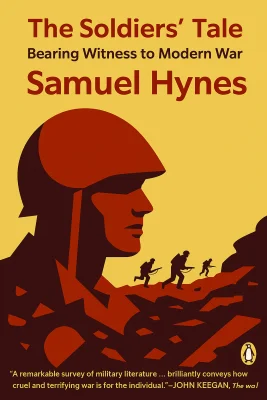
The Soldiers' Tale
Bearing Witness to Modern War
Categories
Nonfiction, History, Sociology, Military Fiction, Literature, Military History, American History, World War II, War
Content Type
Book
Binding
Paperback
Year
1998
Publisher
Penguin Books USA Inc.
Language
English
ASIN
0140261540
ISBN
0140261540
ISBN13
9780140261547
File Download
PDF | EPUB
The Soldiers' Tale Plot Summary
Introduction
# Bearing Witness: Personal Stories and Universal Truths from Modern Warfare In a muddy trench somewhere in France, a young officer named Edwin Campion Vaughan clutched his whiskey bottle and stared into what he called "a black and empty future." Of the ninety men in his company who had marched into battle at Passchendaele, only fifteen remained. The rest lay scattered across a landscape so devastated it no longer resembled earth at all, but something alien and terrible. As Vaughan sat writing his casualty report, his hands shaking not from fear but from the weight of bearing witness to what war had become, he was unknowingly joining a chorus of voices that would reshape how humanity understands the reality of armed conflict. These voices belong to the men who were there, who saw with their own eyes what happens when nations send their sons to fight with the terrible weapons of the modern age. Their testimonies, written in hospital beds and quiet moments between battles, in the years immediately following their wars and decades later when memory finally found the courage to speak, form a collective narrative of extraordinary power. This is not the sanitized version of war found in official histories or the romanticized tales of adventure stories. It is the raw, honest account of what it means to be human in the most inhuman of circumstances, told by those who survived to tell it.
Chapter 1: The Authority of Experience: Voices from the Trenches
When David Jones completed his haunting war narrative "In Parenthesis," he ended it with words borrowed from an ancient French epic: "The geste says this and the man who was on the field... and who wrote the book... The man who does not know this has not understood anything." With these words, Jones laid claim to an authority that only those who have stood where bullets fly can possess. It is the authority of the witness, the man who was there when the shells fell and the earth shook and young men died in ways their mothers could never imagine. This authority runs like a thread through every authentic war narrative, binding together the testimonies of soldiers across centuries and continents. A French soldier of the Great War insisted that "the man who has not understood with his flesh cannot talk to you about it." An English veteran of the Second World War wrote that "you have to have seen things with your own eyes before you believe them with any intimacy." These men understood something fundamental about the nature of war: it cannot be comprehended at second hand, cannot be reduced to strategy and statistics, cannot be truly known except by those who have lived it. Yet this authority comes with a peculiar burden. The men who possess it often find themselves changed in ways they struggle to articulate. They return from their wars carrying not just physical scars but invisible wounds that reshape their understanding of what it means to be human. They have seen their friends die in ways that defy comprehension, have witnessed acts of both extraordinary courage and devastating cruelty, have discovered within themselves capacities for both tenderness and violence they never knew existed. The stories they tell are not the grand narratives of victory and defeat that fill history books. Instead, they are intimate accounts of what happened to individual human beings caught in the machinery of modern warfare. They speak of the strange fellowship that develops among men who face death together, of the way fear and courage intertwine in the human heart, of the odd moments of beauty that can emerge even in the midst of destruction. These testimonies reveal war as a fundamentally transformative experience, one that strips away the comfortable assumptions of civilian life and forces men to confront the most basic questions of existence.
Chapter 2: From Romance to Reality: The Great War's Transformation
When young Edwin Campion Vaughan stepped aboard the train at Waterloo Station in January 1917, his heart raced with anticipation. At nineteen, he was finally bound for France, for what he called "the dreamed of but unrealized land of war." Like thousands of other middle-class volunteers, Vaughan carried in his head a vision of war drawn from romantic literature and schoolboy adventures. He expected to find individual combat, personal courage, and what he breathlessly called "death or glory, or both." The reality that awaited him in the trenches would shatter every one of these expectations. Vaughan's war began with the strangeness that marked every soldier's first encounter with the Western Front. The landscape itself had been transformed into something alien and terrible, where shell holes filled with poisonous water and the dead lay unburied for months, becoming part of the architecture of war. In this devastated world, the romantic notions of individual heroism that had drawn young men to enlist proved not just inadequate but dangerous. When Vaughan finally led his men into battle at Passchendaele, he found himself not in glorious single combat but struggling through liquid mud under relentless artillery fire, watching his soldiers succumb not to enemy bullets but to terror so complete it reduced grown men to helpless, gibbering creatures. The weapons of this new kind of war made traditional courage almost meaningless. Poison gas could kill without regard for a man's bravery or cowardice. Artillery shells fired from miles away could obliterate entire companies without the gunners ever seeing their targets. Machine guns could cut down charging infantry with mechanical precision, turning acts of heroism into exercises in futility. In this environment, the old military virtues of dash and daring gave way to a grimmer kind of courage: the ability to endure, to stand without trembling, to continue functioning when every instinct screamed for flight. By the war's end, Vaughan sat in his tent drinking whiskey and contemplating the casualty reports that told the story of his company's destruction. Of the ninety men who had followed him into battle, only fifteen remained. The rest had been consumed by a war that seemed to exist for no purpose other than the systematic destruction of human life. This transformation from romantic expectation to bitter reality became the defining narrative of the Great War generation, fundamentally questioning the entire mythology that had made war seem glorious and necessary.
Chapter 3: The Good War: Moral Clarity in World War II
When the Second World War began, young men went to fight carrying in their heads not romantic dreams of glory but the bitter lessons of the Western Front. They had read Remarque and Sassoon, had seen the photographs of corpses tangled in barbed wire, had absorbed the hard-won wisdom of the previous generation. Yet when their time came, they enlisted anyway, driven not by illusions about war's nobility but by a clear-eyed understanding of what needed to be done. Christopher Seton-Watson's journey from Dunkirk to Alamein to Bologna exemplified this new kind of warfare, one of constant movement across vast landscapes, of campaigns that had clear objectives and measurable results. The moral clarity of the Second World War distinguished it from every conflict that had come before. Unlike the tangled alliances and obscure causes that had triggered the Great War, this conflict presented issues that seemed almost biblically clear: democracy against fascism, freedom against tyranny, civilization against barbarism. Young men like Eugene Sledge enlisted not because they believed war was glorious but because they understood it was necessary. They went to fight not for abstract principles but against concrete evils that threatened everything they held dear. This moral certainty created a unique atmosphere among the fighting forces. Soldiers approached their duties with a kind of grim professionalism, skeptical of grand rhetoric but committed to the job at hand. They mocked their officers, complained about their equipment, and maintained a sardonic attitude toward military life, but they never doubted the rightness of their cause. This was everybody's war, fought by citizen-soldiers who retained their civilian identities even as they learned to kill efficiently and without remorse. The democratic nature of the conflict extended beyond mere participation to encompass the very character of military service. Class distinctions that had defined earlier armies began to break down under the pressure of shared danger and common purpose. Officers and enlisted men, drawn from every level of society, found themselves united by experiences that transcended their peacetime differences. The narratives that emerged from this conflict reflected its unique character, stories not of disillusionment but of competence, not of victimization but of agency. The men who fought this war understood themselves to be participants in a great historical drama, playing roles they had chosen rather than been forced to accept.
Chapter 4: Technology and the Human Cost: Machines and Men
In the cockpit of a Spitfire during the Battle of Britain, young pilots like Richard Hillary discovered that technology could restore to warfare the individual agency that the trenches had destroyed. Here was a weapon that responded to skill and courage, that allowed its operator to feel he controlled his own fate rather than merely enduring whatever random destruction the enemy might inflict. Hillary approached his first aerial combat with romantic notions that would have seemed familiar to any medieval knight, speaking of fighter combat as individual dueling, clean and impersonal, a contest between equals that would be decided by skill rather than chance. The reality proved more complex and more terrible than Hillary's romantic vision could accommodate. When his own plane was shot down and he was pulled from the wreckage with his face and hands burned beyond recognition, he discovered that even the most advanced technology could not protect its operators from war's fundamental brutality. The machines that seemed to offer control and precision could also become traps, turning their operators into victims as helpless as any soldier caught in a gas attack. Hillary's long struggle to rebuild his ruined face and hands became itself a kind of combat, requiring courage and endurance equal to any aerial battle. The tank battles of North Africa offered another vision of how machines could restore agency to warfare. In the vast spaces of the desert, armored formations maneuvered like cavalry, their commanders making tactical decisions that could determine the outcome of entire campaigns. Here was warfare that combined the romance of individual leadership with the power of industrial technology, creating a new kind of military art that was both ancient and utterly modern. These mechanized warriors developed their own culture and their own understanding of what it meant to fight in the modern age. Yet Hillary's story also revealed technology's power to transform suffering into meaning. When he finally emerged from the hospital, scarred but functional, he had become something new: a warrior whose primary battle had been not with the enemy but with his own damaged flesh, whose victory lay not in destroying others but in reconstructing himself. These technological warriors remained recognizably human in their responses to the eternal challenges of fear, loss, and moral choice, proving that machines could enhance human capability without destroying human dignity.
Chapter 5: Vietnam's Shadow: When Certainty Collapsed
The Vietnam War shattered many of the assumptions that had sustained American military culture since the Second World War, creating a new kind of war narrative marked by moral ambiguity and psychological complexity. Philip Caputo's "A Rumor of War" captured the disorientation of young Americans who had enlisted expecting to fight a conventional war against a clearly defined enemy, only to find themselves in a conflict where the distinction between combatant and civilian had largely disappeared. The Viet Cong fighter might be a farmer by day and a guerrilla by night, making every Vietnamese civilian a potential threat and every military operation a moral minefield. Unlike the clear-cut struggle against fascism that had defined the previous generation's conflict, Vietnam presented American soldiers with a war whose purposes seemed unclear and whose methods often contradicted the values they thought they were fighting to defend. The technology that had seemed to offer precision and control in the Second World War revealed its darker potential in Vietnam. Napalm and Agent Orange, cluster bombs and free-fire zones, created a kind of warfare that seemed to exist primarily to destroy rather than to achieve any recognizable military objective. Young soldiers found themselves participating in operations that felt more like exercises in systematic destruction than legitimate military actions, leaving them to question not only their government's wisdom but their own moral complicity. This uncertainty corroded the confidence and clarity of purpose that had sustained earlier generations of American warriors. The narratives that emerged from Vietnam reflected this moral confusion in their structure and tone, often seeming fragmented and inconclusive, mirroring the war's own lack of clear resolution. Tim O'Brien's work exemplified this new kind of war narrative, blending fiction and memoir in ways that reflected the difficulty of making sense of experiences that seemed to defy conventional understanding. His soldiers were neither heroes nor villains but confused young men trying to maintain their humanity in circumstances that seemed designed to destroy it. Their stories became meditations on the nature of truth itself, questioning whether traditional narrative forms could adequately capture the reality of modern warfare and serving as warnings about the moral complexity of conflicts fought in an increasingly interconnected and ambiguous world.
Chapter 6: The Invisible Wounds: Trauma and the Long Journey Home
Richard Hillary's account of his long recovery from burns suffered when his Spitfire was shot down became a template for understanding how physical trauma could become a form of combat in itself, requiring courage and endurance equal to any battlefield heroism. His transformation from a beautiful young man into a scarred survivor forced him to confront questions about identity and meaning that went far beyond the immediate concerns of military service. His damaged face became a kind of mask that could no longer express emotion, while his reconstructed hands resembled claws more than human appendages. Yet in learning to live with these changes, Hillary discovered resources within himself that he had never known existed, developing a capacity for empathy and understanding that his unmarked youth had never required. The psychological wounds of modern warfare proved even more challenging to understand and treat than physical injuries. The phenomenon that the Great War had labeled "shell shock" evolved into a more sophisticated understanding of how the human mind responds to extreme stress and trauma. Men who had functioned effectively in combat found themselves unable to cope with civilian life, haunted by memories they could not escape and emotions they could not control. Robert Graves's account of his decade-long struggle with what would now be called post-traumatic stress disorder revealed the hidden costs of military service. Unable to use a telephone or travel by train, sickened by crowds and tormented by flashbacks to trench warfare, he found that his war continued long after the armistice had been signed. Only by writing his memoir, by transforming his experiences into narrative, could he finally achieve the peace that had eluded him for ten years after the fighting ended. The democratization of suffering in the Second World War meant that the line between combatant and victim became increasingly blurred. Hillary's encounter with a woman trapped in the rubble of her bombed home created a moment of recognition between two people who had been marked by the same war, their different social backgrounds rendered irrelevant by their shared experience of violence and loss. These narratives of physical and psychological trauma served a crucial function in helping societies understand the true costs of modern warfare, revealing that victory in battle was only the beginning of a longer struggle to heal the wounds that war had inflicted.
Chapter 7: Lessons in Blood and Memory: What the Stories Teach Us
The evolution of war narratives from Vietnam to the present reflects broader changes in how societies understand the relationship between individual experience and collective purpose. The confident voices of the Second World War generation, secure in their knowledge of right and wrong, gave way to more tentative and questioning accounts that reflected the moral complexity of conflicts fought in an increasingly interconnected and ambiguous world. These newer narratives serve not to glorify or condemn warfare but to bear witness to its human costs, ensuring that future generations will understand what they are asking of those they send to fight on their behalf. Marie Vassiltchikov walked through the bombed streets of Berlin, stepping carefully over the rubble that had once been her neighborhood. As a member of the Russian aristocracy caught in Nazi Germany, she occupied a precarious position that required constant vigilance and careful calculation. Yet her diary reveals not the behavior of a victim but of someone who chose, day after day, to resist in whatever small ways were available to her. Her story illustrates how courage manifests itself not just in dramatic battlefield heroics but in the quiet determination of ordinary people to maintain their humanity under extraordinary pressure. The recognition of these varied forms of courage had important implications for how societies understood and honored military service. It suggested that the traditional focus on battlefield heroics, while important, represented only part of the story. True understanding of war's human dimension required acknowledging all the ways that people found to resist dehumanization and maintain their moral integrity under pressure. These stories of quiet heroism provided hope that human decency could survive even the worst that war could inflict. Perhaps most significantly, these diverse narratives revealed that courage was not the exclusive province of professional warriors or exceptional individuals. Ordinary people found within themselves reserves of strength they had never known they possessed. War, for all its destructiveness, also revealed the extraordinary capacity of human beings to rise above their circumstances and act with dignity and compassion even in the darkest times. These testimonies offer profound lessons for anyone seeking to understand not just military history but human nature itself, demonstrating that even in war's worst extremes, the human capacity for growth, understanding, and moral courage remains unbroken.
Summary
The soldiers' tales examined in this exploration reveal a fundamental truth about human nature: that ordinary people, when thrust into extraordinary circumstances, possess reserves of courage, resilience, and moral complexity that peacetime rarely demands or reveals. From the muddy trenches of the Western Front to the burning cockpits of the Battle of Britain, from the desert campaigns of North Africa to the jungle warfare of Vietnam, these narratives demonstrate that while the technology and tactics of warfare may evolve, the essential human experience of combat remains remarkably consistent across generations and cultures. What emerges most powerfully from these testimonies is not a simple condemnation or celebration of warfare, but a nuanced understanding of how extreme circumstances reveal both the best and worst of human nature. The same conditions that can reduce men to terrified, broken creatures can also inspire acts of extraordinary selflessness and courage. These stories serve as both warning and inspiration for future generations, reminding us that the true cost of warfare cannot be measured simply in casualties and material destruction but must include the psychological and moral wounds that may take decades to heal. In bearing witness to these experiences, we honor not only those who fought and died but also those who survived to tell their stories, ensuring that their hard-won wisdom will guide us toward greater understanding and compassion in our own lives and decisions.
Best Quote
Review Summary
Strengths: The review highlights the book's deep and impactful exploration of war, emphasizing its authenticity and comprehensive nature. It praises the author's method of using personal diaries, letters, and firsthand accounts to convey the reality of war, providing a vivid and personal perspective. The book is noted for its ability to evoke strong emotional responses and its clear, memorable storytelling. Overall: The review conveys a generally positive sentiment, appreciating the book's honest and thorough examination of war through personal narratives. It suggests that the book is a valuable read for those seeking to understand the true nature and emotional impact of war beyond historical facts and figures.
About Author

Samuel Hynes
Hynes explores the intricate relationship between war experiences and literary expression, particularly focusing on British literature from the Edwardian period and beyond. As a scholar who served as a torpedo bomber pilot during World War II, Hynes connected his military background with his academic pursuits, offering a unique perspective on how conflict shapes narrative. His works, such as "Flights of Passage: Recollections of a World War II Aviator" and "The Soldier's Tale," reflect a deep understanding of how personal and historical experiences influence literary movements.\n\nHis method often involves examining the works of major authors like Thomas Hardy and William Butler Yeats, interpreting their texts through the lens of war literature. This dual expertise in both combat and literary scholarship provided Hynes with a distinct moral authority and depth, making his analyses particularly resonant with readers and students. Therefore, his books are essential for those interested in the intersection of personal narrative and historical context, illustrating how literature serves as a reflection and critique of the times in which it is written.\n\nMoreover, Hynes's contributions have been recognized through prestigious awards such as the Robert F. Kennedy Book Award. His appointment as a Fellow of the Royal Society of Literature further underscores his significant impact on the field. His bio serves as an inspiring narrative for anyone seeking to understand how personal history can enrich scholarly work, offering both a model for academic inquiry and a testament to the enduring influence of literature shaped by the forces of history.
Read moreDownload PDF & EPUB
To save this Black List summary for later, download the free PDF and EPUB. You can print it out, or read offline at your convenience.
The Soldiers' Tale
by Samuel Hynes
