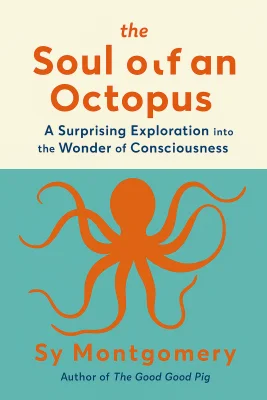
The Soul of an Octopus
A Surprising Exploration into the Wonder of Consciousness
Categories
Nonfiction, Psychology, Science, Memoir, Animals, Nature, Audiobook, Adult, Biology, Book Club
Content Type
Book
Binding
Hardcover
Year
2015
Publisher
Atria Books
Language
English
ISBN13
9781451697711
File Download
PDF | EPUB
The Soul of an Octopus Plot Summary
Introduction
Imagine meeting an alien intelligence right here on Earth—one with three hearts, blue blood, and the ability to taste with its skin. This creature can solve puzzles, recognize individual humans, and change its appearance faster than you can blink. Yet most people dismiss it as a simple, slimy sea monster. The octopus represents one of nature's most extraordinary experiments in intelligence, developing complex cognitive abilities along an evolutionary path completely separate from our own. For over 500 million years, octopuses have been perfecting their remarkable abilities in the ocean's depths. Their intelligence emerged from challenges vastly different from those that shaped human cognition, resulting in a form of consciousness that may be fundamentally alien to our own experience. Through careful observation and scientific study, we're beginning to understand that these eight-armed marvels possess sophisticated problem-solving skills, individual personalities, and perhaps even emotional lives. This exploration into octopus intelligence challenges our assumptions about consciousness itself and reveals that the spark of awareness may take forms we've barely begun to imagine.
Chapter 1: The Extraordinary Anatomy of Eight-Armed Intelligence
The octopus body plan seems like something from science fiction, yet it represents one of evolution's most successful designs for underwater life. Unlike vertebrates with their rigid internal skeletons, an octopus is essentially a muscular bag with eight incredibly flexible arms. This boneless architecture allows them to squeeze through any opening larger than their hard beak—imagine fitting through a hole the size of a quarter when you're as large as a basketball. Each of those eight arms operates with remarkable independence, containing about two-thirds of the animal's neurons. This means an octopus arm can taste, touch, and even react to stimuli without input from the central brain. When an arm is severed, it continues moving and hunting for hours, passing food toward where the mouth used to be. It's as if each arm has its own primitive consciousness, working together in a symphony of distributed intelligence that we're only beginning to understand. The octopus's three hearts pump blue, copper-based blood through a body that can instantly transform its texture and color. Their skin contains millions of chromatophores—tiny sacs of pigment that can open and close in milliseconds, creating patterns more complex than any digital display. This "electric skin" serves as both camouflage and communication system, allowing octopuses to become living billboards broadcasting their emotions and intentions. Perhaps most remarkable is their combination of strength and sensitivity. A single sucker can lift thirty pounds, yet these same appendages can perform delicate tasks like unscrewing jar lids or untying knots. The octopus represents a completely different solution to the challenge of building an intelligent body, one that prioritizes flexibility and adaptability over rigid structure.
Chapter 2: Cognitive Abilities and Problem-Solving Skills
When researchers first began studying octopus intelligence systematically, they discovered abilities that challenged everything we thought we knew about invertebrate cognition. Octopuses can navigate complex mazes, learn to open sequential locks, and remember solutions to problems for weeks. They demonstrate what scientists call "insight learning"—the ability to solve new problems by applying previous experience in creative ways. Laboratory studies reveal octopuses can distinguish between different shapes, patterns, and even individual humans. They form preferences and show distinct personalities, with some individuals being bold and curious while others remain shy and cautious. This individuality extends to their problem-solving approaches; some octopuses methodically work through challenges while others prefer to use brute force, occasionally breaking puzzle boxes rather than solving them properly. What makes octopus intelligence particularly fascinating is its independence from mammalian cognition. While vertebrate intelligence evolved from social pressures and communication needs, octopus intelligence emerged from the demands of being a soft-bodied predator in a dangerous ocean. They must constantly make split-second decisions about when to hide, when to attack, and how to escape from threats, all while processing information through skin that can taste and eyes that can see polarized light. Recent research suggests octopuses can plan for future events, use tools, and even engage in play behavior—activities once thought unique to higher vertebrates. They've been observed collecting coconut shells to use as portable shelters and stacking rocks to create fortress-like dens. These behaviors indicate not just intelligence, but the kind of forward-thinking and environmental manipulation that suggests a rich inner mental life.
Chapter 3: Camouflage Masters: The Art of Deception
The octopus's mastery of disguise goes far beyond simple color changing. These animals are living shape-shifters, capable of transforming their appearance in ways that seem to bend the laws of physics. In less than a second, an octopus can shift from smooth and pale to bumpy and dark, mimicking coral, rocks, seaweed, or even other animals with uncanny precision. This extraordinary ability stems from a three-layer skin system more sophisticated than any human technology. The deepest layer reflects background light, while the middle layer creates iridescent blues, greens, and golds. The top layer contains millions of chromatophores that can expand or contract to reveal different amounts of pigment. Each of these elements is under conscious neural control, meaning the octopus actively chooses its disguise based on its surroundings and intentions. Beyond simple camouflage, octopuses use their skin as a communication system. They can create "passing cloud" displays that make them appear to be moving when they're actually still, or flash warning colors to deter predators. Some species can even mimic the appearance and behavior of other sea creatures entirely, shifting from flatfish to sea snake to lionfish as circumstances require. What makes this ability truly remarkable is its speed and precision. The octopus must first assess its environment, choose an appropriate disguise, execute the transformation, and then monitor the results to ensure the deception is working. This process requires not only sophisticated motor control but also a theory of mind—the ability to understand how other creatures perceive the world and predict their reactions.
Chapter 4: Emotional Lives and Social Behavior
While octopuses were long thought to be solitary creatures driven purely by instinct, mounting evidence suggests they possess rich emotional lives. They demonstrate what appears to be curiosity, playfulness, irritation, and even affection. Some octopuses have been observed engaging in apparently playful behavior, bouncing balls around their tanks or jetting streams of water at floating objects just for the stimulation. Individual octopuses show distinct personalities that remain consistent over time. Some are bold explorers who investigate every new object in their environment, while others prefer to hide and observe from a distance. These personality differences affect everything from hunting strategies to social interactions, suggesting that octopus behavior is guided by individual preferences rather than rigid instinctual programming. Perhaps most surprisingly, octopuses can form relationships with humans. They recognize individual people and treat familiar caretakers differently from strangers. Some become excited when their favorite human approaches, rushing to the front of their tank for interaction. Others show clear preferences, demonstrating affection for some people while actively avoiding or even squirting water at those they dislike. Recent discoveries of sites where multiple octopuses live in close proximity have revolutionized our understanding of their social behavior. At these "octopus cities," individuals maintain separate dens but interact regularly, sometimes sharing food or engaging in complex displays. This suggests that at least some octopus species may be more social than previously believed, capable of negotiating the complex social dynamics that drive intelligence in many other animals.
Chapter 5: Memory and Learning Capabilities
The octopus memory system challenges our assumptions about how intelligent behavior can emerge from relatively simple neural networks. Despite having brains organized very differently from vertebrates, octopuses demonstrate both short-term working memory and long-term retention of learned information. They can remember maze solutions for weeks and apply learned rules to novel situations. What makes octopus memory particularly interesting is its distributed nature. With most of their neurons located in their arms rather than their central brain, octopuses may process and store information in ways fundamentally different from centralized nervous systems. Each arm might maintain its own memory bank of textures, tastes, and movements, creating a form of bodily knowledge that operates independently of conscious thought. Laboratory studies show octopuses can learn through observation, watching other octopuses solve problems and then applying those solutions themselves. They can also learn from humans, following pointing gestures and responding to visual cues in ways that suggest they understand symbolic communication. This social learning ability implies that octopus intelligence might be enhanced through cultural transmission in the wild. The speed of octopus learning is equally impressive. Young octopuses can master complex tasks in just a few trials, and they retain this knowledge even as they grow and their brains develop. This rapid learning ability likely reflects the challenges of their lifestyle—as vulnerable soft-bodied predators, octopuses must quickly master their environment or risk becoming someone else's dinner.
Chapter 6: The Unique Neural Architecture of Cephalopods
The octopus nervous system represents an entirely different approach to organizing intelligent behavior. Unlike vertebrates with centralized brains controlling peripheral nerves, octopuses have evolved a distributed network where the majority of neurons reside in the arms themselves. This arrangement creates what researchers describe as a "collaborative" nervous system, where multiple processing centers work together to coordinate behavior. Each octopus arm contains roughly as many neurons as the entire brain of many vertebrates. These arm-brains can process sensory information, make decisions, and execute complex movements without consulting the central brain. This distributed architecture allows octopuses to multitask in ways impossible for centralized nervous systems—they can simultaneously explore multiple crevices, manipulate several objects, and process sensory input from all eight arms. The octopus brain itself is organized into numerous distinct lobes, each specialized for different functions. Some process visual information from their sophisticated eyes, while others integrate input from their chemical-sensing skin. The brain acts more like a conductor coordinating an orchestra than a commander issuing orders, allowing for the fluid, adaptive behavior that characterizes octopus intelligence. This neural organization may give octopuses a form of consciousness radically different from our own. Rather than a unified sense of self, they might experience multiple streams of awareness—one for each arm, perhaps, coordinated but not completely integrated. This possibility challenges our vertebrate-centric assumptions about what consciousness must look like and suggests that intelligent awareness might take forms we can barely imagine.
Chapter 7: Comparative Intelligence: Octopuses vs. Vertebrates
When we compare octopus intelligence to that of vertebrates, we encounter a fascinating example of convergent evolution—the independent development of similar capabilities through completely different pathways. Both lineages evolved complex brains, sophisticated eyes, and advanced learning abilities, yet they achieved these features using entirely different biological blueprints. Vertebrate intelligence is largely social, driven by the need to navigate complex relationships within groups. Our cognitive abilities evolved to predict the behavior of other individuals, communicate abstract concepts, and cooperate in ways that benefit the entire community. Octopus intelligence, by contrast, appears to be primarily ecological, shaped by the demands of being a camouflaged predator in a dangerous environment. Despite these different origins, octopuses match many vertebrates in problem-solving ability, memory capacity, and behavioral flexibility. They can perform cognitive tasks that require planning, exhibit individual preferences and personalities, and demonstrate the kind of insight learning once thought unique to mammals and birds. In some areas, such as camouflage control and distributed processing, they far exceed vertebrate capabilities. Perhaps most importantly, octopuses force us to expand our definition of intelligence itself. Their success demonstrates that sophisticated cognition doesn't require a backbone, warm blood, or social living. Intelligence, it seems, is not a single phenomenon but a constellation of abilities that can emerge whenever evolution faces certain challenges. By studying octopus intelligence, we gain not only insight into these remarkable animals but also a broader understanding of consciousness as a fundamental feature of complex life.
Summary
The octopus mind represents one of evolution's most extraordinary experiments in consciousness, developing sophisticated intelligence along a pathway completely independent from our own vertebrate heritage. These eight-armed aliens of the sea challenge every assumption we hold about what it means to be intelligent, demonstrating that consciousness can emerge in forms radically different from the centralized, social model we know best. Understanding octopus intelligence opens fascinating questions about the nature of consciousness itself and our place in a universe filled with minds we're only beginning to recognize. How many other forms of intelligence share our planet, hidden beneath scales, shells, or skin so different from our own that we've failed to notice the spark of awareness within? The octopus reminds us that intelligence is not humanity's exclusive domain but a precious and diverse feature of life that deserves our wonder, respect, and protection.
Best Quote
“If you took the monsters' point of view, everything they did made perfect sense. The trick was learning to think like a monster.” ― Sy Montgomery, The Soul of an Octopus: A Surprising Exploration into the Wonder of Consciousness
About Author

Sy Montgomery
Montgomery explores the intricate relationships between humans and the natural world, seeking to uncover the emotional and cognitive dimensions of animals. Her writing intertwines scientific inquiry with personal narrative, creating a vivid tapestry that draws readers into a world where the boundaries between species blur. In works like "The Soul of an Octopus" and "The Good Good Pig", she challenges readers to reconsider their perceptions of consciousness and empathy. By emphasizing conservation and the interconnectedness of all life, Montgomery's books foster a deeper understanding and respect for the environment.\n\nFor readers, Montgomery’s work offers a profound insight into the lives of animals, thereby expanding their appreciation for biodiversity. Her detailed narratives not only educate but also inspire action towards conservation efforts. Children and adults alike find her storytelling accessible, as she seamlessly combines meticulous research with captivating prose. Moreover, her collaborations, such as with photographer Nic Bishop, bring scientific endeavors to life for young readers, encouraging the next generation of environmental stewards. This approach has garnered Montgomery several accolades, including being a National Book Award Finalist.\n\nSy Montgomery’s contributions to literature and conservation have been widely recognized, with multiple bestsellers to her name. Her unique blend of adventure and empathy resonates with a broad audience, making her a pivotal figure in nature writing. As an author, her ability to engage readers with both facts and emotion ensures that her works remain influential in shaping attitudes toward the natural world. This short bio captures the essence of her career, highlighting her commitment to fostering a greater understanding of the planet's diverse inhabitants.
Read moreDownload PDF & EPUB
To save this Black List summary for later, download the free PDF and EPUB. You can print it out, or read offline at your convenience.
The Soul of an Octopus
by Sy Montgomery
