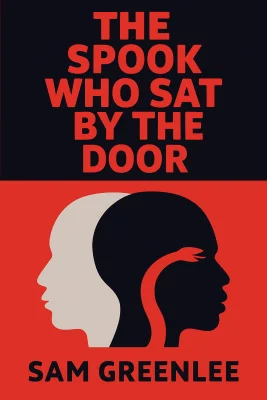
The Spook Who Sat by the Door
Categories
Fiction, Politics, Classics, Audiobook, Mystery, Historical Fiction, Thriller, African American, Novels, Race
Content Type
Book
Binding
Paperback
Year
2014
Publisher
Lushena Books
Language
English
ISBN13
9781930097278
File Download
PDF | EPUB
The Spook Who Sat by the Door Plot Summary
Introduction
In the marble halls of CIA headquarters at Langley, Freeman sits by the door—literally and figuratively—as the agency's token black officer. For five years, he has played the perfect Uncle Tom: shuffling, smiling, grateful for his reproduction clerk position while the white establishment pats itself on the back for integration. But Freeman harbors a secret that would shake the foundations of American power: he is Uncle Tom only by day. By night, he is something far more dangerous. A former infantry officer with advanced training in guerrilla warfare, Freeman has spent his CIA years not just copying classified documents, but studying them. He has memorized every manual on insurgency, every report on urban warfare, every strategy for crushing revolutionary movements. Now he plans to turn that knowledge against its creators. His target is not some foreign enemy, but the very system that created him—and his weapon will be the forgotten young men of Chicago's South Side, transformed from street gang members into America's first urban guerrilla army.
Chapter 1: The Token Integration: Freeman's CIA Recruitment and Training
The political machinery that brought Freeman to the CIA began with Senator Hennington's reelection crisis. Poll numbers showed the liberal senator hemorrhaging black votes, and his staff desperately needed a headline-grabbing civil rights victory. The CIA's lily-white officer corps presented the perfect target for righteous indignation. Senator Hennington's attack was surgical. In closed Senate hearings, he cornered the CIA director about the agency's discriminatory hiring practices. The general squirmed as Hennington pointed out that while the CIA employed black janitors and kitchen staff, not a single Negro held officer rank. The exchange was leaked to sympathetic columnists, creating exactly the media firestorm the senator needed. Under pressure, the CIA launched a token recruitment program. From hundreds of candidates, they selected twenty-three middle-class Negroes for preliminary training. Freeman was the anomaly in this group of doctors' sons and lawyers' nephews—a working-class kid from Chicago's ghetto who had learned to speak their language at Michigan State. While his classmates networked and preened, Freeman observed and planned. The training camp became Freeman's graduate school in deception. He deliberately projected incompetence while excelling academically, shuffled when he could have strode, and spoke in street dialect when he possessed two college degrees. His mask was so perfect that instructors forgot he existed even as he topped every examination. When a racist combat trainer challenged him to a judo match, Freeman's controlled violence shocked everyone—including himself with how easily he could flip between personas. One by one, Freeman watched his classmates wash out. Poor marksmanship, inadequate physical conditioning, and homosexuality became grounds for dismissal. The CIA's plan was working perfectly: they could claim integration while ensuring no qualified black officers actually graduated. Freeman alone survived because he was exactly what they didn't expect—a supremely competent man pretending to be their stereotype.
Chapter 2: Playing the Role: Five Years as the Agency's Black Showpiece
Freeman's CIA career became an extended performance in institutional racism. Promoted to "special assistant to the director," he discovered his real job was to be professionally black—a walking advertisement for the agency's progressive hiring policies. He attended meetings where he said nothing, toured visiting senators around the building, and sat in his glass-walled office like a museum exhibit. The work was soul-crushing by design. Freeman spent his days operating reproduction machines, making copies of classified documents that revealed America's global manipulation. He ate lunch alone, listening to rhythm and blues on a transistor radio, while his white colleagues discussed him in the cafeteria as if he were a fascinating anthropological specimen. The general himself took Freeman to lunch, explaining with paternal condescension how Negroes weren't quite ready for field work but might evolve sufficiently in a few generations. But Freeman was learning. Every classified manual on guerrilla warfare, every study of successful insurgencies, every analysis of how revolutionary movements could be crushed—he absorbed it all. His position gave him access to the agency's most sensitive operational knowledge, including detailed studies of urban warfare in Algeria, Vietnam tactics, and profiles of effective underground organizations. What the CIA intended as busy work became Freeman's private military academy. The psychological toll was immense. Freeman maintained multiple covers, playing the grateful Negro at work while cultivating a playboy image in Chicago's black middle class during weekend visits home. He took white liberal secretaries to lunch, endured their clumsy attempts at color-blind flirtation, and smiled when they called him "articulate" as if speaking English were an impressive achievement for someone of his race. His relationship with Joy, a college girlfriend now married to a prominent black doctor, crystallized Freeman's rage. She represented everything he despised about the black bourgeoisie—their desperate assimilation, their contempt for lower-class blacks, their willingness to accept token positions in exchange for proximity to white power. When Joy finally broke off their affair to preserve her marriage, Freeman felt only relief. He was becoming someone even he didn't recognize.
Chapter 3: Return to Chicago: Building a Revolutionary Foundation
Freeman's transformation from government token to revolutionary leader began with a calculated resignation. After five years of humiliation, he had gathered enough intelligence to start a war. He tendered his resignation to the general, citing a desire to "help his people" through social work back in Chicago. The general, proud of his Negro protégé's dedication to his race, arranged a White House meeting where the President accidentally called Freeman "Foreman" while presenting him with a ceremonial pocket knife. The South Side Youth Foundation welcomed Freeman as executive director with enthusiasm. His CIA credentials impressed the board of white liberals who ran the organization, while his street background suggested he could reach the unreachable gang members who terrorized the neighborhood. Freeman accepted their praise while privately planning their downfall. His target was the King Cobras, the most feared gang on the South Side. These weren't the disorganized hoodlums of popular imagination, but a disciplined underground army waiting for the right leader. Freeman had been their war chief as a teenager—they called him "Turk" then—and he understood their potential better than any sociologist. The Cobras possessed something invaluable: they feared nothing because they had nothing to lose. Freeman's recruitment strategy was brilliant in its simplicity. He allowed the gang to spread rumors that they were using heroin, which made the police dismiss them as non-threatening addicts. In reality, the Cobras were undergoing intensive military training in warehouses and basements across the South Side. Freeman taught them weapons handling, small-unit tactics, demolitions theory, and resistance to interrogation—all the skills he had acquired during five years of studying CIA manuals. The foundation's board celebrated Freeman's success in "pacifying" the Cobras, never suspecting that their grant money was funding America's first urban guerrilla training program. Freeman played his role perfectly, giving lectures to suburban white audiences about juvenile delinquency while his students learned to build bombs and conduct nighttime raids. The irony was exquisite: white America was literally paying for its own destruction.
Chapter 4: Training the Cobras: From Street Gang to Freedom Fighters
Freeman's transformation of the King Cobras from street thugs into revolutionary soldiers required more than military training—it demanded a complete reconstruction of their identity as black men in America. He began with history lessons, teaching them about slave rebellions their schools had never mentioned, about Nat Turner and Denmark Vesey, about the countless acts of resistance that white historians had erased from official memory. The gang's existing structure proved perfect for underground warfare. They already operated in cells, maintained strict discipline, and commanded absolute loyalty from their members. Freeman simply militarized what existed, adding weapons training to their natural toughness and giving strategic direction to their random violence. The poolroom became their headquarters, late-night sessions their war college. Dean, the gang's methodical leader, became Freeman's second-in-command. Sugar Hips Scott, a mathematical genius destroyed by ghetto schools, handled logistics and planning. Stud Davis, born for violence, commanded their attack teams. Pretty Willie Du Bois, light-skinned enough to pass for white, ran propaganda operations while struggling with his own identity crisis. These four lieutenants would eventually spread across America, seeding revolution in every major city. Freeman's most brilliant innovation was psychological. He convinced the Cobras that their blackness was not a burden but a weapon. While white society insisted on their invisibility, Freeman taught them to exploit that blindness. They moved through the city unseen because white people literally could not distinguish between individual black faces. They could strike anywhere because no one suspected that "niggers" possessed the intelligence for sophisticated military operations. The training was relentless. Weapons maintenance in abandoned buildings. Urban combat techniques in vacant lots. Communications security in basement hideouts. Freeman pushed them beyond their limits, knowing that the margin between victory and death would be measured in split seconds of superior preparation. When they robbed a bank to fund their operations, using Pretty Willie's ability to pass for white as the perfect disguise, Freeman knew his army was ready for war.
Chapter 5: Igniting the Spark: The Riots Begin
The summer of 1967 brought the heat that always preceded explosion in America's ghettos. Freeman knew that riot season was approaching—police brutality would eventually push the community past its breaking point, providing perfect cover for the Cobras' first military operations. He didn't have to create the spark; he simply had to be ready when it came. The trigger was depressingly predictable: a white cop shot a fifteen-year-old black boy beneath the El tracks. The neighborhood erupted as Freeman had known it would, but when police brought German shepherds to disperse the crowd, righteous anger became murderous rage. Freeman watched from the shadows as Detective Sergeant Pete Dawson, his childhood friend now working for the enemy, tried desperately to prevent catastrophe. But some things cannot be stopped once started. The riots followed the familiar pattern—looting, burning, random violence that accomplished nothing except providing television footage for white consumption. But hidden within the chaos, Freeman's Cobras conducted their first live-fire exercises. They moved with discipline through the burning streets, striking military targets while media attention focused on teenagers stealing televisions. Every police position, every National Guard checkpoint became intelligence for future operations. Freeman's tactical genius emerged in his use of the riots as cover for major weapons theft. While police chased looters through the streets, his men systematically emptied a National Guard armory, making off with enough military hardware to equip a small army. The theft went unnoticed for days, buried beneath reports of property damage and arrest statistics. By the time authorities realized what had happened, the weapons had vanished into the underground. The riots served another purpose: they revealed the true nature of American law enforcement. Freeman watched supposedly professional soldiers shoot into apartment buildings, saw police beat surrendering protesters, witnessed the naked racism that all the civil rights legislation couldn't touch. His men saw it too, and their last illusions about reforming the system died in those burning streets. There would be no peaceful solution to the problem of being black in America.
Chapter 6: Nationwide Insurgency: The Revolution Spreads
Freeman's master stroke was the expansion beyond Chicago. Throughout the winter, his best lieutenants had infiltrated other cities, identifying the most promising gangs and beginning the slow work of recruitment and training. By spring, revolutionary cells were active in twelve major American cities, each one an exact replica of the Chicago model but adapted to local conditions. The synchronization was perfect. Freeman's declaration of war began with the bombing of Chicago's mayor's office—empty and harmless, but symbolically devastating. Within hours, similar attacks erupted across the country: Oakland, Los Angeles, Harlem, Philadelphia. Each strike was precisely calculated for maximum psychological impact and minimum collateral damage. Freeman wanted to terrify the establishment, not create martyrs for their cause. The government's response proved Freeman's strategic brilliance. Politicians immediately blamed Communist agitators, unable to conceive that American Negroes might possess the intelligence and organization for such sophisticated operations. FBI task forces searched frantically for white masterminds and foreign infiltrators while the real revolutionaries moved invisibly through their own communities, protected by the same prejudices that had oppressed them. Freeman's propaganda campaign was equally masterful. His radio broadcasts, delivered through jury-rigged equipment placed throughout the ghettos, spoke directly to black America in language no government spokesman could match. He called himself "Uncle Tom"—reclaiming the ultimate insult as a badge of honor—and promised that the days of begging for freedom were over. The broadcasts became appointment listening in every urban ghetto, spreading the revolution's message faster than any government could suppress it. The military situation deteriorated rapidly for federal forces. Elite paratroopers replaced incompetent National Guard units, but they faced an impossible tactical situation. Freeman's fighters knew every alley and rooftop in their neighborhoods, could blend into the civilian population at will, and struck only when they possessed overwhelming local superiority. Government forces, trained for conventional warfare, found themselves outmaneuvered by an enemy that refused to fight fair.
Chapter 7: Final Sacrifice: Freeman's Cover Blown
Freeman's downfall came from an unexpected source—his childhood friend Pete Dawson had connected too many dots. Years of investigation, combined with intimate knowledge of Freeman's character and capabilities, led the detective to the terrible truth: his old football teammate was America's most wanted terrorist. The confrontation in Freeman's apartment became inevitable, and with it, the end of Freeman's double life. The fight was brief and brutal. Freeman had hoped to recruit Dawson, to save at least one friend from the coming conflagration, but Dawson's loyalty to the badge proved stronger than their shared history. When the detective reached for his handcuffs, Freeman struck with lethal precision. The man who had once been his brother died on the bedroom floor, another casualty of America's racial war. Freeman's wound was serious, but his organization had been designed to survive his capture or death. As he waited for medical attention, listening to the sounds of battle erupting across the city, he felt a grim satisfaction. The Cobras no longer needed him. They had learned his lessons too well, had become the soldiers he had trained them to be. His revolution would continue without him, spreading like wildfire through every ghetto in America. The government's counterinsurgency experts would never find the white Communist mastermind they sought because no such person existed. Freeman's revolution was purely, authentically American—the logical product of a system that had pushed its victims beyond endurance. He had given his people something more valuable than integration or civil rights: he had given them the tools to fight back. Freeman's final victory was philosophical. He had proven that the oppressed could master their oppressors' techniques, could turn the tools of domination into weapons of liberation. The CIA had created the perfect spy by training him to be invisible, to become whatever his handlers needed him to be. But Freeman had used that same training to become invisible to them, hiding in plain sight while he built their destruction.
Summary
Freeman's revolution succeeded in ways that traditional civil rights movements never could, because it forced white America to confront the true cost of racial oppression. By training urban guerrillas in the techniques of modern warfare, he transformed the ghetto from a containment zone into a battlefield, making the comfortable assumption of black passivity untenable. His genius lay in recognizing that the same invisibility that white society used to ignore black humanity could be weaponized to deadly effect. The story Freeman's disciples would tell was larger than any individual life—it was the tale of a people who refused to die quietly in America's shadows. Like the slave rebellions that official history forgot, Freeman's war would be written out of textbooks and buried in classified files. But in the poolrooms and street corners where young black men learned to see themselves as soldiers rather than victims, the legend would endure. Freeman had given his people something irreplaceable: proof that they could fight, and fighting, could be free. The revolution he started would burn until justice replaced the carefully maintained lie of American equality, or until there was nothing left to burn.
Best Quote
“Whites were fools and one had constantly to fight in order not to underestimate their power and danger, because a powerful and dangerous fool is not to be underestimated. Add the elements of hypocrisy and fear and one had an extremely volatile combination. It was a combination that could easily blow the country, even the world, apart. In” ― Sam Greenlee, The Spook Who Sat by the Door
Review Summary
Strengths: The review highlights the book's profound impact, likening it to a powerful video of raw talent, and praises its ability to provoke deep reflection on racial issues. It emphasizes the book's relevance to current social movements like Black Lives Matter and its potential to inspire change in marginalized communities. Overall: The reader expresses a highly positive sentiment, considering the book one of the best they've read. They recommend it for its insightful exploration of racial dynamics and its potential to serve as a catalyst for social and political change.
About Author

Sam Greenlee
Greenlee reframes African American identity and resistance through his radical and politically charged narratives. His works often blend realism with a deep commitment to racial justice, exploring themes of racial politics, espionage, and guerrilla warfare. By drawing on his extensive international experience, particularly as one of the first African American Foreign Service Officers, Greenlee's narratives often intersect with his lived experiences, allowing him to critique and analyze the sociopolitical landscape from a unique vantage point.\n\nHis most notable book, "The Spook Who Sat by the Door", showcases these themes by portraying a Black CIA officer who uses his training to empower a Black guerrilla movement in the United States. This controversial and acclaimed work was later adapted into a film, further amplifying its impact. Meanwhile, his poetry collections, such as "Blues for an African Princess", integrate blues aesthetics to convey the struggles and resilience of African American life. Readers interested in exploring the intersections of race, identity, and empowerment in literature can greatly benefit from his bold narratives, which continue to inspire discourse on social justice.\n\nGreenlee's contributions to literature have been recognized with several awards, including the Book of the Year award from the "London Sunday Times" and the Meritorious Service Award from the USIA. In 1990, he was named Illinois Poet Laureate, acknowledging his significant influence on the literary and cultural landscapes. This short bio reflects his enduring legacy as an author whose works resonate with audiences seeking to understand the complexities of race and power dynamics in society.
Read moreDownload PDF & EPUB
To save this Black List summary for later, download the free PDF and EPUB. You can print it out, or read offline at your convenience.
The Spook Who Sat by the Door
by Sam Greenlee
