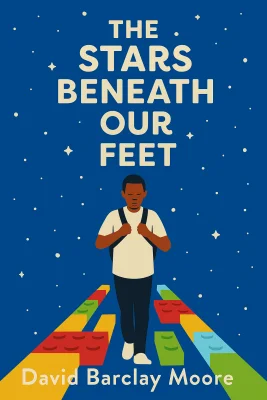
The Stars Beneath Our Feet
Categories
Fiction, Audiobook, Young Adult, Grief, African American, Contemporary, LGBT, Realistic Fiction, Middle Grade, Friendship
Content Type
Book
Binding
Library Binding
Year
2017
Publisher
Knopf Books for Young Readers
Language
English
ISBN13
9781524701253
File Download
PDF | EPUB
The Stars Beneath Our Feet Plot Summary
Introduction
The weight of grief sits heavy on a twelve-year-old boy's chest like a stone that grows heavier with each passing day. Wallace "Lolly" Rachpaul walks through the streets of Harlem with eyes that dart nervously at every corner, knowing his older brother Jermaine will never again be there to protect him. Two months have passed since that October night when gunshots echoed through a Bronx nightclub, and the rock in Lolly's heart threatens to crush what remains of his childhood innocence. In the projects of St. Nicholas Houses, winter arrives with more than just cold winds. It brings predators who circle like vultures, seeking fresh prey among the young and vulnerable. When mysterious gifts appear and unlikely alliances form in the shadows of storage rooms, Lolly discovers that sometimes salvation comes wrapped in the most unexpected packages. In a world where the line between survival and destruction blurs daily, one boy's journey through grief becomes a testament to the power of creation over chaos, imagination over rage, and hope over the darkness that threatens to swallow everything whole.
Chapter 1: A Heavy Stone: Grief and Loss in Harlem's Winter
The two older boys trailing behind Lolly on Christmas Eve move like sharks scenting blood in the water. Harper and Gully have been circling for weeks, waiting for the perfect moment to strike. Their eyes lock onto his new sneakers with predatory focus, and Lolly knows that without Jermaine's protective presence, he's nothing more than easy prey walking through the neon-lit streets of 125th. The holiday lights blur through tears he refuses to shed as memories crash over him like waves. That heavy stone in his chest grows denser with each step, a physical manifestation of the grief that threatens to suffocate him. Christmas means nothing when the person who made it magical lies buried in cold ground. The festive music from storefront speakers sounds like mockery, each note a reminder of celebrations that will never come again. In the safety of a corner gift shop, Lolly watches his stalkers through frost-covered windows, their patient grins promising violence. The elderly clerk notices the danger and keeps the boys at bay with his presence, allowing Lolly to purchase last-minute gifts with trembling hands. But stepping back onto those streets means facing the inevitable confrontation that his brother's absence has made possible. The projects of St. Nicholas Houses rise before him like concrete guardians, their familiar bulk offering sanctuary from the predators who dare not follow him onto territory they don't control. Here among the graffitied walls and broken elevators, Lolly finds momentary peace. But even home cannot protect him from the weight of memories that grow heavier with each passing day, threatening to crush the boy beneath their unbearable mass.
Chapter 2: Building Harmonee: Finding Refuge in Imagination
Christmas morning brings unexpected salvation in the form of trash bags filled with discarded Lego bricks, a gift from his mother's girlfriend Yvonne who works at the toy emporium downtown. What begins as charity transforms into obsession as Lolly tears apart his carefully constructed childhood sets, their ordered perfection no longer matching the chaos consuming his world. In the depths of that first sleepless night, something awakens within him. His hands move with desperate purpose, building not from instruction manuals but from the raw need to create something new from broken pieces. The House of Moneekrom rises from the rubble of his old constructions, an alien castle ruled by King Blaze and Queen Misteria, their son Prince Stellar locked in eternal battle against the monstrous Swarm that threatens their realm. The fantasy city spreads across his bedroom floor like a physical manifestation of his inner world, each tower and wall a barrier against the grief threatening to consume him. Here in this realm of plastic bricks and imagination, Lolly finds something he thought lost forever: purpose. The stories flow from him like water from a broken dam, each alien adventure a way to process emotions too vast and terrible for a twelve-year-old mind to comprehend. His mother watches with growing concern as the construction consumes more space, spreading into their cramped living room like an invasive species. Yet she sees something in her son's fevered building that gives her hope. For the first time since Jermaine's death, Lolly shows signs of life, his eyes bright with creative fire as he shapes plastic dreams into tangible reality.
Chapter 3: Shared Spaces: When Rose Enters the Storage Room
The community center's storage room becomes Lolly's sanctuary when his expanding city threatens to overwhelm their apartment entirely. Here in the dusty darkness, illuminated only by the warm breath of heating vents, Harmonee grows into something magnificent and strange. The alien metropolis spreads across twenty feet of concrete floor, a testament to imagination's power over despair. Into this sacred space comes an unwelcome invader. Rosamund Major, known cruelly as Big Rose, crashes through the door like a force of nature, her massive frame and mysterious silence making her seem more monster than girl. She takes Lolly's bricks without asking, builds without permission, and transforms his private refuge into contested territory. Their silent war plays out in plastic and determination, Rose constructing a meticulous replica of their housing project while Lolly expands his fantasy realm with increasing desperation. She works with mechanical precision, her photographic memory capturing every architectural detail of their concrete world, while he builds from pure imagination, each tower and bridge a rejection of reality's harsh limitations. The Ten-Foot Tower Contest emerges from their rivalry like a medieval trial by combat. Both children pour their souls into vertical monuments reaching toward a ceiling that represents their respective dreams. When the heating vent's relentless breath topples both structures in spectacular cascades of plastic destruction, something unexpected happens. In the aftermath of mutual defeat, they discover the possibility of collaboration, their separate worlds capable of connection through bridges built with patience and understanding.
Chapter 4: Streets of Danger: Confrontations and Stolen Identities
The streets of East Harlem reveal their true predatory nature when Harper and Gully finally corner their prey outside a bodega where rain turns concrete into treacherous ice. The attack comes swift and brutal, two against two as Vega falls victim alongside his best friend, their phones and dignity stripped away in moments of helpless violence. Rose's intervention arrives like divine retribution, her lunch box becoming a weapon of righteous fury as she demolishes the older boys with shocking efficiency. Her massive frame and unexpected martial prowess transform her from victim to avenger, sending Harper fleeing while Gully stumbles away cursing and bleeding. The girl who rarely speaks becomes a force of nature when protecting those she considers hers. But victory feels hollow when the damage reveals itself in private moments. Vega retreats into his bedroom with a secret that gleams black and deadly in a shoebox beneath his bed. The Glock that his cousin Frito provides represents more than protection; it's a gateway to a world that devoured Jermaine and threatens to claim another generation of St. Nicholas Houses' children. The weight of the weapon in Lolly's hands feels like destiny, cold metal singing songs of revenge and power that his grief-addled mind finds impossible to resist. Here is the solution to their helplessness, the answer to every humiliation suffered at the hands of predators who mistake youth for weakness. Yet something deeper than fear holds him back, a recognition that this path leads only to the cemetery where his brother lies waiting.
Chapter 5: The Weight of the Gun: Choices That Define Us
Night after sleepless night, Lolly's imagination conjures scenes of violent retribution played out on Harlem's neon-lit stages. He sees Harper and Gully falling like broken toys, their bodies dissolving into the same plastic bricks that built his fantasy worlds. The gun calls to him with promises of power and respect, offering transformation from victim to victor in one trigger pull. Vega's transformation frightens more than any weapon, his gentle nature corroding under the weight of humiliation and rage. The boy who once made music with violin strings now speaks only of violence, his cousin Frito's influence poisoning his thoughts with talk of crews and territories and the respect that comes only through fear. The meeting at Tuttle's toy store brings unexpected complications when Yvonne's arrest exposes the source of their endless Lego supply. What seemed like charity reveals itself as theft, forcing Lolly to confront the reality that even his sanctuary was built on borrowed time and stolen goods. The businessman's accusations cut deep, suggesting that poverty excuses any crime, that project children are born criminals waiting for opportunity. Yet in that sterile office high above the city, Lolly discovers strength he didn't know he possessed. His poetry quotations and earnest promises surprise even himself, revealing depths of character that shame and struggle could not destroy. The businessman's grudging respect feels like vindication, proof that creativity trumps criminality when given the chance to flourish.
Chapter 6: Throwing Away Darkness: Choosing Creation Over Destruction
The Harlem River runs black beneath their feet as Lolly and Vega stand at the precipice of their own destruction. The gun weighs heavy in his friend's hands, representing every slight and humiliation they've suffered, every moment of powerlessness that drives young men to seek respect through fear. But in that moment of ultimate decision, something clicks into place like the final piece of an enormous construction project. The weapon arcs through darkness and disappears beneath churning waters with a splash that sounds like freedom. Vega's tears flow like a dam bursting, releasing months of accumulated rage and fear into the night air where they dissipate like smoke. The choice reverberates through every aspect of their lives, opening doors that violence would have sealed forever. Steve Jenkins becomes their mentor, showing them the blueprint for escape that he followed from the same streets to success. His advice comes hard-earned from experience: choose your associations carefully, because the people you surround yourself with determine who you become. Lolly's architectural dreams take concrete form when Tuttle offers a commission despite the theft that created their connection. The opportunity to build something beautiful in the toy store's front windows represents more than employment; it's validation that creation holds more power than destruction, that imagination can triumph over circumstance when coupled with determination and hope.
Chapter 7: Wallace, Not Lolly: Becoming Who You're Meant to Be
The storage room's demolition feels like death until something unexpected emerges from destruction's ashes. The bridge that connects Rose's realistic cityscape to Lolly's fantasy realm becomes more than architecture; it represents the connection between harsh reality and limitless possibility, between what is and what could be. Their collaborative masterpiece draws crowds at the community health fair, transforming two outcasts into celebrated artists whose work speaks to something universal in the human experience. Cameras flash and videos upload as their plastic metropolis captures imaginations far beyond the confines of St. Nicholas Houses, proving that genius can emerge from the most unlikely circumstances. Rose's departure to specialized care feels like another loss, but her email attachment preserves their friendship in digital amber. The photograph of two children standing before architectural marvels serves as proof that their journey together changed them both, giving each the tools needed to face whatever challenges await in their separate futures. The final transformation comes not in plastic bricks but in self-determination, as Lolly sheds the diminutive nickname that marked him as child and victim. Wallace Rachpaul emerges from grief's chrysalis as someone new, carrying his brother's memory not as burden but as inspiration, ready to build bridges between the world he inherited and the one he chooses to create.
Summary
From the ashes of tragedy, Wallace Rachpaul constructs something beautiful and lasting, proving that creativity possesses more power than any weapon forged in anger or despair. His journey from grief-stricken victim to celebrated artist shows that even the darkest circumstances cannot extinguish the human capacity for growth and transformation. The bridges he builds—between reality and fantasy, self and other, present pain and future possibility—become monuments to resilience that inspire everyone who encounters them. The stars that Rose places beneath their feet in her miniature city serve as eternal reminders that the dead live on in the creations of those who loved them. Jermaine's memory infuses every brick Wallace places, every story he tells, every choice he makes to build rather than destroy. In learning to carry grief without being crushed by its weight, Wallace discovers that the most profound victories come not from defeating enemies but from refusing to become them, transforming pain into art and dreams into reality one carefully placed piece at a time.
Best Quote
“Since then I had learned the most important thing: the decisions you make can become your life. Your choices are you.” ― David Barclay Moore, The Stars Beneath Our Feet
Review Summary
Strengths: The review highlights the book's ability to capture the complexities of black-male adolescence, particularly through the character of Lolly, who balances childhood dreams with adult challenges. The narrative is praised for addressing themes like death, gang violence, and identity with grace and understanding. The use of African American Vernacular is noted as an enriching element, and the story's focus on friendship, creativity, and coping skills is appreciated. Overall: The reader expresses a highly positive sentiment, recommending the book for its insightful portrayal of a young boy's life and its ability to connect with young, reluctant readers. The book is seen as an important and lovely story that opens eyes to different worlds and experiences.
About Author

David Barclay Moore
Moore navigates the intersection of storytelling and social awareness, crafting narratives that illuminate the resilience of African American youth. His work, particularly in middle grade literature, leverages authentic voices and experiences to explore themes of identity, family, and creativity. By using a first-person vernacular style, inspired by authors like Mark Twain, Moore aims to depict the multidimensional lives of his characters without resorting to stereotypes. This approach is evident in his acclaimed book, "The Stars Beneath Our Feet", which centers on a young boy in Harlem coping with personal loss and community challenges.\n\nHis career as an author and filmmaker reflects a commitment to both narrative depth and social impact. Moore's diverse educational background—spanning creative writing, film, and language studies—equips him with a unique skill set that informs his storytelling methods. This multifaceted approach is also seen in his film projects, such as the documentary "Realness," recognized at various film festivals. For readers, Moore's work offers a window into the experiences of urban youth, promoting empathy and understanding through engaging and relatable narratives.\n\nBeyond literature, Moore's impact extends to the film industry, as his debut novel is being adapted into a film by Michael B. Jordan's production company. This adaptation underscores the broader cultural relevance of Moore's themes and storytelling techniques. His accolades, including the Coretta Scott King–John Steptoe Award for New Talent, highlight his ability to connect with audiences while addressing significant social issues. This bio of Moore encapsulates his dedication to reshaping perceptions and fostering dialogue through the power of narrative.
Read moreDownload PDF & EPUB
To save this Black List summary for later, download the free PDF and EPUB. You can print it out, or read offline at your convenience.
The Stars Beneath Our Feet
by David Barclay Moore
