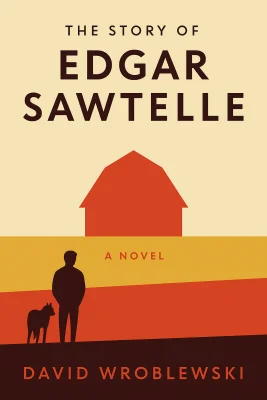
The Story of Edgar Sawtelle
Categories
Fiction, Animals, Audiobook, Historical Fiction, Book Club, Contemporary, Coming Of Age, Adult Fiction, Literary Fiction, Dogs
Content Type
Book
Binding
Hardcover
Year
2008
Publisher
Ecco
Language
English
ASIN
B005DIGU4O
ISBN
0061374229
ISBN13
9780061374227
File Download
PDF | EPUB
The Story of Edgar Sawtelle Plot Summary
Introduction
# The Silent Language of Dogs and the Price of Truth In the remote hills of Wisconsin, where winter silence stretches like a held breath, fourteen-year-old Edgar Sawtelle lives in a world shaped by unspoken understanding. Born without a voice, he communicates through sign language with his parents Gar and Trudy, who run a legendary dog kennel breeding extraordinary animals of remarkable intelligence. Edgar's universe revolves around the barn where dozens of dogs live, each one a testament to his grandfather's vision of creating something beyond nature's original design. His constant companion is Almondine, an aging female who has watched over him since birth with the devotion of a guardian angel. But this fragile paradise built on loyalty and understanding is about to shatter when death arrives unexpectedly, bringing with it secrets that will force Edgar to discover just how far love and betrayal can drive both man and beast. The kennels that seemed like a peaceful kingdom will reveal themselves as a place where primal forces constantly press against the thin veneer of human control, where the bonds between species run deeper than training or breeding could explain.
Chapter 1: The Mute Boy and His Canine Cathedral
Edgar Sawtelle entered the world without a voice, but in the company of dogs who seemed to understand him better than any human ever could. The massive red barn sat like a cathedral in the Wisconsin wilderness, housing dozens of dogs whose intelligence bordered on the supernatural. These weren't ordinary pets but creatures of remarkable intuition, bred through generations of careful selection to anticipate human needs and respond to the subtlest gestures. Edgar's father Gar moved through the kennels with quiet authority, his weathered hands gentle as he examined each animal. Trudy worked alongside him, training the dogs with infinite patience. She had learned sign language for Edgar, and together they developed a complex vocabulary that allowed them to communicate with both each other and the dogs. The animals watched Edgar's hands with the intensity of scholars studying ancient texts, their dark eyes tracking every movement. But it was Almondine who truly understood Edgar's soul. A magnificent female with coat the color of autumn leaves, she had been Edgar's constant companion since birth. She slept beside his bed, followed him through his daily routines, and seemed to anticipate his thoughts before he could form them into signs. When Edgar signed to her, she responded not just with obedience but with something approaching conversation, tilting her head and positioning her body to communicate complex emotions. The kennel became Edgar's classroom and playground. He learned to read the subtle language of canine behavior, to understand the difference between a play bow and a threat display, to recognize which dogs possessed the special intelligence that marked true Sawtelle breeding. His father taught him that these weren't ordinary animals but the result of decades of careful selection, bred not just for obedience but for an almost human capacity for reasoning and emotional connection. In this world where words were unnecessary, Edgar discovered that silence was not a limitation but a different kind of language entirely. The dogs understood his gestures, his expressions, the subtle shifts in his posture that conveyed meaning more clearly than any spoken word ever could.
Chapter 2: Death in the Workshop: A Father's Final Secret
Winter gripped the Wisconsin hills with particular ferocity that year, turning the world into a crystalline wasteland where breath froze in the air. Edgar, now fourteen, had grown into his role as his father's apprentice, spending hours in the hay mow above the kennel training his own litter of seven pups. He had named them from his beloved dictionary, each name carefully chosen to reflect their emerging personalities. On that January afternoon, Edgar was working with distance commands when he heard the other dogs begin to bark. Not the usual excited yipping that accompanied feeding time, but something urgent and distressed. He paused in his training, listening to the cacophony rising from the kennel below. Something was wrong. Descending the wooden stairs with his dogs at his heels, Edgar found his father collapsed on the workshop floor. Gar lay motionless beside an overturned milk can, its contents of rusty bolts and hardware scattered across the concrete. Edgar knelt beside him, his hands shaking as he checked for injuries, for blood, for any sign of what had happened. His father's eyes were open but unfocused, his breathing shallow and labored. Panic seized Edgar as he realized the magnitude of his helplessness. He ran to the house, his feet slipping on the icy ground, and grabbed the telephone with desperate fingers. The operator's voice crackled through the receiver, asking for information Edgar couldn't provide. His mouth opened and closed soundlessly as he struck his chest, trying to force words that would never come. The phone slipped from his hands, shattering against the kitchen counter. When he returned to the barn, his father had stopped breathing. Edgar sat beside the still form, one hand resting on Almondine's trembling flank, until Doctor Papineau arrived hours later. The official cause of death was accidental, a tragic fall that had claimed the life of a good man. But Edgar had seen something in those final moments, something that made his blood run cold and would haunt his dreams for months to come.
Chapter 3: The Uncle's Return: Shadows Behind Kind Gestures
The funeral brought unexpected faces from Edgar's past, including one he had heard about but never met. Claude Sawtelle, Gar's younger brother who had vanished into the Navy twenty years earlier, arrived like a shadow given substance. Lean and weathered, he carried himself with the careful posture of a man accustomed to confined spaces. His resemblance to Gar was startling, yet where Edgar's father had possessed gentle authority, Claude radiated something harder, more dangerous. Trudy welcomed Claude with cautious warmth, recognizing the family's need for additional help during their time of grief. The kennel required constant attention, feeding schedules and medical care that couldn't be interrupted even by death. Claude moved into the spare room and threw himself into the work with surprising skill, demonstrating an intuitive understanding of the dogs that impressed even Edgar's critical eye. But beneath the surface cooperation, tensions simmered. Edgar noticed how Claude's jaw tightened when Gar's name was mentioned, how he avoided certain areas of the property, how his hands sometimes trembled with what might have been suppressed rage or grief. The brothers had parted on bitter terms decades ago, and Claude's return stirred up sediment that had long settled on the bottom of family memory. The first real conflict erupted over a stray dog that had been haunting their property, a magnificent German Shepherd that Edgar had been secretly feeding. The animal was clearly starving but too wary to approach humans directly. Edgar saw potential in the creature, remembering his grandfather's stories about incorporating exceptional bloodlines into their breeding program. Claude saw only a threat to their carefully maintained kennel. During a heated dinner conversation, Claude's words carried the weight of experience but also a coldness that made Edgar's skin crawl. There was something in his eyes when he spoke of killing that suggested familiarity with the act, a comfort with violence that Edgar's gentle father had never possessed. The dogs seemed to sense it too, watching Claude with the wariness of prey animals in the presence of a predator.
Chapter 4: Whispers from Beyond: When Rain Reveals Murder
The thunderstorm came in the middle of the night, lightning flashing through the sky and thunder rattling the windows. Edgar woke to the sound of the dogs barking with a strange mixture of alarm and recognition. He looked out his bedroom window to see them standing wet in their runs, tails wagging as they gazed into the yard with an intensity that made his breath catch. Something moved in the rain before the barn doors. Edgar pressed his face to the glass, trying to make sense of what he was seeing. Raindrops seemed to pause in midair, suspended for a heartbeat before continuing to the ground. As he watched, the pattern of falling water began to take shape, forming the outline of a man he recognized with a shock that sent ice through his veins. His father stood in the rain, translucent and shimmering, formed entirely of water droplets that hung in the air for impossible moments before being replaced by others. Edgar's breath fogged the window as he stared at the impossible sight. The figure gestured, and Edgar found himself pulling on clothes and creeping downstairs, past his sleeping mother, out into the warm summer rain that felt like tears against his skin. The dogs were calm in his father's presence, their tails wagging as they recognized something Edgar was only beginning to understand. His father's hands moved in sign, trails of water falling through the air as he communicated with desperate urgency. The message was fragmented, difficult to read through the rain and Edgar's own shock, but certain words came through clearly: search, find, the truth about what had happened that day in the workshop. When his father reached toward him, Edgar felt memories flood into his mind like water through a broken dam. Images of Claude, of dogs fighting, of a syringe hidden beneath the workshop stairs. The sensation was overwhelming, like having his heart cradled in ghostly hands, and Edgar fell to his knees as the visions poured through him. But even as they came, they began to fade, leaving only fragments and the terrible certainty that his father's death had not been natural.
Chapter 5: Flight into Wilderness: Boy and Dogs Against the World
Edgar ran that night, taking three of his dogs into the Chequamegon Forest. Behind them, police sirens wailed and searchlights swept the fields, but Edgar had crossed the creek at the back of their property and disappeared into the wilderness that had always bordered their civilized world. The confrontation with Claude had ended in violence and death, leaving Edgar with blood on his hands and no way to explain what had happened to anyone who would believe him. The first days were the hardest. They had no food, no supplies, nothing but Edgar's determination to put distance between himself and the life he'd destroyed. The dogs, Essay, Baboo, and Tinder, followed him without question, trusting in his leadership even as they grew thin and desperate. Edgar learned to be a thief, breaking into vacation cabins and fishing shacks to steal food and supplies, becoming a ghost who haunted the edges of the civilized world. They moved from lake to lake through the forest, following no map but Edgar's instinct to go north and west, toward Canada and some imagined freedom. The summer days blurred together in a haze of heat and mosquitoes, broken by moments of pure beauty when they would emerge from the trees to find a pristine lake reflecting the sky like a mirror. Edgar's body grew lean and hard from constant travel and irregular meals, his clothes becoming rags, his eyes taking on the wary alertness of a wild creature. The dogs adapted with the resilience of their wolf ancestors, learning to hunt frogs and find turtle eggs, their domestic instincts gradually giving way to something more primal. They were becoming something new, something that belonged neither to the civilized world they'd left nor to the true wilderness that surrounded them. Their journey nearly ended when Tinder stepped on a piece of broken glass beside the railroad tracks. The shard drove completely through his paw, and Edgar found himself carrying the injured dog through the night to a small farmhouse where a lonely man named Henry Lamb lived alone with his regrets.
Chapter 6: The Reckoning: Fire, Truth, and Ultimate Sacrifice
Autumn found Edgar at a crossroads, both literal and metaphorical. He had intended to flee to Canada, to disappear forever into a new life, but the pull of home proved stronger than his desire for safety. The knowledge that Claude remained at the kennel, playing the role of protector while harboring deadly secrets, gnawed at Edgar like a physical pain. When he learned of Almondine's death, the news hit him like a physical blow, creating a void that threatened to consume him entirely. He returned to find the kennel much as he had left it, but subtly changed. Claude had settled into the role of co-owner, his presence now accepted as natural and necessary. Edgar's mother seemed smaller somehow, worn down by grief and the burden of running the operation alone. The dogs remembered Edgar, but their joy at his return was tempered by confusion and the wariness that months in the wilderness had taught him. Edgar hid in the barn, watching and waiting for his chance. He discovered that Claude had moved the mysterious bottle, the evidence of his uncle's guilt now hidden somewhere new. But Edgar was patient, and he knew the barn better than anyone. When Claude finally retrieved the bottle from its hiding place, Edgar was watching from the shadows like an avenging spirit. The confrontation erupted in violence and flame. Glen Papineau, driven by grief over his father's death and manipulated by Claude's lies, attempted to kidnap Edgar using ether-soaked rags. But Edgar fought back with the desperation of someone who had nothing left to lose, and in the struggle, the volatile chemicals ignited. Fire raced through the dry timbers of the barn with terrifying speed. Edgar, overcome by smoke and the effects of the ether, found himself trapped in the inferno with Claude. In those final moments, as the flames consumed everything around them, the truth finally emerged. Claude confessed his crimes, the murder of Edgar's father, the manipulation of events that had driven Edgar into exile. But Edgar's response was not hatred or revenge. Instead, he felt only a profound sadness for the waste of it all. Rather than flee to safety, he stayed to save what he could of the family's breeding records, the documentation of generations of careful work.
Chapter 7: The Dogs' Choice: Freedom Beyond Human Dominion
In the aftermath of the fire, as the barn collapsed into glowing embers and the authorities arrived to sort through the wreckage, the surviving dogs faced a choice that would define their future. Led by Essay, Edgar's most devoted companion, they gathered in the yard where they had spent their lives learning to serve human masters. But the world had changed beyond recognition. The humans who remained could no longer provide the guidance and purpose that had given the dogs meaning. Edgar's mother, traumatized by loss, sat in stunned silence as the flames died to embers. Glen Papineau, blinded by quicklime and consumed by guilt, could offer nothing but his own broken spirit. The kennel was gone, the breeding program destroyed, the careful structure of their lives reduced to ash and memory. Essay made the decision for all of them. Rather than wait for new masters or submit to the chaos of the human world, she led the pack into the wilderness. They moved through the night like shadows, following paths that Edgar had once walked, guided by instincts that ran deeper than training or domestication. Some of the dogs fell away during the journey, choosing to return to the familiar world of human dependence. But others followed Essay to the end, trusting in her vision of a different kind of life. They were no longer domestic animals waiting for commands but something new, creatures that carried within them the best of both worlds. The intelligence and loyalty bred into them by generations of Sawtelles combined with the freedom and self-determination of wild things. At the forest's edge, they paused to look back one final time at the world they were leaving behind. Smoke still rose from the ruins of the barn, and in the distance, the lights of human civilization twinkled like fallen stars. But ahead lay the vast wilderness, full of possibilities and dangers that would test everything they had learned. Essay stepped forward into the tall grass, and the others followed. They moved with purpose now, no longer servants but partners in their own destiny, carrying Edgar's legacy into a future he could never have imagined but would have understood completely.
Summary
The story of Edgar Sawtelle traces an arc from innocence to exile to sacrifice, exploring the bonds that transcend species and the corruption that can poison even the most sacred relationships. Edgar's journey from beloved son to wilderness survivor to martyred hero reveals the terrible cost of truth in a world built on lies, where silence becomes both curse and gift, isolating him from human society while deepening his connection to the dogs who understand him completely. The Sawtelle dogs, bred for intelligence and empathy, become more than mere animals in this tale. They are witnesses, judges, and ultimately inheritors of a legacy that their human creators could not preserve. Their final choice to abandon domestication for freedom represents not a rejection of their training but its ultimate fulfillment, as they demonstrate the very qualities of independence and moral judgment that the Sawtelle breeding program had sought to cultivate. In choosing their own path, they honor Edgar's sacrifice while ensuring that the true spirit of the Sawtelle legacy will survive long after the last ember has cooled to ash, carrying forward the silent language of love and loyalty that transcends the boundaries between human and animal consciousness.
Best Quote
“You swam in a river of chance and coincidence. You clung to the happiest accidents—the rest you let float by.” ― David Wroblewski, The Story of Edgar Sawtelle
Review Summary
Strengths: The book is described as thought-provoking, well-written, and evocative of its early 70s Wisconsin setting. It captivates the reader, making it difficult to put down, with a compelling narrative for the first 500 pages. Weaknesses: The ending is heavily criticized for being unsatisfactory and tragic, leaving the reader feeling cheated. The expectation of a warm, coming-of-age story is unmet, as the book aligns more with a Shakespearean tragedy. The predictability due to its Hamlet inspiration and the portrayal of some characters by dogs are also seen as drawbacks. Overall: The reader expresses mixed feelings, torn between admiration for the writing and disappointment with the ending. The book is not recommended for those seeking a light-hearted read, as it leans heavily into tragedy.
About Author

David Wroblewski
Wroblewski explores the intersection of creativity and technical precision, drawing from his computer science background to craft novels that resonate with both emotional depth and structural complexity. In his debut book, "The Story of Edgar Sawtelle", Wroblewski creates a richly woven narrative set in rural Wisconsin, examining themes of familial bonds and the extraordinary connection between humans and dogs. His subsequent novel, "Familiaris", ambitiously expands on these themes, employing a different tone and structure while retaining the essence of human striving and the pursuit of beauty.\n\nWhile his novels are set against the backdrop of a 90-acre farm in northern Wisconsin, Wroblewski's narratives delve into broader existential questions. He connects his literary endeavors with his prior career in computer science research, where he collaborated with innovative thinkers. This connection enriches his storytelling with a sense of purpose, aiming to highlight the significance of both human and technological achievements. His work has not only achieved critical acclaim, including selections for Oprah's Book Club, but also won awards such as the Colorado Book Award, underscoring the impact of his unique literary voice.\n\nReaders are drawn to Wroblewski's novels for their intricate storytelling and emotional depth. His background informs his narrative style, making his books appealing to those who appreciate complex character development and thematic exploration. This short bio highlights Wroblewski's ability to intertwine his technical expertise with his literary pursuits, offering readers an engaging and thought-provoking experience.
Read moreDownload PDF & EPUB
To save this Black List summary for later, download the free PDF and EPUB. You can print it out, or read offline at your convenience.
The Story of Edgar Sawtelle
by David Wroblewski
