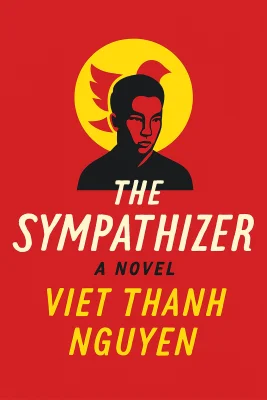
The Sympathizer
Categories
Fiction, Politics, Historical Fiction, Literature, Asia, Book Club, Historical, Novels, War, Literary Fiction
Content Type
Book
Binding
Hardcover
Year
2015
Publisher
Grove Press
Language
English
ASIN
0802123457
ISBN
0802123457
ISBN13
9780802123459
File Download
PDF | EPUB
The Sympathizer Plot Summary
Introduction
# The Sympathizer: A Tale of Divided Loyalties and Revolutionary Betrayal The helicopter blades chopped through Saigon's humid air as Captain stood on the embassy rooftop, watching desperate refugees claw their way toward salvation. April 1975—the month everything died. Around him, South Vietnamese officers clutched their families and final possessions, fleeing the communist forces closing in on their capital. But Captain carried a different kind of burden. Hidden beneath his loyal aide-de-camp facade lay a devastating secret: he was a communist spy, a mole who had infiltrated the highest ranks of the South Vietnamese military. For years, he had reported on his own allies, betraying the very men who trusted him with their lives. Now, as Saigon crumbled, Captain would escape to America alongside General—his commanding officer and unwitting victim. In exile, his mission would continue. He would monitor the refugee community, document their resistance activities, and send intelligence back to his communist handlers in Vietnam. But living among those he betrayed would exact a terrible price. The deeper he sank into his double life, the more the lines blurred between revolutionary duty and human connection, between loyalty and betrayal, between the spy he was trained to be and the man he was becoming. His journey would take him from the chaos of a falling city to the strange new world of American exile, where the cost of divided loyalties would ultimately demand everything he held dear.
Chapter 1: The Fall of Saigon: Escape and the Weight of Secrets
The rockets screamed overhead as Captain pressed himself against the airport tarmac, concrete fragments raining down like deadly confetti. Beside him, his blood brother Bon cradled his dying wife Linh, her white blouse blooming red where shrapnel had torn through her chest. Their four-year-old son Duc lay motionless between them, killed by the same explosion that claimed his mother. "No, no, no," Bon whispered, his voice breaking as he rocked Linh's lifeless body. The communist artillery had found their evacuation flight just as it prepared for takeoff, turning their escape into a massacre. Captain pulled Bon toward the next transport plane, helping carry Linh's body up the ramp. Around them, panicked refugees trampled each other in their desperation to flee. The aircraft's engines roared to life, drowning out Bon's anguished howls as they lifted off in a steep spiral to avoid anti-aircraft fire. In the cargo hold, Captain watched his homeland disappear through a small porthole. He thought of his final meeting with Man, his communist handler and childhood friend, in the basement of Saigon's basilica just days earlier. Man had pressed a small camera into his hands along with his final orders. "Document everything," Man had said, his revolutionary fervor burning bright even in the church's shadows. "The General's plans, his contacts, his weaknesses. The revolution needs eyes in America." Now, thirty thousand feet above the South China Sea, Captain felt the weight of that camera in his jacket pocket. Below him, Bon grieved for his shattered family while General sat rigid in his seat, already planning their return to reclaim Vietnam. Neither man suspected that their most trusted ally was their greatest enemy. The plane banked toward Guam, carrying them toward an uncertain future in exile. Captain closed his eyes and tried to silence the voice in his head—the voice that whispered he was no longer sure which side he truly served, or if the revolution he had pledged his life to was worth the price it demanded.
Chapter 2: Exile in America: Building Lives While Betraying Trust
The refugee camp at Camp Pendleton stretched across the California hills like a temporary city of the dispossessed. Captain sat in the mess hall, watching fellow refugees huddle around a television as Saigon fell to communist tanks. The images flickered across the screen—North Vietnamese soldiers raising their flag over the presidential palace while Captain's former comrades fled or surrendered. "We'll be back," General muttered, his weathered hands clenched into fists. "This isn't over." Captain nodded sympathetically while mentally composing his first coded report to Man. The invisible ink, made from cornstarch and water, would reveal his secrets when heated. Between innocent lines about camp food and American weather, he documented General's contacts, his growing network of former officers, and their desperate plans for counterrevolution. By autumn, Captain had secured an apartment in Los Angeles through his old professor, Hammer, who arranged a job at the university's Oriental Studies department. Bon moved in with him, a broken man who spoke little and drank much. The grief had hollowed him out, leaving only rage and a burning desire for revenge against the communists who had destroyed his family. General established himself in Hollywood, running a liquor store that served as an unofficial headquarters for the exile community. His wife Madame held court in their modest home, dispensing advice and gossip while their daughter Lana rebelled against traditional Vietnamese values, dyeing her hair blonde and singing in rock bands. "America corrupts everything it touches," Madame complained during one of their Sunday dinners. "Look at our children. Look at what we're becoming." Captain photographed these gatherings with his hidden camera, documenting faces and conversations for his reports. He felt like a ghost haunting his own life, present but not truly there, watching his friends build new lives while systematically betraying their trust. The weight of his deception grew heavier with each passing month, but the revolution demanded sacrifice. Even if that sacrifice was his own soul.
Chapter 3: Hollywood's Vietnam: Fighting for Truth in a World of Lies
The film set in the Philippines blazed under tropical sun as Captain watched American actors play Vietnamese villagers. The Auteur, a celebrated director with an ego larger than his talent, was creating an epic about the Vietnam War. Captain had been hired as a cultural consultant, tasked with bringing authenticity to the Vietnamese dialogue and characters. "Authenticity," the Auteur proclaimed, gesturing grandly at the fake village constructed from Hollywood lumber and Filipino labor. "That's what separates art from propaganda." Captain bit his tongue as he watched Vietnamese refugees from the Bataan camp—desperate boat people who had fled communism—being paid a dollar a day to portray Viet Cong soldiers. The irony was bitter enough to choke on. These people had risked death at sea to escape the very regime they now pretended to serve for American entertainment. The script reduced Vietnamese characters to screaming extras and noble savages. When Captain suggested giving them actual dialogue, actual humanity, the Auteur exploded. "You're here for technical matters, not creative input!" he shouted, his face flushed with artistic indignation. "I know what audiences want. They want to see American heroes, not political lectures." Captain persisted, fighting for small victories. He convinced the Auteur to let three Vietnamese characters speak actual words instead of just screaming. He corrected the most egregious cultural errors. But the fundamental lie remained—Vietnam as backdrop for American heroism, Vietnamese people as props in their own tragedy. During filming, an explosion on set nearly killed Captain. Whether it was an accident or an attempt on his life, he never knew. The Auteur settled with him quietly, eager to avoid bad publicity. Captain took the money and returned to Los Angeles, carrying with him a deeper understanding of how America would remember Vietnam—not as it was, but as it needed to be for American audiences to sleep at night. Back in General's liquor store, Captain filed his reports about the film industry's propaganda machine while listening to General plan his own propaganda campaign. Both sides, he realized, were fighting the same war—the war for memory, for narrative, for the right to define what the Vietnam War had meant.
Chapter 4: Blood and Betrayal: The Murder That Stained His Soul
The newspaper lay spread across General's desk like an indictment. Sonny, a Vietnamese-American journalist, had published an exposé questioning the Fraternity's fundraising activities and hinting at darker purposes behind their charitable facade. General's face was stone as he read the article aloud, his voice growing colder with each paragraph. "This communist sympathizer thinks he can destroy us with his lies," General said, folding the paper with deliberate precision. "Something must be done about this problem, Captain. Don't you agree?" Captain's throat went dry. He understood the implication perfectly. Sonny had to be eliminated, and as General's intelligence officer, Captain would have to arrange it. The order came wrapped in euphemism, but its meaning was crystal clear. "Yes, sir," Captain replied, the words tasting like ashes. "Something must be done." For weeks, Captain stalked Sonny, learning his routines and habits. The journalist lived alone in a modest apartment, worked late at his newspaper office, and had recently begun dating Sofia Mori, a Japanese-American woman Captain had once been involved with. The personal connection made the task even more nauseating. On the chosen night, Captain arrived at Sonny's apartment with a silenced pistol hidden in a gift bag. Sonny welcomed him warmly, offering bourbon and conversation. They had known each other in college, and Sonny spoke openly about his hopes for the Vietnamese-American community. "We need to move beyond the war," Sonny said, pouring another drink. "We need to build something new here, not just nurse old grievances." In desperation, Captain made a shocking confession. "What if I told you I was a communist? I'm your ally. I've been working for the revolution for years." Sonny's face hardened. "I don't believe you. This is a trap, isn't it? You want me to confess so you can expose me." The moment shattered. Captain drew his weapon and fired. The first shot missed. The second struck Sonny's hand as he reached for the door. The third caught him between the shoulder blades, sending him crashing to the floor. Standing over Sonny's bleeding form, Captain remembered Bon's advice about confirming kills. He pressed his finger against Sonny's eyeball. It blinked. Sonny was still alive, still conscious, still watching his killer with accusation in his dying eyes. Captain fired one final shot into Sonny's temple, then fled into the Los Angeles night. He had crossed a line that could never be uncrossed, killed an innocent man to protect his cover. The revolution had demanded this sacrifice, but Captain wondered if any cause was worth such a price.
Chapter 5: The Counterrevolution: Infiltrating the General's Doomed Resistance
The Thai refugee camp sprawled across the border landscape like a city of the damned. Captain arrived with Bon and two other volunteers, part of General's advance team to establish a base for counterrevolutionary operations. The camp housed thousands of Vietnamese refugees and former soldiers, all dreaming of the day they could return home and reclaim their country from the communists. Admiral, the camp's commander, bore an uncanny resemblance to Ho Chi Minh with his wispy goatee and simple black clothing. He spoke of their mission in religious terms, comparing their struggle to Christ and his apostles. "We are the chosen ones," Admiral declared to the assembled volunteers. "We will be the seeds of Vietnam's resurrection." Bon's response was characteristically blunt. "Jesus died. So did his apostles." Captain documented everything—the camp's location, its defenses, the names and backgrounds of key personnel. Each night, he encoded this intelligence in letters to his "aunt" in Paris, knowing the information would find its way to Hanoi. The men around him spoke of liberation and revenge, unaware they were being systematically betrayed by one of their own. The reconnaissance mission into Laos began at dawn. Captain, Bon, and ten others crossed the Mekong River on bamboo rafts, moving through jungle terrain scarred by American bombing. Craters filled with rainwater dotted the landscape like wounds that refused to heal. On the second night, disaster struck. The Affectless Lieutenant stepped on a landmine, the explosion tearing off his leg and alerting any enemy forces in the area. His screams echoed through the jungle until the Grizzled Captain suffocated him to preserve their mission's secrecy. They buried the lieutenant in a shallow grave and pressed on, but Captain knew they were walking into a trap of his own making. His reports had given the communists their exact route and timing. The ambush would come at the Vietnamese border, where his handlers waited with superior numbers and firepower. As they approached the final river crossing, Captain felt the weight of his betrayal crushing down on him. Bon walked beside him, trusting and loyal, ready to die for a cause that was already lost. Captain had the power to warn him, to save his blood brother's life, but doing so would expose his true identity and destroy years of careful espionage work. The revolution demanded sacrifice. But as Captain watched Bon check his weapon one final time, he wondered if he had anything left worth sacrificing for.
Chapter 6: Capture and Reeducation: Breaking the Revolutionary Mind
Gunfire erupted from both sides of the Mekong as Captain and Bon dove for cover behind fallen logs. The Grizzled Captain's head exploded in a spray of blood and bone, his body pitching forward into the muddy water. Communist soldiers emerged from the jungle like ghosts, their AK-47s chattering death. "It's a trap!" Captain shouted, grabbing Bon's arm. But there was nowhere to run. They were surrounded, outgunned, and betrayed by intelligence Captain himself had provided. Bon stared at him with dawning comprehension. "You," he whispered, the single word carrying the weight of ultimate betrayal. Before Captain could explain, a rifle butt cracked against his skull, sending him tumbling into darkness. When he awoke, he was bound and blindfolded in the back of a truck, bouncing along jungle roads toward an uncertain fate. The reeducation camp squatted in a valley like a concrete cancer, surrounded by barbed wire and guard towers. Captain was thrown into solitary confinement, a windowless cell barely large enough to lie down in. For months, he saw no one except the guards who brought his meager rations of rice and fish sauce. The interrogations began without warning. Captain was dragged to a white-tiled room blazing with fluorescent lights and strapped to a metal table. His interrogator's face was a horror—burned beyond recognition by napalm, leaving only a void where features should have been. "Do you know who I am?" the faceless man asked. Captain's blood turned to ice. Despite the ruined features, he recognized the voice. "Man?" His childhood friend and revolutionary handler nodded slowly. "The Americans did this to me. Their napalm turned my face into nothing. But nothing has its own beauty, don't you think?" Man explained the charges against Captain—not for his espionage work, which had been valuable to the revolution, but for his contamination by Western ideas. His mixed blood, his American education, his ability to see multiple sides of every issue made him dangerous to the revolution's purity. "You are a man of two minds," Man said, his ruined face hovering inches from Captain's. "The revolution has no place for such complexity. We must burn away your contradictions until only revolutionary truth remains." The torture began with sleep deprivation and sensory overload. Speakers blared recordings of screaming babies while strobe lights flashed in Captain's eyes. Man asked the same question over and over: "What is more precious than independence and freedom?" Captain offered various answers—love, happiness, peace—but none satisfied his tormentor. Days blended into nights as his sanity slowly cracked under the relentless assault. He began to hallucinate, seeing the ghosts of Sonny and the crapulent major watching his torment with interest. Finally, in a moment of broken clarity, Captain understood. "Nothing," he screamed. "Nothing is more precious than independence and freedom!" Man smiled with his ruined face. "Now you begin to understand. The revolution fought for these ideals, but nothing—the void, the absence—is more precious than the ideals themselves. We have achieved nothing, and nothing is our greatest victory."
Chapter 7: The Final Escape: Fleeing the Revolution He Once Served
The confession took months to write. Captain sat in his cell, documenting his crimes against revolutionary purity while his mind slowly healed from the torture. The camp doctor prescribed the writing as therapy, and gradually the fractured pieces of his identity began to reassemble into something resembling sanity. Man visited him regularly, his faceless visage a constant reminder of war's cost. He explained how the revolution had evolved since victory, how ideological purity had become more important than human compassion, how those who had fought for freedom now denied it to others. "The revolution succeeded too well," Man said during one visit. "We defeated our enemies so completely that we had to create new ones from among ourselves. People like you, with your divided loyalties and complex thoughts, became the new threat to be eliminated." When Captain's reeducation was declared complete, Man arranged for his release along with Bon, who had survived his own ordeal but emerged as a hollow shell of his former self. They were transported to Ho Chi Minh City, formerly Saigon, where they found shelter with Bon's cousin, a fisherman planning another escape attempt by boat. The city Captain had known was gone, replaced by a revolutionary monument to ideological conformity. The streets bore new names honoring communist heroes, while the people moved with the careful wariness of those who knew they were always being watched. "Fifty-fifty odds," the fisherman said when asked about their chances of survival at sea. "Half the boat people make it to freedom. The other half feed the fish." Captain spent his final weeks in Vietnam completing his manuscript—the confession that had become something more, a testament to the human cost of absolute ideology. He wrote by candlelight, documenting his journey from revolutionary spy to broken refugee, from true believer to man of divided loyalties. On the night of their escape, 150 refugees crowded into a fishing trawler designed for thirty. Captain and Bon huddled in the suffocating hold as the boat pushed out into the South China Sea, leaving behind the revolution that had devoured its own children. As the Vietnamese coast disappeared into darkness, Captain clutched his waterproofed manuscript and made a promise to the ghosts that haunted him—Sonny, the crapulent major, Bon's wife and child, and all the others sacrificed on the altar of ideological purity. Their stories would survive, even if he did not. The boat rose and fell on the swells, carrying its cargo of broken dreams toward an uncertain horizon. Captain closed his eyes and listened to the engine's steady rhythm, a mechanical heartbeat carrying them away from the revolution he had served and toward whatever remained of their humanity.
Summary
Captain's journey from revolutionary spy to refugee boat person traced the trajectory of idealism corrupted by absolute power. His divided nature—half-Vietnamese, half-French, communist agent embedded among anticommunist exiles—made him the perfect spy but ultimately marked him for destruction by the very revolution he served. The communists who had valued his intelligence work came to see his complexity as contamination, his ability to understand multiple perspectives as a threat to ideological purity. His story became a testament to the human cost of absolute belief, whether communist or capitalist, revolutionary or reactionary. In the end, Captain's greatest act of rebellion was not his espionage work but his refusal to surrender his humanity to any ideology. His manuscript, carried across dangerous waters in waterproof wrapping, preserved the voices of those sacrificed to political expediency—the innocent major, the journalist Sonny, the refugees used as pawns in larger games. As his boat disappeared into the vast Pacific, Captain embodied the eternal refugee condition: forever caught between worlds, belonging fully to none, carrying within himself the contradictions and complexities that make us human. His final promise—"We will live!"—stood as both desperate hope and defiant assertion that the human spirit, however divided and compromised, would endure long after the revolutions that claimed to perfect it had crumbled into history's ash.
Best Quote
“Nothing . . . is ever so expensive as what is offered for free.” ― Viet Thanh Nguyen, The Sympathizer
Review Summary
Strengths: The review highlights Viet Nguyen's unique and intelligent humor, his ability to address significant aspects of Vietnamese American history without turning the narrative into a mere historical lesson, and the authenticity of the Vietnamese American experience depicted in the book. The novel's engaging style and potential for receiving awards are also noted. Weaknesses: The review suggests potential backlash from Vietnamese conservatives due to the book's portrayal of Vietnamese identity and history, which may not align with traditional views. Overall: The review is highly positive, praising "The Sympathizer" as an exceptional and authentic portrayal of the Vietnamese American experience. It is recommended for readers interested in a nuanced understanding of the Vietnam War and its aftermath, though it may not appeal to those with conservative views on Vietnamese history.
About Author

Viet Thanh Nguyen
Nguyen interrogates the complexities of identity and displacement, a recurring theme throughout his works. In his acclaimed book "The Sympathizer," he delves into the dualities of loyalty and betrayal, earning the Pulitzer Prize in Fiction. His exploration of identity extends into "To Save and to Destroy," where he investigates the feeling of being an outsider, and "The Refugees," a collection that highlights stories of Vietnamese expatriates. This multifaceted approach enables Nguyen to weave narratives that resonate with the intricacies of belonging and alienation.\n\nBy blending fiction and nonfiction, Nguyen charts a course that is both reflective and provocative. His nonfiction works, such as "Nothing Ever Dies," critically address the memories and narratives surrounding the Vietnam War, earning recognition as a finalist for the National Book Award. Meanwhile, "A Man of Two Faces" serves as a memoir that questions and reconstructs personal and historical narratives. For younger audiences, his children's book "Simone," illustrated by Minnie Phan, introduces themes of cultural heritage in an accessible format. As an editor, he further amplifies diverse voices in works like "The Displaced" and "The Cleaving."\n\nReaders gain insight into the profound effects of war and migration through Nguyen's narratives, which combine personal experiences with broader historical contexts. His academic role at the University of Southern California and fellowships from the Guggenheim and MacArthur foundations underscore his influence and commitment to exploring ethnic and cultural studies. Therefore, his body of work serves not only as compelling literature but also as a crucial resource for understanding the intersections of culture, identity, and memory.
Read moreDownload PDF & EPUB
To save this Black List summary for later, download the free PDF and EPUB. You can print it out, or read offline at your convenience.

The Sympathizer
by Viet Thanh Nguyen
