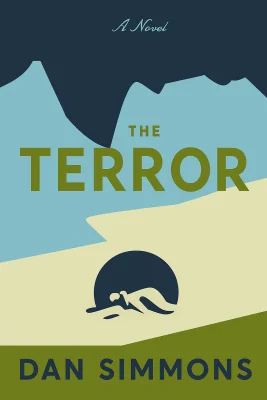
The Terror
Categories
Fiction, Audiobook, Horror, Mystery, Historical Fiction, Thriller, Fantasy, Historical, Adventure, Survival
Content Type
Book
Binding
Hardcover
Year
2007
Publisher
Little, Brown and Company
Language
English
ASIN
0316017442
ISBN
0316017442
ISBN13
9780316017442
File Download
PDF | EPUB
The Terror Plot Summary
Introduction
# The Terror: Ice, Death, and Transformation in the Arctic Void The ice screams in the Arctic night, a sound that drives men mad with its relentless grinding and moaning. Captain Francis Crozier stands on the deck of HMS Terror, watching the aurora dance like ghostly fingers across the black sky, knowing that something far worse than the cold stalks his crew in the darkness. It is 1847, and the Franklin Expedition has been trapped in the pack ice for over a year, their ships HMS Erebus and Terror frozen solid in a white hell northwest of King William Land. What began as a triumphant quest to discover the Northwest Passage has devolved into a nightmare of survival against an enemy that defies all understanding. The thing on the ice is no ordinary polar bear, though it wears the white fur of one. It hunts with malevolent intelligence, striking without warning, leaving behind scenes of carnage that chill the soul more than the Arctic wind. As the expedition's food spoils and madness creeps through the crews like frostbite through flesh, the men begin to understand that they face not just starvation and cold, but something ancient and hungry that has claimed the frozen wasteland as its domain.
Chapter 1: Ships Entombed: The Ice Prison Claims Erebus and Terror
The trap closed with the sound of thunder on September 15, 1846. Captain Sir John Franklin watched from the deck of HMS Erebus as the ice plates ground together with unstoppable force, sealing his ships in a frozen prison that stretched to every horizon. The temperature plummeted overnight, transforming the leads of dark water that had promised escape into solid white barriers. Franklin had pushed too far, driven by the tantalizing glimpse of open water to the southwest that his ice masters swore lay just beyond the next ridge. The expedition had already spent one winter frozen at Beechey Island, losing three men to consumption and pneumonia, but that had been in the shelter of a protected harbor. Now they found themselves beset in open pack ice, directly in the path of what Ice Master Thomas Blanky called a seaborne glacier flowing down from the polar regions. The ships groaned as the ice tightened its grip, their reinforced hulls designed to withstand such pressure but not indefinitely. HMS Terror, under Captain Crozier's command, had taken the lead in ice-breaking duties after Erebus damaged her propeller shaft, but now both vessels sat helpless as the white desert reformed around them. The steam engines fell silent, their coal too precious to waste on futile attempts to break free. As the long Arctic night descended, the 129 men of the expedition settled into their second winter in the ice, unaware that they would never sail again. The ships became islands of warmth and light in an ocean of frozen darkness, their decks covered with canvas pyramids to trap what little heat the coal stoves could provide. Below deck, the men hammered their hammocks between the maze of provisions and supplies, creating a cramped but livable world that smelled of tobacco, cooking food, and unwashed bodies. But even in those first weeks of imprisonment, strange sounds echoed across the ice. The lookouts reported movement in the pressure ridges, shapes too large to be seals or foxes. The Inuit called this region the domain of the Tuurngait, the helping spirits, but there was nothing helpful about what watched the ships from the darkness beyond their lantern light. Something massive breathed in the shadows, patient as the ice itself, waiting for the right moment to begin its hunt.
Chapter 2: The White Death: First Encounters with Ancient Terror
The killing began on a June morning in 1847, when Lieutenant Graham Gore led a sledge party to King William Land to cache a message and scout for open water. Dr. Harry Goodsir, the expedition's assistant surgeon and amateur naturalist, had volunteered to join the reconnaissance, eager to study the Arctic wildlife that had proven so elusive during their imprisonment. They found the cairn left by Sir James Ross seventeen years earlier, deposited Franklin's optimistic message reporting that all was well, and pressed south along the desolate coast. The land was a nightmare of frozen gravel and ice, swept by winds that could strip flesh from bone, with no sign of the game that should have sustained them. But something was watching from the fog that rolled in from the pack ice, something that breathed and coughed like a bear but moved with impossible stealth. Gore and Seaman Charles Best had separated from the main party for the final push south when the fog thickened around their ice camp. The others heard the shots first, then Gore's voice shouting for quiet, then a sound that would haunt their dreams for the rest of their shortened lives. It was not quite a roar, not quite a scream, but something between the two that spoke of intelligence and malice. When the fog lifted, they found Gore's body broken like a child's toy, his chest caved in and his spine snapped. The thing had risen from the ice itself, the survivors swore, materializing around the lieutenant like a white shadow given substance. Twelve feet tall or more, with claws that could rend oak and eyes like black holes in the Arctic night. It had crushed Gore in seconds, then vanished back into the ice as if it had never existed. Dr. Goodsir, kneeling beside the corpse with his instruments, could only confirm what they all knew. The wounds were consistent with a polar bear attack, but no bear they had ever encountered possessed such size or cunning. The creature had not fed on its kill, leaving Gore's body intact but for the crushing damage. It was hunting for sport, or perhaps for something darker than mere hunger. The sledge party limped back to the ships carrying their dead officer and the terrible knowledge that they were no longer the apex predators in this frozen world.
Chapter 3: Command in Crisis: Franklin's Fall and Crozier's Rise
Sir John Franklin refused to believe in monsters. Even as the reports mounted through the summer of 1847, even as more men disappeared from work parties and watch duties, the expedition commander clung to rational explanations. It was merely an unusually large polar bear, perhaps driven mad by hunger or disease. Ten gold sovereigns to every man when the beast was killed, he promised from his makeshift pulpit on Erebus's deck, and double advance pay as a bonus for their patience. The bear blind seemed like military genius in its simplicity. Six Marines with muskets in a concealed position, fresh meat as bait, and clear fields of fire across the ice. Sergeant Bryant positioned his men with the precision of a Waterloo veteran, their weapons loaded with Minié balls that could drop a charging elephant. Franklin himself joined them in the blind, sharing the cramped space and the anticipation of ending their nightmare with British firepower and discipline. The creature came from below, erupting through the burial crater where Lieutenant Gore had been laid to rest a week earlier. It had been waiting beneath the ice, watching through the black water as they built their trap, learning their plans with an intelligence that mocked their assumptions. The blind disintegrated in seconds, iron framework bent like wire, canvas shredded by claws the size of cavalry sabers. Sergeant Bryant's head flew thirty yards across the ice, his body collapsing in the wreckage of their ambush. The other Marines scattered like leaves before a hurricane, their disciplined volleys forgotten in the face of something that should not exist. Franklin felt the crushing grip on his legs, the snap of bone and sinew, then the impossible sensation of being lifted and carried toward the hole in the ice. The black water closed over his head with a shock that stopped his heart. In the darkness beneath fifteen feet of ice, Sir John Franklin met his end not as a knight of the realm or a hero of the Royal Navy, but as prey. Captain Francis Crozier assumed command of the expedition by default, inheriting a situation that had moved beyond desperate into the realm of the impossible. The ships were dying around them, their hulls squeezed and twisted by ice pressure that never relented, and somewhere in the darkness beyond their lanterns, the thing that had killed Franklin waited with the patience of a predator that had claimed this frozen wasteland as its hunting ground.
Chapter 4: Abandonment: The Desperate March Across Frozen Wasteland
By April 1848, the ships were dying. HMS Erebus listed at an impossible angle, her hull cracked and twisted by ice pressure that never relented. Water pumps ran constantly to keep the lower decks from flooding, and the sound of splintering wood echoed through the night as the frozen sea tightened its grip. HMS Terror was in better condition but not by much, her reinforced hull groaning under stresses no shipwright had ever imagined. Captain Crozier knew they had months at most before the vessels became uninhabitable. The plan he had been avoiding for two years could no longer be postponed. They would have to abandon the ships and make for King William Land on foot, hauling their supplies across twenty-five miles of broken ice while the creature stalked them from the pressure ridges. The cache of supplies he had established on the island was pitifully inadequate for 105 surviving men, but it was better than nothing. The exodus began on April 22nd with the surviving crew hauling sledges loaded with boats and equipment across the broken ice. Each man was already weakened by scurvy and starvation, but they pulled their loads with the desperate strength of the condemned. Behind them, the ships sat like tombstones in the ice, their masts stark against the grey sky. The march quickly became a nightmare of endurance, with sledges weighing over a thousand pounds that had to be hauled in relays. Men collapsed in their traces and were loaded into the boats they had been pulling, becoming cargo rather than crew. The weaker ones died in the night and were left behind with only a cairn of stones to mark their passing. But the creature followed them, its tracks appearing regularly around their camps, sometimes so fresh the snow was still falling into the impressions. It seemed to be herding them, driving them toward some predetermined destination. Lieutenant Irving led a hunting party and never returned. They found his body three days later, arranged almost ceremonially on a ridge overlooking their route. He had been opened from throat to pelvis with surgical precision, his organs removed and arranged around him in patterns that hurt to look at directly. The thing was not just hunting them, it was playing with them, demonstrating its power with each carefully orchestrated death. The expedition that had begun as a triumph of British naval engineering had become a procession of the damned, stumbling across the ice toward an uncertain fate while something ancient and terrible watched from the shadows.
Chapter 5: Betrayal on Ice: Mutiny and the Collapse of Civilization
The mutiny had been brewing for weeks, led by Caulker's Mate Cornelius Hickey, a small man with the cunning of a rat and twice the viciousness. As the expedition's strength failed and hope dwindled, Hickey gathered malcontents around him with promises of survival through any means necessary. When he finally made his move, it was with the cold calculation of a born predator who understood that civilization was just a thin veneer over the animal need to survive. Hickey's faction split from the main group, taking Lieutenant Hodgson and fifteen others with them. They claimed they would return to the ships, but Crozier knew their real intention was darker. They had already begun eyeing the weakest men not as comrades but as provisions. The civilized veneer that had held them together was finally cracking, revealing the savage desperation beneath. The betrayal came when Hickey lured Crozier and Dr. Goodsir onto the ice with false reports of open water. The trap was sprung by moonlight, with young Robert Golding serving as Judas goat. Crozier found himself surrounded by armed men who had once followed his orders without question. Now they looked at him with the cold eyes of executioners, their faces gaunt with starvation and something worse than hunger. Hickey shot him three times, leaving him for dead on the ice while taking Dr. Goodsir prisoner. The surgeon would be needed to butcher the bodies that would sustain Hickey's band through the winter. As Crozier's blood pooled beneath him, turning the snow crimson in the moonlight, he heard Hickey's laughter echoing across the ice. The sound was no longer entirely human, as if the Arctic had stripped away the last pretense of civilization from the mutineers. But death did not come for Francis Crozier that night. As consciousness faded, he felt hands pulling him from the ice, small and strong hands that belonged to Lady Silence, the Inuit woman who had been aboard Terror since the previous summer. She had been watching, waiting for this moment when the white man's world would finally collapse and something older could take its place. In saving him, she was not acting from mercy but from necessity, for the real test was only beginning.
Chapter 6: Through Death to Rebirth: Crozier's Arctic Transformation
Lady Silence nursed Crozier back to life in a tent made from seal skins, her knowledge of Arctic survival keeping him alive when he should have died from his wounds. She dug the bullets from his flesh with bone needles, packed his injuries with moss and blubber, and fed him blood soup that gradually restored his strength. But the healing was more than physical, it was a fundamental change in what he was becoming. Through the long months of recovery, Crozier learned to see the Arctic through Inuit eyes. He discovered that survival here required not conquest but accommodation, not fighting the ice but learning to live within it. Silence taught him to hunt seals at their breathing holes, to build shelters that turned the wind's fury into warmth, to read the sky for weather that could kill in minutes. The rigid discipline of the Royal Navy gave way to something more fluid and intuitive. But the greatest lesson was about the creature itself. Through dreams that seemed more real than waking, Silence shared her people's understanding of what they called the Tuunbaq. It was not merely a predator but a guardian, an ancient spirit that protected the Arctic from those who would violate its sacred balance. The Franklin expedition, with their coal smoke and canned goods and absolute certainty in their own superiority, had been exactly the kind of violation that summoned the beast's wrath. The transformation reached its climax on a night when the Aurora Borealis painted the sky in sheets of impossible color. Silence led Crozier out onto the ice for a ritual older than memory, the throat singing that could summon or dismiss the Tuunbaq. As their voices merged in harmonies that seemed to reshape reality itself, Crozier felt the last of his old identity slip away like a shed skin. When the creature finally appeared, rising from black water like a mountain of living ice, Crozier did not run. Instead, he knelt before it and opened his mouth to receive communion with something far older and more powerful than the Christian god he had abandoned. The Tuunbaq's breath filled his lungs, and when it withdrew, Francis Crozier was no longer entirely human. He had become something new, a bridge between two worlds, carrying the memories of both but belonging fully to neither.
Chapter 7: Beyond the White Silence: Finding Home in the Void
Years passed like seasons, marked not by calendars but by the rhythm of ice and thaw, hunt and feast, the endless cycle of Arctic life. Crozier, now called Taliriktug by Silence's people, learned to live without the certainties that had once defined him. He took Silence as his wife in the Inuit way, and she bore him children who would grow up knowing both worlds but belonging fully to the one that had claimed their father's soul. The fate of his former expedition became clear through fragments, artifacts found by hunting parties, stories told around seal oil lamps. Hickey's band had devoured itself in cannibalistic madness before freezing to death in their stolen boat. The main group under Des Voeux had reached the mouth of Back's River only to perish from starvation and exposure, their bones scattered along the shoreline like driftwood. Of 129 men who had sailed from England, none would ever see home again except in dreams. But Crozier had found a different kind of home in the vast emptiness of the Arctic. He learned to speak without words, to hunt with weapons made from bone and sinew, to navigate by stars whose names existed in no European language. The Tuunbaq, no longer his enemy, became a distant presence that watched over the ice with ancient patience. The bargain had been struck and honored, the white men's violation had been cleansed, and balance restored. When rescue ships finally came, years later, Crozier watched them from a distant ridge and felt no urge to signal them. The man they sought was dead, had died on the ice that night when Hickey's bullets found their mark. What remained was something else entirely, a soul that had learned to find warmth in the coldest place on earth, purpose in apparent emptiness, and love in the arms of a woman who had never needed words to speak truth. The ships passed by, their crews scanning the ice for signs of the lost expedition, never knowing that one survivor watched them from the white silence. When they were gone, Taliriktug returned to his family, to the life he had built from the bones of his old existence. The Arctic had claimed him completely, but in return, it had given him something the civilized world never could: the knowledge that home is not a place but a choice, and that sometimes the greatest discoveries are made not by conquering the unknown but by surrendering to it completely.
Summary
In the end, The Terror reveals itself as more than a tale of survival against impossible odds, but a meditation on what it means to be human when all the structures of civilization fall away. Francis Crozier's journey from Royal Navy captain to Inuit hunter represents the ultimate act of adaptation, not just learning new skills but becoming fundamentally transformed by the encounter with a world that operates by entirely different rules. His love for Silence and their children becomes the anchor that allows him to navigate between two incompatible ways of understanding existence. The Arctic emerges not merely as setting but as character, a vast and indifferent force that strips away pretense and reveals the essential truth that humans are not the masters of nature but merely another species struggling to survive. The Tuunbaq, terrible as it is, serves as the ice's immune system, eliminating those who would impose their will rather than learn to live in harmony with forces beyond their comprehension. Crozier's survival depends not on defeating the monster but on understanding his place in a larger, more ancient order that values balance over conquest, adaptation over rigid adherence to a dying world.
Best Quote
“Luckily, even as a young man not yet become himself, John Bridgens had two things besides indecision that kept him from self-destruction - books and a sense of irony.” ― Dan Simmons, The Terror
Review Summary
Strengths: The review acknowledges the author's technical ability. Weaknesses: The book is criticized for its extensive length, lack of adherence to a single genre, absence of traditional romance, and inclusion of both positive and negative depictions of homosexual activity. It also notes the presence of interracial sexuality without punitive outcomes, which is seen as problematic. Additionally, the novel's lack of resolution and ambiguous ending are highlighted as significant issues. Overall: The review expresses a negative sentiment, indicating that the book does not align with the company's goals or the preferences of their focus groups. It suggests that substantial revisions are necessary for the book to be considered for publication.
About Author

Dan Simmons
Simmons intertwines multiple genres to craft narratives that challenge conventional storytelling, focusing on the interplay of science fiction, horror, and fantasy. His book "Song of Kali" not only won the World Fantasy Award but also exemplifies his unique approach to genre-blending. By creating worlds where disparate elements coexist, he encourages readers to explore complex themes that defy traditional categorizations. This method allows for a richer, more nuanced reading experience, as it combines the suspense of horror with the imaginative scope of science fiction.\n\nIn works like the Hyperion Cantos and the Ilium/Olympos cycles, Simmons investigates the human condition through expansive and speculative narratives. His approach often involves creating intricate plots and multifaceted characters that invite deep contemplation of existential and philosophical questions. Readers who enjoy engaging with literature that pushes boundaries and offers fresh perspectives will find value in his writing. Moreover, Simmons's exploration of mysteries and thrillers, particularly those featuring Joe Kurtz, showcases his versatility and ability to captivate a wide audience.\n\nHis work benefits those interested in speculative fiction that probes beyond the surface, offering a blend of entertainment and introspection. Simmons's writing is particularly impactful for readers who seek to understand the potential of genre fiction to address broader societal and existential themes. Through his innovative narrative techniques and thematic depth, Simmons has solidified his place in the literary world, providing a bio that reflects his contributions to both genre literature and the larger field of speculative fiction.
Read moreDownload PDF & EPUB
To save this Black List summary for later, download the free PDF and EPUB. You can print it out, or read offline at your convenience.

The Terror
by Dan Simmons
