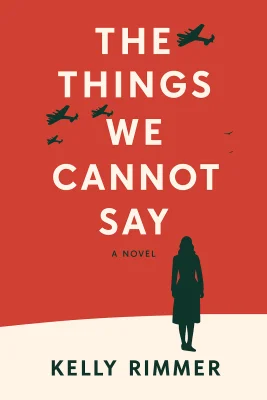
The Things We Cannot Say
Categories
Fiction, Audiobook, Historical Fiction, Romance, Adult, Book Club, Historical, Holocaust, World War II, War
Content Type
Book
Binding
Hardcover
Year
2019
Publisher
Graydon House
Language
English
ISBN13
9781525831515
File Download
PDF | EPUB
The Things We Cannot Say Plot Summary
Introduction
# Echoes Across Time: The Things We Cannot Say The hospital room reeks of antiseptic and dying hope. Alice Michaels watches her ninety-five-year-old grandmother's trembling fingers tap against an iPad screen, the same communication device her autistic son Eddie uses to speak. The stroke stole Babcia's voice, but her eyes burn with desperate urgency as electronic words appear: "Find Tomasz. Please find Tomasz." Alice stares at the message, confusion washing over her like cold water. Pa—her grandfather—died over a year ago. His ashes sit in an urn at the retirement home. Yet Babcia's weathered hands produce a sepia photograph of a gaunt young man with haunting green eyes, someone Alice has never seen before. On the back, faded ink reads: "Trzebinia Hill, 1 July 1941." This isn't Pa. This stranger holds secrets that have festered in silence for eight decades, and now time is running out to uncover them.
Chapter 1: A Silent Plea: The Dying Grandmother's Desperate Request
Alice's world revolves around careful routines and managed chaos. Her son Eddie exists in rigid schedules where a simple change in yogurt packaging can trigger a meltdown. Her daughter Callie burns with intellectual fire, frustrated by a world moving too slowly for her gifted mind. Her husband Wade provides but retreats into his research, unable to bridge the gap between the son he expected and the one he received. Now Babcia's request threatens to shatter Alice's carefully constructed life. The iPad continues its electronic plea: "Alice plane Poland. Trzebinia." From a weathered box beside the hospital bed, Babcia produces relics from a buried past—a tiny leather baby shoe with uneven stitches, letters in Polish with ink faded to whispers, names that mean nothing to Alice but everything to the dying woman. Alice's mother Julita, a district court judge with no patience for sentiment, dismisses it all as stroke-induced confusion. But Alice sees something else in her grandmother's eyes—the same determination that carried a young woman through Nazi occupation and across an ocean to build a new life in America. The photograph trembles in Alice's hands as understanding begins to dawn. Her grandmother isn't confused. She's desperate. The box of memories tells fragments of a story Alice never knew existed. Names like Alina Dziak and Emilia Slaska dance across the iPad screen, each one causing Babcia's face to transform with recognition and pain. As her grandmother sleeps, Alice finds herself studying the photograph again. The young man's eyes seem to follow her, carrying the weight of untold stories. Some secrets, Alice realizes, are too heavy to carry alone.
Chapter 2: Crossing Oceans: Alice's Journey Into Hidden History
Alice makes her decision in a moment of marital fury, booking flights to Poland after Wade questions her priorities. But his unexpected support transforms her impulsive rebellion into something deeper. He arranges a Polish guide named Zofia and promises to manage Eddie and Callie alone—a prospect that terrifies Alice more than flying halfway around the world. Krakow's ancient beauty overwhelms her senses. Cobblestone squares pulse with life, street musicians fill the air with melodies that seem to echo from centuries past, and pierogi vendors serve food that tastes like memory itself. For the first time in years, Alice exists without the constant weight of caregiving, without Eddie's rigid schedules or Callie's intellectual demands. The freedom feels both exhilarating and guilt-inducing. Zofia proves invaluable, having already researched the names on Babcia's list. Their first stop is Trzebinia, a small industrial town where the addresses lead them to a tiny, abandoned farmhouse backed by rolling hills. The moment Alice sees it, recognition floods through her—this matches every detail of the childhood home her grandmother had described in rare moments of reminiscence. But when they search local records, lightning strikes. There are no birth records for anyone named Hanna Wisniewski in Trzebinia. Instead, they find records for the Dziak family—parents Faustina and Bartuk, with a daughter named Alina born in 1923. When Alice video-calls her grandmother from the farmhouse, showing her the property on screen, Babcia's reaction is electric. Tears stream down her face as she creates a new entry on her communication device: a photo of herself labeled "Alina." Alice's grandmother has lived under a false identity for over seventy years.
Chapter 3: False Names and Buried Truths: Discovering Alina's Secret Identity
The revelation hits Alice like a physical blow, but it's only the beginning. Her search leads to a medical clinic in Trzebinia, where a plaque honors Dr. Aleksy Slaski. Inside, she meets Lia Truchen, a young receptionist who claims to be Aleksy's great-granddaughter. The conversation grows heated when Lia insists that Alice's grandfather Tomasz died in 1942, not in Florida last year. Lia leads Alice to a grave on the hill behind the abandoned farmhouse—a well-maintained headstone bearing Tomasz Slaski's name and the dates 1920-1942. Fresh flowers and candles surround the grave, clearly tended with love. A Hebrew medal identifies Tomasz as one of the Righteous Among the Nations, honored for risking his life to save Jewish people during the war. Alice stares at her grandfather's name carved in stone, knowing with absolute certainty that the man buried here is not the grandfather who raised her. The mystery deepens when Alice learns that Lia's grandmother Emilia still visits this grave monthly, mourning the brother she believes died nearly eighty years ago. Alice's attempts to arrange a meeting are rebuffed—Lia is fiercely protective of her elderly grandmother and suspicious of Alice's motives. The trail seems cold until Alice's phone buzzes with urgent messages from Lia and her mother Agnieszka: they want to meet immediately. Something has changed their minds, and Alice finds herself racing back to Krakow with her heart pounding, sensing that the truth is finally within reach. The photograph of the young man with haunting eyes suddenly makes sense—he's not just a stranger from the past. He's the key to understanding why her grandmother lived under a false name for eight decades.
Chapter 4: Wartime Love and Impossible Choices: The Story of Alina and Tomasz
The story that emerges from Emilia's trembling voice paints a picture of love tested by unimaginable circumstances. In 1942, seventeen-year-old Alina Dziak lived on that small farm while Tomasz Slaski worked as a medical student in nearby Trzebinia. Their romance bloomed against the backdrop of Nazi occupation, stolen moments of tenderness amid the daily brutality of life under the Third Reich. Tomasz had been conscripted into the Wehrmacht medical corps, a position that tormented him as he was forced to treat German soldiers while his countrymen suffered. When he could bear it no longer, he deserted and returned to Trzebinia, where he joined the resistance network dedicated to helping Jewish families escape the Nazi death machine. Through this work, he befriended Dr. Saul Weiss, a Jewish physician hiding with his wife Eva and infant daughter Tikva. The plan had been elegant in its simplicity. An American journalist named Henry Adamcwiz needed couriers to smuggle photographs of Nazi atrocities out of Poland. Tomasz would escort Alina to safety while carrying the precious film hidden in a plaster cast on her arm. They would cross into Soviet territory, make their way to a Polish army camp, and eventually reach England where they could start their new life together. But on the night of their planned escape, disaster struck. The farmer hiding Saul's family betrayed them to the Nazis. Eva and baby Tikva were murdered before Saul's eyes, their bodies left as a warning. Saul survived only because the Nazi commander thought living with the memory would be crueler than death. When Tomasz found his friend cradling the corpses of his wife and child, everything changed. Love would demand the ultimate sacrifice.
Chapter 5: The Ultimate Sacrifice: Identity, Survival, and Love's True Cost
Tomasz faced an impossible choice. The escape route was arranged for that night only—there might not be another chance for months. Alina was already pregnant with their child, though she didn't yet know it. The photographs hidden in her cast contained evidence that might help convince the Allies to intervene in the Holocaust. And Saul, despite his trauma, was a skilled surgeon whose knowledge could save countless lives if he could reach safety. In a decision that would echo through generations, Tomasz chose sacrifice over self-preservation. He would give his identity papers to Saul, allowing the Jewish doctor to travel as Tomasz Slaski. Alina would make the journey with Saul as her companion, carrying both the precious film and the future of their family line. Tomasz would remain behind to warn other resistance members and ensure that Emilia could escape before the Nazi manhunt intensified. The parting was agonizing. In the darkness of the cellar where they had found brief happiness, Tomasz pressed his passport into Saul's hands and made him promise to protect Alina and the child she carried. To Alina, he whispered the words that would sustain her through the trials ahead: "We will always find our way back to each other. Our love is bigger than this war." Hidden in a wooden crate in the back of a Wehrmacht supply truck, Alina and Saul began their harrowing journey. The truck carried them across Nazi-occupied territory, through checkpoints and past death camps, while they huddled in suffocating darkness. But Tomasz's story was reaching its tragic conclusion. After ensuring their truck had safely departed, he walked into the town square of Trzebinia and surrendered himself to the Nazi authorities. He knew that as long as he remained free, roadblocks and searches would continue, potentially trapping Alina and Saul before they could reach safety. His capture would end the manhunt and give his loved ones the precious hours they needed to escape. The execution was swift and brutal, carried out in the same square where his father had been murdered months earlier.
Chapter 6: Revelation and Reconciliation: Connecting Two Worlds Across Time
The video call between the two elderly women—Alina in her Florida hospital bed and Emilia in her Krakow apartment—becomes a moment of profound reconciliation. Through tears and halting Polish words, Emilia delivers the message Tomasz had entrusted to her nearly eighty years earlier. She tells Alina that her brother had died believing in their love, confident that they would find each other again beyond the veil of death. For Alice, watching her grandmother's face as the truth unfolds, the revelation is both heartbreaking and illuminating. The man she knew as Pa—gentle, devoted, brilliant Dr. Tomasz Slaski—had actually been Saul Weiss, a Jewish refugee who had spent his entire American life honoring another man's identity. Her biological grandfather was the young Polish resistance fighter buried on that hill in Trzebinia, a man whose sacrifice had made her very existence possible. The journey to America had been a testament to human resilience. Alina and Saul endured weeks in overcrowded cattle cars, surrounded by fellow refugees dying of disease and starvation. In London, then in Florida, they maintained the fiction that they were husband and wife, that he was Tomasz Slaski, that she was Hanna Wisniewski. But theirs was a marriage of convenience and deep friendship, not passion. Alina never stopped waiting for Tomasz to find her, never stopped believing in his promise that they would be reunited. Saul threw himself into his medical career with the dedication of a man seeking redemption. As "Dr. Tomasz Slaski," he became a renowned pediatric surgeon, saving countless children's lives as if each successful operation could somehow balance the scales of justice. The false identity that had begun as wartime necessity had become, over decades, a deeper truth—Saul had become Tomasz in every way that mattered, living up to the heroic legacy of the man whose name he carried.
Chapter 7: Coming Home: Fulfilling Promises That Transcend Death
Alice returns to Florida with a new understanding of her family's complex history. Her grandmother's final request becomes clear: she wants her ashes taken back to Poland and buried with Tomasz, the love she never stopped waiting for. The mysterious phrase "Babcia fire Tomasz" that had puzzled everyone finally makes sense—it wasn't about passion, but about the literal fire of cremation, Alina's desire to be consumed by flames and have her ashes mingle with the earth that holds her true love. Alice's journey to Poland becomes more than a quest for family history—it transforms into a meditation on the stories we tell ourselves and the truths we choose to preserve or bury. Standing in that hospital room, watching her grandmother's peaceful death, Alice understands that some secrets are kept not from shame but from love, not to deceive but to protect. When Alice finally returns to Poland with her grandmother's ashes, she brings her own family—her husband Wade, their daughter Callie, and their son Eddie, whose autism had once seemed like an insurmountable barrier to such a journey. The trip becomes a bridge between generations, a way of honoring both the love that was lost and the love that endures. As they lay Alina's ashes to rest beside Tomasz's grave, Alice feels the completion of a promise made in darkness and kept across decades of separation. The revelation of her family's true origins doesn't diminish the love she felt for Pa, but it adds layers of meaning to his life's work. Every child Saul saved as Dr. Tomasz Slaski was a testament to the Jewish doctor's survival and the Polish resistance fighter's sacrifice. Every moment of happiness in their American life was built on the foundation of Tomasz's ultimate act of love—giving up his own future so that others might live.
Summary
The story ends not with answers but with understanding—the recognition that love transcends death, that sacrifice creates meaning, and that the most important truths are often the ones we carry in silence until the moment comes to pass them on. In finding her grandmother's past, Alice has discovered something essential about her own present: the courage to face difficult truths, the strength to honor complex legacies, and the wisdom to know that some promises are worth keeping across time itself. Alice's transformation mirrors her family's hidden history. Just as Alina and Saul built new identities from the ashes of war, Alice rebuilds her understanding of love, sacrifice, and the weight of unspoken words. The photograph of the young man with haunting eyes no longer holds mystery—it holds the key to a love story that survived Nazi occupation, crossed oceans, and waited eight decades for its final chapter. Some echoes across time grow stronger with distance, and some fires burn brightest when they finally find their way home.
Best Quote
“It costs our ancestors too damned much for us to have this life - the best thing we can do to honor them is to live it to its fullest.” ― Kelly Rimmer, The Things We Cannot Say
Review Summary
Strengths: The review highlights the emotional depth of the story, noting its ability to evoke tears from the reader. It praises the seamless weaving of past and present narratives, emphasizing themes of heartbreak, sacrifice, and love. The characters are described as strong and their stories as impactful, with the author’s personal family history enriching the narrative. Overall: The reader expresses a highly positive sentiment, recommending the book for its powerful storytelling and emotional impact. The narrative’s exploration of WWII’s horrors and the resilience of love and sacrifice is particularly commended, making it a memorable read.
About Author

Kelly Rimmer
Rimmer explores the intricacies of human emotion and resilience by intertwining personal stories with historical events, notably those surrounding World War II. Her novels, such as "The Warsaw Orphan", delve into the complexities of family dynamics and secrets, highlighting the personal struggles faced during large-scale tragedies. By drawing inspiration from real-life figures like Irena Sendler, who saved thousands of Jewish children during the Holocaust, Rimmer illustrates her fascination with heroic and lesser-known historical narratives. Her work is characterized by deeply researched settings and complex character development, providing readers with an immersive experience that transports them to different worlds and eras.\n\nIn crafting her stories, Rimmer employs a methodical approach honed through years of critical reading and writing practice. This dedication to her craft has resulted in her books being translated into dozens of languages and appearing on bestseller lists such as the New York Times, Wall Street Journal, and USA Today. Her storytelling is both immersive and emotionally compelling, appealing to readers who seek narratives rich in historical context and personal growth. Books like "The Things We Cannot Say" and "Before I Let You Go" showcase her ability to navigate themes of trauma and healing, resonating with audiences worldwide.\n\nReaders benefit from Rimmer's work as her books offer a profound exploration of memory, history, and the human spirit. Her unique blend of historical and contemporary fiction invites audiences to engage deeply with the past while reflecting on its impact on present and future generations. The success of titles like "The Secret Daughter" and "Truths I Never Told You" underscores her status as a distinguished author, capable of weaving emotionally resonant stories that captivate and inspire. With over three million books sold globally, her influence continues to grow, solidifying her place in the literary world.
Read moreDownload PDF & EPUB
To save this Black List summary for later, download the free PDF and EPUB. You can print it out, or read offline at your convenience.
The Things We Cannot Say
by Kelly Rimmer
