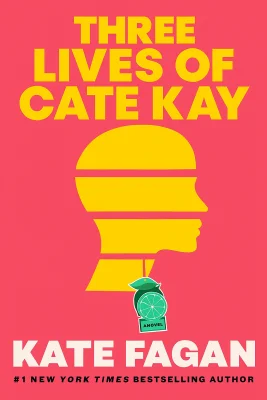
Categories
Fiction, Audiobook, Mystery, Romance, Thriller, Adult, Book Club, Contemporary, LGBT, Queer
Content Type
Book
Binding
Hardcover
Year
2025
Publisher
Atria Books
Language
English
File Download
PDF | EPUB
The Three Lives of Cate Kay Plot Summary
Introduction
The red Honda Civic sat in the parking lot like a confession waiting to be made. Inside, eighteen-year-old Annie Callahan gripped the steering wheel, her knuckles white as bone. Behind her, in the drained swimming pool of an abandoned island house, lay her best friend Amanda—broken, eyes wide with terror, unable to move. The zip line dangled uselessly above them both, its metal cable snapped like a promise that couldn't be kept. Annie had called 911. She had done the right thing, hadn't she? But as the distant sound of sirens grew closer, something darker took hold. The future she and Amanda had planned—their escape to Hollywood, their dreams of stardom—suddenly felt like chains around her throat. In that moment of pure animal panic, Annie Callahan made a choice that would echo across decades. She got in the car and drove away, leaving behind not just her best friend, but her entire identity.
Chapter 1: The Origin of Flight: Bolton Landing and the Seeds of Escape
The shirt was white with Tom and Jerry on the front, and nine-year-old Annie wore it for an entire month without her mother noticing. It was the summer she caught what she would later call "the sickness of wanting to eat the world"—an insatiable hunger for something bigger than the cramped apartment that smelled of microwave dinners and her mother's disappointment. Bolton Landing clung to the shores of Lake George like a reluctant secret. Tourist money flowed through its veins each summer, but the locals knew better. They cleaned the rooms and served the drinks and watched the city people with their car keys held like trophies, their casual wealth burning like acid in the mountain air. Annie's mother cleaned those rooms at the Chateau resort, coming home with stories of silk scarves left carelessly on beds and champagne bottles opened for a single sip. At the free theater camp behind the library, Annie met Amanda Kent. Amanda wore jelly sandals painted in rainbow ombré, and when Annie complimented them, Amanda replied with devastating confidence: "Thank you for noticing." Even at nine, Amanda possessed something Annie desperately wanted—the ability to inhabit her own skin without apology. They became inseparable. While other kids played video games until their eyes burned, Annie and Amanda transcribed movie scripts and performed them in Amanda's bedroom, using clothes from her dead mother's closet as costumes. They planned their escape with the methodical precision of war strategists. Los Angeles beckoned like a golden god, promising transformation. They would be a package deal—Amanda the stunning brunette with perfect comedic timing, Annie the quirky sidekick who secretly stole every scene. But even then, in those crystalline moments of shared dreaming, Annie's brain spun darker fantasies. She imagined outgrowing Amanda, imagined solo success that would require leaving her best friend behind. The thoughts arrived unbidden and shameful, but they persisted like fever dreams.
Chapter 2: Metamorphosis: From Annie to Cass to Cate Kay
The coffee shop in Plattsburgh had the kind of desperate charm that came from trying too hard. Brett, the manager, hired Annie without asking many questions, perhaps sensing that she was running from something too large to name. She slept in the red Honda, showered in the shop's tiny bathroom, and told anyone who asked that her name was Cass Ford. Cass was everything Annie had been too afraid to become—mysterious, self-possessed, untethered from the suffocating expectations of small-town life. She audited writing classes at the local college, where she met Sidney Collins, a pre-law student with surgical precision and hungry eyes. Sidney was all sharp angles and Protestant work ethic, the kind of person who took notes in perfect block letters and never forgot a favor owed. The night Cass finally broke down and told Sidney the truth—about Amanda, about the accident, about her cowardice—Sidney listened with the calculating attention of someone already forming a plan. She offered salvation in the form of a fresh start in New York City, complete with new legal documents and an airtight backstory. All Cass had to do was surrender her agency to Sidney's capable hands. But Sidney's most devastating gift came wrapped in false compassion. She told Cass that Amanda had died—pneumonia in the hospital, a week after the accident. The lie was delivered with such clinical precision that Cass never questioned it, never thought to look closer. She simply let the grief hollow her out, making room for Sidney to pour herself in. In their Harlem apartment, Cass began writing the story that would make her famous. She poured Amanda's memory into every page, transforming their shared dreams and private jokes into the post-apocalyptic love letter that would become The Very Last. The book was her monument to a friendship she believed had ended in death, her penance paid in prose.
Chapter 3: Phantom Success: Building a Literary Empire from Hidden Shadows
The Very Last exploded across the cultural landscape like wildfire. Critics called it "The Road meets beach read," and readers devoured its story of Samantha Park and Jeremiah Douglas, two young journalists broadcasting from the ruins of nuclear-devastated Manhattan. But behind the pseudonym Cate Kay, Cass Ford remained invisible, a ghost haunting her own success. Sidney orchestrated the mystery with masterful precision. She created labyrinthine legal structures, managed bank accounts that couldn't be traced, and fed the public's fascination with the anonymous author. Every interview request was declined, every public appearance refused. The more elusive Cate Kay became, the more desperately the world wanted to find her. Melody Huber, the literary agent who had plucked the manuscript from the slush pile, knew only that Cate Kay was a woman—the writing was too emotionally intelligent, too intuitive about female experience, to have come from a man. Jake Fischer, the Vanity Fair journalist, spent months chasing shadows and dead ends, never getting closer than Sidney's carefully constructed walls of silence. The royalty checks arrived like prayer answers. Cass watched her bank account swell with numbers that seemed fictional, abstract. She kept working at the coffee shop in Harlem, serving lattes to customers who had no idea they were buying coffee from one of the most successful authors of her generation. The anonymity that had once felt like protection began to feel like a prison, but Sidney held all the keys. Movie deals followed, with Ryan Channing cast as Persephone Park, Samantha's daughter in the trilogy's second timeline. Cass watched the casting announcement with a mixture of pride and profound loneliness. Her words would be spoken by beautiful actors in exotic locations while she remained trapped in the shadows Sidney had built around her.
Chapter 4: The Hollywood Mirage: Love and Deception in Los Angeles
Ryan Channing appeared at Cass's back gate like an answer to a prayer she hadn't dared voice. The movie star was smaller than expected but luminous in the way of people accustomed to being watched, and when she spoke about The Very Last, it was with the reverence of someone who understood its emotional architecture. In the Los Feliz bungalow with its jewel-bright pool and jasmine-scented nights, Cass tasted a different life. Ryan moved through her space with casual confidence, wearing basketball shorts and no makeup, making terrible coffee and laughing at her own jokes. They talked until dawn about cosmic bigness and the hunger that fame couldn't feed, sharing the particular loneliness of women who had outgrown their origins but couldn't find their destinations. When Ryan touched her—first accidentally, then deliberately—Cass felt her carefully constructed defenses crumble. Here was someone who understood the performance of public life, the exhaustion of always being "on," the way success could feel like drowning in golden light. Their first night together was revelation and homecoming combined, bodies moving with the desperate urgency of people who had been holding their breath for years. For weeks, they existed in a bubble of stolen time. Ryan had no obligations until filming began in Charleston, and Cass let herself imagine this could last forever. They ordered takeout and read by the pool, made love with the windows open to catch the Santa Ana winds. Cass felt herself becoming real again, emerging from the half-life Sidney had constructed for her. But Hollywood had its own gravity, and Ryan moved within its orbit whether she wanted to or not. When Janie Johnson suggested dinner at Jack's, a quiet restaurant tucked into the hills, Cass agreed despite her instincts. She needed to trust someone eventually, and Ryan's eyes held such honest desire. The photographers were waiting outside like spiders sensing flies in their web.
Chapter 5: Unraveling Lies: The Discovery That Changes Everything
The phone call came as Cass was packing for Charleston, her heart already dreaming of magnolia trees and Ryan's arms around her in some antebellum bed-and-breakfast. The reporter's voice was clinical, professional, devastating: "We have a source confirming you as Cate Kay and your involvement in a death in your hometown." The words hit like physical blows. Cass hung up without speaking, her hands shaking as she called Sidney in New York. But Sidney's response was swift and merciless: "I knew this trip was a bad idea. Can't trust anyone in Hollywood." At dinner, watching Ryan's eyes dart nervously toward the bar where their server whispered with the bartender, Cass felt the familiar panic rise in her throat. The photographers outside confirmed her worst fears. She had been exposed, betrayed, sold for the price of a tabloid photograph. When the black SUV Sidney had arranged pulled to the curb, Cass climbed inside without looking back, her heart breaking with each city block that carried her away from the only real happiness she had known. But not all truths are final, and not all endings are complete. Years later, the same Jake Fischer who had made that threatening phone call would be married to a man who believed in cosmic justice and second chances. Over breakfast in Cabo, wracked with guilt about his past compromises, Jake would call Sidney Collins and demand she right her wrong. The binders arrived at Cass's Charleston home like artifacts from a buried life. Inside, among the business documents and fan mail forwarding information, were two letters that would rewrite history. Jake's confession was meaningless—just a pawn in Sidney's game. But Sidney's own note cut deeper than any blade: "When you were in Los Angeles I was the one who had the reporter call you. Ryan had nothing to do with it." Seven years of believing in betrayal. Seven years of building walls against a love that had been real and true and innocent.
Chapter 6: The Journey Home: Confronting the Past and Finding Amanda
The postal warehouse in New Jersey stretched like an aircraft hangar, and Cass walked through it feeling like an archaeologist hunting for her own fossilized heart. Carl, the postal worker with the too-small John Deere cap, treated her revelation with the matter-of-fact kindness of someone who had seen enough of life's surprises to roll with one more. The bags of fan mail filled her hotel suite like evidence of a life unlived. Thousands of letters from readers who had found solace in her words, who had seen their own struggles reflected in Samantha and Persephone's journey. Cass read through the night, her heart expanding with each handwritten note, until she found the letters that changed everything. Five envelopes, same handwriting, same return address: AK, Bolton Landing, NY. The first was brief and brutal: "FUCK YOU." But as the years progressed, the letters evolved into breadcrumbs leading home. References to shared memories, inside jokes, the particular intimacy of two people who had known each other's souls. The final letter was a masterpiece of forgiveness and longing: "Come home, Annie. I still love you." Amanda was alive. Had always been alive. Had been writing to her for years, waiting with the patience of someone who understood the long mathematics of love and loss. Sidney's lie unraveled like a sweater with a pulled thread, revealing the breathtaking scope of her manipulation. The drive north to Bolton Landing felt like resurrection. Each familiar landmark brought fresh waves of memory and regret, but underneath ran a current of pure joy. Amanda was alive, and that fact rewrote every story Cass had told herself about duty and destiny and the price of ambition.
Chapter 7: Reclamation: Embracing All Three Lives as One
The auditorium doors opened with their familiar creak, and Cass slipped inside to find Amanda directing a group of high school students with the same generous confidence she had always possessed. When Amanda saw her, the recognition passed between them like electricity—two people who had once known each other's heartbeat, still tuned to the same frequency after decades apart. They sat together in the darkened theater, sharing a slice of key lime pie while the students ran their scene, and the years collapsed like paper walls. Amanda's wheelchair was simply another part of her landscape now, integrated with the same grace she had always brought to new challenges. She had learned to live differently, not less. Over the following months, as they rebuilt their friendship from the ruins of their shared trauma, other pieces fell into place. Ryan Channing came out publicly in a Vanity Fair interview that mentioned Cate Kay's mysterious identity, and Cass felt the old pull toward connection. When Janie Johnson called with news that Ryan understood the truth about Los Angeles, the reunion unfolded like a dream long deferred. Standing in that green Adirondack chair outside her childhood apartment, watching Ryan cross the street toward her in the golden hour light, Cass felt the fractures in her identity finally healing. She was Annie Callahan who had loved fiercely and fled in fear. She was Cass Ford who had reinvented herself in the crucible of loss. She was Cate Kay who had transformed pain into art that moved millions. All three women lived in the same skin, and for the first time in decades, that felt like abundance rather than confusion.
Summary
At the Strand bookstore in New York, Annie Callahan faced an audience hungry for the truth behind Cate Kay's mysterious identity. With Amanda and Ryan watching from the crowd, she finally told the story she had been running from for fifteen years. The confession was both ending and beginning—the close of a chapter built on lies and fear, and the opening of a life lived in the light of honest love. The scars remained, would always remain. Amanda would never walk again, and that fact cast its shadow over every reconciliation. But love, they discovered, was not about erasing damage but about choosing each other despite it, because of it, through it. Annie's guilt and Amanda's forgiveness became the foundation for something stronger than their original friendship—a bond forged in the fire of loss and cooled in the waters of grace. In the end, the three lives were not separate existences but facets of a single diamond, each reflecting different light but sharing the same essential core. Annie the dreamer, Cass the survivor, Cate the artist—all were necessary, all were true, all led back to the same fundamental human need to be known and loved completely. The very last lie had been the belief that she had to choose between them. The first truth was that she could finally embrace them all.
Best Quote
“The trick of life, as I see it now, is to make what’s around you beautiful. It’ll grow from there. Took me a long time to see that.” ― Kate Fagan, The Three Lives of Cate Kay
About Author

Kate Fagan
Fagan explores the intricate interplay between sports and personal identity, delving into the emotional and psychological challenges faced by athletes. Her work is characterized by a unique blend of investigative journalism and personal insight, enabling readers to engage deeply with issues like mental health and LGBTQ+ identity. With a background as a professional basketball player and a journalist at ESPN, Fagan brings firsthand experience to her narratives, enriching them with authenticity and empathy.\n\nCentral to Fagan's work are themes of personal struggle and reinvention, which are evident in books like "The Reappearing Act" and "All the Colors Came Out". These themes resonate with readers who appreciate stories of resilience and transformation. Her writing not only captivates sports enthusiasts but also appeals to those interested in broader societal issues. Her ability to connect personal narratives with wider cultural themes is why her book, "What Made Maddy Run", became a #1 New York Times bestseller. This investigative work addresses the hidden pressures of youth sports and the mental health challenges athletes face, offering a compelling read for those interested in the human aspect behind sports headlines.\n\nFagan’s empathetic approach makes her work highly accessible and impactful. By examining the complexities of identity and the pressures of societal expectations, she invites readers to consider the deeper emotional truths behind athletic achievement. Her books provide both a personal bio of athletes' lives and a broader commentary on the cultural dynamics at play, making her an essential voice in contemporary sports literature.
Read moreDownload PDF & EPUB
To save this Black List summary for later, download the free PDF and EPUB. You can print it out, or read offline at your convenience.
The Three Lives of Cate Kay
by Kate Fagan
