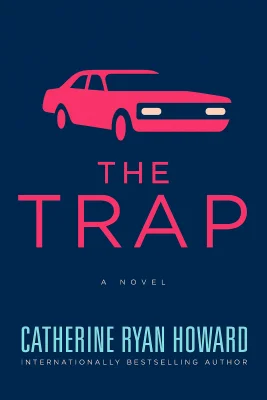
The Trap
Categories
Fiction, Audiobook, Mystery, Thriller, Adult, Ireland, Suspense, Crime, Mystery Thriller, Psychological Thriller
Content Type
Book
Binding
Hardcover
Year
2023
Publisher
Blackstone Publishing
Language
English
ISBN13
9781982694715
File Download
PDF | EPUB
The Trap Plot Summary
Introduction
In the rolling hills of Ireland's countryside, women disappear into the night like smoke dissolving into darkness. The official count stands at three missing women, their faces plastered across headlines and their families haunted by endless questions. But Detective Denise Pope suspects the truth runs deeper—that Operation Tide, the high-profile investigation tasked with finding them, has missed crucial pieces of the puzzle. When Lucy O'Sullivan's sister Nicki vanishes after a night out in Dublin, Lucy's world fractures into a relentless search for answers. The police speak of connections, patterns, and ongoing investigations, but Lucy sees only bureaucratic failures and growing desperation. As months turn into a year of sleepless nights and dead ends, her need to know transforms from grief into obsession, from love into something far darker. The phantom who stalks these lonely roads understands that desperation makes people do unthinkable things—and Lucy O'Sullivan is about to prove him right.
Chapter 1: Vanishing Patterns: The Missing Women of Wicklow
The call came at dawn, pulling Detective Denise Pope from restless sleep. Another search in the Wicklow Mountains had begun, dozens of white-suited figures combing through bracken and bog for traces of the missing women. But this time felt different. Lena Paczkowski, a young Polish woman who had vanished two weeks earlier, had been found—or rather, she had found her way out. The story emerged in fragments from paramedics' reports. Lena had run into traffic on a mountain road, struck by an American tourist's rental car while fleeing something in the darkness. Before slipping into a coma from her injuries, she had whispered about a pink house and other women being held there. The revelation sent shockwaves through Operation Tide, the specialized unit investigating what they believed were connected disappearances. Three women had officially vanished over eighteen months. Tana Meehan, twenty-nine, had disappeared from a bus stop in Kildare town after visiting Dublin. Nicki O'Sullivan, twenty-five, had walked out of the Duke pub in Dublin city center and never returned home. Jennifer Gold, just seventeen, had vanished while walking her dog near her family's home, the animal returning alone with its leash trailing. Each had left behind a discarded phone found near their last known location. But Detective Pope suspected there were more. Her unofficial list contained names like Kerry Long, a young woman from Enniscorthy who had disappeared years earlier with barely a mention in local papers. The Missing Persons Unit had become a repository of forgotten faces, women whose stories had never captured public attention the way Jennifer Gold's had. Now, with Lena's testimony, Pope wondered how many other victims lay waiting in unmarked graves, their families still believing in miracle returns. The searches would continue, helicopters sweeping across endless green expanses while ground teams followed leads that dissolved like morning mist. Somewhere in those mountains, a pink house held secrets that could unlock everything—if they could find it before it was too late.
Chapter 2: Desperate Measures: Lucy's Search for Truth
Lucy O'Sullivan had learned to hate mornings. Each dawn brought the same crushing realization that her sister remained missing, that another night of questions had produced no answers. She stood at her kitchen window, staring at the For Sale sign she had torn from the garden wall in a moment of rage. The house was supposed to be sold, the proceeds funding her dream of opening a café. Instead, it had become a monument to paralyzed grief. The television news offered false comfort in the form of Operation Tide press conferences, where Superintendent Colin Hall spoke of progress and ongoing investigations. But Lucy saw through the polished words to the truth beneath—eighteen months after Nicki's disappearance, they were no closer to finding her. The official investigation had moved on, absorbed Nicki's case into the broader search for missing women, reducing her sister to a statistic in a high-profile operation. When Jack Keane's business card appeared in her post, Lucy initially dismissed it. The former crime correspondent turned true-crime celebrity was known for sensationalist documentaries that exploited tragedy for ratings. But his handwritten message on the card's back proved irresistible: "You're not being told everything. Call me and I'll tell you." Their meeting at her derelict café revealed uncomfortable truths. Keane claimed Operation Tide was fundamentally flawed, more concerned with maintaining its budget than solving cases. He possessed information about Lena Paczkowski that the police had kept secret—details about a nightdress that wasn't hers and repeated references to a pink house. Most damaging of all, he suggested Roland Kearns could be charged with his ex-wife Tana's murder, but wasn't, because solving one case would undermine the operation's justification for existence. The price for this information was Lucy's participation in a television interview alongside the other families. But when she gathered them together, the meeting collapsed into bitter recriminations. Margaret Gold, Jennifer's mother, refused to participate, jealously guarding her daughter's elevated status in the public consciousness. The other families lacked the strength to face cameras and questions. Lucy realized she was alone in her desperate need for answers, isolated by a grief that had transformed into something approaching madness. That night, she made a decision that would change everything. If the official channels had failed her, she would create her own.
Chapter 3: The Pink House: A Killer's Methodology
The man who would become known as the Phantom had never planned to be a serial killer. His first victim was an accident born of opportunity and rage—a young woman named Kerry Long who had asked him for directions on a dark Wexford road. The blow to her skull that opened her forehead like a zipper had surprised him as much as her. But in that moment of violence, something sleeping inside him had awakened with ravenous hunger. He developed his methods through necessity rather than planning. Speed was everything—sixty seconds to move from approach to abduction, using props in his backseat to project normalcy. A cake box, flowers, a gift bag from an upscale department store, even a child's car seat to suggest he was a family man running late for a party. Women would lean into his passenger window to help with directions, putting themselves within reach of hands that moved with practiced efficiency. The Pink House had come to him through inheritance—a derelict cottage in the Wicklow Mountains that no estate agent could sell. Its isolation made it perfect for his needs, its crumbling walls painted in that sickly medicinal shade hiding horrors from any casual observer. The cellar beneath became his domain, where he could indulge the darkness that true crime documentaries never properly explained. It wasn't about killing, he would tell himself. It was about the power that came before death, the moment when another person's world collapsed into terror and understanding. He studied his wife Amy's documentary obsessions with amusement, watching her consume endless hours of serial killer profiles while he sat beside her, reading historical biographies. She would point at the screen and declare that she would know if she lived with a monster, that the signs would be obvious. He found her certainty endearing, even as he left late at night on what she believed were astronomy club meetings or solitary hikes. The ritual was always the same. He would disable them quickly, bind them securely, and transport them to his sanctuary. There, in that pink-walled chamber beneath the earth, he would take his time. The screaming always stopped eventually, replaced by the kind of hollow-eyed compliance that made him feel most alive. When boredom set in, as it inevitably did, he would simply stop bringing food. The mountain wind through the broken roof would carry away any sounds, and the isolation ensured that discovery was impossible. Until Lena Paczkowski had found the emergency release in his car boot and run straight into traffic, taking his secrets with her to the grave.
Chapter 4: Willing Prey: The Televised Invitation
Lucy O'Sullivan faced the television cameras with the desperate calm of someone who had nothing left to lose. The studio lights felt surgical under their intensity, exposing every line of grief etched into her face over the past fourteen months. Rachel O'Leary, the veteran anchor brought in to conduct the interview, had warned her that this was her chance to keep her sister's case in the public eye. But Lucy had come with a different agenda entirely. She began conservatively, criticizing Operation Tide's competence and demanding accountability from the Minister for Justice. But as the interview progressed, her carefully prepared talking points gave way to raw honesty. She spoke about the hierarchy of victims, how Jennifer Gold's youth and innocence had made her a media darling while women like Nicki were dismissed as architects of their own misfortune. The truth spilled out with gathering force—how Tana Meehan's divorce had marked her as damaged goods, how Nicki's purple hair and short skirt had suggested she deserved whatever happened to her. The anchor tried to regain control, but Lucy's desperation had found its voice. She spoke directly to the camera now, addressing not the viewing public but the man who had taken her sister. Her voice cracked as she made an offer that sent shockwaves through the production crew: she would go with him willingly if he would just show her where Nicki was. She would trade her life for answers, her freedom for the truth that had consumed her waking hours for over a year. The feed cut to commercial as studio executives realized what they had broadcast. Lucy's plea had gone out live to the entire nation, an open invitation to every dangerous mind watching. Jack Keane found her in the corridor afterward, his face pale with professional horror. He warned her that she had perhaps hours before her house would be surrounded by media and madmen, that she needed to disappear somewhere safe until the storm passed. But Lucy had already made peace with the consequences of her desperation. She drove home through Dublin's evening traffic knowing that she had crossed a line from which there was no return. The house felt different when she arrived, as if her televised breakdown had somehow changed its fundamental nature. She poured wine and waited, watching Air Crash Investigation episodes on repeat, the technical explanations of catastrophic failures providing strange comfort. When the call came at two in the morning—her phone buzzing with a message from an unknown number—she felt only relief. Three words that changed everything: "Can we meet?"
Chapter 5: Hidden in Plain Sight: Nicki's Voluntary Disappearance
The convoy of Garda cars wound through impossible narrow lanes deep in the Cork countryside, following directions that seemed designed more to confuse than guide. Detective Pope sat in tense silence as they penetrated further into a landscape that felt removed from the modern world, where mobile coverage failed and GPS signals faltered among ancient trees. The anonymous tip had been specific—Nicki O'Sullivan was alive and well, living at a remote commune that called itself the Farm. When they finally emerged into a cleared valley scattered with ramshackle buildings and polytunnels, the last thing Angela expected to see was the woman from the official photograph walking out of a caravan to meet them. But there she was—older, thinner, deeply tanned, her famous purple hair now grown out to natural brown. Nicki O'Sullivan looked like someone who had been living outdoors for over a year, which was exactly what she had been doing. The interview that followed shattered every assumption about her disappearance. There had been no abduction, no mysterious vanishing. On the night she walked out of the Duke pub, Nicki had encountered a group of Dutch tourists on Grafton Street and impulsively joined their road trip south. From Cork, she had made her way to this intentional community in West Cork, a place dedicated to sustainable living and voluntary simplicity. She had chosen to stay, cutting all ties with her previous life. Her reasoning revealed a selfishness that was breathtaking in its scope. She was an adult, she insisted, entitled to live as she chose without regard for others' expectations. Lucy's plan to sell the house and open a café had felt like a betrayal, Chris's evolution from adventurous traveler to settled boyfriend a disappointment. Rather than confront these issues directly, she had simply walked away, assuming others would adapt to her absence as they had adapted to her presence. The community's isolation had protected her from news of the outside world. She had no idea that her disappearance had triggered a massive investigation, that it had been linked to other missing women cases, that her sister Lucy had spent fourteen months in agonizing uncertainty. When Detective Pope explained that Lucy was now missing herself, presumably taken by whoever had been responsible for the other disappearances, Nicki's carefully constructed justifications crumbled. For the first time since they had found her, the woman who had caused such devastation through her thoughtless choices began to understand the true cost of her freedom. The last good moment of her life was ending, though she didn't yet comprehend the depths of the nightmare she had inadvertently created.
Chapter 6: The Dark Climb: Descending into the Abyss
Lucy's hands trembled as she approached the silver car parked across from the café, its driver hidden in shadow against the streetlights. Every instinct screamed at her to run, but the message on her phone had been clear—this was her chance to finally get answers about Nicki. The man who emerged from the vehicle appeared unremarkable, middle-aged with thinning reddish hair, but his eyes held a predatory intelligence that made her skin crawl. He played the interaction like a chess master, offering her control while systematically removing her options. She could photograph him, call the police, even attack him with a knife if she wished—but if she did any of those things, she would never learn what had happened to her sister. The choice he presented was elegant in its simplicity: satisfy her desperate need to know, or spend the rest of her life consumed by questions that would never find answers. When he mentioned the Pink House—the same detail Jack Keane had shared from Lena Paczkowski's dying words—Lucy's resistance crumbled. This was him, the phantom who had terrorized the countryside for months. But his next words shattered her understanding completely. He had never taken Nicki O'Sullivan. Her sister's disappearance was unconnected to his crimes, a separate mystery that he could not solve for her. The revelation should have sent her running, but Lucy found herself trapped by a logic that bordered on madness. If he was telling the truth about not taking Nicki, he might also be telling the truth about the other women still being alive. And if they were alive, someone needed to save them. The mathematics of sacrifice seemed clear—her life in exchange for multiple others, her answers in exchange for their freedom. She got into the car knowing it was a mistake, lying down in the backseat as he bound her wrists and ankles with seatbelts. As they drove through the darkness toward the mountains, he began to talk, his voice carrying the casual tone of someone discussing the weather. He spoke of his methods, his motivations, the documentary obsessions of his pregnant wife who lived unaware beside a monster. The keys in her pocket pressed against her hip as the car climbed steadily upward, and Lucy clung to them as her last hope of salvation. When they reached the Pink House, she would find a way to free herself and the other women. She would be the hero of this story, the sister who succeeded where the police had failed. But as his monologue continued and the darkness deepened around them, she began to understand that some choices, once made, lead only downward into places from which there is no return.
Chapter 7: Role Reversal: The Sister Who Becomes the Hunted
The cellar beneath the Pink House was a monument to casual evil, its medicinal pink walls stained with mold and despair. Lucy had awakened there three times now, each return to consciousness bringing fresh waves of pain from injuries she refused to catalog completely. The smell in the confined space suggested other occupants—or former occupants—whose fate she dared not consider too closely. Her captor had made good on his promise to answer her questions, but the truth was more horrible than any mystery. He had never taken Nicki. Her sister's disappearance remained unexplained, a separate tragedy that had intersected with his crimes only through Lucy's desperate search for answers. The irony was devastating—in seeking to solve one mystery, she had created another. Her own disappearance would now torment Chris and Nicki just as Nicki's had tormented her, an endless cycle of unanswered questions and sleepless nights. The other women were not alive, had never been alive in any meaningful sense after their capture. His claim of not killing them was a semantic game—he simply stopped feeding them when they ceased to amuse him, letting starvation and despair complete what violence had begun. The Pink House was not a prison but a tomb, its hidden cellar a final resting place for dreams and futures that would never be realized. As her strength faded and hope died, Lucy understood that she had achieved exactly what she claimed to want. The questions that had consumed her for fourteen months finally had answers, but the knowledge brought no peace, only a deeper understanding of how thoroughly she had destroyed herself in pursuit of it. She had traded everything—her life, her safety, her future—for information that served no purpose except to illuminate the depths of human evil. In the darkness above her head, she could hear him moving about, preparing for whatever came next. Soon there would be no more questions because there would be no one left to ask them. The phantom had claimed his willing victim, and Detective Pope would add another name to her list of women who had vanished from the face of the earth. But somewhere in West Cork, Nicki O'Sullivan was learning that freedom without responsibility was just another form of prison, and that some mistakes echo across generations in ways their makers never intend.
Summary
The Pink House stood empty now, its secrets finally exposed to the light that flooded through broken windows. The search teams had found Lucy O'Sullivan's remains in the cellar alongside evidence of other victims, bringing closure to families who had waited years for answers that no one wanted to receive. Detective Pope's instincts had been correct—there were more missing women than Operation Tide had acknowledged, more graves hidden in the Wicklow Mountains than anyone had dared imagine. Caroline O'Callaghan's arrest for Tana Meehan's murder proved that not all the disappearances were connected, that sometimes evil was simply opportunistic rather than systematic. But the true horror lay not in the crimes themselves but in their aftermath, the way they had metastasized through the lives of those left behind. Nicki O'Sullivan returned from her voluntary exile to find herself infamous, her thoughtless escape having triggered a chain of events that led to her sister's death. The woman who had once fled responsibility now faced a lifetime of carrying the weight of consequences she had never intended. In seeking to answer questions about love and loss, The Trap reveals that some knowledge comes at too high a price, and that the monsters we fear in the darkness are often less dangerous than the desperation we carry within ourselves. The true phantom haunting these pages is not a killer but the human need to know at any cost, the terrible mathematics of sacrifice that transforms victims into architects of their own destruction.
Best Quote
“The world, she’d discovered, just wasn’t designed for people with open wounds.” ― Catherine Ryan Howard, The Trap
Review Summary
Strengths: The review highlights the book's gripping and realistic opening chapter, effective suspense, and compelling narrative structure. The inclusion of multiple perspectives, including the abductor's, adds depth and intrigue. The cover art is also praised. Overall: The reviewer expresses strong enthusiasm for Catherine Ryan Howard's latest work, indicating it as a standout read for 2023. The book is recommended for its thrilling plot and haunting conclusion, making it a top choice for readers interested in suspenseful and thought-provoking stories.
About Author

Catherine Ryan Howard
Howard interrogates the intricacies of human nature through her suspenseful and psychologically complex crime novels. Her narratives often delve into themes of mystery and dark human behavior, creating gripping stories that keep readers on the edge of their seats. The combination of fast-paced plots and morally ambiguous situations invites readers to explore the depth of psychological tension present in her work. With her debut novel, "Distress Signals", Howard made a significant mark on the thriller genre, earning a nomination for the CWA John Creasey Dagger and solidifying her as a key figure in contemporary crime writing.\n\nHer subsequent works, such as "The Liar’s Girl", "Rewind", and "The Nothing Man", continue to captivate audiences by building on these established themes while also expanding into new territories. For example, "The Nothing Man" achieved both critical acclaim and commercial success, becoming a bestseller and further demonstrating Howard's ability to connect with a wide readership. Meanwhile, her latest book, "56 Days", written during lockdown, was named one of the best thrillers of 2021 by the New York Times, showcasing her talent for crafting timely narratives that resonate with current events.\n\nReaders benefit from Howard's commitment to exploring the darker sides of human experience, as her books provide not only thrilling entertainment but also a window into the complexities of psychological motivations. Her work appeals to those who appreciate intricate character studies and tightly woven plots. With a career marked by a series of accolades and bestsellers, Howard continues to stand out in the crime and thriller genres, offering fresh perspectives and maintaining a strong presence on the international literary stage. This short bio underscores her impact and enduring appeal as a leading contemporary author.
Read moreDownload PDF & EPUB
To save this Black List summary for later, download the free PDF and EPUB. You can print it out, or read offline at your convenience.
The Trap
by Catherine Ryan Howard
