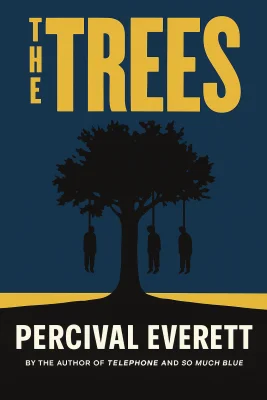
The Trees
Categories
Fiction, Audiobook, Horror, Mystery, Historical Fiction, Book Club, Race, Crime, Literary Fiction, Mystery Thriller
Content Type
Book
Binding
Paperback
Year
2021
Publisher
Graywolf Press
Language
English
ASIN
164445064X
ISBN
164445064X
ISBN13
9781644450642
File Download
PDF | EPUB
The Trees Plot Summary
Introduction
In the sweltering heat of Money, Mississippi, a town that looks exactly like it sounds, something ancient and terrible has awakened. When Junior Junior Milam is found brutally murdered in his own home, his testicles severed and clutched in the bloody fist of an unidentified Black man, the local sheriff thinks he has a simple case of mutual murder. But the dead Black man disappears from the morgue, only to reappear at the next killing scene. Then the next. What begins as a local mystery in this forgotten Delta town soon spreads across America like wildfire, as corpses thought long buried begin walking again, seeking a vengeance sixty-five years in the making. The ghosts of lynching victims have risen, and they're coming for the descendants of their killers. In Money, Mississippi, where fourteen-year-old Emmett Till was murdered in 1955, the past refuses to stay buried, and the dead have come to collect a debt written in blood and barbed wire.
Chapter 1: The Dead That Won't Stay Buried
The call came in just after dawn to Deputy Sheriff Delroy Digby, who was still nursing his morning coffee when Daisy Milam's hysterical voice crackled through the radio. Her husband Junior Junior was dead, she sobbed, killed by a Black man in their own home while she and the children were at the swap meet. When Digby arrived at the split-level house in Small Change, he found Daisy pacing the yard like a caged animal, her mascara streaking down her cheeks in dark rivers. The scene inside defied comprehension. Junior Junior Milam lay twisted on the blood-soaked floor, his skull caved in, barbed wire wrapped around his throat like a grotesque necklace. His pants were pulled down, his groin a mess of matted blood where his testicles should have been. But it was the second body that stopped Digby cold. In the corner sat a Black man in a dirt-encrusted blue suit, his face so battered and swollen that no mother could have recognized him. The man's neck bore scars that looked stitched together by time itself, and in his stiff, cold fist, he clutched Junior Junior's severed genitals. Sheriff Red Jetty arrived to find his deputy standing in the doorway like a statue, too shocked to move. The sheriff had seen plenty of violence in his twenty years of law enforcement, but this scene felt different. The Black man looked not just dead, but impossibly dead, as if he'd been deceased for decades. His skin had the waxy pallor of formaldehyde, and dirt clung to his clothes like grave soil. Doctor Reverend Fondle, the town coroner, pronounced both men dead without much examination. He'd seen enough corpses to know death when he saw it, and these two were as dead as anyone he'd ever encountered. They loaded the bodies into the coroner's wagon and drove them back to town, where Fondle locked the Black man in drawer number three of his morgue. By evening, the drawer was empty, and the door that had been rusted shut for years hung open, its lock shattered from the inside.
Chapter 2: A Trail of Mutilated Bodies and Racial History
While Money's law enforcement scrambled to understand how a dead man could walk away, two hundred miles north in Chicago, Detective Daniel Moon stood over another gruesome scene. Lester William Milam lay in his cramped apartment, his throat slashed so deeply his head nearly separated from his shoulders, barbed wire twisted around his neck. The beating had been so severe that the walls were spattered with blood, yet there was no sign of struggle. Most disturbing was the slight Black man sitting against the far wall, dirt covering his old-fashioned clothes, holding Lester's testicles in his decomposing hands. The Mississippi Bureau of Investigation dispatched Special Detectives Jim Davis and Ed Morgan to Money, two Black investigators who'd seen their share of racial violence but nothing like this. They arrived to find a town on edge, where the older White residents whispered about ghosts and the younger ones cleaned their guns. The pattern was becoming clear: White men dying in locked rooms, their genitals severed, always with the same impossibly dead Black companion. At the Dinah diner, the detectives met Gertrude, a mixed-race waitress who went by Dixie and seemed to know more about the town's dark history than she let on. She directed them to Mama Z, a one-hundred-and-five-year-old woman who lived alone in the woods and kept meticulous records of every lynching in American history since 1913. In Mama Z's house, filing cabinet after filing cabinet contained the names and stories of seven thousand victims, their deaths documented with the precision of an archivist and the passion of someone who remembered. The connection hit like lightning when Jim and Ed realized the truth about their victims. Junior Junior Milam and Wheat Bryant were the sons of J.W. Milam and Roy Bryant, the men who had tortured and killed fourteen-year-old Emmett Till in 1955. Carolyn Bryant, found dead of apparent fright in her bedroom, was the woman whose false accusation had sealed the boy's fate. The Black corpse that kept appearing and disappearing bore an uncanny resemblance to photographs of Till's mutilated body in his open casket, the image that had shocked America into facing the reality of lynching.
Chapter 3: The Archives of Forgotten Violence
In Mama Z's records room, Professor Damon Thruff from the University of Chicago sat surrounded by the weight of history, writing name after name by hand until his fingers cramped. Each file told the same story with different details: Black men and women murdered by White mobs, their killers never prosecuted, their deaths forgotten by everyone except an ancient woman who refused to let memory die. Mama Z had spent nearly a century collecting newspaper clippings, police reports, and witness accounts, building a monument to America's victims that existed in no museum or textbook. As the investigation widened, FBI Special Agent Herberta Hind arrived from Washington, bringing federal resources and a personal investment in seeing justice done. She quickly realized that the crimes weren't limited to Mississippi. Similar murders were occurring across the country, always following the same pattern: White men with connections to historical racial violence found dead with mutilated genitals, always accompanied by the corpse of someone who looked like their ancestors' victims. The stolen truck from Acme Cadaver Supply in Chicago provided a crucial clue. Chester Hobsinger, a mixed-race man whose grandfather had been lynched, had hijacked a trailer full of bodies and brought them south. But when the investigators found his hideout, they discovered something that chilled them to the bone. The missing corpses weren't just being used as props in revenge killings. They were moving, walking, acting with purpose and intelligence that defied every law of nature and death. Gertrude revealed the truth when cornered: she was part of a group that had formed around Mama Z, young people who had decided that if the law wouldn't provide justice for historical crimes, they would. They had killed only three people, targeting the specific family members responsible for Emmett Till's death. But something had gone wrong. The stolen corpses had taken on a life of their own, spreading across America like an infection, seeking out the descendants of lynch mobs with supernatural precision.
Chapter 4: The Awakening of Historical Vengeance
The television screens across America filled with breaking news as the death toll mounted. Wyoming. California. Minnesota. Everywhere, mobs of dirt-covered Black men appeared as if from nowhere, moving through towns and cities with deadly purpose. They showed no fear of bullets or police, walking through gunfire as if it were rain. Witnesses described their eyes as empty yet purposeful, their movements coordinated despite having no visible leader. In Rock Springs, Wyoming, twenty-eight Chinese men materialized in a tavern, slashing and burning eight White men before vanishing into the mountains. The local Shoshone elder who witnessed the attack wasn't surprised. He'd seen ghosts before, he said, and these weren't just any ghosts. They were the spirits of the Rock Springs Massacre of 1885, when White miners had killed Chinese workers in a frenzy of racial hatred. The pattern was undeniable. Every location where the supernatural killings occurred had a history of racial violence. Every victim, when their genealogy was traced, had ancestors who participated in lynchings, massacres, or other acts of White supremacist terror. The dead were rising not randomly, but with the precision of a court system that had never existed, delivering verdicts for crimes that had never been prosecuted. President Trump's response was predictably inflammatory, calling for martial law and encouraging his supporters to take up arms against what he termed "a negro uprising." But bullets couldn't stop the dead, and the more violence the living attempted, the more corpses joined the ghostly army. It was as if America's buried history was literally clawing its way out of the grave, demanding acknowledgment and retribution.
Chapter 5: When Dead Men Walk Among the Living
Sheriff Jetty discovered a terrible truth in his own family photographs: his father had been passing for White his entire life, hiding his mixed heritage while participating in the very Klan activities that had killed his own father. The revelation shattered Jetty's understanding of himself and his place in Money's racial hierarchy, but it also explained why the supernatural violence seemed to bypass him while claiming his deputies. The dead showed a cruel intelligence in their selection of victims. They ignored bystanders, passed over children, and even spared some White adults whose families had no connection to historical violence. But for those whose bloodlines carried the stain of lynch mobs and race riots, there was no mercy. They came at night, materialized in locked rooms, appeared in seemingly impossible numbers to overwhelm their targets with the same brutal methods their ancestors had used: rope, fire, and mutilation. In Hernando, Mississippi, five White men were found slaughtered in a Masonic lodge, their bodies bearing the signature marks of barbed wire and castration. In Duluth, Minnesota, a descendant of the 1920 lynching participants was discovered in his kitchen, his head nearly severed, while ghostly Black figures were seen walking through the streets in broad daylight. Each crime scene told the same story: the victims had died exactly as their ancestors' victims had died, with the same weapons and the same deliberate cruelty. The investigation led Jim Davis and Ed Morgan deeper into a mystery that seemed to mock the very concept of death. Bodies disappeared from morgues only to reappear at crime scenes hundreds of miles away. Fingerprints matched corpses that had been buried for decades. DNA analysis revealed victims who had died in prison years earlier, their bodies donated to science and somehow reanimated for vengeance.
Chapter 6: A Nation Facing Its Bloody Past
As the supernatural violence spread, America was forced to confront a history it had spent centuries trying to forget. News broadcasts struggled to explain how the dead could walk, but the geographical pattern was unmistakable. Every town, every county, every state touched by the ghostly army had blood on its hands. The violence followed the historical map of American racism with terrifying accuracy. Mama Z revealed the full scope of what was happening when the investigators returned to her house one final time. In her records room, Damon Thruff sat typing obsessively at an old manual typewriter, transcribing name after name from the lynching files. Each name he typed seemed to give power to the dead, calling them back from whatever realm they had inhabited to seek justice in the world of the living. The old woman explained that she had never intended this outcome. Her group had planned only to kill the specific descendants of Emmett Till's murderers, a symbolic act of retribution for the most famous lynching in American history. But the stolen corpses had somehow become conduits for something larger, channels through which the accumulated rage of seven thousand murdered souls could finally find expression. The federal government's response grew increasingly desperate as the death toll mounted into the hundreds. Military units were deployed, martial law declared in affected areas, but conventional weapons were useless against enemies who were already dead. The ghostly armies continued their march across America, appearing wherever their historical counterparts had died, settling scores that had remained open for more than a century.
Chapter 7: The Unstoppable Reckoning
In the White House, even the president wasn't safe. Secretary Reynolds was found castrated and dead in the Roosevelt Room, killed by a Black man who had died years earlier but somehow gained access to the most secure building in America. The president cowered under his desk, demanding military protection against an enemy that recognized no authority but the cosmic justice of the grave. The climax came as Mama Z's house filled with the sound of approaching voices. Outside, hundreds of figures emerged from the darkness, moving with the slow inevitability of a natural disaster. They were no longer hiding, no longer limiting themselves to specific targets. The dead were rising en masse, and their hunger for justice had grown beyond the ability of the living to satisfy. Jim Davis and Ed Morgan, along with FBI Agent Hind and the frightened Gertrude, found themselves trapped in the center of forces they had unleashed but could no longer control. In the records room, Damon Thruff continued typing names while Mama Z watched with the satisfaction of someone who had lived long enough to see history's wheel turn full circle. The sound outside grew louder: "Rise. Rise. Rise." It was the voice of every person who had ever died at the hands of racial hatred, finally finding the strength to answer violence with violence, murder with murder, terror with terror. The dead were no longer content to rest in unmarked graves while their killers' descendants lived in comfort and denial.
Summary
The Trees transforms the ghost story into an instrument of historical reckoning, using supernatural horror to confront America's unacknowledged legacy of racial violence. Through Mama Z's meticulous records and the rise of vengeful spirits, Percival Everett creates a narrative where the past literally refuses to stay buried. The novel's dead don't seek peace or forgiveness; they demand the justice that was denied them in life, visiting upon the descendants of lynch mobs the same brutality their ancestors inflicted. What began as a simple murder mystery in Money, Mississippi, becomes an apocalyptic confrontation with collective guilt and historical amnesia. The book suggests that America's racial wounds have never healed because they were never properly acknowledged or addressed. Instead, the violence was buried, forgotten, relegated to footnotes in history books while the perpetrators' families prospered. In Everett's vision, that willful forgetting has consequences, and the bill for centuries of unpunished racial terrorism has finally come due, payable only in blood.
Best Quote
“Everybody talks about genocides around the world, but when the killing is slow and spread over a hundred years, no one notices. Where there are no mass graves, no one notices. American outrage is always for show. It has a shelf life.” ― Percival Everett, The Trees
About Author

Percival Everett
Everett delves into the complexities of human experience through a diverse and experimental lens, reflecting a commitment to exploring themes that intrigue him. His work often addresses issues of race, identity, and societal norms, employing satire and irony to critique expectations and challenge conventional narratives. With more than 30 books, including "Suder" and "Erasure," Everett frequently bends genres, ranging from philosophical explorations to sharp satires of the publishing industry. This approach underlines his view that writing should mirror the vastness of human interests, therefore allowing him to weave intricate stories that engage readers on multiple levels.\n\nReaders benefit from Everett's work through its philosophical depth and humor-infused social commentary, which offers both entertainment and introspection. His teaching philosophy parallels his writing; as a professor of English and Distinguished Professor at the University of Southern California, Everett emphasizes learning as a two-way street, gaining insights from his students as much as they gain from him. This mutual learning enriches his literary output, making his books particularly valuable for readers interested in narratives that push the boundaries of traditional storytelling while delving into the moral ambiguities of life.\n\nHis contribution to literature has not gone unnoticed, earning significant recognition such as the Pulitzer Prize for Fiction for his book "James" and the Hurston/Wright Legacy Award for "Erasure." Such accolades reflect Everett’s status as a dynamic force in American fiction, celebrated for both his innovative style and his ability to tackle profound subjects with wit and wisdom. His impact extends beyond individual works, as his career and methods continue to influence new generations of writers and readers alike.
Read moreDownload PDF & EPUB
To save this Black List summary for later, download the free PDF and EPUB. You can print it out, or read offline at your convenience.
The Trees
by Percival Everett
