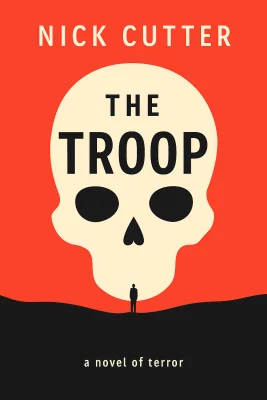
The Troop
Categories
Fiction, Science Fiction, Audiobook, Horror, Mystery, Thriller, Adult, Book Club, Survival, Horror Thriller
Content Type
Book
Binding
Hardcover
Year
2014
Publisher
Gallery Books
Language
English
ISBN13
9781476717715
File Download
PDF | EPUB
The Troop Plot Summary
Introduction
# The Devouring Hunger: A Parasitic Horror on Falstaff Island The stolen boat cuts through black Atlantic waters like a blade through flesh, carrying Thomas Padgett toward his final destination. Inside his wasted body, something alien writhes with patient hunger, transforming him into a living weapon of biological warfare. When he collapses on the rocky shores of Falstaff Island, five Boy Scouts and their Scoutmaster have no idea they're witnessing the arrival of their own extinction. What begins as a routine camping trip becomes a nightmare of parasitic horror as the boys discover that their weekend retreat has been transformed into a quarantine zone. The military ships circling the island aren't there to rescue them—they're there to contain them. As the infection spreads and their friends transform into something inhuman, the survivors must confront a terrible truth: they were never meant to leave Falstaff Island alive.
Chapter 1: The Stranger from the Dark Waters
The man who emerges from the sea looks like death given form. His skeletal frame barely holds together, skin stretched translucent over protruding bones, eyes sunken into hollow sockets that burn with desperate hunger. Tim Riggs, the Scoutmaster and only adult on Falstaff Island, approaches with medical caution as the stranger collapses on their rocky beach. The five boys of Troop 52 watch from their campfire as their leader tends to this living scarecrow. Max Kirkwood, the coroner's son with steady nerves, observes the stranger's condition with clinical detachment. Kent Jenks, the golden boy athlete whose father runs the local police, immediately senses something wrong in the man's presence. Newton Thornton, overweight but knowledgeable about wilderness survival, consults his field guides for explanations that don't exist. Ephraim Elliott, all sharp edges and barely contained anger, paces restlessly around the perimeter. Only Shelley Longpre remains perfectly still, watching everything with pale eyes that seem to catalog secrets. The stranger's first coherent words chill them to the bone. "So hungry," he whispers, his fingers clawing at the rocky beach. "Haven't eaten in so long." But this isn't the hunger of starvation—it's something far more sinister, something that drives him to shovel handfuls of dirt into his mouth as if it were bread. Tim's medical training compels him to help despite every instinct screaming danger. As he examines the man's impossibly emaciated frame, he feels something moving beneath the paper-thin skin—a subtle writhing that makes his flesh crawl. The stranger's vital signs make no sense; he should be dead, yet something keeps him animated, driven by an appetite that seems to grow stronger even as his body wastes away. When Tim tries to radio for help, the stranger erupts into violence with inhuman strength, smashing their only connection to the mainland before collapsing back into unconsciousness. The boys huddle around their dying campfire, understanding that their peaceful weekend has become something else entirely—a test of survival against forces they cannot comprehend.
Chapter 2: Quarantine: The Island Prison
Dawn brings black helicopters cutting through morning mist with military precision. They circle Falstaff Island twice before hovering offshore, close enough for the boys to see the pilot's impassive face behind his visor. Max waves frantically for help, but the aircraft maintains its distance like a predator studying prey. More ships follow—dark, angular vessels that take positions around the island's perimeter with coordinated efficiency. The military cordon transforms their camping destination into a prison, cutting them off from the mainland with ruthless professionalism. When Kent tries to start their boat, he discovers the spark plugs are missing. Someone has sabotaged their only means of escape. The stranger's condition deteriorates with shocking speed. His skin takes on a waxy, translucent quality, and from deep within his abdomen come sounds that belong in no human body—wet, sliding noises like something large moving through liquid. Tim works with desperate professionalism, but his medical training provides no framework for understanding what's happening. Radio contact with the mainland has been severed. Their emergency beacon goes unanswered. The boys begin to understand that whatever plague the stranger carries, the outside world considers it dangerous enough to abandon five children and their adult supervisor. They are truly alone, cut off from help by forces beyond their comprehension. The stranger's appetite becomes insatiable. He consumes their entire food supply in a single night, yet appears more emaciated than ever. When Tim examines him more closely, the man's abdomen feels wrong—distended yet somehow hollow, as if something inside has eaten away everything that should have been there. The sweet, fruity stench of ketosis rolls off him in waves, speaking of a body consuming itself from within. As night falls, the stranger's transformation reaches its horrifying climax. His already skeletal frame convulses, and the wet sounds from his abdomen grow louder, more urgent. The boys watch in terror as their Scoutmaster prepares makeshift surgical instruments, driven by medical curiosity and growing dread to discover what horror lies beneath the stranger's distended skin.
Chapter 3: First Blood: Kent's Descent into Hunger
The creature that emerges from the stranger's ruptured abdomen defies every law of biology. White, segmented, and impossibly long, it moves with predatory intelligence through the cabin's stale air. Its surface bristles with tiny mouths lined with needle teeth, each one opening and closing in silent hunger. This is no ordinary parasite—it's something designed, something created to consume and spread with maximum efficiency. Tim's scalpel severs a portion of the writhing mass, releasing a spray of brown fluid that burns like acid where it touches skin. The worm's death throes are terrible to witness as it wraps around the stranger's throat with deliberate cruelty, constricting until bones crack and the man's face turns blue. In his final moments, the stranger's eyes hold terrible awareness—he knows what's happening to him, knows what he's become. Kent is the first to show symptoms. It begins subtly with increased appetite that seems reasonable given their dwindling food supplies and mounting stress. But within hours, his hunger transforms into something else entirely, a gnawing need that consumes his thoughts and drives him to desperate measures. The other boys discover him in pre-dawn darkness, methodically devouring their emergency rations with mechanical efficiency. His athletic frame already shows signs of the wasting that consumed the stranger. His clothes hang loose on his shrinking body, and his eyes take on the same desperate gleam they witnessed in their unwelcome guest. When confronted, Kent's response reveals how far he has already fallen. "I can't help it," he says, his voice carrying genuine desperation. "It's like there's something inside me, something that's never full." Tim makes the agonizing decision to quarantine Kent, locking him in the cabin's small storage room despite the boy's increasingly frantic protests. Through the thin wooden door, they hear him pleading, then demanding, then making sounds that no longer seem entirely human. The transformation is accelerating, as if whatever infected the stranger is learning, adapting, becoming more efficient with each new host. The island's ecosystem begins showing signs of contamination. Beetles split open to reveal writhing white larvae inside their shells. The very air seems infected with microscopic threats that drift on invisible currents, seeking new hosts with patient malevolence. What started as one man's affliction has become an environmental catastrophe, and they are trapped at its epicenter.
Chapter 4: Unraveling Minds: Paranoia and Self-Destruction
Ephraim's breakdown begins with paranoia that spreads like infection through his thoughts. He becomes convinced that the parasites have already taken hold inside him, that microscopic invaders are burrowing through his flesh and establishing colonies in his organs. His hands, bloodied from fighting Kent during the quarantine struggle, become the focus of his obsession. "I can feel them," he whispers to Max during one of their increasingly rare moments of calm. "Moving under my skin, eating me from the inside." He scratches at his knuckles until they bleed, convinced he can dig out the infection before it spreads. Each scratch becomes a wound, each wound a potential doorway for the horrors that consumed their friends. Shelley, who has remained eerily calm throughout their ordeal, begins to encourage Ephraim's delusions with subtle suggestions and carefully placed observations. The pale, strange boy seems to take pleasure in his classmate's deterioration, offering advice that only makes the situation worse. His eyes reflect no horror at the carnage around them—only cold fascination that chills the other boys more than the parasites themselves. The breaking point comes when Ephraim finds his Swiss Army knife. Convinced that surgical intervention is his only hope of survival, he begins cutting into his own flesh, searching for parasites that exist only in his fractured mind. Each incision reveals nothing but blood and tissue, but rather than providing relief, the absence of visible infection only convinces him that the creatures are hiding deeper. Max and Newton try desperately to stop him, but Ephraim's madness has given him manic strength. He carves symbols into his arms and legs, geometric patterns that he claims will trap the parasites and prevent them from spreading. His face, once handsome in its sharp-featured way, becomes a mask of self-inflicted wounds that weep blood in the firelight. The final act of his self-destruction comes with gasoline and flame. Shelley, in a moment of calculated cruelty, convinces Ephraim that burning is the only way to purify himself of the infection. The other boys return from a desperate search for food to find their friend engulfed in fire, his screams echoing across the water toward the silent ships that watch but do not intervene.
Chapter 5: Monstrous Metamorphosis: Shelley's Alien Evolution
While the others fought against infection or succumbed to madness, Shelley embraces his transformation with disturbing enthusiasm. The pale boy had always been different, watching his classmates with the detached interest of a scientist observing specimens. Now, as the parasites rewrite his biology, he finds a purpose that has always eluded him. His body changes in ways that defy natural law. His limbs elongate while his torso swells with alien life, skin becoming translucent to reveal the writhing masses that have replaced his organs. But rather than fighting the changes, Shelley welcomes them as evolution, a step toward something greater than mere humanity. He moves through the island's ecosystem with predatory grace, hunting birds and insects with inhuman efficiency. Tim's condition deteriorates as the infection spreads through the adult's robust frame. Within hours, his body begins wasting away as if something inside is consuming his very substance. The boys watch in horror as their trusted leader transforms into something they no longer recognize, his medical knowledge useless against the alien hunger devouring him from within. When a storm batters the island, bringing crushing isolation and the weight of absolute abandonment, a massive oak crashes through the cabin roof. The tree seals their fate, trapping the infected Scoutmaster in the closet where they locked him and crushing his skull like an eggshell. Newton witnesses Tim's final transformation as hundreds of thread-like worms pour from the man's split abdomen, their tiny mouths gasping for hosts with almost sentient hunger. The confrontation in the cave reveals the full extent of Shelley's metamorphosis. Max and Newton, searching desperately for the spark plugs that represent their only hope of escape, find their former classmate in a natural chamber beneath the island. What they discover is no longer recognizably human—a creature of pale flesh and alien hunger that moves with spider-like grace. The thing that had been Shelley carries a grotesquely swollen abdomen that pulses with internal movement. Its face retains enough human features to be recognizable, but the intelligence behind its eyes is utterly alien. When Newton strikes it with a makeshift spear, the creature's abdomen ruptures, releasing a flood of parasitic offspring into the cave's stagnant air before collapsing, its purpose finally fulfilled.
Chapter 6: The Last Stand: Desperate Flight from Hell
Max and Newton, the last survivors of Troop 52, face their final challenge with the desperate courage of those who have nothing left to lose. The spark plugs, retrieved from the stranger's corpse at terrible cost, represent their only hope of reaching the mainland and the medical help that Newton desperately needs. Newton's infection has progressed beyond denial. The parasites have found their way into his bloodstream, and he can feel them moving behind his eyes, preparing for the final stage of their lifecycle. His body begins the wasting process that consumed the others, but his mind remains clear enough to understand what's happening to him. They work together to prepare their escape, their movements efficient despite the horror surrounding them. The island has become a charnel house, littered with the remains of their friends and evidence of biological warfare gone wrong. The ships on the horizon maintain their vigil, waiting to see if any survivors will emerge from the quarantine zone. The boat's engine catches on the first try, a small miracle that feels like divine intervention. As they pull away from Falstaff Island's rocky shores, both boys understand they are leaving behind not just their friends, but their innocence and any hope of returning to the lives they knew. The military cordon closes around them as they approach the mainland, searchlights pinning them like insects under a microscope. When Newton speaks—when he admits to the hunger consuming him from within—the response is swift and final. The red dot of a sniper's laser sight dances across his chest before the bullet finds its mark. The shot that ends Newton's life is a mercy, though Max will never see it that way. He watches his last friend disappear beneath dark waters, carrying with him the infection that claimed them all. The military's cold efficiency in eliminating the threat speaks to the true nature of their ordeal. They had been test subjects in an experiment that valued data over human life, expendable resources in a game whose rules they never understood. The adults who should have protected them had instead used them as guinea pigs for humanity's newest weapon of mass destruction.
Chapter 7: Sole Survivor: The Weight of Terrible Truth
Max Kirkwood returns to North Point as the sole survivor of Troop 52, carrying within him memories of horrors that no child should witness. The official reports speak of a containment breach and necessary sacrifices, but they can never capture the human cost of scientific ambition unchecked by moral consideration. The parasites that consumed his friends were products of deliberate design, weapons disguised as medical research. Dr. Clive Edgerton's modified hydatid worms represented the marriage of biological warfare and corporate greed, with Falstaff Island serving as an unacknowledged testing ground. The boys had been sacrificed to prove the effectiveness of humanity's newest tool of destruction. In the years that follow, Max struggles with survivor's guilt and the knowledge that his friends' deaths served a purpose far removed from any noble cause. The isolation and fear they experienced on the island was nothing compared to the betrayal of learning that their abandonment had been deliberate. They were never meant to survive their weekend camping trip.
Summary
The horror of Falstaff Island lies not in its monsters, but in its revelation of how quickly the familiar becomes alien. Five boys who arrived as friends discovered that survival strips away everything except the most basic drives—to eat, to live, to avoid becoming food for something else. Their Scout training, meant to prepare them for wilderness challenges, proved woefully inadequate against an enemy that attacked from within. The military cordon surrounding the island served as a mirror to their isolation, reflecting society's willingness to sacrifice the few for the many. The boys became unwilling test subjects in an experiment that would determine whether humanity could contain what it had unleashed. In the end, the greatest horror was not the parasites themselves, but the knowledge that somewhere in a laboratory, someone thought this nightmare was worth creating. Max's survival stands as testimony to their courage and a warning of the price we pay when science serves power rather than humanity.
Best Quote
“The past had a perfection that the future could never hold.” ― Nick Cutter, The Troop
Review Summary
Strengths: The review highlights Nick Cutter's ability to craft compelling horror, placing him among the reviewer's favorite authors. The book is praised for its well-developed characters and the effective portrayal of their relationships and inner thoughts, making it a strong character piece. The narrative evokes nostalgia for classic horror and incorporates mixed media sources, inspired by Stephen King's "Carrie," which the reviewer found appealing. Overall: The reviewer expresses high admiration for "The Troop," recommending it as a standout horror novel. The book's ability to evoke strong emotional responses and its character-driven narrative are particularly commended, suggesting a strong recommendation for horror enthusiasts.
About Author

Nick Cutter
Davidson, writing under the pseudonym Nick Cutter, navigates the intricate landscape of horror literature by exploring the deep-seated fears and psychological complexities within his readers. While Craig Davidson crafts literary fiction that delves into human experiences and trauma, as Cutter, he leans into horror and thriller genres characterized by body horror, psychological terror, and cosmic elements. His narrative technique combines vivid and often gruesome imagery with an emotional depth that evokes an unsettling experience, as seen in his notable work "The Troop", which became a national bestseller.\n\nFocusing on themes such as childhood experiences and the resilience of the human mind, Cutter’s horror novels, including "The Deep" and "Little Heaven", serve not only to frighten but also to probe the endurance of human spirit in terrifying circumstances. His book "The Queen" is a testament to his ability to blend personal experiences with fictional horrors, exploring adolescent friendship and fear. These thematic explorations benefit readers who seek literature that challenges their perception of fear while engaging with psychological and emotional dimensions.\n\nCutter’s literary style has earned significant recognition, including his story "Medium Tough" being featured in "The Best American Short Stories 2014". Meanwhile, "Rust and Bone", written under his real name, extended his impact beyond literature by being adapted into a Golden Globe-nominated film. These accomplishments underscore his versatility and the broad appeal of his writing, resonating with audiences who appreciate both the chilling allure of horror and the profound depth of literary fiction. This brief bio provides insight into the author’s creative journey and the diverse literary contributions he continues to offer.
Read moreDownload PDF & EPUB
To save this Black List summary for later, download the free PDF and EPUB. You can print it out, or read offline at your convenience.
The Troop
by Nick Cutter
