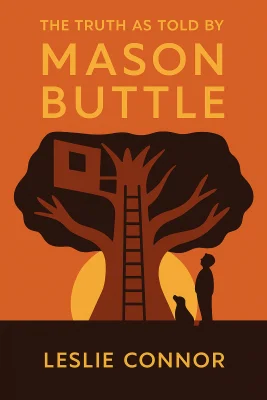
The Truth as Told by Mason Buttle
Categories
Fiction, Audiobook, Mystery, Young Adult, Family, Realistic Fiction, Childrens, Middle Grade, Friendship, Death
Content Type
Book
Binding
ebook
Year
2018
Publisher
Katherine Tegen Books
Language
English
ASIN
0062491490
ISBN
0062491490
ISBN13
9780062491497
File Download
PDF | EPUB
The Truth as Told by Mason Buttle Plot Summary
Introduction
Mason Buttle sweats through his shirt before noon and can barely read his own name, but he knows the difference between truth and lies. The twelve-year-old giant of Merrimack Middle School has carried a terrible weight since that spring day when he found his best friend Benny Kilmartin dead beneath their tree fort, a broken ladder scattered in the apple blossoms. For over a year, Lieutenant Baird has circled back with the same questions, the same suspicions, the same notebook that Mason can't fill with words that dance and blur on the page. The town whispers. The sad-to-see-you faces multiply. Mason's family farm crumbles as developers carve up their orchard for new houses, but nothing hurts worse than the growing certainty that people think he killed his best friend. When Calvin Chumsky arrives—a wisp of a boy with white hair and a tablet full of ancient cave paintings—Mason glimpses hope. Together they'll build something beautiful in the ruins of an old root cellar, something that might prove Mason isn't the monster everyone believes him to be. But secrets have a way of surfacing, and sometimes the truth comes with a price steeper than anyone imagined.
Chapter 1: The Burden of Suspicion: Mason and the Mystery of Benny's Death
Mason's day begins like all the others, with sweat soaking through his shirt and kids laughing at his spelling bee catastrophe. He'd tried to spell "stopped" but somehow produced "S-T-O-O-P-I-D," which felt like prophecy when Matt Drinker stuffed a Sharpie-marked shirt into his locker. The cruel joke stings less than it should—Mason has learned to absorb worse. The weight pressing down on his broad shoulders isn't really about school humiliation. It's about the notebook Lieutenant Baird gave him months ago, still mostly empty because Mason's dyslexia turns letters into dancing enemies. It's about the questions that never change: What really happened in the orchard that May evening when Benny Kilmartin fell from their homemade ladder and broke his neck? Mason knows his answer hasn't satisfied anyone. He'd jumped down from the tree fort instead of climbing the ladder, rolled through apple blossoms, and called up to Benny that it was suppertime. Benny had laughed—such a huge laugh that Mason swore he saw pink clouds puffing from his friend's mouth. But when Mason returned after Benny missed dinner, he found him still and cold beneath the broken ladder. The lieutenant's visits have become routine torture. Each time, Baird circles back to the same suspicions: Why did Mason jump instead of climb down? Where is his missing handsaw? The questions carry an accusation Mason can feel in his bones. In a town where everyone once knew everyone else, Mason has become the boy people look at with careful, sad eyes. At the crumbledown house he shares with his grandmother and Uncle Drum, even the walls seem to sag under the weight of unspoken doubts. The farm that once buzzed with pick-your-own customers now hemorrhages land to developers. Mason watches from his upstairs window as bulldozers devour apple trees to make room for new houses, new families, new children who'll learn to whisper about the big sweaty kid whose best friend died in mysterious circumstances. But in Ms. Blinny's room at school—the SWOOF, as she calls her social work office—Mason discovers something that might change everything: Dragon NaturallySpeaking, voice-recognition software that lets him talk his thoughts onto a computer screen. For the first time in his life, words flow freely, carrying the weight of his story without the torture of letters that swim and blur. Maybe now he can finally tell Lieutenant Baird the truth in a way that matters.
Chapter 2: Finding Calvin: A New Friend in a Hostile World
The small figure curled into the SWOOF's oversized couch looks like he might disappear entirely if he exhales too hard. Calvin Chumsky has hair white as dandelion fluff and bones thin as pencils, but when he offers Mason a pretzel, there's nothing fragile about his smile. He rides Mason's bus, he says, though Mason has never noticed him before. Calvin's arrival in Mason's life feels like finding water in a drought. When Matt Drinker and Lance Pierson chase them from the cluster stop with lacrosse sticks and rotten apples, Calvin doesn't flinch or complain. Instead, he analyzes their trajectory and suggests tactical retreats with the enthusiasm of a general planning campaigns. The boy weighs maybe ninety pounds soaking wet, but he has the heart of someone much larger. At the crumbledown house, Calvin fits perfectly into spaces Mason never knew were empty. He calculates with genuine interest that the mysterious Shayleen—Uncle Drum's lost-girl houseguest who orders everything from TV shopping channels—has occupied Mason's old bedroom for approximately three hundred thirty-seven days. He studies the house's ancient beams and stone foundations like an archaeologist, seeing beauty where Mason sees only decay. Calvin brings something else too: stories of the Lascaux Caves in France, where prehistoric artists painted aurochs and stick figures on underground walls seventeen thousand years ago. Four boys with a dog discovered the caves by accident, Calvin explains, and Mason feels something stir in his chest—a recognition, as if Calvin is describing something that already exists inside him. The friendship grows through shared exile from cafeteria hostility and mutual fascination with hidden things. Calvin doesn't care that Mason sweats through shirts or that letters dance away from his eyes. Mason doesn't mind Calvin's need to research everything on his tablet or his inability to climb trees. They balance each other: Mason's size and strength, Calvin's quick mind and fearless curiosity. When Calvin first mentions creating their own version of Lascaux, Mason thinks it's just dreaming. But Calvin's dreams have a way of becoming reality, and behind the crumbledown house lies an old root cellar that hasn't been opened since Mason's grandmother was a girl. Hidden behind walls of thorns and brambles, it waits like a secret begging to be discovered. The first time they force open that stubborn door together, both boys know they've found something special. The root cellar becomes their sanctuary, their project, their proof that they can create something beautiful in a world determined to see Mason as dangerous.
Chapter 3: The Root Cellar Sanctuary: Creating a Secret Haven
Behind the crumbledown house, where thorns and brambles form an impenetrable wall, Mason and Calvin discover their destiny. The old root cellar hasn't been touched in decades, its stone walls holding the ghost-scent of forgotten preserves and winter vegetables. When Mason finally wrenches the wooden door open, they step into history itself. The work transforms them. They sweep decades of debris with whisk brooms, paint the stone walls pale as ancient bone, and mix sand into the paint to create the perfect texture for cave art. Calvin directs with the precision of an architect while Mason provides the muscle, and together they resurrect something that seemed permanently dead. Calvin's obsession with the Lascaux caves drives their vision. He shows Mason photographs of bulls and horses painted by artists who lived when ice covered the earth, and Mason feels recognition spark in his chest. These ancient people understood something about making beauty in dark places, about leaving proof that you existed and mattered. The centerpiece of their transformation is Calvin's masterstroke: a light shaft. Using construction materials scavenged from new housing developments—a massive cardboard Sonotube and Shayleen's forgotten salad chiller bowl—they engineer a way to bring sunlight six feet down through the earth into their cave. Mason digs with post-hole diggers until his hands blister, cutting through clay and roots with the determination of someone who has finally found purpose. When the shaft is complete and light streams down to illuminate their pale walls, both boys understand they've created something miraculous. Calvin calls it the Shaft of the Dead Man, after the most mysterious chamber in the real Lascaux caves. Mason simply knows it feels like hope. The root cellar becomes their refuge from Matt Drinker's lacrosse balls and the weight of Lieutenant Baird's suspicions. Here, Mason can be someone other than the sweaty giant everyone eyes with pity or fear. Here, Calvin can dream impossible dreams and watch Mason make them real with strength and skill that school never recognizes. They furnish their sanctuary with overturned buckets for chairs and salvaged rugs for comfort. Calvin researches ancient art techniques while Mason practices with charcoal made from apple wood burned in Calvin's fireplace. Neither boy speaks of how desperately they need this place, but both understand that losing it would be like losing themselves. The root cellar holds their secrets and their ambitions, their friendship and their hope that beautiful things can still grow in soil that seems cursed with loss.
Chapter 4: Trapped in the Light Shaft: Calvin's Rescue and the Lost Hideout
The chase begins like all the others—Matt Drinker and Lance Pierson wielding lacrosse sticks like weapons, hurling apples with practiced accuracy. But this time, desperation drives Calvin to attempt the impossible. As Mason draws their pursuers away, Calvin makes a split-second decision that will haunt them both: he'll drop down the light shaft like a human arrow, surprising everyone by appearing in their secret cave. The plan fails catastrophically. Calvin's tan-sandy shoe catches the rim of the Sonotube, bending his thin body at impossible angles as gravity claims him. Mason searches frantically as darkness falls and Lieutenant Baird organizes volunteers with flashlights, never thinking to check the one place they've kept secret for so long. Mason wakes before dawn with inexplicable certainty. The root cellar. Racing through wet grass, he yanks open their camouflaged door and shines Uncle Drum's flashlight up the shaft. Calvin's whispered response from somewhere in the darkness above carries relief and terror in equal measure: he's alive, but trapped, his leg numb and useless after hours folded in the tube. The rescue transforms their sanctuary into a crime scene. EMTs and firefighters swarm the root cellar, marveling at the boys' engineering while systematically destroying their refuge. They soap Calvin like a stuck cork and ease him down through the shaft into waiting hands, and Mason watches their beautiful cave fill with strangers who see only hazards where he and Calvin saw possibilities. Calvin emerges battered but triumphant, managing a weak thumbs-up from his stretcher. The concussion and nerve damage will heal, but the root cellar won't survive the town's judgment. By the next morning, a mechanical excavator has reduced their Lascaux to rubble, their light shaft to buried dreams. Standing in the ruins, Mason faces a terrible reckoning. The building inspector condemns their creation as a "hazardous structure" and orders it filled with debris. Their painted walls disappear under broken boards and brambles, though Mason's charcoal aurochs remains visible on one exposed stone wall, as if the prehistoric bull refuses to be completely erased. The investigation that follows reveals Mason's failure to disclose their hiding place during Calvin's disappearance. Lieutenant Baird's questions carry new edges of suspicion: Why didn't Mason think to check the root cellar immediately? How could he build such an elaborate secret without considering the dangers? The cave that was supposed to prove Mason's creativity becomes another mark against his credibility. Yet something survives the destruction. Calvin's friendship deepens rather than dissolves, and Mason discovers reserves of strength he didn't know he possessed. If they can create one miracle in the ruins behind a crumbling house, perhaps they can create others.
Chapter 5: The Handsaw's Secret: Uncovering the Truth About Benny's Death
The brown paper bag splits as Mason lifts it from the Drinkers' high garage shelf, spilling dog food across the concrete floor like scattered guilt. But what falls with the kibble changes everything: his missing handsaw, the one Lieutenant Baird has asked about so many times, the one that's been hiding in plain sight for over a year. Matt Drinker's face goes white as bone when he sees Mason holding the wooden handle. His mother's confusion dissolves into horror as understanding dawns, and even Lance Pierson shrinks back from what the saw represents. Mason's mind struggles to process the implications while his body automatically catalogues the familiar weight of the tool, the nick in the handle where he'd once missed a nail. The truth emerges in fragments, like shards of a broken mirror reflecting different angles of the same terrible image. Matt and Lance had planned a prank, weakening the top rung of the ladder just enough to startle whoever climbed it. But Matt returned later, sawing deeper, creating a trap that would collapse under weight. They hadn't meant to kill Benny Kilmartin, but intention matters less than consequence. Lieutenant Baird arrives as Mason's world restructures itself around this new reality. Every accusation, every suspicious glance, every sleepless night questioning his own memory—all of it based on the lie that Mason could harm his best friend. The lieutenant's embrace surprises them both, his whispered apologies mixing with Mason's confused sobs as eighteen months of suspicion evaporate in a garage that smells of motor oil and ruined dog food. Corey McSpirit's tears complete the picture. The quiet boy who always stood apart from Matt and Lance's cruelty had carried their secret like a poison, watching Mason suffer for crimes he didn't commit. His cooperation with the investigation becomes the key that locks the real perpetrators into accountability they can no longer escape. The Drinker family disappears from Merrimack within days, their new house as empty as a stage set after the final curtain. Mrs. Drinker leaves behind only Moonie, the black-and-white dog who had chosen Mason long before anyone understood why. The gesture feels like absolution, a recognition that some bonds transcend the failures of their creators. Mason's exoneration spreads through Merrimack like sunlight after storm, but vindication tastes more complicated than he'd imagined. The sad-to-see-you faces transform into apologetic smiles, yet Mason finds himself mourning not just for Benny, but for Matt and Lance too—boys whose prank became tragedy, whose fear became cruelty, whose inability to confess made Mason's nightmare possible.
Chapter 6: Reckoning and Redemption: Justice, Forgiveness, and Moving Forward
The handsaw's discovery unleashes consequences that ripple through Merrimack like stones dropped in still water. Matt Drinker and Lance Pierson vanish behind walls of lawyers and family protection, but their secret is finally exposed to daylight. The newspaper reports speak carefully of "pranks gone wrong" and "tragic accidents," but everyone understands what really happened in the orchard that spring evening. Mason's vindication feels strange and hollow at first. The sad-to-see-you faces transform overnight into apologetic smiles, but eighteen months of suspicion can't be erased by simple revelation. Andy Kilmartin, Benny's carpenter father, arrives at the crumbledown with yellow pine boards and tears that soak Mason's shirt. Their embrace on the broken porch repairs something deeper than wood—it restores the connection between Mason and the family that had loved Benny most. Lieutenant Baird's visits become something entirely different. The notebook that once symbolized Mason's inadequacy now holds Dragon-generated pages that tell his story completely, including the pink clouds of synesthesia that the lieutenant had dismissed as lies. What seemed like fantasy proves to be neurological truth, another layer of Mason's complex reality that adults had failed to understand. The town's judgment shifts like weather, but Mason discovers that vindication brings its own challenges. Sympathy can feel as heavy as suspicion, and everyone's eagerness to forget their doubt creates pressure to pretend the last year didn't scar him permanently. Only Calvin truly understands, having survived his own underground ordeal and emerged changed but not broken. Calvin's recovery becomes a parallel journey of healing. His damaged leg wakes slowly, nerves firing pain and possibility in equal measure. Physical therapy forces him to rebuild strength just as Mason must rebuild trust, and both boys learn that survival requires different kinds of courage than they'd previously understood. The root cellar's destruction transforms from tragedy to opportunity. Mason's grandmother announces family plans that acknowledge both loss and hope: the orchard will be revived, the apple stand reopened, the crumbling house stabilized with purpose and pride. Even Shayleen, the lost girl who'd occupied Mason's old bedroom for over a year, finds her place in the family's renewal. Mason's ownership of half the farm becomes real rather than theoretical. The acres that developers had carved into housing developments still hold enough trees for a sustainable operation, and Uncle Drum's emergence from his years of grief provides the leadership that hope requires. Together, they begin planning for seasons beyond this one.
Chapter 7: Rebuilding: New Beginnings for the Buttle Orchard
Winter approaches the orchard with promise instead of dread. Mason walks the rows with Moonie at his side, planning improvements that spring will make possible. The dog's permanent residence at the crumbledown feels like justice—the best consequence of the worst situation, proof that love sometimes survives what destroys everything else around it. The family meetings around Grandma's kitchen table reshape more than just their living arrangements. Uncle Drum's commitment to steady employment replaces his dawn-to-dusk exile at the diner, while Grandma's return to baking fills the house with scents that had been absent too long. Even Shayleen discovers purpose in tending the farm stand, her enthusiasm for purchasing redirected toward sales. Calvin's recovery progresses with typical determination. The wheelchair gives way to a walker, then to careful steps that promise full mobility eventually. His parents' understanding of their son's needs deepens through crisis, and their support for his friendship with Mason becomes unwavering. The Chumsky family integrates into the crumbledown's extended circle, bringing dinner contributions and engineering expertise in equal measure. The destroyed root cellar becomes a memorial rather than a ruin. Mason's aurochs remains visible on its stone wall, the charcoal beast seeming to guard the orchard from his permanent post. Calvin talks of new projects that might honor their lost sanctuary while avoiding its dangers, but both boys understand that some things can't be replicated, only remembered with grateful sadness. Lieutenant Baird's final visit brings closure rather than interrogation. The notebook becomes evidence in a larger case, Mason's Dragon-written testimony finally serving its intended purpose. The lieutenant's apology feels genuine but unnecessary—Mason has learned that adults sometimes fail despite good intentions, and forgiveness becomes possible when understanding replaces anger. Annalissetta Yang's arrival as the farm's after-school care recipient adds unexpected joy to the daily routine. Her Crocodile walker navigates the crumbledown's uneven floors with determination that inspires everyone, and her friendship expands Mason's world beyond its previous boundaries. Calvin, Annalissetta, and Mason form a triangle of mutual support that promises to withstand whatever challenges adolescence might bring. As snow begins falling on apple trees that will bloom again next spring, Mason understands that survival isn't about avoiding all damage—it's about learning to grow around the scars. The orchard that once seemed doomed to disappear entirely now stretches toward a future that includes all of them: damaged, healing, and discovering that hope tastes sweeter after you've known despair.
Summary
Mason Buttle's journey from suspected murderer to vindicated survivor reveals truths deeper than the mystery that nearly destroyed him. The handsaw hidden in Matt Drinker's garage unlocked more than just the secret of Benny Kilmartin's death—it freed Mason from a prison of doubt that had consumed eighteen months of his young life. His friendship with Calvin Chumsky proved that understanding transcends traditional measures of intelligence or ability, while their destroyed root cellar demonstrated that beautiful things can grow in the most unlikely places. The Buttle orchard's resurrection mirrors Mason's own healing, transforming from a symbol of family decline into proof that perseverance can overcome seemingly impossible odds. Lieutenant Baird's investigation, Uncle Drum's return to purpose, and Grandma's renewed baking all contribute to a restoration that encompasses more than just property or reputation. Even Shayleen's transformation from shopping-addicted refugee to contributing family member suggests that redemption remains possible for anyone willing to accept it. Mason's story ultimately becomes a testament to the power of truth, the necessity of friendship, and the enduring strength of families who refuse to let tragedy define them permanently.
Best Quote
“Knowing what you love is smart.” ― Leslie Connor, The Truth as Told by Mason Buttle
Review Summary
Strengths: The review highlights the authenticity and honesty of Mason's character, suggesting a deep connection between the author and her creation. The book's portrayal of complex relationships and realistic bullying scenarios is noted as a strong point. The character of Miss Blinny is praised for her empathy and effective handling of outsiders. Weaknesses: The review criticizes the lack of resolution for certain plot threads, which may leave readers unsatisfied. Additionally, the book's blurb is said to spoil key events, potentially reducing suspense and making earlier parts seem slow. Overall: The review conveys a positive sentiment towards Leslie Connor's work, recommending it as essential reading for children despite its dark themes. The book is appreciated for its realistic portrayal of bullying and character development, though some narrative choices may not satisfy all readers.
About Author

Leslie Connor
Connor delves into the intricacies of personal challenges and emotional growth through her compelling middle-grade novels. Her storytelling emerges from a fusion of everyday experiences and a deep-seated passion for the arts, as evidenced by her academic background with an associate's degree in agriculture from SUNY Cobleskill and a bachelor's degree in fine art from the University of Connecticut. Initially focused on illustration, Connor's transition to writing allowed her to fully explore her narrative voice, leading to a portfolio rich with authentic characters and engaging plots.\n\nHer books, such as the award-winning "Waiting for Normal", demonstrate her ability to connect with young readers by addressing complex themes with authenticity. While her writing primarily serves the middle-grade audience, its appeal extends to readers of all ages who appreciate depth and nuance in storytelling. Connor's work has been recognized with honors like the ALA Schneider Family Book Award, underscoring her success in the literary community.\n\nBy situating her novels within the realm of personal exploration, Connor not only entertains but also inspires reflection and empathy among her readers. Her dedication to weaving everyday life into her narratives ensures that her stories resonate long after the final page is turned. In this way, Connor's work stands as a testament to the transformative power of literature, providing young readers with both a mirror to see themselves and a window to understand others.
Read moreDownload PDF & EPUB
To save this Black List summary for later, download the free PDF and EPUB. You can print it out, or read offline at your convenience.
The Truth as Told by Mason Buttle
by Leslie Connor
