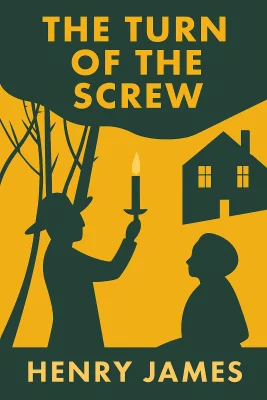
The Turn of the Screw
Categories
Fiction, Classics, Audiobook, Horror, Mystery, Literature, 19th Century, Ghosts, Paranormal, Gothic
Content Type
Book
Binding
Paperback
Year
1994
Publisher
Penguin Books
Language
English
ASIN
0140620613
ISBN
0140620613
ISBN13
9780140620610
File Download
PDF | EPUB
The Turn of the Screw Plot Summary
Introduction
The governess arrived at Bly on a summer evening, drawn by more than duty to the grand estate in Essex. Her employer, a charming gentleman in Harley Street, had made one condition devastatingly clear: she must never contact him, never trouble him, no matter what occurred. The house greeted her with golden light and the laughter of children, but something darker lurked beneath its pastoral beauty. Two children awaited her care—Flora, eight years old with angelic beauty that seemed almost unnatural, and Miles, her brother, recently expelled from school under mysterious circumstances. The housekeeper, Mrs. Grose, welcomed the governess with unusual enthusiasm, as if grateful for any ally in some unspoken battle. What began as an idyllic appointment would soon reveal itself as something far more sinister, where the dead refused to stay buried and innocence carried the stench of corruption.
Chapter 1: The Fateful Appointment: A Governess's Journey to Bly
The handsome gentleman in Harley Street had made the position irresistible—too much salary for a vicar's daughter, too grand an estate for someone of her station. But his conditions were absolute. Whatever happened at Bly, she must handle it alone. No letters. No complaints. No contact whatsoever. She accepted, seduced by his charm and the promise of independence. The journey to Essex felt like entering a fairy tale, the countryside rolling past her coach window in summer splendor. When Bly materialized before her—its windows gleaming, its grounds immaculate, its staff lined up in greeting—she felt her doubts dissolve into wonder. Mrs. Grose, the housekeeper, emerged with little Flora clinging to her hand. The child was a vision of perfection, golden-haired and blue-eyed, with a smile that could melt stone. The governess felt immediately that some extraordinary fortune had delivered her to this place. Her room was magnificent, her reception warm, her little charge utterly enchanting. But that first night, as she wandered her spacious quarters and gazed out at the moonlit grounds, she heard sounds that didn't belong. A child's cry, distant and brief. Footsteps in the corridor that shouldn't have been there. She dismissed them as nerves and excitement, but something in the house's silence felt expectant, as if it were holding its breath for what was to come.
Chapter 2: Beautiful Prisoners: Meeting the Children and First Apparitions
Miles arrived by coach two days later, and the governess understood immediately why Mrs. Grose had been so certain she would be "carried away" by him. At ten years old, he possessed an ethereal beauty that matched his sister's, but where Flora radiated innocence, Miles carried himself with an unsettling sophistication. His manners were perfect, his conversation charming, yet something about his knowing eyes made her uneasy. The letter from his headmaster burned in her drawer like a guilty secret. Expelled for reasons too shocking to specify, yet here was a child who seemed incapable of any real wrongdoing. She and Mrs. Grose agreed to say nothing, to let Miles prove his innocence through his behavior. The days took on a dreamlike quality. The children were unnaturally well-behaved, almost preternaturally good. They never quarreled, never complained, never mentioned their past or asked difficult questions. They moved through their lessons and play with an otherworldly grace that both delighted and disturbed her. It was during one of her solitary evening walks that she first saw him. Standing atop the old tower, a figure in gentleman's clothes stared down at her with predatory intensity. Not her employer—she had seen him only twice, but this stranger's face was burned into her memory instantly. Red hair, pale skin, eyes that seemed to strip away pretense and peer into her very soul. When she blinked, he vanished, leaving her shaking in the garden's gathering dusk.
Chapter 3: Ghosts from the Past: The Revelation of Quint and Jessel
The second encounter came days later, more intimate and infinitely more terrifying. As she prepared for church, the governess glimpsed the same figure through the dining room window, his face pressed against the glass, staring not at her but toward the house's interior—searching for someone else. When she rushed outside to confront him, she found only empty air and her own hammering heart. Mrs. Grose's reaction to her description confirmed her worst fears. The man was Peter Quint, her employer's former valet, dead for nearly a year. Found frozen on the road from the village pub, his skull cracked from a fatal fall on the icy path. But Quint's death had been no accident, Mrs. Grose confided with obvious reluctance. He had been a beautiful, dangerous man who took liberties with everyone and everything at Bly. The truth emerged in whispered fragments. Quint had formed an unhealthy attachment to young Miles, spending hours alone with the boy, corrupting him with adult knowledge and sinful influence. Worse still, he had carried on a shameless affair with Miss Jessel, the previous governess—a lady fallen so low that her death remained shrouded in scandal and mystery. The governess felt the pieces of a horrible puzzle clicking into place. The children's unnatural perfection, their careful silence about the past, their strange moments of seeming communion with invisible presences. Quint and Miss Jessel hadn't simply died—they had returned, drawn back by their obsessive need to reclaim what they considered theirs.
Chapter 4: Invisible Conspiracies: The Battle for the Children's Souls
With growing horror, the governess realized she was not fighting living corruption but something far more insidious. The dead were waging war for the children's souls, and Miles and Flora had become willing accomplices in their own damnation. She began to watch with new eyes, noting the children's strange habits. Their tendency to disappear at crucial moments. Their coded glances and whispered conversations that ceased whenever she approached. The way they seemed to listen to voices only they could hear, their faces radiant with secret knowledge. Miss Jessel appeared to her by the lake on a gray afternoon, a figure in black seated on the opposite shore while Flora played innocently nearby. The former governess was a vision of tragic beauty and malevolent purpose, her dark dress and haunted eyes speaking of desires that death could not extinguish. The governess watched in fascination and terror as Flora carefully avoided acknowledging the apparition, though her behavior made clear she was fully aware of the ghostly presence. The children had learned to move between two worlds—the daylight realm of lessons and proper behavior, and the shadow kingdom where they communed with their former corruptors. They played their parts with consummate skill, but their governess now saw through their performance to the darkness beneath.
Chapter 5: The Confrontation at the Lake: Flora's Denial and Departure
The crisis came when the governess could no longer bear the charade. Following Flora to the lake where Miss Jessel waited like a patient spider, she decided to force the truth into the open. Mrs. Grose accompanied her, though the older woman's terror was palpable as they tracked the missing child through the grounds. They found Flora across the lake, having somehow managed the difficult boat journey alone—or with supernatural assistance. The child stood among the reeds, plucking dead ferns with deliberate calm, her perfect composure more unsettling than any display of guilt would have been. When the governess finally named Miss Jessel aloud, pointing to where the specter stood in all her dreadful glory, Flora's mask slipped for the first time. But instead of confession, the child revealed a shocking capacity for deception and cruelty. Her beautiful face hardened into something ancient and corrupt as she denied seeing anything, her voice dripping with contempt for the governess who dared challenge her secrets. Mrs. Grose saw nothing, could see nothing, leaving the governess isolated in her knowledge. Flora's performance was masterful—tears, accusations of cruelty, desperate pleas to be taken away from the "wicked" governess who saw horrors where none existed. The child who had seemed an angel revealed herself as something far more calculating, her innocence nothing more than an elaborate lie.
Chapter 6: Final Reckoning: Miles's Confession and the Price of Truth
With Flora gone, spirited away by Mrs. Grose who could no longer trust her own perceptions, the governess faced her final battle alone. Miles remained, and in his staying she sensed both hope and terrible danger. The boy knew the game was nearly over, his carefully maintained facade beginning to crack under the pressure of isolation. Their last evening together carried the weight of inevitability. Miles, with his uncanny adult wisdom, maneuvered their conversation toward the truth with surgical precision. He admitted to his midnight wanderings, his deliberate deceptions, even his theft of the letter she had written to his uncle. Each confession was offered with a smile that never quite reached his eyes. When the governess pressed him about his school dismissal, Miles began to break down. The candle flames flickered as if stirred by invisible breath, shadows dancing on the walls like listening spirits. He spoke of saying things to other boys, corrupt whispers learned from Peter Quint, words that had shocked his masters and sealed his expulsion. But as his confession reached its climax, Quint appeared one final time—not as a distant figure but pressed against the window, his white face blazing with possessive fury. The governess faced a terrible choice: allow Miles to see his former corruptor and be reclaimed by the dead, or fight for the boy's soul with her own life as the stakes. In the end, her victory came at an unbearable cost. Miles spoke Quint's name in final acknowledgment, his young voice breaking with the weight of recognition. But the effort of choosing between the living and the dead proved too much for his corrupted heart. The governess held him close as his life ebbed away, knowing she had saved his soul by destroying his body.
Summary
The governess's battle at Bly ended in pyrrhic victory, the children lost in different ways to the corruption that had claimed them. Flora disappeared into a world of lies and denial, while Miles paid the ultimate price for his moment of truth. The dead had been defeated but not before leaving their mark on everything they touched. In the end, the turn of the screw proved to be the terrible choice between damnation and destruction, between living corruption and innocent death. The governess learned that some forms of evil are too deeply rooted to be simply cast out, and that salvation sometimes comes at a price too terrible to bear. At Bly, the beautiful and the damned had danced their final dance, leaving only shadows and whispers to mark where angels once trod.
Best Quote
“No, no—there are depths, depths! The more I go over it, the more I see in it, and the more I see in it, the more I fear. I don’t know what I don’t see—what I don’t fear!” ― Henry James, The Turn of the Screw
Review Summary
Strengths: The review acknowledges the novella's significant influence on Gothic literature over the past century. It also highlights the dual interpretations of the story, which are seen as a hallmark of Henry James' writing style, and notes the potential for deep analysis due to its ambiguity and subtlety. Weaknesses: The reviewer criticizes the lack of character development, particularly the governess's unclear motivations and personality. The language is described as plain rather than atmospheric, and the ambiguity is perceived as frustrating rather than intriguing. The reviewer also finds the characters' actions and motivations senseless. Overall: The reader expresses disappointment with "The Turn of the Screw," feeling it fails to deliver on its Gothic and eerie potential. Despite recognizing its literary significance, the reviewer does not recommend it, citing personal dissatisfaction with its execution and ambiguity.
About Author
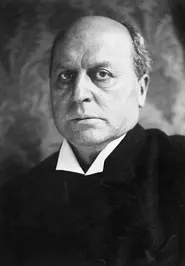
Henry James
James probes the intricacies of cultural identity and psychological depth through his transatlantic narratives. Rooted in his experiences across America and Europe, he deftly navigates the complexities of social mores and personal freedoms, particularly in the context of the evolving relationship between American and European societies. His literary technique is marked by a meticulous attention to the interior landscapes of his characters, utilizing innovative narrative methods that bridge the gap between realism and modernism.\n\nIn works such as "The Portrait of a Lady" and "The Wings of the Dove," James's exploration of consciousness and cultural contrast invites readers to engage with the subtle interplay of social dynamics and individual motivations. His prose is likened to Impressionist art, rich with layers and ambiguity that demand active interpretation. This approach not only reshapes readers' understanding of character and motive but also elevates the novel as an art form, offering profound insights into the human condition. James's influence extends beyond his own time, inspiring subsequent generations of writers to delve deeper into the psychological and social complexities of their narratives.\n\nThe author’s contribution to literature is underscored by his multiple Nobel Prize nominations and his enduring impact on the field. His writings continue to resonate with audiences who appreciate intricate psychological realism and nuanced cultural critique, making his work a vital study for anyone interested in the evolution of modern fiction. This short bio highlights James's pioneering efforts that shaped the trajectory of English literature and continue to captivate readers worldwide.
Read moreDownload PDF & EPUB
To save this Black List summary for later, download the free PDF and EPUB. You can print it out, or read offline at your convenience.
The Turn of the Screw
by Henry James
