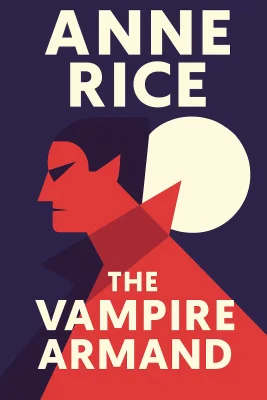
The Vampire Armand
Categories
Fiction, Horror, Historical Fiction, Fantasy, Adult, Paranormal, Gothic, Urban Fantasy, Vampires, Supernatural
Content Type
Book
Binding
Mass Market Paperback
Year
2000
Publisher
Ballantine Books
Language
English
ASIN
0345434803
ISBN
0345434803
ISBN13
9780345434807
File Download
PDF | EPUB
The Vampire Armand Plot Summary
Introduction
# Blood Canvas: An Immortal Artist's Quest for Divine Grace In the shadows of a New Orleans convent, where ancient vampires gather like moths to dying flame, Armand begins to speak. His voice carries the weight of five centuries, each word a brushstroke on a canvas painted in blood and memory. The boyish face that has remained unchanged since Renaissance Venice masks depths of experience that would crush mortal minds—monastery cells in medieval Kiev, burning palazzos, catacombs lined with human skulls, and stages where the damned performed for audiences who never suspected the truth. This is not merely the confession of a monster, but the chronicle of a soul's journey through the labyrinth of immortality. From the boy Andrei who painted icons with hands blessed by divine fire to the vampire who would one day stand before the true face of Christ himself, Armand's story unfolds like a dark symphony. It speaks of masters and servants, of love that transcends death, and of the terrible price demanded for eternal life. At its heart burns a single question that has haunted him across centuries: can a creature damned to drink human blood ever find redemption in the eyes of God?
Chapter 1: The Icon Painter: From Sacred Art to Immortal Transformation
Snow fell like ash across the ruins of Kiev as young Andrei pressed his brush to wood, watching the Virgin's sorrowful face emerge beneath his trembling fingers. In the underground monastery where he had taken refuge, the priests whispered that his gift came not from human hands but from God himself. Each icon he painted seemed to breathe with divine life, the eyes following viewers with otherworldly compassion. His father Ivan, a giant of a man with flame-red beard and bow that only he could string, would burst into the monastery's sacred silence demanding his son join him in the wild grasslands. The tension between these two worlds shaped Andrei's young soul—the ascetic darkness of the caves where monks buried themselves alive for God's glory, and the violent beauty of the steppes where Tatar raiders swept like wolves across the grass. The end came swiftly when father and son rode into the wild lands, carrying a precious icon as offering to a distant prince. Mongol horsemen materialized from morning mist, their arrows singing death songs through the air. Ivan fell first, his great sword useless against their numbers. Andrei ran, clutching the sacred bundle, but rough hands seized him and the icon tumbled forgotten into the mud as darkness claimed his young life. Constantinople's slave markets became his world—hemp and rats and human misery pressed into wooden walls. The boy's unusual beauty drew immediate attention from Turkish merchants who examined their human goods like horses at auction. Soon he found himself bound for Venice, tended by an old keeper who fed him delicacies and kept him clean. Through salt-stained windows, he glimpsed cities of impossible beauty rising from azure waters, their towers catching sunlight like captured stars. When Venice finally appeared through morning haze, it seemed less a city than a vision—palaces floating on emerald canals, their facades painted in colors that had no names.
Chapter 2: Chains of Darkness: Captivity and the Corruption of Faith
The brothel reeked of desperation beneath its perfumed veneers when a figure carved from moonlight walked through its shadowed rooms. Marius de Romanus was tall and pale, with golden hair that caught torchlight like spun silk and blue eyes that held depths speaking of centuries witnessed. His gaze settled on the auburn-haired boy huddled in the corner, and he spoke a single word that fell like benediction: "Amadeo." The palazzo that became the boy's new home defied comprehension. Rooms flowed into rooms like chambers in a dream, their walls covered with paintings that seemed to breathe with captured life. Other rescued boys moved through these spaces—all beautiful, all gifted, all devoted to their mysterious Master who vanished before dawn and returned each night transformed, his pale skin flushed with vitality, his eyes bright with secrets that burned behind their blue depths. But darkness gathered around them all. The attack came without warning—black-robed figures swarming through the palazzo like a plague of locusts. They called themselves the Children of Darkness, servants of Satan in service to God, come to punish Marius for his heresies. Their leader Santino was beautiful in the way poisonous flowers are beautiful, with eyes that burned with fanatic fervor as he set the palazzo ablaze. Amadeo watched in horror as Marius was overwhelmed, his golden hair catching fire, his perfect form becoming a pillar of flame. The paintings that had been his education went up in smoke while the boys who had been his brothers were dragged screaming from their beds. Bound in silver chains, Amadeo was dragged aboard a ship bound for Rome, where in the hold surrounded by dying friends, he learned the true meaning of despair. One by one, his mortal companions were brought to him as he starved, their blood the only sustenance he would receive. The Children of Darkness had perfected cruelty as an art form, making him complicit in the deaths of those he loved.
Chapter 3: Satan's Saint: Three Centuries of False Devotion in Paris
In the catacombs beneath Rome, surrounded by walls of human skulls and lit by flames of hell, Amadeo learned a new gospel. Santino preached with the fervor of a true believer, his beautiful face animated by terrible certainty. They were not monsters but instruments of divine will—God had made them vampires to test humanity, to be the darkness that gave meaning to light, the evil that made good precious. The logic was seductive in its completeness, offering purpose to the purposeless. If they were monsters, at least they were God's monsters, serving a plan too vast for mortal comprehension. Amadeo became Armand, taking a new name for his new existence. He learned the rituals and restrictions—never to enter churches, never to look upon the cross, never to create beauty or seek comfort. When the Roman Coven sent him north to lead the Paris Coven, Armand carried their faith like a torch into the City of Light. For three centuries, he ruled from beneath the Cemetery of Les Innocents, leading followers in grim devotions. They hunted the beautiful and innocent, believing their cruelty served heaven's design. They lived in filth and shadow, denying themselves all comfort, all joy, all hope of redemption. But faith built on lies cannot endure forever. The world changed around them—Renaissance gave way to Enlightenment, superstition yielded to reason, and old certainties crumbled like ancient parchment. In his earthen cell, Armand dreamed of painted eggs and golden palazzos, of a time when beauty was not sin and love was not weakness. The boy who had painted icons with divine inspiration was still there, buried beneath centuries of manufactured darkness, waiting for someone to call him back to light.
Chapter 4: Theatre of Illusions: Performing Humanity on Immortal Stage
The vampire who destroyed Armand's world came dressed in red velvet and laughing at the moon. Lestat de Lioncourt was everything the Children of Darkness were not—bold where they were secretive, joyful where they were grim, beautiful where they embraced ugliness. He walked into Notre Dame Cathedral without bursting into flames and mocked their ancient laws with every breath he drew. The confrontation shattered everything Armand had built his existence upon. If Lestat could enter churches without dying, if he could create beauty without damnation, then what did that make of Santino's gospel? The revelation was liberation and devastation combined—freedom from lies, but also the terrible burden of meaninglessness. Allesandra, his ancient companion, chose the flames rather than face a world without purpose. From destruction came unexpected salvation. Lestat offered Armand a gift—a theater in the heart of Paris where vampires could hide in plain sight. The Theatre des Vampires became their new sanctuary, a place where the damned could play at being human while feeding on those who came to watch their performances. For nearly two centuries, Armand ruled this strange kingdom of illusion and reality. By night, they performed for audiences who never suspected that the pale actors on stage were actual monsters. By day, they slept in coffins beneath the stage, dreaming of spotlights and applause. It was not redemption, but it was better than the catacombs. Behind greasepaint and stage lights, Armand found refuge from a world that no longer made sense, directing performances that mocked both sacred and profane. Night after night, he watched from his velvet-lined box as his children played at being human, their supernatural grace disguised as theatrical skill.
Chapter 5: Modern Awakening: Music as the New Path to Redemption
The end of the Theatre des Vampires came with fire and blood. Louis de Pointe du Lac arrived with his child companion Claudia, both seeking answers that Armand could not provide. The encounter destroyed everything—the theater burned, the coven died, and Claudia met her end in ways too horrible to recount. Yet from tragedy came an unexpected gift—Louis himself, beautiful and melancholy, a vampire who carried his damnation like a cross. For nearly two centuries, they wandered the world together, two lost souls seeking meaning in existence that seemed to offer none. But even love could not survive the weight of eternity. Time withered their connection, leaving them as strangers sharing the same immortal curse. Louis drifted away like smoke, and Armand found himself alone again, surrounded by the glittering emptiness of the modern world. In a New York apartment, salvation arrived in the form of music. Sybelle was a young woman whose obsession with Beethoven's Appassionata matched his own hunger for the divine. She played the same sonata endlessly, her fingers dancing across keys with supernatural precision, while her guardian Benjamin watched with protective devotion. They had found each other in the wreckage of their mortal lives—she broken by trauma, he by abandonment—and created their own sanctuary of sound and silence. When danger threatened them, Armand discovered strength he didn't know he possessed. The killing was swift, merciful—a monster's justice for those who would harm the innocent. As blood restored his purpose, he felt something shift inside him. This was not the old hunger, but protection, love, the fierce joy of a guardian angel who had found his calling at last. In Sybelle's music and Benjamin's laughter, he found peace that had eluded him in monastery cells and theater boxes alike.
Chapter 6: The Divine Face: Confronting Christ and Choosing Sacrifice
The Veil arrived in New York like a thunderbolt, carried by Lestat from realms beyond mortal comprehension. He had walked with Memnoch the Devil through visions of Heaven and Hell, had drunk from Christ's own throat on the road to Calvary, and returned bearing proof of the impossible—a cloth that bore the true face of God made flesh. Armand stared at that face and saw not the sanitized Christ of cathedral windows, but something infinitely more terrible and beautiful. This was the man who had bled for humanity's sins, whose divine nature had not spared him from very human agony. The thorns were real, the blood was real, the suffering was real—and in that reality lay a truth that shattered every carefully constructed wall around his heart. Standing before St. Patrick's Cathedral as dawn approached, he made his choice. The faithful pressed around him, weeping and praying as they glimpsed the sacred image, while Dora proclaimed the miracle to a world hungry for signs and wonders. But Armand saw only those eyes—dark, knowing, infinitely compassionate—gazing at him across the centuries. He opened his arms to the rising sun, offering himself as sacrifice to the God whose face had haunted his dreams since childhood. The light struck him like molten silver, burning away flesh and pretense alike, carrying him skyward in a column of divine fire. In that moment of perfect agony, he found what he had always sought—not damnation, but the possibility of grace, written in fire across the morning sky. Yet death refused him. He awoke on a rooftop, his body charred to leather and bone, buried beneath ice and snow, too damaged to live but too stubborn to die.
Chapter 7: Betrayal of Love: The Price of Immortal Companionship
Spring came to New York like a resurrection, bringing with it a terrible gift. Marius arrived at their sanctuary with ancient eyes full of sorrow and determination, carrying the weight of millennia and the burden of a decision that would shatter Armand's newfound happiness. He had watched from shadows as Armand healed, had seen the love that bloomed between vampire and his mortal companions, and made a choice he believed was merciful. The transformation happened while Armand was away, hunting in the city's dark corners. He returned to find them changed—Sybelle's pale skin now marble-white, her mortal warmth replaced by cold fire of immortal blood. Benjamin danced with supernatural grace, his child's body now housing predatory instincts of a killer. They were beautiful, perfect, and utterly damned. Marius spoke of love, of gifts freely given, of time eternal that would allow them to remain together forever. But Armand heard only the sound of mortality dying, the theft of choice, the casual cruelty of a god who remade the world to suit his whims. They had been perfect as they were—fragile, temporary, gloriously human. Now they were something else, creatures like himself who would hunger and kill and watch centuries pass like pages in an endless book. The rage that filled him was older than Christianity, deeper than faith or doubt. It was the fury of a parent whose children had been stolen, transformed into something he could love but never forgive. In making them immortal, Marius had made them his—but at a cost that would echo through eternity. The music continued, but it was different now, deepened by supernatural precision yet somehow emptied of the desperate humanity that had made it sacred.
Chapter 8: Eternal Symphony: Accepting Grace Through Mortal Art
The chapel in New Orleans held its breath as Armand knelt beside Lestat's motionless form. The ancient vampire lay like a broken doll, his eyes fixed on nothing, his mind lost in visions that had driven him beyond madness into perfect stillness. Around them, other immortals watched and waited, drawn by curiosity and terrible hope that proximity to the divine might somehow transform them all. Armand pressed his lips to Lestat's throat and drank deeply, seeking in that ancient blood some trace of the Christ who had offered his own veins on the road to Calvary. The vision that came was not gentle—a crushing weight of divine presence, the sound of crowds baying for blood, the impossible reality of God made flesh and broken on a cross. It was too much, too real, too terrible to bear. The force that threw him across the chapel was not Lestat's strength but something far greater—the rejection of one who had sought to touch the divine without permission. He struck the wall with bone-crushing force, his skull cracking like an eggshell, blood flowing like tears down his face. In that moment of perfect agony, he understood that some mysteries were not meant to be shared, some truths too dangerous for even immortal minds to contain. But from the ruins of his shattered certainty came something unexpected—not despair, but a strange kind of peace. He had seen the face of God and been found wanting, had touched the infinite and been cast down. Yet he remained, scarred but whole, surrounded by those who loved him despite his failures. In Sybelle's transformed music and Benjamin's immortal laughter, in the simple fact of their continued existence, he found a different kind of salvation—not the grand gesture of martyrdom, but the quiet miracle of love that endures beyond faith, beyond doubt, beyond even the grave itself.
Summary
Armand's journey through five centuries of immortal existence reveals itself as ultimately a story about the search for meaning in a universe that seems determined to deny it. From the religious certainty of his mortal youth through the manufactured purpose of the Children of Darkness to the hollow entertainments of the modern age, he has sought something to give weight to his endless nights. Each phase has been both revelation and disappointment—the discovery that his beliefs were lies, that his loves were temporary, that his very nature as a vampire makes him forever separate from the human world he once belonged to. Yet perhaps the search itself is the meaning. In telling his story, in preserving the memory of those he has loved and lost, in continuing to exist despite the weight of centuries, Armand performs an act of faith more profound than any religious doctrine. The boy who once painted Christ's face with divine inspiration has become something else—not a saint, not a monster, but a chronicler of the spaces between light and darkness where all souls must learn to make their homes. In a world where resurrection may be nothing more than a painted symbol on a fragile egg, the act of continuing to hope, to love, to create meaning from meaninglessness, becomes its own form of sacred art that echoes through eternity.
Best Quote
“If I am an angel, paint me with black wings.” ― Anne Rice, The Vampire Armand
Review Summary
Strengths: The book captures the essence and soul of the series, reminiscent of "Interview with the Vampire." Armand is portrayed as a unique and compelling character, with duality as a defining trait. The writing is described as gorgeous, particularly in the first half, which engages the reader effectively. Weaknesses: The narrative is criticized for being boring and lacking plot progression. Armand's character is perceived as whiny and immature. The book's homoerotic elements and Anne Rice's personal struggles with faith are seen as intrusive. The ending is deemed unsatisfactory, and the overall story fails to maintain interest. Overall: The review presents a mixed sentiment, with appreciation for the writing style and character depth but significant criticism of the plot and character development. The recommendation level is low due to perceived shortcomings in narrative engagement and thematic execution.
About Author

Anne Rice
Rice investigates the complexities of human emotions through her exploration of themes such as love, death, and immortality. Her works often delve into the supernatural and gothic realms, using these motifs to probe existential questions about the human condition. Known primarily for her influential series, The Vampire Chronicles, Rice crafts narratives that intertwine historical and religious elements, allowing readers to grapple with existential and philosophical questions.\n\nIn her diverse body of work, Rice utilizes pen names like Anne Rampling and A.N. Roquelaure to differentiate her adult-themed and erotically charged fiction. These pseudonyms highlight her versatility and willingness to explore different aspects of human experience through varied narrative lenses. Her commitment to engaging with profound themes is further evident in the near 100 million copies of her books sold, indicating her widespread influence and the resonant impact of her storytelling.\n\nRice's books offer readers an opportunity to reflect on the existential nature of life and the nuances of the human psyche. Her ability to blend gothic settings with philosophical inquiry invites an audience interested in both supernatural intrigue and deep introspection. By confronting mortality and the quest for meaning, Rice's narratives remain relevant to anyone seeking a deeper understanding of life's mysteries.
Read moreDownload PDF & EPUB
To save this Black List summary for later, download the free PDF and EPUB. You can print it out, or read offline at your convenience.

The Vampire Armand
by Anne Rice
