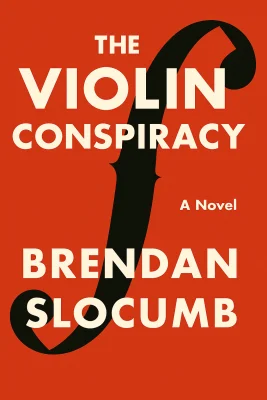
The Violin Conspiracy
Categories
Fiction, Audiobook, Mystery, Music, Thriller, Adult, Book Club, Contemporary, Race, Mystery Thriller
Content Type
Book
Binding
Hardcover
Year
2022
Publisher
Anchor
Language
English
ASIN
0593315413
ISBN
0593315413
ISBN13
9780593315415
File Download
PDF | EPUB
The Violin Conspiracy Plot Summary
Introduction
# Strings of Legacy: A Stradivarius, Stolen Dreams, and the Music of Justice The morning Ray McMillian stepped out of that Manhattan hotel shower, his life balanced on the edge of a knife. In the next room sat a violin case containing what he believed was his future—a 1724 Stradivarius worth ten million dollars, inherited from his grandmother and recently authenticated by experts who gasped when they saw its tiger-striped wood emerge from beneath decades of accumulated rosin. What Ray found instead was a white Converse sneaker and a ransom note that would shatter everything he thought he knew about trust, family, and the price of success. This is the story of a young Black violinist whose discovery of his instrument's true value transformed him from a struggling music student into a classical sensation overnight, only to lose everything to those closest to him. It's a tale that weaves through hotel rooms and concert halls, courtrooms and competition stages, revealing how music can survive slavery, theft, and betrayal while carrying the dreams of generations in its wooden frame.
Chapter 1: The Inheritance: When a Family Heirloom Reveals Its Secrets
The violin had sat in Grandma Nora's corner for decades, its alligator-skin case cracked and forgotten. Ray McMillian knew it belonged to his great-great-grandfather Leon, a slave who somehow preserved this instrument through the horrors of plantation life. When Nora finally placed it in Ray's twenty-one-year-old hands that Christmas morning, the sound that emerged was hauntingly beautiful, as if the violin had been waiting generations to sing again. For years, Ray carried what he thought was a weathered family fiddle to lessons and performances, its surface coated in what Grandma Nora called "Good Luck Dust"—the accumulated rosin from Leon's playing. The instrument felt like an extension of his soul, connecting him to ancestors who had found refuge in melody when the world offered only cruelty. Everything changed when Ray brought the violin to an expert for routine maintenance. The appraiser's hands trembled as he examined the instrument under magnification. Beneath the grime and wear, tiger-striped wood revealed itself. The label inside bore the unmistakable signature of Antonio Stradivari, dated 1724. In an instant, Ray's family heirloom became a ten-million-dollar treasure, one of fewer than six hundred Stradivarius violins known to exist. The authentication made headlines worldwide. A young Black musician from Charlotte had been playing a priceless masterpiece without knowing it, carrying musical history in a battered case to college practice rooms. Ray found himself thrust into a spotlight he never sought, his story captivating classical music lovers and casual observers alike. But fame, he would soon learn, came with dangers he couldn't have imagined. The violin that had survived slavery and poverty now made Ray a target. Reporters called constantly. Strangers approached him on the street. Insurance companies demanded security measures that felt like prison walls. The instrument that had once been his private connection to family history became a public symbol of unlikely triumph, beautiful and terrible in its power to transform lives.
Chapter 2: Contested Bloodlines: Family Greed and Historical Claims
The video call felt like a tribunal. Ray's uncles and mother gathered on pixelated screens, their faces twisted with barely concealed greed as they calculated their shares of ten million dollars. Uncle Thurston led the charge with mathematical precision, dividing the violin's value among family members as if Ray's inheritance was community property. "That fiddle belongs to all of us," Thurston declared, his voice cutting through digital static. "If we divide it by five, we each get two million minimum." Ray's mother nodded vigorously, her fake nails clicking against her phone screen. The other siblings chimed in with their own demands and calculations, treating the violin like a lottery ticket they all deserved to cash. Ray felt the familiar weight of the violin case on his shoulder as he faced down his own blood. "Grandma Nora gave it to me four years ago," he said quietly. "I'm not selling my violin." The silence that followed was deafening, broken only by Uncle Larry's bitter laugh. "You think you're all that because you're going to that white school. That boy thinks he can mess this up for all of us." But family greed was only the beginning. Letters arrived at Ray's house from strangers claiming ownership of his violin. Andrea Marks wrote with chilling certainty that the instrument belonged to her family, stolen during the Civil War by Ray's ancestor Leon. She and her brother Dante appeared uninvited at Ray's door, waving a two-hundred-thousand-dollar cashier's check and demanding the violin's return. Andrea spoke with casual cruelty about "you people" while Dante, potbellied in his seersucker suit, read from alleged family letters that casually used racial slurs. They claimed Leon had "unlawfully obtained" the violin from their great-great-great-grandfather Thomas Marks, making Ray's ownership illegitimate. When he refused their offer, they threatened lawsuits that could drag on for years. The confrontation revealed the ugly truth beneath their Southern politeness. Here were descendants of slaveholders demanding property from descendants of the enslaved, inverting justice with breathtaking audacity. Ray stood tall in his doorway, channeling his grandmother's lessons about dignity, and ordered them out. But their parting words chilled him to the bone: "You can't afford this fight. You won't win."
Chapter 3: Vanished Treasure: The Theft That Shattered a Dream
The Saint Jacques Hotel in Manhattan felt like sanctuary after Ray's intensive lesson with renowned Russian teacher Leonid Molchalin. The Tchaikovsky Competition loomed just weeks away, and Ray's girlfriend Nicole had flown in to support him through the final preparations. They celebrated with dinner and drinks, the violin case never leaving Ray's side as they moved from restaurant to Irish pub. Back in their room, Ray carefully placed the case on the bureau beneath the television, the same ritual he performed every night. The routine was sacred: shower, sleep, wake up, practice. Nicole curled up in an armchair watching CNN while Ray let hot water cascade over his shoulders, mentally rehearsing Tchaikovsky's triple-stops with fingers dancing through the air. A small, dark-haired housekeeper with straight bangs had delivered their breakfast while Ray showered, keeping her head down as she arranged plates and accepted Nicole's tip. Nothing seemed amiss. They packed their bags, said goodbye at the hotel entrance where Nicole caught a taxi to Penn Station, and Ray headed to LaGuardia for his flight back to Charlotte. The discovery shattered Ray's world like glass. He opened the violin case for his daily practice session and found only a white Chuck Taylor sneaker, size ten and a half, sitting mockingly in the green velvet interior. A folded paper protruded from the shoe's mouth like an obscene tongue. Ray's hands trembled as he unfolded the ransom note: "We have your fiddle. Send five million dollars in Bitcoin. Transfer on July 15 between 12:00 PM and 1:00 PM EST. You will receive no further communication." The next hours blurred into nightmare. Police interviews, FBI agents, insurance investigators, all asking the same questions Ray couldn't answer. How could someone steal a ten-million-dollar violin from under his nose? The media descended like vultures, turning his devastation into entertainment. His phone buzzed incessantly with calls from reporters, family members, and strangers offering sympathy or advice. The violin that had connected him to his ancestors, that had made him a star, was gone. Somewhere in the city's shadows, his great-great-grandfather's instrument sat in the hands of criminals who saw only dollar signs where Ray saw his soul. The theft made international headlines, but no amount of publicity could fill the emptiness in his chest where music used to live.
Chapter 4: Playing Through Loss: Competing Without One's Soul
The Moscow State Tchaikovsky Conservatory loomed before Ray like a classical temple, its ionic columns and bronze statue of the great composer a reminder of musical giants who had walked these halls. Despite losing his Stradivarius, Ray had come to compete, playing on a borrowed 1959 Lehman violin that felt like a wooden prosthetic compared to his stolen treasure. The competition was gladiatorial combat disguised as high art. Three hundred sixty candidates had been whittled down to twenty-five violinists, each one a prodigy in their own right. Ray found himself face to face with Mikhail Lezenkov, a Serbian violinist with ice-blue eyes and fingers that moved like lightning across strings. The media had dubbed them rivals, the American underdog versus the European aristocrat. When Ray took the stage for his first round, lights blazed down like interrogation lamps. He closed his eyes and let music flow through him, pouring grief and determination into every note. The Bach Chaconne emerged from his borrowed violin with surprising power, and the audience responded with thunderous applause. But something was missing, the magical connection he'd felt with his Stradivarius replaced by mere technical proficiency. Round by round, Ray advanced through the competition, his performances fueled by desperate need to prove himself worthy even without his precious instrument. The crowdfunding campaign he'd launched to raise ransom money climbed toward five million dollars as classical music lovers worldwide followed his story. Each performance was both triumph and reminder of what he'd lost, the ghost of his stolen violin haunting every bow stroke. Back in the United States, art recovery expert Alicia Childress tracked leads across continents. She found the mysterious housekeeper, Pilar Jiménez, in Honduras, but the woman claimed innocence and refused to explain her sudden departure. The Bitcoin wallet remained untouched. Security footage yielded nothing. As July 15th approached, the date specified in the ransom note, hope dwindled like a dying flame. Ray's family rallied behind him, with Aunt Joyce searching through old documents for evidence to fight the Marks family lawsuit. The violin had become more than an instrument; it was a battleground for America's unresolved racial legacy, with Ray caught in the crossfire between those who would steal his heritage and those who would see him rise above it. Every note he played in Moscow was an act of defiance, a refusal to let criminals and racists silence the music that lived in his bones.
Chapter 5: Unraveling Betrayal: Love, Lies, and the Truth Behind the Crime
The revelation came like a physical blow during casual conversation in Moscow. Nicole mentioned driving back from New York, a throwaway comment about needing an oil change after putting too many miles on her car. But Ray remembered clearly: she had flown that day, not driven. The discrepancy gnawed at him like a splinter under skin, small but impossible to ignore. Back in the United States, Ray's investigation led him to a run-down house in Erie, Pennsylvania, where a man named Marcus Terry lived surrounded by pizza boxes and empty beer bottles. Hidden among the debris, Ray found photographs of Nicole and Marcus together, their bodies intertwined in intimate embraces. The woman he'd loved, who had comforted him through the theft, had been living a lie. The storage unit key Ray discovered in Marcus's kitchen led to a climate-controlled locker containing a cardboard box. Inside, nestled in cheap foam padding, was his Stradivarius violin. The instrument looked exactly as he remembered it, its varnish gleaming under fluorescent lights. Ray's hands trembled as he lifted it from the box, feeling the familiar weight and balance that had been missing from his life for months. Nicole had orchestrated the entire theft with cold precision. While Ray showered that morning in Manhattan, she had switched the violin for a sneaker and ransom note, hiding the instrument in her luggage before flying back to Erie. The woman who had whispered words of love and encouragement had seen him only as a mark, a lonely musician with a priceless instrument ripe for taking. The FBI moved swiftly once Ray provided evidence. Nicole and Marcus were arrested within hours, their carefully constructed plan unraveling under the weight of digital footprints and surveillance footage. The ransom note, the fake breakup with Marcus, the burner phones they'd used to communicate, all painted a picture of calculated betrayal that left Ray reeling. In her jail cell awaiting trial, Nicole wrote letters begging forgiveness and claiming Marcus had forced her into the scheme. Her words felt like poison on paper, each excuse another knife twist in Ray's wounded trust. She asked him to testify for leniency at her sentencing, to remember the love they'd shared. But Ray knew now that love had been as fake as her tears, another performance in a con game that had nearly destroyed his life.
Chapter 6: Reclaiming Justice: The Recovery and Its Price
The violin's return should have felt triumphant, but Ray found himself changed by the experience. The instrument sang as beautifully as ever, its voice unchanged by its ordeal, but something in Ray had shifted. He could no longer take for granted the simple act of opening the case each morning, of feeling the familiar weight of the violin in his hands. Trust, once broken, left scars that even beautiful music couldn't fully heal. Nicole received eight years in prison and a crushing fine that would follow her for the rest of her life. Her orchestral career was over, her reputation destroyed by her own greed. Ray wrote a letter to the judge asking for the maximum sentence, his words as sharp and unforgiving as a blade. Some betrayals, he learned, were too deep for mercy, too calculated for forgiveness. The Marks family's lawsuit eventually crumbled under scrutiny, their historical claims proving as fabricated as their moral authority. Documents discovered in Ray's grandmother's papers confirmed what the family had always known: Leon had been given the violin by his former master, possibly his father, as recognition for years of faithful service. The gift had been acknowledgment of talent, not spoils of theft. But legal victory felt hollow against the magnitude of what Ray had endured. The months of uncertainty, the family betrayals, the public scrutiny, had taken their toll. He found himself checking locks obsessively, jumping at unexpected sounds, unable to fully relax even with the violin safely in his possession. The instrument that had once been his refuge now carried the weight of trauma alongside its musical legacy. Ray's story became a cautionary tale about the price of fame and the vulnerability that comes with success. The young musician who had once practiced in anonymous college rooms now lived with security systems and insurance policies, the spontaneous joy of music tempered by harsh lessons about human nature. The violin had taught him that some things transcend money and fame, but it had also shown him how quickly those closest to you could become enemies when enough money was at stake. The crowdfunding campaign that had raised millions for the ransom was redirected to music education programs for underprivileged youth. Ray found purpose in ensuring other young musicians wouldn't face the barriers he had encountered, using his platform to promote diversity in classical music and support for emerging artists. The violin that had nearly destroyed his faith in humanity became a tool for building something better.
Chapter 7: Beyond the Music: Legacy, Growth, and the Sound of Redemption
The years that followed brought Ray everything he'd dreamed of and more. As the Tchaikovsky Competition silver medalist, he toured the world's greatest concert halls, his story of theft and recovery adding layers of drama to his already compelling biography. The BESK Quartet he formed became internationally renowned, their performances of classical masterpieces earning awards and accolades from every major musical institution. But Ray's greatest satisfaction came from smaller moments. Teaching young students who reminded him of himself, hungry for music but lacking resources to pursue it. Playing in soup kitchens where homeless guests wept at the beauty of a perfectly executed sonata. Discovering and promoting works by Black and Latinx composers whose genius had been overlooked by a classical world obsessed with dead European masters. Each morning, Ray still opened his violin case with the same sense of wonder he'd felt as a child in Grandma Nora's living room. The instrument gleamed back at him, survivor of slavery and theft, bearer of his family's musical legacy. He thought often of his great-great-grandfather Leon, who had used music to survive the unthinkable horrors of plantation life, and of Grandma Nora, who had preserved that legacy through decades of poverty and struggle. The violin had taught him that some things transcend money and fame. Music was a language that spoke to the soul, a bridge between past and present, a reminder that beauty could emerge from even the darkest circumstances. Every note Ray played was testament to the power of that legacy, a promise that the music would continue long after he was gone. The betrayals and battles had scarred him, but they had also strengthened his resolve. Ray established a foundation to help young musicians from underrepresented communities, ensuring that talent wouldn't be wasted for lack of opportunity. He spoke at conferences about diversity in classical music, challenging institutions to examine their own biases and barriers. The Stradivarius that had nearly destroyed his life became the instrument of his greatest triumphs. Its voice carried not just the technical perfection of centuries-old craftsmanship, but the accumulated dreams and struggles of everyone who had fought to keep music alive in the face of impossible odds. In Ray's hands, it sang with the voices of ancestors and the hopes of future generations, a wooden bridge spanning centuries of pain and joy, loss and redemption.
Summary
Ray McMillian's journey from a poor kid with a beat-up fiddle to an internationally acclaimed violinist reads like a modern fairy tale, but one tempered by harsh realities of racism, betrayal, and the complex weight of family legacy. The Stradivarius violin that transformed his life carried within its wooden frame the echoes of his enslaved ancestor's survival, a reminder that music has always been both refuge and resistance for those society would rather silence. The theft and recovery of the instrument revealed truths more valuable than its ten-million-dollar price tag. Love could be counterfeit, family could be greedy, and trust once broken left permanent scars. But music remained pure, a constant in a world of variables, connecting Ray to generations of musicians who had found in melody and harmony something that transcended the boundaries others tried to impose. In the end, the violin's greatest gift wasn't fame or fortune, but the understanding that some legacies are too precious to be stolen, too powerful to be silenced, and too beautiful to be contained by the small minds of those who would diminish them.
Best Quote
“Who you are goes far beyond what you look like. My hope is that Ray’s story will inspire all of you—white or Black, Asian or Native American, straight or gay, transgender or cisgender, blond or dark haired, tall or short, big feet or small—to do what you love. Inspire those around you to do what they love, too. It might just pay off. Alone, we are a solitary violin, a lonely flute, a trumpet singing in the dark. Together, we are a symphony.” ― Brendan Slocumb, The Violin Conspiracy
Review Summary
Strengths: The review highlights the audiobook's immersive quality, particularly praising the narration that vividly brings characters to life. It emphasizes the compelling storyline of a young Black man's journey through the classical music world, overcoming racial barriers. The inclusion of a mystery element and family drama adds depth. The author's personal connection to the story, being a Black violinist, enriches the narrative. Overall: The reviewer expresses a highly positive sentiment, recommending the audiobook for its engaging storytelling and immersive experience. The music between chapters enhances the mood, making it a worthwhile investment. The reviewer would rate it beyond five stars if possible, indicating a strong endorsement.
About Author

Brendan Slocumb
Slocumb connects his passion for music with his dedication to education, creating narratives that harmonize artistic expression with personal growth. His background in music education, with concentrations in violin and viola, informs his method of storytelling, where the discipline of music intersects with the emotional journeys of his characters. For over two decades, Slocumb has shaped young minds as a music educator in public and private schools, simultaneously performing with orchestras in Northern Virginia, Maryland, and Washington, DC. This blend of teaching and performance enriches his creative output, allowing him to explore themes of perseverance and creativity in his writing.\n\nBy integrating his experiences as a performer and educator, Slocumb's work benefits readers who appreciate the intersection of art and life. His stories often reflect the challenges and triumphs found in the pursuit of artistic excellence, providing inspiration and insight for those engaged in similar creative endeavors. His commitment to music as both a profession and a personal interest is evident not only in his teaching career but also in his participation with Geppetto's Wüd, his rock band. Meanwhile, his enjoyment of writing, alongside collecting comic books and action figures, broadens his narrative scope, offering a rich tapestry of influences for readers to enjoy.\n\nIn his bio, Slocumb emerges not just as an author but as a multifaceted creative whose work is grounded in real-world experience. Those who engage with his books will find themselves immersed in a world where music serves as both backdrop and catalyst for personal transformation. Through his storytelling, Slocumb provides a lens into the harmonious blend of discipline and imagination, making his work particularly resonant for those interested in the arts, education, and the enduring impact of creative pursuits.
Read moreDownload PDF & EPUB
To save this Black List summary for later, download the free PDF and EPUB. You can print it out, or read offline at your convenience.
The Violin Conspiracy
by Brendan Slocumb
