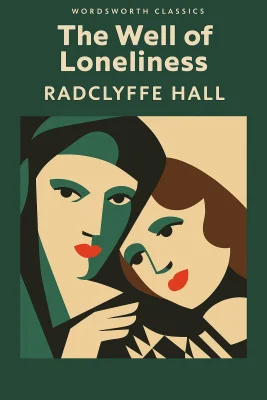
The Well of Loneliness
Categories
Fiction, Classics, Feminism, Historical Fiction, Romance, LGBT, Queer, Banned Books, Gay, Lesbian
Content Type
Book
Binding
Paperback
Year
2014
Publisher
Wordsworth Editions Ltd
Language
English
File Download
PDF | EPUB
The Well of Loneliness Plot Summary
Introduction
# The Well of Loneliness: A Soul's Quest for Recognition In the Georgian manor of Morton, nestled between England's rolling hills, Sir Philip Gordon stood at his study window watching snow fall like judgment upon his estate. His newborn daughter lay sleeping in the nursery above, but already he sensed the terrible burden she would carry. Stephen Mary Olivia Gertrude Gordon had entered the world with a soul that would never quite fit the body fate had given her, destined to love in ways that society could neither understand nor forgive. The child's first cry had echoed through Morton's ancient halls like a prophecy of storms to come. As she grew from a restless infant into a fierce young woman, Stephen would discover that some hungers can never be satisfied, some loves never blessed. Her journey would take her from the privileged drawing rooms of Worcestershire to the trenches of France, from the bohemian cafés of Paris to the ultimate sacrifice that love sometimes demands. This is the story of a heart that dared to beat differently, and the price the world extracted for such audacity.
Chapter 1: Born Different: The Child Who Would Not Conform
Seven-year-old Stephen Gordon pressed her face against the nursery window, watching her father stride across Morton's courtyard with the easy confidence of a man who belonged completely to his world. She longed to follow him, to walk with that same assured gait, but something invisible held her back. When she finally escaped to the stables, old Williams watched with knowing eyes as the child handled the horses with instinctive understanding. "She's got the touch, that one," he muttered, noting how even the most spirited stallions gentled under her small hands. But when Stephen appeared for dinner in her proper dress, her movements became awkward, constrained, as if she wore a costume that didn't fit her soul. Sir Philip observed his daughter with growing unease during their evening walks through Morton's gardens. Stephen would pepper him with questions about honor and courage, her young mind grappling with concepts that seemed to burn within her. "What is honor, Father?" she asked one twilight evening, her serious gray eyes reflecting the dying light. His answer came slowly, weighted with prescience: "Honor, my daughter, is being true to the best that is in you, no matter what the cost." The child's relationship with her mother grew increasingly strained as Stephen's masculine traits became pronounced. Anna Gordon, elegant and refined, watched her daughter's tomboyish behavior with mounting alarm. During tea parties with local ladies, Stephen would fidget in her frilly dress, her discomfort so palpable that conversations would falter. The whispered comments followed them home like shadows, and Stephen felt their judgment like pinpricks against her skin. In Raftery, the Irish hunter her father bought for her eighteenth birthday, Stephen found a companion who asked no questions. The horse's liquid brown eyes held only trust and devotion, offering the acceptance that human society seemed determined to withhold.
Chapter 2: First Love's Betrayal: The Angela Crossby Affair
At twenty-one, Stephen had grown into a striking young woman whose masculine beauty turned heads and troubled hearts. Her first encounter with love came through Angela Crossby, a married woman whose ethereal beauty masked a calculating nature. Angela, trapped in a loveless marriage to the crude Ralph Crossby, found herself drawn to Stephen's intense devotion and protective strength. Their relationship bloomed in secret, fed by stolen moments and passionate declarations that Stephen poured out like prayers. She lavished expensive gifts upon Angela, wrote letters that burned with desire, and dreamed of a future where they might live openly together. But Angela's fear of scandal and dependence on her husband's wealth made her a reluctant lover, always pulling back when Stephen's passion threatened to expose them both. The catastrophe came when Stephen discovered Angela in the arms of Roger Antrim, a young officer whose conventional masculinity offered what Stephen never could—social acceptance. The betrayal cut deeper than any physical wound, but worse followed when Angela, terrified of exposure, showed Stephen's passionate letters to her husband, who immediately forwarded them to Anna Gordon. Standing in Morton's drawing room, surrounded by portraits of respectable ancestors, Anna delivered her verdict with the cold precision of a judge: "I would rather see you dead at my feet than standing before me with this thing upon you." The words fell like stones into still water, creating ripples that would spread through both their lives forever. Stephen was given a choice that was no choice at all—leave Morton forever or watch her mother's love die completely. Sir Philip's death followed swiftly, as if his gentle heart could not bear the weight of what had been revealed. He died with Stephen's name on his lips and love in his eyes, leaving behind a daughter who understood, finally, the true meaning of exile.
Chapter 3: War's Baptism: Finding Purpose and Meeting Mary
Paris in 1914 offered Stephen sanctuary, but it was the Great War that truly forged her into the woman she was meant to become. The Breakspeare Unit became her crucible, and in the chaos of ambulance runs through shell-torn countryside, she found purpose that transcended personal anguish. Day after day, she carried broken bodies of young men from front lines to field hospitals, racing against death on roads transformed into arteries of suffering. The work was brutal and sacred. The stench of gas and blood became as familiar as breathing, and Stephen discovered that her hands, so awkward in drawing rooms, possessed steady grace when lives hung in the balance. Her courage under fire earned respect from soldiers and officers alike, men who cared nothing for her unconventional nature when she was pulling them from the jaws of death. It was in this crucible that Mary Llewellyn appeared—a Welsh girl barely twenty-two, with gray eyes that held depths Stephen had never imagined. Mary had come to France carrying nothing but courage and fierce determination to serve, her delicate frame concealing strength that matched Stephen's own. From their first meeting, something electric passed between them, recognition perhaps, or the simple relief of finding another soul who understood the weight of difference. The friendship that bloomed between them transcended ordinary bonds of comradeship. In brief respites between runs, they would sit together sharing cigarettes and stories, their voices low and intimate against distant thunder of artillery. Mary spoke of her childhood in Wales, of the cousin who had grudgingly provided her with a home but never with love. Stephen found herself revealing secrets she had never shared with another living soul. When Stephen earned the Croix de Guerre, it was Mary who pinned the medal to her chest with trembling fingers. The touch of those hands sent fire through Stephen's veins, and in that moment, she understood that her exile from Morton had been leading to this—to Mary, to love, to a future that suddenly blazed with possibility.
Chapter 4: Paradise Found: Love in Tenerife and Paris
The villa at Orotava perched on its headland like a dream made manifest. Ancient cypress trees cast shadows across gardens that bloomed with wild Mediterranean abundance, and the air itself seemed drunk with possibility. Stephen and Mary had come here to heal from war's wounds, but what they found was something far more precious—each other. The confession came on a night when African darkness pressed close around them, heavy with jasmine scent and distant Spanish guitars. Mary's words tumbled out in a rush of honesty that left them both trembling: "All my life I've been waiting for something. I've been waiting for you, Stephen." What followed was a revelation that transformed them both. In Mary's arms, Stephen discovered that love could be both sanctuary and storm, a force that remade the very foundations of existence. They moved through their days like sleepwalkers awakening to find themselves in paradise. They would ride their mules up into mountains, climbing toward peaks that scraped the heavens, their voices echoing across valleys that had never heard such laughter. In evenings, they would sit in their little arbour overlooking the sea, watching water flush with afterglow while beggars sang love songs in the garden below. When they returned to Paris, it was with knowledge that they had crossed a threshold from which there could be no return. The house in Rue Jacob welcomed them like conspirators returning from a successful mission. Stephen threw herself back into writing with renewed passion while Mary took charge of their domestic life with fierce protectiveness of someone who had found her purpose at last. Yet even in their private happiness, the outside world pressed in with its demands and judgments. They moved carefully through Paris, aware that tolerance had its limits. But in their quiet moments together, reading by the fire or walking in their garden among roses Mary had planted, they found peace that made all struggle worthwhile.
Chapter 5: The Triangle: When Martin Threatens Their World
Martin Hallam walked back into Stephen's life like a ghost made flesh, carrying with him the scent of pine forests and memory of simpler times. Twenty years had passed since their childhood friendship had ended in confusion and pain, but the man who stood in her doorway possessed the same gentle eyes and thoughtful manner that had once made him her dearest companion. The reunion should have been pure joy, but Stephen found herself watching with growing unease as Martin's attention turned increasingly toward Mary. The girl bloomed under his notice like a flower turning toward the sun, and Stephen recognized with sick certainty the signs of an attraction that threatened to destroy everything she held dear. Martin represented everything Stephen could never offer Mary—respectability, security, a place in the normal world. His aunt, the Comtesse de Mirac, welcomed Mary with maternal warmth that Anna Gordon had always withheld. At elegant dinners in Passy, Mary laughed with a freedom that Stephen had never been able to give her, and the sound cut through Stephen's heart like a blade. The battle for Mary's soul was fought in silence, with weapons of memory and desire. Stephen used every tool at her disposal—their shared history, their physical passion, the bonds forged in war and strengthened in love. But Martin fought with the promise of a future free from shame and persecution, and Stephen began to understand that she was fighting a war she could not win. The confrontation, when it came, was conducted with the courtesy of gentlemen and the desperation of lovers. "I'm going to fight you," Martin told her, his voice steady despite the pain in his eyes. "I'll do all in my power to take Mary from you." Stephen accepted his challenge with grim satisfaction of a duelist who knows that honor demands nothing less than total commitment. Mary, caught between them, began to show the strain of being pulled in two directions at once, her face growing pale and her laughter taking on a brittle edge that broke Stephen's heart to witness.
Chapter 6: The Ultimate Sacrifice: Setting Mary Free
The realization came to Stephen like a revelation written in fire across her soul. She could not win this battle without destroying Mary in the process, and love—true love—demanded the ultimate sacrifice. In the small hours of the night, as Mary slept beside her, Stephen made the decision that would shatter her world and save the woman she loved. The plan was as simple as it was devastating. Stephen began to withdraw from Mary, to treat her with a coldness that went against every instinct in her body. She spent more time with Valérie Seymour, the sophisticated American expatriate who held court in Paris's artistic circles, allowing Mary to draw the obvious conclusions. Each cruel word, each calculated slight, was like driving a knife into her own heart, but Stephen persevered with the grim determination of a surgeon cutting away diseased flesh. Valérie, when approached, understood immediately what Stephen was asking of her. "You're worth twenty Mary Llewellyns," she protested, but she agreed to play her part in the deception. The sophisticated older woman had seen too much of life to believe in fairy tale endings, but she recognized the nobility in Stephen's sacrifice. Mary's confusion and pain were almost unbearable to witness. The girl clung to Stephen with desperate intensity, unable to understand why the woman she loved was suddenly treating her like a stranger. "Can't you understand?" she pleaded. "Are you utterly blind—have you only got eyes now for Valérie Seymour?" But Stephen's lips remained sealed, her face a mask of indifference that concealed the agony within. The final scene played out with the inevitability of Greek tragedy. Stephen arranged for Martin to be waiting in the shadows as she delivered the killing blow, telling Mary with brutal finality that she had found someone else. The girl's face crumpled like paper in a fire, and Stephen watched from her window as Mary stumbled into the courtyard, into Martin's waiting arms. They left together, Mary leaning on Martin's strength as they disappeared into the Paris streets. Stephen remained at her window long after they had gone, her reflection staring back at her like an accusation.
Chapter 7: Voices of the Dispossessed: A Cry for Recognition
Alone in the house that had once echoed with Mary's laughter, Stephen felt the walls of her carefully constructed world collapse around her. The silence was not empty but full—crowded with the voices of all those like her who had suffered and died for the crime of loving differently. They came to her in the darkness, the legion of the dispossessed. Jamie was there, the Scottish girl who had taken her own life rather than face a world that would not let her mourn her lover openly. Barbara appeared beside her, the woman whose death from pneumonia had triggered Jamie's suicide. Wanda materialized from the shadows, the Polish painter whose genius had been slowly devoured by brandy and despair. The nameless men from the underground bars stood in the corners, their faces marked by the special anguish of those who had been denied even the right to exist. "You dare not disown us," they whispered, their voices rising like a tide. "We are coming, Stephen—we are still coming on, and our name is legion." They pressed against her, demanding recognition, demanding justice, demanding that their suffering be given meaning. Stephen felt herself becoming their voice, their instrument of protest against a world that had cast them out. The pain of her personal loss merged with the greater agony of her people, and she understood finally why she had been chosen to bear this burden. Her love for Mary had been both blessing and curse, teaching her the full measure of what it meant to be different in a world that demanded conformity. The vision reached its crescendo as Stephen found herself speaking not just for herself but for all the invisible ones, all those who loved in shadow and died in silence. Her voice rose like thunder, carrying the weight of centuries of persecution and the hope of generations yet unborn: "God, we believe; we have told You we believe. We have not denied You, then rise up and defend us. Acknowledge us, oh God, before the whole world. Give us also the right to our existence!"
Summary
Stephen Gordon's journey from the privileged halls of Morton to the bohemian streets of Paris traces the arc of a soul learning to accept itself in a world determined to deny its right to exist. Her sacrifice of Mary to Martin's conventional love represents the ultimate act of devotion, proving that even the most forbidden love could inspire the most selfless sacrifice. In losing everything she held dear, Stephen discovered her true purpose—not merely as a lover, but as a witness to the truth that love, in all its forms, demands recognition and respect. The well of loneliness runs deep, fed by the tears of countless souls who have been denied their place in the sun. But from its depths rises something indestructible—the human spirit's refusal to be silenced, to be denied, to accept that any form of love is less worthy than another. Stephen's cry echoes across the years, a demand for justice that waits for a world brave enough to listen and wise enough to answer. Her story stands as testament to the courage required to live authentically in a society that demands conformity, and to the price that must be paid for the privilege of being true to oneself.
Best Quote
“If our love is a sin, then heaven must be full of such tender and selfless sinning as ours.” ― Radclyffe Hall, The Well of Loneliness
Review Summary
Strengths: The book is praised for its straightforward honesty and its ability to highlight overlooked aspects of the world. It is accessible to a wide audience due to its clear writing style. The narrative is unbiased and avoids sensationalism or guilt-inducing tactics. Weaknesses: The writing style is described as lacking depth and mystery. The prose is criticized for being overly lengthy and polemical, with some chapters deemed unnecessary. The narrative approach is compared to a "bulldozer," indicating a lack of subtlety. Overall: The reviewer suggests that the book is important for its historical context rather than its artistic merit. Despite initial reservations, the reviewer found some enjoyment in the novel, though it is seen as overly long and blunt in its messaging. The book is recommended for its honest portrayal of marginalized experiences.
About Author

Radclyffe Hall
Radclyffe Hall interrogates societal norms through her literary exploration of sexual identity and personal authenticity. Her work, including the groundbreaking novel "The Well of Loneliness", tackles themes of societal rejection and loneliness experienced by lesbian women in a restrictive society. Hall's writing is characterized by a serious and somber tone, with a focus on realism and social awareness. She employs her narratives to advocate for the acceptance of LGBTQ+ identities, reflecting her own life as a lesbian and her relationship with Una, Lady Troubridge.\n\nHall's transition from poetry to fiction marked a significant evolution in her career, with her early books such as "The Forge" and "The Unlit Lamp" beginning to explore themes of lesbian love. This thematic exploration culminated in "Adam’s Breed", which brought her critical acclaim, winning both the Prix Fémina and the James Tait Black Memorial Prize. These achievements underscore her ability to connect deeply with audiences through her poignant storytelling. While Hall's works often faced societal backlash, her writing resonated with readers who sought authenticity and understanding of complex identities.\n\nFor those interested in LGBTQ+ literature and the history of gender and sexual identity, Hall's contributions offer valuable insights. Her bio illustrates a courageous author who defied societal norms to portray the multifaceted experiences of lesbian women. By examining her work, readers can gain a deeper understanding of the social constraints and personal struggles faced by individuals challenging conventional norms in early 20th-century society.
Read moreDownload PDF & EPUB
To save this Black List summary for later, download the free PDF and EPUB. You can print it out, or read offline at your convenience.
The Well of Loneliness
by Radclyffe Hall
