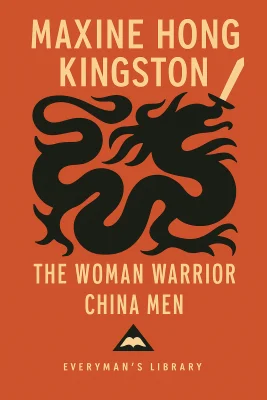
The Woman Warrior / China Men
Categories
Nonfiction, Biography, Memoir, Classics, Feminism, China, Literature, Autobiography, American
Content Type
Book
Binding
Hardcover
Year
2005
Publisher
Everyman's Library
Language
English
ISBN13
9781400043842
File Download
PDF | EPUB
The Woman Warrior / China Men Plot Summary
Introduction
In a small Chinese-American laundry, steam rises from the presses as a mother whispers forbidden stories to her daughter. The tale she tells is dangerous—about an aunt who never existed, who threw herself into the family well carrying her illegitimate child. "You must not tell anyone," the mother warns, yet she continues speaking, planting seeds of stories that will either destroy or liberate the next generation. This is the world Maxine Hong Kingston inhabits, caught between the ancient mysteries of China and the harsh fluorescent reality of 1960s California. Her mother, Brave Orchid, once a respected doctor in China, now works sixteen-hour days in the family laundry, her medical diploma hidden in a metal tube, her past reduced to whispered fragments. As Maxine grows up surrounded by ghost stories, warrior legends, and the constant threat of silence, she must learn to separate truth from myth, memory from imagination, and find her own voice in a culture that demands women remain voiceless.
Chapter 1: The Burden of Untold Stories
The story begins with shame, as all Chinese-American stories must. Maxine's mother speaks in hushed tones about the aunt who brought disgrace to their family—pregnant while her husband worked in America, condemned by villagers who painted her face white with death and destroyed everything she touched. The villagers came at night like avenging spirits, their masks catching moonlight as they slaughtered livestock and smeared blood on the walls. This nameless woman gave birth alone in a pigsty, then carried her newborn to the family well. The next morning, both bodies plugged the water source like twin curses. "Don't let your father know I told you," Maxine's mother whispers. "Now that you have started to menstruate, what happened to her could happen to you." But the story carries poison beneath its warning. Was the aunt raped by a neighbor, or did she seek forbidden love? Did she jump willingly, or was she pushed by desperation? Maxine will never know her aunt's name, never know her face, never know if she was victim or rebel. The family erased her so completely that she exists only in whispers, a ghost feeding on other people's offerings, forever hungry, forever forgotten. Years later, working in the same laundry where steam obscures vision and truth bends like heat waves, Maxine realizes her mother's cruel gift. The story was meant to terrify her into obedience, but instead it planted questions that would grow into defiance. In trying to silence one woman's voice, her mother had accidentally given Maxine a reason to find her own.
Chapter 2: Warriors of Imagination and Reality
While her classmates dream of boys and parties, Maxine escapes into her mother's warrior tales. Fa Mu Lan, the woman warrior, trained for fifteen years in mystical mountains, learning to fight dragons and command armies. She married her childhood love, bore his son, then strapped the baby to her back and rode into battle with words of vengeance carved into her flesh. The stories feel more real than California, more vivid than the endless rows of tomatoes where her mother now works. In her imagination, Maxine becomes the warrior, her body lean and deadly, her voice commanding thousands. She would return to her village victorious, demanding justice from those who wronged her family. But reality intrudes with brutal clarity. At school, white teachers cannot pronounce her name. Chinese boys ignore her in favor of blonde cheerleaders. Her own voice, when she tries to speak, comes out broken and strange, neither fully Chinese nor completely American. She begins to understand that warriors exist only in stories, while real Chinese-American girls work in their parents' businesses and marry men they've never met. Her mother, once a surgeon who delivered babies and fought ghosts, now sorts dirty laundry and sends money to relatives in China. The woman who could cure any disease, who never lost a patient, now earns twenty-five cents an hour picking fruit. The warrior stories, Maxine realizes, are both inspiration and trap—dreams of power for women who have none. The carved words on Fa Mu Lan's back told of grievances against her enemies. But what words would be carved on Maxine's back? What battles could she fight in suburban California, where the enemies wear business suits and speak in budget meetings?
Chapter 3: Ghosts Between Two Worlds
Brave Orchid arrives in America carrying her medical diploma like a talisman, but the Gold Mountain proves to be paved with dirty linoleum and endless shifts. The woman who once commanded respect from entire villages now struggles to understand why the Garbage Ghost can speak Chinese, why her own children flee whenever she tells stories. She had been somebody in China—Dr. Brave Orchid, who could diagnose illness by looking at a daughter-in-law's face, who once spent a night fighting a Sitting Ghost in her dormitory and emerged victorious. She knew the names of spirits, the proper rituals for cleansing, the difference between Fox Spirits and true hauntings. In China, her knowledge made her powerful. But America is full of different ghosts—Meter Reader Ghosts, Social Worker Ghosts, Immigration Ghosts who could send families back to China with a single stamp. These ghosts speak only English and follow rules that make no sense. They want forms filled out, appointments scheduled, children immunized. They don't understand that some things must be done in darkness, that some cures require secrecy. Her own children are becoming ghosts too, speaking English at the dinner table, cutting their hair like Americans, forgetting the old ways. They are embarrassed by her accent, her stories, her insistence that spirits still matter. They want to blend into the white world, to become invisible, to abandon everything that makes them Chinese. At night, surrounded by the mechanical sounds of washers and dryers, Brave Orchid remembers the weight of respect, the satisfaction of saving lives. She had mattered once. Now she is just another immigrant woman, indistinguishable from thousands of others, her wisdom dismissed as superstition, her past erased by the demands of survival.
Chapter 4: Confronting Cultural Displacement
The reunion happens at San Francisco Airport, where sixty-eight-year-old Brave Orchid waits for Moon Orchid, the sister she hasn't seen in thirty years. But the elegant woman stepping off the plane is a stranger—fragile, confused, speaking Hong Kong Cantonese with a accent Brave Orchid barely recognizes. Moon Orchid had lived comfortably in China on money sent by her husband in America, never knowing he had taken a second wife, built a new life, erased her from his American existence. She is delicate as rice paper, beautiful in an old-world way that will mean nothing in Los Angeles traffic. Brave Orchid has a plan, of course. They will drive to her brother-in-law's medical office, march past his young American wife, and demand Moon Orchid's rightful place as first wife. "You walk right into the bedroom," she instructs, "and you open the second wife's closet. Take whatever clothes you like." But when the confrontation comes, it unfolds like a tragedy. The successful doctor, in his dark American suit, stares at Moon Orchid as if she is a ghost from his discarded past. "You weren't supposed to come here," he says simply. "I have a new life." His young wife, a nurse with painted nails and blue eyeshadow, waits in the office while he disposes of his Chinese wife like outdated paperwork. Moon Orchid says almost nothing. What words could bridge thirty years of separation, two different worlds, the gap between who she was and who he has become? He offers her money, distance, invisibility. He offers her everything except recognition, except love, except the life she thought she was coming to claim.
Chapter 5: Finding Voice in a Land of Strangers
At school, Maxine discovers the power and terror of silence. She paints her pictures entirely black, layer upon layer, until teachers call her parents in concern. For three years, she speaks to no one except family, existing in a bubble of self-imposed muteness that feels safer than risking her broken English in public. But silence becomes its own prison. She watches other children participate in plays, answer questions, make friends, while she remains invisible, neither fully Chinese nor acceptably American. Her tongue, cut by her mother to make her speak more freely, seems to work against her, producing sounds that embarrass and isolate. The breaking point comes with another silent Chinese girl, a year older and even more withdrawn. In an empty school bathroom, Maxine corners this mirror image of herself and demands speech. She pinches the girl's cheeks, pulls her hair, screams at her to say something, anything, to prove that Chinese girls can find their voices in America. "I want you to talk," Maxine says, her own voice finally emerging strong and clear in its cruelty. "You're going to talk." But the other girl only cries, her silence absolute, her fear complete. Maxine realizes she is torturing herself, trying to force sound from someone as trapped as she is. The violence accomplishes nothing except guilt and eighteen months of mysterious illness that keeps Maxine bedridden, silent again, retreating from a world that demands too much. When she finally returns to school, the quiet girl is still there, still voiceless, still protected by her family from a world that would never understand her particular kind of damage.
Chapter 6: Breaking Silence, Weaving Identity
The explosion happens in the family laundry, surrounded by steam and the smell of other people's lives. Maxine stands up at dinner and releases years of accumulated rage, speaking in the duck-voice that has always embarrassed her, letting every forbidden thought pour out like water from a broken dam. "I want you to tell that hulk to go away and never bother us again," she screams at her parents, referring to the mentally disabled man they hope she might marry. "I know what you're up to. You think we're odd and not pretty and not bright. You think you can give us away to freaks." The words keep coming—about college plans her parents don't understand, about American dreams that contradict Chinese expectations, about the fundamental impossibility of being both cultures simultaneously. She rejects arranged marriage, rejects silence, rejects the assumption that Chinese-American girls exist only to serve and obey. Her mother shouts back, revealing family secrets, immigration lies, the complex web of truth and fiction that has shaped their lives. "Ho Chi Kuei," she calls Maxine—bamboo ghost, American-born Chinese who obstruct the flow of tradition like nodes in a bamboo tube. But the words, once released, create their own momentum. Maxine discovers that speaking her truth, even badly, matters more than remaining silent and safe. She will go to college, will write stories, will refuse the roles assigned to Chinese daughters. The conversation ends with both women exhausted, but something fundamental has shifted between them.
Summary
Moon Orchid never recovers from her rejection, gradually retreating into madness and paranoia until she must be institutionalized. She dies quietly in a mental hospital, surrounded by other displaced women who, like her, could not survive the collision between old world expectations and new world realities. Her story serves as warning and prophecy—this is what happens to women who cannot adapt, who remain beautiful and fragile and ultimately powerless. But Maxine chooses a different path. She learns to navigate between Chinese ghosts and American dreams, to honor her mother's warrior stories while creating her own version of strength. The silence that once trapped her becomes raw material for writing; the shame that once defined her transforms into fuel for art. She discovers that survival sometimes requires betrayal—of family expectations, cultural traditions, the very stories that shaped her. The woman warrior she becomes fights not with swords but with words, carving truth from the collision of worlds, speaking for all the silenced women who came before and those who will come after. In finding her voice, she breaks the cycle of voicelessness, proving that even damaged tongues can sing, even immigrant daughters can claim their stories, even ghosts can become fully human through the simple, revolutionary act of refusing to stay quiet.
Best Quote
Review Summary
Strengths: The review highlights the book's imaginative narrative and effective use of magical realism. It praises Maxine Hong Kingston's ability to weave her identity with Chinese myths and legends, creating a rich tapestry of cultural and personal exploration. The structure of the book, divided into five chapters, is noted for illustrating Kingston's American experience and the blending of cultures. Overall: The review conveys a positive sentiment, awarding the book 4.5 stars. It recommends "The Woman Warrior" for its artistic storytelling and insightful exploration of cultural identity, particularly appealing to readers interested in the intersection of myth and personal history.
About Author

Maxine Hong Kingston
Kingston synthesizes the complexities of bicultural identity and immigrant experiences through her fusion of fiction and memoir. Her writing often explores themes such as gender, ethnicity, and cultural conflict, drawing on both Chinese folklore and contemporary American realities. Her early book, "The Woman Warrior: Memoirs of a Girlhood Among Ghosts," blends myth and personal memoir to examine the Chinese American female experience, earning the National Book Critics Circle Award. Meanwhile, "China Men" continues this exploration, focusing on male ancestors and immigration stories, and it won the National Book Award.\n\nKingston's methods include weaving oral storytelling traditions with modern narratives, offering critiques of cultural stereotypes and misunderstandings. Readers benefit from her insightful analysis of identity and feminism, which challenges and enriches their understanding of the immigrant experience in America. Her work has not only influenced Asian American literature but also contributed significantly to feminist discourse and cultural studies. Through her unique literary style, Kingston has cemented her place as a transformative author who interrogates the nuanced layers of bicultural life, leaving a lasting impact on both her readers and the literary world.
Read moreDownload PDF & EPUB
To save this Black List summary for later, download the free PDF and EPUB. You can print it out, or read offline at your convenience.
The Woman Warrior / China Men
by Maxine Hong Kingston
