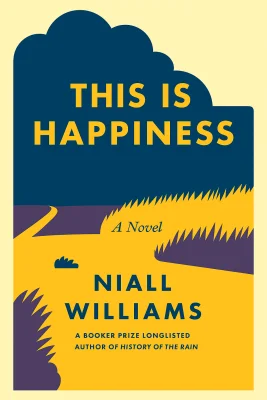
This Is Happiness
Categories
Fiction, Audiobook, Historical Fiction, Book Club, Historical, Novels, Coming Of Age, Ireland, Literary Fiction, Irish Literature
Content Type
Book
Binding
Hardcover
Year
2019
Publisher
Bloomsbury Publishing
Language
English
ASIN
163557420X
ISBN
163557420X
ISBN13
9781635574203
File Download
PDF | EPUB
This Is Happiness Plot Summary
Introduction
# When Light Came to Faha: A Story of Redemption and Remembrance The rain stopped on Spy Wednesday, 1958, in the forgotten parish of Faha, County Clare. Nobody could remember when it had started, but on that miraculous morning, the endless Irish deluge simply ceased. Into this transformed landscape walked Christy McMahon, a man in his sixties carrying a small suitcase and fifty years of regret. He had come to make amends for the greatest mistake of his life: leaving Annie Mooney at the altar in a church in Sneem, County Kerry, half a century ago. Seventeen-year-old Noe Crowe, a failed seminarian staying with his grandparents Ganga and Doady, became witness to this quest for redemption. As electricity poles from Finland began arriving to bring power to this forgotten corner of Ireland, Christy's mission would collide with the parish's own transformation, creating ripples that would touch every soul in Faha. The light that was coming would illuminate more than just darkened rooms.
Chapter 1: The Stranger's Arrival: Christy McMahon Comes to Faha
The stranger materialized at their gate like something conjured from the cleared sky itself. Christy McMahon stood there in his wrinkled blue suit, bicycle propped against stone, eyes the color of deep Atlantic water. When he smiled at Noe sitting by the threshold, the air in Faha seemed to shift. "There you are," he said, as though Noe was the one who had just appeared. He settled onto the windowsill with the easy confidence of a man who understood the privilege of stillness. They watched the river together in companionable silence until Doady emerged from the house. She looked at the stranger and said something that surprised them all: "You're early." The electricity man had arrived to bring light to the parish, but he carried shadows of his own. Christy answered the advertisement from the Electricity Supply Board, but his true purpose ran deeper than poles and wires. He was a man on a mission of reparation, carrying the mythology of a life fully lived across two continents. In the evenings, as they played cards in the garden under impossible stars, fragments of his story emerged. He had eaten purple tulips for love once, he said, his eyes glittering with memory. He had been cook, barber, carpenter, merchant sailor, and a dozen other things in his wanderings through the Americas. But at sixty, lying in a Boston boarding house, he had received a revelation clear as spring water: "You've still time, Christy. You've still time to go back and right all the mistakes you've made." The greatest of those mistakes lived just down the road in Faha, behind the counter of Gaffney's chemist shop. Annie Mooney had become Mrs. Gaffney in the years since Christy had vanished from her life, but widowhood had returned her to her maiden name in all but law. When Noe mentioned seeing her at Easter Sunday Mass, Christy's entire being transformed. The bulk of him seemed to lift, his eyes took on the glitter of a man possessed.
Chapter 2: Shadows of the Past: The Confession of a Broken Promise
The revelation came on a sun-drunk afternoon when Noe pressed Christy for the truth. They sat in Cleary's meadow, grass sweet beneath them, air thick with the drone of bees drunk on furze blossoms. The fine weather had continued beyond all reason, transforming the usually sodden parish into something approaching paradise. In that golden light, Christy finally opened the locked chambers of his heart. "In St Michael's church, Sneem, County Kerry, I left her at the altar," he said, the words falling like stones into still water. The confession hung between them, fifty years of guilt and regret made manifest in a single sentence. He had been young and terrified, overwhelmed by the intensity of what he felt for Annie Mooney. Rather than risk being consumed by love, he had chosen to run. Noe felt the ground shift beneath him as he tried to reconcile this revelation with the man he had come to admire. The Christy he knew was generous and brave, someone who faced life with open arms. But the young man who had fled that church had been ruled by fear, paralyzed by the very depth of his feelings. "I was afraid of what I felt," Christy continued, his voice barely above a whisper. "I thought it would swallow me up. It already had. I only wanted to live for her." The irony was bitter. He had destroyed their love to save himself from loving too much, and in doing so had condemned himself to a lifetime of loving her from a distance. The confession changed everything between them. Noe understood now why Christy had come to Faha, why he lingered near the chemist shop, why his eyes held that particular quality of longing. He had spent fifty years carrying the weight of that moment, and now, in the twilight of his life, he had come seeking the only absolution that mattered. Forgiveness from the woman he had wronged.
Chapter 3: Voices Across Time: Telephone Lines and Healing Words
The telephone rang at eight o'clock on a Tuesday evening, its shrill voice cutting through the peaceful domesticity of the kitchen where Ganga and Doady played their eternal game of draughts. When Doady answered, her face registered surprise, then something deeper as she called for Christy. The voice on the other end belonged to Annie Mooney, and with those first tentative words, a bridge began to form across fifty years of silence. Annie had been dying quietly in the rooms above the chemist shop, her body surrendering to an illness that Doctor Troy could name but not cure. She had called not for reconciliation or romance, but for something simpler and more profound. She wanted to hear the story of what had happened to the young man who had disappeared from her life on what should have been their wedding day. Night after night, Christy bent his head to the receiver and spoke into the darkness, his voice carrying across the village to where Annie sat propped in her chair, listening to the tale of his wandering years. He told her of his travels, his marriages and failures, his long journey toward understanding that some wounds can only be healed by returning to their source. Mrs. Prendergast at the telephone exchange listened with professional discretion and personal fascination as these two voices wove their way back toward each other across the decades. The calls grew longer, more intimate, as Christy learned to pace his stories to match Annie's strength, pausing when exhaustion claimed her, resuming when she returned to consciousness. The parish held its breath as these nightly conversations continued, understanding instinctively that something sacred was taking place. Love had returned to Faha, not in the form anyone might have expected, but as two voices reaching across time and space, finally finding the courage to speak the words that had been waiting fifty years to be said. The electricity poles rising across the fields carried more than just power. They carried the current of human connection, flowing between hearts that had never stopped beating for each other.
Chapter 4: Music in the Darkness: Finding Connection Through Song
While Christy courted Annie through telephone wires, Noe embarked on his own quest for connection, cycling through the night-soaked countryside in search of the legendary fiddle player Junior Crehan. These expeditions took them to pubs scattered across the rural landscape, where music flowed like water and time moved to the rhythm of reels and jigs rather than clocks. In smoky rooms lit by paraffin lamps, Noe discovered a world that existed parallel to the daylight reality of electricity poles and modern progress. Here, old men with gnarled fingers coaxed ancient tunes from battered instruments, their playing carrying the accumulated wisdom of generations. The music was both deeply local and mysteriously universal, speaking a language that needed no translation. Christy proved an ideal companion for these musical pilgrimages, his easy manner opening doors that might have remained closed to strangers. He had the gift of making himself welcome anywhere, of finding common ground with farmers and publicans, tinkers and teachers. But Noe sensed that these journeys served another purpose for Christy. They were a way of staying in motion while his heart remained fixed on the woman in the chemist shop. The search for Junior Crehan became a metaphor for something larger, a quest for authenticity in a world increasingly dominated by mass production and standardization. Each pub they visited, each musician they encountered, represented a thread in the tapestry of Irish culture that was already beginning to fray at the edges. When they finally found Junior Crehan at a fleadh in Miltown, playing "The Mist-Covered Mountains" with the casual mastery of someone for whom music was as natural as breathing, Noe understood that the search itself had been the point. The music had been there all along, waiting to be discovered by those willing to venture into the darkness with open hearts and patient ears. The fiddle that had been gathering dust in his room suddenly became a voice, a way of participating in the great conversation that connected past and present, tradition and innovation, the living and the dead.
Chapter 5: The Farewell: Annie's Peace and Christy's Redemption
Annie Mooney died as she had lived her final months, with quiet dignity and grace. Doctor Troy found her in the morning, still sitting in the chair by the telephone where she had spent her last conscious hours listening to Christy's voice. The receiver lay cradled in her lap like a sleeping bird, the line still open to the house where Christy waited for her to return from what had seemed like just another of her brief naps. The funeral drew people from seven parishes, a testament to the quiet impact Annie had made during her years behind the chemist's counter. She had been the keeper of remedies and secrets, the one who dispensed comfort along with medicines, who knew which ailments required pills and which needed only a kind word and a patient ear. Christy served as a pallbearer, his large frame helping to carry the woman he had loved across two lifetimes. At the graveside, as Father Coffey spoke the ancient words of committal, Christy did something that surprised everyone. He sang. The same song he had sung outside her window in the dawn light weeks before, his voice carrying across the cemetery and out over the river, as if the music itself could bridge the gap between this world and whatever lay beyond. The song hung in the air long after the last note faded, and in that silence, the gathered mourners felt the presence of something larger than grief. A recognition that love, once kindled, never truly dies but simply changes form, becoming memory, becoming story, becoming the music that connects one generation to the next. After the funeral, Christy made his preparations to leave Faha. His work with the electricity project was complete, the parish wired and ready for its appointment with the modern world. But more than that, his personal mission had reached its conclusion. He had found Annie, had spoken the words that needed to be said, had received the forgiveness he had spent fifty years seeking. He left as quietly as he had arrived, with a simple goodbye and a promise to write. But Noe knew, with the certainty that comes from witnessing profound transformation, that Christy had been changed by his time in Faha.
Chapter 6: Switch-On: When Electric Light Came to the Parish
June 8th, 1960, dawned bright and clear, the miraculous weather holding for what would be Faha's appointment with the twentieth century. The entire parish gathered in Church Street, where a makeshift stage had been erected around the transformer pole that would serve as the ceremonial heart of the switch-on. Children who had been released from school for this historic moment ran between the legs of adults, their excitement infectious. Harry Rushe, the electricity board official, stood ready with his clipboard and wristwatch, the embodiment of bureaucratic efficiency in his pressed suit and polished shoes. Beside him, Moylan the salesman had arranged his display of electrical appliances. A washing machine, a toaster, an iron, and a standing lamp with a bare bulb that would serve as the visible symbol of Faha's transformation. Father Tom blessed the proceedings with holy water and episcopal authority, while the crowd pressed forward with the collective anticipation of witnesses to history. Noe stood with his grandparents, Ganga beaming with pride despite his decision not to take the electricity himself, Doady clutching his arm as the moment approached. At precisely noon, Rushe raised his arm and then brought it down in a sharp chopping motion. Somewhere in Dublin, a switch was thrown, and instantly, at the speed of light itself, the bulb on the stage blazed to life. The crowd gasped, then burst into applause that sounded like waves breaking on stones. But even as Faha celebrated its entry into the modern world, the old world reasserted itself. As people hurried to their homes to see their own lights work for the first time, the sky began to darken. The first drops of rain in months began to fall, as if nature itself was commenting on the hubris of human progress. Noe lifted his face to feel the rain on his skin, understanding that this moment marked not just the arrival of electricity, but the end of something irreplaceable.
Chapter 7: Luminous Moments: Love, Loss, and the Light That Endures
The lights came on in Faha that June day, but the real illumination had already occurred in the quiet moments between human hearts reaching across time and space. Christy McMahon had found his redemption not in grand gestures but in the simple act of speaking truth to the woman he had loved and lost. Annie Mooney had died knowing that she had been cherished across fifty years of separation, that love had survived even the cruelest abandonment. Noe had discovered his own voice, both literal and metaphorical, in the music that connected him to something larger than himself. The old world of Ganga and Doady, with its rhythms of season and story, its acceptance of hardship and celebration of small mercies, would gradually give way to the electric future. But in those luminous moments when past and present touched, when forgiveness flowed like current through the wires of memory, something essential had been preserved. The light that mattered most was not the one that came from bulbs and switches, but the one that flickered eternally in the human heart. The light of connection, of understanding, of love that transcends time and death and all the small failures that make us human. In the end, that was the only electricity that truly mattered, the only power that could illuminate the darkness and make the long journey home.
Summary
Best Quote
“It was a condensed explanation, but I came to understand him to mean you could stop at, not all, but most of the moments of your life, stop for one heartbeat and, no matter what the state of your head or heart, say This is happiness, because of the simple truth that you were alive to say it.” ― Niall Williams, This Is Happiness
Review Summary
Strengths: The review highlights the novel's lyrical prose and its evocative depiction of Ireland's landscape, family, and community. It praises the author's ability to capture the essence of rural life and the importance of storytelling in Irish culture. The characters, particularly Noe and Christy, are noted for their depth and development, contributing to the novel's immersive quality. Overall: The review conveys a positive sentiment, appreciating the novel as a joyous and immersive exploration of Irish life and traditions. It is recommended for its eloquent writing and rich character portrayals, appealing to readers interested in a reflective and culturally rich narrative.
About Author

Niall Williams
Williams reflects on the intricate layers of human emotion through his evocative storytelling, often weaving the Irish rural experience with universal themes of love, loss, and memory. His novels stand out for their lyrical prose and lush imagery, drawing readers into the magic of everyday life. The author skillfully blends realism with elements of magic realism, offering narratives that explore both the emotional and spiritual dimensions of ordinary lives. A key example is his book "Four Letters of Love," which became an international bestseller and has been published in over twenty countries.\n\nIn his work, Williams consistently highlights the passage of time and the interplay between myth and reality, situating his stories in the rich landscape of the west of Ireland. This is evident in "History of the Rain," which was longlisted for the Man Booker Prize. Readers gain a deep sense of place and culture while engaging with characters who grapple with profound personal challenges. For those seeking to understand the essence of Irish life and landscape, Williams's writing offers a poignant and enriching experience.\n\nWilliams's impact on contemporary literature is marked not only by his celebrated novels but also by his foray into plays and screenwriting. His diverse literary contributions demonstrate a commitment to capturing the complexities of human experience. His work appeals to a wide audience, from those interested in richly crafted narratives to readers fascinated by the intersection of history and personal tales. This short bio underscores Williams's position as a major voice in contemporary Irish literature, respected for his ability to evoke the magic of ordinary moments and to chart the emotional landscapes of his characters.
Read moreDownload PDF & EPUB
To save this Black List summary for later, download the free PDF and EPUB. You can print it out, or read offline at your convenience.
This Is Happiness
by Niall Williams
