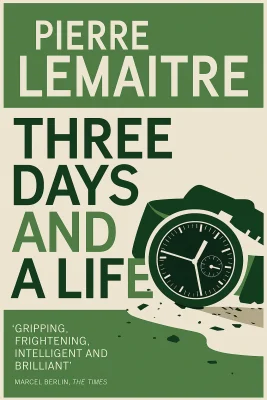
Three Days and a Life
Categories
Fiction, Audiobook, Mystery, Thriller, France, French Literature, Roman, Suspense, Crime, Mystery Thriller
Content Type
Book
Binding
Kindle Edition
Year
2017
Publisher
MacLehose Press
Language
English
ASIN
B06XRCKLK9
ISBN13
9781681441764
File Download
PDF | EPUB
Three Days and a Life Plot Summary
Introduction
In the dying days of December 1999, twelve-year-old Antoine Courtin commits an act that will haunt him for the rest of his life. What begins as a moment of uncontrolled rage in the woods of Saint-Eustache becomes a secret so terrible that it reshapes not just his existence, but the fabric of an entire small French town. When six-year-old Rémi Desmedt disappears on a cold Thursday afternoon, the residents of Beauval are plunged into a nightmare of searching, suspicion, and grief that will echo through the years. But Antoine knows something no one else does: there is no kidnapper to catch, no missing child to find alive. Hidden beneath the fallen trees of the forest lies a truth so devastating that even nature itself seems to conspire to keep it buried. As the boy grows into a man, carrying his terrible burden through medical school, love, marriage, and the ordinary rhythms of life, the past refuses to stay dead. The weight of childhood sins has a way of surfacing when least expected, demanding a reckoning that has been delayed but never forgotten.
Chapter 1: The Fatal Moment: A Child's Deadly Anger
The death of Ulysses changed everything. Antoine had watched in horror as Monsieur Desmedt, Rémi's father, emerged from his house with a shotgun and put the injured dog out of its misery with brutal efficiency. The gray plastic bag containing the animal's remains was tossed carelessly with the construction debris, as if the dog had never mattered at all. For Antoine, already isolated by his mother's ban on video games and his friends' new obsessions, Ulysses had been his constant companion during long afternoons building a secret tree house in the woods of Saint-Eustache. The dog's sudden, violent death felt like a betrayal of everything innocent in his twelve-year-old world. On that fateful December afternoon, grief and rage churned inside Antoine as he destroyed his carefully constructed hideaway, hurling planks and sheets of plastic into the forest in a fury of disappointment. He had poured weeks of work into the project, dreaming of impressing his friends when they tired of their PlayStation games. Now it all seemed pointless. When little Rémi appeared through the trees, walking carefully as he always did, Antoine's sorrow exploded into something darker. The six-year-old boy, with his sandy hair and trusting eyes, had been Antoine's eager assistant in building the tree house, sworn to secrecy about their shared project. But in that moment of overwhelming emotion, Antoine saw only the son of the man who had killed his beloved companion. "Why did your dad have to do it?" Antoine screamed, his voice cracking with pain and fury. "Why did he do it, WHY?" The branch he grabbed was thick enough to serve as a weapon, and before rational thought could intervene, before the consequences could register, Antoine swung it with all the strength his young body possessed. The sickening impact against Rémi's temple echoed through the silent forest, followed by the soft thud of the child's body hitting the forest floor. In that instant, childhood ended. The boy who had been building tree houses and dreaming of adventures became something else entirely: a killer, bound forever to a secret that would define every day of his remaining life.
Chapter 2: Nature's Conspiracy: How the Storm Buried the Truth
The discovery of Rémi's lifeless body, eyes fixed and glassy, sent Antoine into a panic that bordered on madness. His first instinct was to run for help, to somehow undo what had been done, but the terrible reality settled over him like a shroud. The boy was dead, and Antoine was responsible. Desperation drove him to an impossible decision. He could not face the consequences of his action, could not bear to see his mother's face when she learned what her son had become. The thought of Monsieur Desmedt's rage, of prison, of the shame that would destroy his family, overwhelmed any remaining traces of rational thought. With superhuman effort born of terror, Antoine hoisted Rémi's limp body onto his shoulders and began the grueling journey through the dense forest. The child's arms dangled helplessly, his head lolling with each step, a grotesque parody of the piggyback rides they had shared in happier times. Every root and bramble seemed placed to impede his progress, every shadow threatened to reveal his crime to unseen watchers. The fallen beech tree, ancient and massive, had created a perfect hiding place when it toppled years earlier. Beneath its trunk lay a deep crevasse, a black mouth that seemed to swallow light itself. With tears streaming down his face, Antoine rolled the small body to the edge and, with a final kick of his foot, sent Rémi tumbling into the darkness. The last image burned into his memory was of the child's small hand, fingers curled as if trying to grasp something, anything, to stop his fall into oblivion. But nature itself would become Antoine's unwitting accomplice. Within days, the twin cyclones Lothar and Martin would devastate the region with unprecedented fury. Hundred-mile-per-hour winds would topple hundreds of trees, creating an impenetrable tangle of timber that would bury the crevasse even deeper. The storm that terrorized the living would protect the secret of the dead, transforming Saint-Eustache into a monument to chaos that no searcher would ever penetrate.
Chapter 3: Escape and Reinvention: Building a Life Beyond Beauval
The years that followed blurred together in Antoine's memory like scenes viewed through rain-streaked glass. He threw himself into his studies with manic intensity, using academic achievement as both shield and escape route from the suffocating atmosphere of Beauval. Every high grade, every academic honor, was another step away from the twelve-year-old boy who had committed an unforgivable act in a moment of blind rage. Boarding school provided blessed distance from the daily reminders of his crime. No longer did he have to walk past the Desmedt house, now rebuilt and occupied by strangers. No longer did he have to endure the periodic resurrections of Rémi's case whenever a slow news cycle needed filling. The missing posters with the little boy's school photograph gradually faded from shop windows, but never entirely disappeared. At university, Antoine discovered that he possessed an almost supernatural ability to compartmentalize his guilt. Weeks would pass without conscious thought of Rémi Desmedt, his mind completely absorbed in the demanding curriculum of medical school. He chose medicine partly from genuine calling, partly from subconscious penance—perhaps saving lives could somehow balance the cosmic scales of justice. Laura entered his life like sunlight breaking through storm clouds. Dark-haired, brilliant, and uninhibited, she represented everything Antoine's constrained existence in Beauval had lacked. With her, he could imagine a future defined by humanitarian work in distant countries, far from the ghosts that haunted his hometown. She challenged him intellectually, matched his ambitions, and offered him something he had never dared hope for: the possibility of genuine happiness. Yet even in Laura's arms, even during their most passionate moments, Antoine remained haunted. Panic attacks would strike without warning, leaving him gasping and sweat-soaked while she looked on in concerned bewilderment. He learned to deflect her questions, to channel his nervous energy into relentless studying, to present the façade of a driven perfectionist rather than a man fleeing from his own shadow. The future they planned together—marriage, humanitarian work, a life of meaning and purpose far from France—became his lifeline, the promise that eventually he might outrun the past entirely.
Chapter 4: The Past Resurfaces: Development Plans and DNA Evidence
The computer-generated image stared back at Antoine from Monsieur Lemercier's shop window like an accusation made flesh. Gone was the faded missing poster he had grown accustomed to seeing, replaced by this vivid reconstruction: little Rémi aged to seventeen, the boy he might have become superimposed over the child he had been. The digital ghost seemed to follow Antoine's movements with its painted eyes, a technological resurrection that made his blood run cold. But worse news was yet to come. His mother's casual mention that the woods of Saint-Eustache were to be cleared for development struck Antoine like a physical blow. The parc Saint-Eustache would be a family-friendly attraction, complete with playground equipment and walking trails. Bulldozers would arrive in September, methodically clearing away the chaos left by the storms of 1999. Antoine's carefully constructed life began to crumble. The panic attacks returned with savage intensity, leaving him hollow-eyed and trembling. Laura noticed the change but could not penetrate the wall of secrecy he had built around his past. He found himself walking the streets of his university town like a condemned man counting down his final days, knowing that somewhere in the woods near his childhood home, evidence of his crime lay waiting to be discovered. The call came in November: his mother had been struck by a car, was in a coma, might not survive. Racing back to the hospital in Saint-Hilaire, Antoine felt the grip of fate closing around him. As if summoned by the crisis, Docteur Dieulafoy appeared at his mother's bedside—the same doctor who had saved him from arrest all those years ago by treating his suicide attempt as food poisoning rather than investigating its true cause. The old doctor's presence was both comfort and reminder. In their brief, cryptic conversation, Antoine sensed that Docteur Dieulafoy still carried his own burden of knowledge, still protected secrets that could destroy lives. They sat together in the hospital room, two conspirators bound by silence, watching over the woman who had unknowingly raised a killer and loved him despite the darkness she sensed but never named. Then came the news that Antoine had been dreading for more than a decade: workers clearing the development site at Saint-Eustache had unearthed the skeletal remains of a small child.
Chapter 5: Émilie's Ultimatum: Trapped Between Two Revelations
The television coverage was relentless. Every channel carried the same footage: crime scene investigators in white suits, DNA evidence, the resurrection of the Rémi Desmedt case that had captivated France sixteen years earlier. Antoine watched in horrified fascination as forensic experts announced they had recovered hair samples that could identify the killer, if only they could find a match in their database. The irony was exquisite in its cruelty. Antoine was safe from DNA detection as long as he never provided a sample for comparison. He was not in any criminal database, had never been arrested or even seriously questioned about Rémi's disappearance. All he had to do was remain invisible, continue his quiet life, and the investigation would eventually fade away once more. Then Émilie Mouchotte appeared at his apartment door. The girl he had known since childhood had grown into a stunning woman, all curves and golden hair and that same vacant smile that had once made him desperate with desire. But her words shattered his world more completely than any police investigation ever could. She was pregnant, she claimed, and Antoine was the father. Their single night together during his last visit to Beauval—a meaningless encounter born of nostalgia and wine—had produced consequences he had never imagined. Émilie's demands were simple and devastating. She wanted marriage, respectability, a father for her child. Her religious family would accept nothing less than a wedding, and if Antoine refused, her father threatened to file a paternity suit that would compel him to provide DNA evidence in court. The trap was perfect in its symmetry. Submit to the DNA test to prove or disprove paternity, and risk that evidence someday being compared to the samples from Rémi's killer. Refuse the test and face a court battle that would draw exactly the kind of attention he could not afford. Either choice led to the same destination: eventual exposure, arrest, trial, and the destruction of everything he had built. Standing in his small apartment, watching Émilie's perfect lips form words that spelled his doom, Antoine finally understood that some sins can never be outrun. The past had found him at last, not through police investigation or forensic breakthrough, but through the simple biological consequences of human desire. The boy who had killed would now be forced to become a father, bound forever to the very community he had spent his adult life trying to escape.
Chapter 6: The Final Reckoning: When Secrets Remain Buried
The marriage was a mockery of everything Antoine had once dreamed his life might become. Standing at the altar beside Émilie, he felt like an actor playing a role in someone else's tragedy. Her parents beamed with satisfaction, having successfully trapped the doctor for their daughter. His own mother watched with poorly concealed bewilderment, unable to understand how her ambitious son had suddenly abandoned his plans for humanitarian work abroad. Laura's response to his abandonment arrived in the mail: a single sheet of paper bearing only the word "Fine." He locked it away in his desk drawer, a talisman of the life he had sacrificed to preserve his secret. Sometimes he would take it out and stare at it, wondering what might have been if he had possessed the courage to face his past rather than fleeing into this prison of respectability. The birth of Maxime brought unexpected complications to Antoine's carefully orchestrated emotional numbness. The child bore no resemblance to the vapid Mouchotte clan, instead displaying flashes of intelligence and curiosity that reminded Antoine uncomfortably of himself. Watching his son take his first steps, speak his first words, Antoine found himself experiencing unfamiliar stirrings of paternal pride mixed with terror. Would this child grow up to be a killer like his father, or could innocence somehow skip a generation? His medical practice in Beauval provided the perfect camouflage for his enforced exile. As the town doctor, he was respected, valued, above suspicion. Patients trusted him with their bodies and their secrets, never suspecting that their healer carried a darkness that dwarfed their petty ailments and complaints. He treated the sick with genuine compassion, finding in their suffering an echo of his own hidden pain. The years passed in a blur of routine calls and minor emergencies, punctuated by the slow decay of his marriage to Émilie. She conducted discrete affairs with the predictability of changing seasons, most notably with Théo Weiser, who had inherited both his father's factory and the position of mayor. Antoine observed these betrayals with clinical detachment, feeling neither jealousy nor pain—only a distant curiosity about what it might feel like to care about such things. Beauval prospered during these years, transformed from a dying industrial town into a modest tourist destination by the success of the parc Saint-Eustache. Families came from across the region to enjoy the nature trails and playground equipment built directly over Rémi Desmedt's grave. Antoine sometimes drove past the park, marveling at the children's laughter echoing above the spot where his own childhood had died.
Chapter 7: Living with Ghosts: The Unexpected Resolution
The revelation came not through police investigation or forensic breakthrough, but in the quiet intimacy of a doctor's office on a rainy evening in 2015. Andriej Kowalski, the gaunt man who had been twice arrested and twice released in connection with Rémi's disappearance, sat across from Antoine's desk and calmly revealed that he had been the one person who could have destroyed everything years earlier. Kowalski had seen Antoine fleeing through the woods that December day in 1999, had witnessed the boy's desperate dash across the forest road. But he had remained silent, not from any loyalty to Antoine, but out of love for the boy's mother. Blanche Courtin and the Polish immigrant had conducted a secret affair for years, their relationship hidden behind a facade of employer-employee coldness that had fooled everyone, including Antoine himself. The old man's confession recontextualized Antoine's entire understanding of his family history. The father who had abandoned them, the mother who had always seemed to carry secret sorrows, the strange protectiveness that had surrounded Antoine's childhood—all of it took on new meaning in light of this revelation. Kowalski had endured arrest, suspicion, and social ostracism to protect the woman he loved and her son. As the man prepared to leave for retirement in the south of France, he handed Antoine a small package: the fluorescent green diving watch that had been lost during that terrible journey through the forest sixteen years earlier. The timepiece had stopped, its hands frozen at the moment when one life ended and another began its long descent into deception. Antoine sat alone in his office after Kowalski's departure, holding the silent watch and contemplating the strange mathematics of guilt and redemption. Two men had carried terrible secrets for over a decade—one guilty of murder, the other guilty only of love. The innocent had suffered while the guilty had prospered, yet both had been shaped by the same tragic event into guardians of the same devastating truth. Outside his window, Beauval continued its peaceful evening rhythm, unaware that the man they trusted to heal their ailments carried within himself a wound that would never close. The boy who had killed remained hidden inside the doctor who saved lives, a contradiction that time had not resolved but merely calcified into the foundation of a life built on necessary lies.
Summary
In Pierre Lemaitre's haunting exploration of guilt and consequence, the weight of a single moment ripples through decades, transforming not just the perpetrator but an entire community. Antoine's journey from twelve-year-old killer to respected physician illustrates how we become prisoners of our own secrets, how the very efforts to escape our past often bind us more tightly to it. His enforced return to Beauval, trapped by circumstances as much as by his own choices, represents a kind of cosmic justice—not the harsh punishment of legal retribution, but the subtler torment of living forever adjacent to his crime. The novel's true genius lies not in its portrait of a killer, but in its understanding of how ordinary people become complicit in burying truth. Kowalski's protective silence, Docteur Dieulafoy's willful blindness, even Blanche Courtin's intuitive refusal to ask the questions that might destroy her world—all represent the small moral compromises that allow terrible secrets to endure. In the end, Antoine's punishment is not imprisonment but something perhaps worse: the obligation to live a good life while knowing himself to be fundamentally corrupted, to heal others while remaining forever broken himself. The stopped watch serves as the perfect metaphor for a life suspended between crime and consequence, where time moves forward but the essential wound remains forever frozen at the moment of impact.
Best Quote
“She went to church when she needed help. God was a distant neighbour it was pleasant to bump into occasionally, someone you felt you could ask a small favour of from time to time. (Three Days and a Life - English translation).” ― Pierre Lemaitre, Trois jours et une vie
Review Summary
Strengths: The review highlights Lemaitre's skill in authentically capturing the psyche of a 12-year-old boy, Antoine, amidst a complex narrative of crime and morality. The novel's setting in a small town rife with human frailties and intricate relationships adds depth to the story. The suspenseful plot, filled with unexpected twists, effectively explores themes of crime, punishment, and morality. Overall: The review conveys a positive sentiment, appreciating Lemaitre's ability to weave a dark, thrilling narrative that delves into the psychological and moral complexities of a young boy's accidental crime. The book is recommended for its engaging exploration of human emotions and community dynamics.
About Author

Pierre Lemaitre
Lemaitre delves into the human condition through the dual lenses of crime and history, crafting narratives that blend thrilling suspense with profound psychological depth. Noted for his creation of Commandant Camille Verhœven, a diminutive yet astute detective, Lemaitre's novels revolutionize the crime genre with intricate plots and intertextual references to classic crime fiction. His literary prowess extends beyond crime to encompass historical fiction, particularly the aftermath of World War I, as seen in his acclaimed Les Enfants du désastre trilogy. This trilogy, beginning with "Au revoir là-haut" (The Great Swindle), reflects his adeptness at intertwining historical narrative with social critique, earning him the prestigious Prix Goncourt in 2013.\n\nBeyond entertainment, Lemaitre's work offers readers a deeper understanding of narrative structures, undoubtedly influenced by his three-decade career teaching French and American literature. Therefore, his books not only provide gripping plots but also serve as a study in sophisticated storytelling techniques. His crime novels, including "Alex" and "Camille," have garnered international recognition, evidenced by multiple Crime Writers' Association International Dagger awards. As one of France's most successful contemporary authors, Lemaitre's works have been translated into numerous languages, thus broadening his impact and offering global audiences a rich exploration of human nature and societal issues.
Read moreDownload PDF & EPUB
To save this Black List summary for later, download the free PDF and EPUB. You can print it out, or read offline at your convenience.
Three Days and a Life
by Pierre Lemaitre
