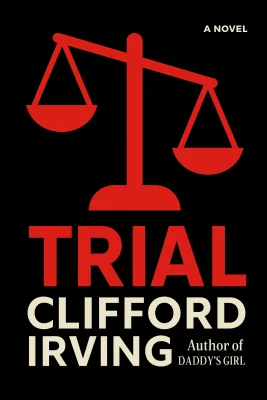
Trial
Categories
Fiction, Mystery, Thriller, Novels, Crime, Mystery Thriller, Legal Thriller
Content Type
Book
Binding
Kindle Edition
Year
2014
Publisher
Language
English
ASIN
B00J273XP6
File Download
PDF | EPUB
Trial Plot Summary
Introduction
# The Weight of Silence: A Lawyer's Moral Reckoning Warren Blackburn stares at the crime scene photographs spread across his desk like tarot cards predicting doom. Dan Ho Trunh's lifeless eyes gaze back from the driver's seat of a blood-soaked Ford station wagon, a neat bullet hole centered between his brows. The Vietnamese electrician died execution-style in a Houston parking lot, his wallet missing, his killer vanished into the night. Now Hector Quintana, a homeless Mexican immigrant, sits in county jail facing the death penalty for a murder he swears he didn't commit. Four years ago, Warren was Houston's rising legal star until the Virgil Freer case destroyed his career. He'd lied under oath to help a desperate man with a dying wife, only to watch Freer betray him on the witness stand. Now Warren survives on court-appointed cases, defending society's forgotten in windowless courtrooms where justice moves with the efficiency of molasses. But when he meets Hector in that sterile jail visiting room, something shifts in his chest—a recognition of innocence that cuts through years of cynicism like a blade. What Warren doesn't know is that two seemingly unrelated murder cases are about to collide in ways that will test every principle he holds dear about truth, justice, and the terrible price of silence.
Chapter 1: The Fallen Advocate: Warren's Disgrace and Second Chances
The Harris County Courthouse reeked of disinfectant and desperation when Warren first encountered Virgil Freer in the visiting cubicle. The small man's yellowed teeth worked nervously at his lower lip while Houston's winter sun cast harsh shadows through barred windows, illuminating claw marks prisoners had left in the yellow painted walls. Virgil had used a bootleg pricing gun to steal from department stores, buying goods at artificially low prices and returning them elsewhere for full refunds. A petty crime, really. Warren checked Freer's story about his dying wife and found it true. He visited the man's dilapidated mobile home, saw the four ragged children and the woman caring for them. Virgil wasn't evil, Warren decided. Just desperate and foolish. When the case came before Judge Louise Parker, Warren discovered that the prosecutor had buried Virgil's prior convictions from Oklahoma deep in the file. They didn't know about the drunk driving and bad check charges. Warren saw his chance to help a man who seemed to deserve it. He signed an affidavit stating that Freer had no prior convictions, knowing it was a lie, believing it was justified. Nine months later, Virgil Freer was caught attempting to hijack a truck full of television sets. He was carrying a loaded gun and exchanged shots with police before surrendering. When confronted with the perjury in his previous case, Freer's response was simple and devastating. Yeah, but my lawyer told me to. The scandal destroyed Warren's partnership, his reputation, and eventually his marriage. Now, four years later, he was back to hustling court appointments, defending the dregs of Houston's criminal underworld for modest fees. When Judge Parker's court coordinator offered him the Quintana capital murder case, he jumped at it despite knowing the source. Warren needed redemption, and Hector Quintana needed a miracle. Neither man knew how desperately they would need each other.
Chapter 2: Two Defendants, One Truth: The Innocent and The Guilty
Warren met Hector Quintana in the same sterile visiting cubicle where Virgil Freer had spun his lies. But Quintana was different—smooth-skinned and soft-spoken, with an uncomplicated face that radiated dignity despite his circumstances. He insisted he was innocent in broken English that carried the weight of absolute truth. I was borrachito, Quintana explained, describing the night in question. A little drunk. He'd found a pistol in a dumpster at the Ravendale Apartments, along with an empty bottle of Old Crow. Desperate and emboldened by alcohol, he'd decided to rob a Circle K convenience store. But the gun was empty when he used it, and police arrested him within minutes. The evidence against Quintana seemed overwhelming. Ballistics matched the murder weapon to the gun found in his possession. An eyewitness, Siva Singh, had identified him in a lineup as the man she'd seen running from the crime scene. The victim's wallet was missing, establishing the robbery motive that made it capital murder. Meanwhile, Warren's professional resurrection seemed to arrive in the form of Scoot Shepard, Houston's most legendary criminal defense attorney. Shepard needed help with a high-profile murder case and offered Warren a chance to sit second chair defending Johnnie Faye Boudreau, accused of killing her wealthy lover, Dr. Clyde Ott. Boudreau was a former beauty queen turned nightclub owner whose past was littered with suspicious deaths. She claimed she'd killed Ott in self-defense when he attacked her with a fireplace poker. When Scoot Shepard died in a car accident, Warren inherited both the case and the client. Johnnie Faye was a striking woman with mismatched eyes—one hazel, one gray-blue—and a personality that radiated dangerous charisma. The contrast couldn't have been starker. While Hector sat in a jail cell counting days until his probable execution, Johnnie Faye held court in elegant offices, her tailored suit costing more than most people's monthly salary. Warren found himself caught between two worlds, defending both the innocent and the guilty, not yet knowing which was which.
Chapter 3: Blood Evidence: When Physical Proof Reveals Hidden Connections
The revelation hit Warren like a physical blow as he stood in the parking lot outside Johnnie Faye's apartment building. There, on her cream-colored Mercedes, was a small but unmistakable mark—bright blue paint ground into the cream surface, exactly matching the damage on Dan Ho Trunh's station wagon. His wife Charm had pointed it out casually, her reporter's eye catching details others missed. The bumper's separated from the grillwork, she'd observed. And there's a small dent with blue paint. At the time, Warren had noted it as an odd coincidence. Now, with the crime scene photos fresh in his memory, the coincidence felt like a smoking gun. The pieces fell into place with sickening clarity. Johnnie Faye owned three guns, including a .32-caliber Diamondback that matched the murder weapon. She'd practiced at shooting ranges using false names. She harbored a virulent racism that made her capable of viewing Vietnamese immigrants as less than human. And she had the connections to dispose of evidence and create alibis. That night, Warren attempted to photograph the Mercedes outside Ecstasy nightclub, hoping to document the evidence. But Frank Sawyer, Johnnie Faye's muscle-bound enforcer with dragon tattoos covering his arms, caught him in the act. The beating was swift and brutal, leaving Warren with a shattered camera and a face that looked like abstract art painted in purple and green. The message was clear—some truths were too dangerous to pursue. As Warren sat in his apartment with an ice pack pressed to his swollen cheek, he realized he was trapped in an ethical maze with no clean exit. He couldn't abandon Hector, but he couldn't expose Johnnie Faye without destroying himself in the process. The next morning brought a phone call that confirmed his worst fears. Johnnie Faye's voice was honey over steel as she summoned him to her apartment. We need to talk, counselor. I think it's time we understood each other completely.
Chapter 4: Privileged Confession: Trapped by the Law's Sacred Bond
Johnnie Faye's apartment was a museum of calculated innocence—family photos covering every surface, religious artifacts strategically placed, the carefully curated image of a woman who'd overcome humble beginnings through hard work and determination. But her eyes held no warmth as she poured iced tea and settled into her chair like a spider waiting for prey to acknowledge the web. You're still my lawyer, she said, her voice carrying the certainty of someone accustomed to getting her way. And I need your advice. If I committed another crime, could they bring that up when I go to trial for what happened to Clyde? Warren's blood turned to ice water. The question was a trap, but he was legally obligated to answer honestly. He explained the rules of evidence, how prior bad acts could be used in cross-examination, how the prosecution was bound by the defendant's answer. With each word, he felt the noose tightening around his own neck. Well, I did it, Johnnie Faye said with casual brutality. In self-defense. I had to. The confession poured out like poison from a broken bottle. She'd followed Dan Ho Trunh from the dry cleaners, her rage building as she watched him—another slope taking jobs from real Americans. When he'd reached into his pocket, she'd assumed he was drawing a weapon. The .32-caliber Diamondback had barked three times before she'd even realized she was firing. Warren sat paralyzed, watching his client describe murder with the same tone she might use to discuss the weather. She'd thrown the gun in a dumpster, never imagining that a homeless Mexican would find it and seal his own fate. The irony wasn't lost on her—she actually seemed to find it amusing. You're still my lawyer, she repeated, and Warren understood the full implications. Everything she'd told him was protected by attorney-client privilege, a sacred bond that survived even the termination of their relationship. He could never testify against her, never reveal what he knew, never use her confession to save Hector Quintana. The law had become his prison. He was ethically bound to defend a woman he now knew was a cold-blooded killer, while watching an innocent man march toward execution.
Chapter 5: The Hunt for Justice: Finding Witnesses in Houston's Shadows
Warren's salvation came in the form of a man whose real name sounded like a joke. Jim Dandy—born James Thurgood Dandy—was everything the prosecution's case needed and everything Warren had been desperately seeking. He was the missing piece of a puzzle that had been driving Warren to the edge of madness. The search had consumed Warren for days. He'd haunted Houston's underbelly—missions, soup kitchens, abandoned buildings where the homeless gathered like ghosts of society's failures. His Mexican witnesses, Pedro and Armando, had provided the crucial lead. They'd seen a man at the mission wearing Dan Ho Trunh's clothes—a gray suit and green sweater picked up from the dry cleaners using the dead man's laundry ticket. Warren found Jim Dandy in Beeville, a dusty cattle town south of Houston, living with a woman whose face could stop traffic and not in a good way. Jim Dandy was exactly what central casting would order for a homeless alcoholic—weathered, unkempt, and possessed of the peculiar dignity that comes from having nothing left to lose. The story Jim Dandy told was devastating to the prosecution and salvation for Hector Quintana. He'd been drunk in the shopping center parking lot on the night of the murder, relieving himself against a wall when he heard a woman scream followed by gunshots. He'd seen a cream-colored car parked next to Trunh's station wagon, a woman with long hair and red lipstick behind the wheel, something that looked like a gun in her hand. After the woman fled, Jim Dandy had approached the station wagon and found Trunh's body. Seeing the wallet in the dead man's hand, he'd taken it—not from malice, but from the practical understanding that the dead have no use for money. Days later, he'd used the laundry ticket to collect Trunh's clothes, figuring the dead man wouldn't need them either. The beauty of Jim Dandy's testimony was its unvarnished honesty. He admitted to theft without shame, described events without embellishment, and possessed the kind of credibility that comes from having no reason to lie. Warren brought him back to Houston and installed him in his apartment, creating an unlikely household of witnesses who might save a life.
Chapter 6: Courtroom Paradox: Defending Evil While Fighting for Innocence
The courtroom became Warren's battlefield, where truth and justice waged war with evidence and procedure. Judge Lou Parker presided like a hanging judge from the Old West, her contempt for Warren barely concealed beneath judicial robes. She'd made her position clear from the beginning—plead out the Mexican and don't waste her time with a hopeless trial. But Warren had found his fighting spirit again. When Parker tried to railroad him with impossible deadlines and prejudicial rulings, he stood his ground with a fury that surprised even himself. Your honor, Warren said, his voice carrying the weight of righteous anger, this is not your courtroom. Your only function is to help the two of us present a true case to the jury. Until that jury comes in with a verdict, it's Quintana's courtroom. He faces death. The words hung in the air like a challenge to everything Parker represented. For a moment, the judge's mask slipped, revealing the petty tyrant beneath. But Warren had allies he hadn't expected. Nancy Goodpaster, the prosecutor, confirmed Parker's earlier prejudicial statements, forcing the judge to back down and grant the continuance Warren needed. Meanwhile, the Johnnie Faye Boudreau trial proceeded like a carefully choreographed dance of deception. Warren found himself in the surreal position of defending someone he knew was guilty, crafting arguments that painted her as a victim while knowing she was a predator. The irony was suffocating—he was being praised for his brilliant defense of a killer while struggling to save an innocent man. Johnnie Faye played her part perfectly, transforming from the hard-edged nightclub owner into a vulnerable woman who'd suffered years of abuse. Her testimony was a masterpiece of calculated emotion, complete with tears at precisely the right moments and righteous indignation when challenged. Warren watched the jury absorb her performance, knowing they were witnessing a master manipulator at work. As both trials moved toward their climax, Warren felt the weight of impossible choices pressing down on him like a physical force. He was succeeding too well at defending the guilty while the innocent remained in jeopardy.
Chapter 7: Moral Victory: When Truth Prevails Despite Legal Constraints
The verdicts came like thunderclaps, reshaping Warren's understanding of justice and his place in the system he'd served for so long. The Johnnie Faye Boudreau jury delivered their decision first—not guilty by reason of self-defense. Warren watched in horror as the woman he knew was a killer walked free, her triumphant smile a mockery of everything he believed about truth and justice. The media swarmed him as he left the courtroom, microphones thrust in his face like weapons. The jury has spoken, he said, his voice hollow with defeat, for better or for worse. The words would haunt him, marking him as a lawyer who'd lost faith in his own victory. But Warren's real triumph was still to come. In Judge Parker's courtroom, Jim Dandy took the witness stand and delivered testimony that demolished the prosecution's case against Hector Quintana. His description of the woman in the cream-colored car, his admission of taking the wallet, his absolute certainty that he'd never seen Hector before—each word was another nail in the coffin of a wrongful prosecution. Nancy Goodpaster, to her credit, recognized the truth when she heard it. After Jim Dandy's testimony, she approached Warren with the offer he'd been praying for—the state would drop all charges against Hector Quintana. The man who'd faced execution for a crime he didn't commit was finally free. Warren's victory was bittersweet. He'd saved an innocent life, but he'd also helped a killer escape justice. The system had worked and failed simultaneously, protecting the guilty while nearly destroying the innocent. As he watched Hector walk out of the courthouse, tears streaming down both their faces, Warren understood that justice wasn't a destination but a journey—messy, imperfect, but worth fighting for. The final twist came weeks later when Warren learned that Johnnie Faye's freedom was short-lived. Her enforcer Frank Sawyer, facing murder charges for killing a homeless man who'd worn Dan Ho Trunh's clothes, had made a deal with prosecutors. He'd implicated Johnnie Faye in multiple murders, including Trunh's death. The woman who'd manipulated the system so skillfully was finally caught in a web of her own making.
Summary
Warren Blackburn's journey through the labyrinth of law and conscience revealed the fundamental paradox of the American justice system—that the same rules designed to protect the innocent can shield the guilty, and that truth and justice don't always align in the courtroom. His defense of two clients, one innocent and one guilty, forced him to confront the ethical boundaries of his profession and the terrible price of privileged silence. The cases of Hector Quintana and Johnnie Faye Boudreau became a mirror reflecting the complexities of a system where evidence matters more than truth, where wealth can purchase better justice than poverty, and where a lawyer's duty to his client can conflict with his duty to society. Warren's ultimate triumph wasn't in winning or losing cases, but in finding a way to serve justice without betraying the principles that made justice possible. In the end, the system's imperfections became its strength—flexible enough to correct its own mistakes, resilient enough to survive the manipulations of those who would corrupt it, and human enough to recognize that sometimes the greatest victory is simply ensuring that an innocent man goes home to his family.
Best Quote
“And also don’t forget, the reason opportunity is often missed is that it usually comes disguised as hard work.” ― Clifford Irving, Trial
Review Summary
Strengths: The book is praised for its gripping legal thriller elements, spellbinding courtroom scenes, and well-developed plot. The character of Warren Blackburn is particularly compelling, with readers expressing a desire to see more of him. The narrative provides insight into the moral and legal challenges faced by trial attorneys, and the storyline is described as fast-paced with surprising twists. The author is commended for character development and creating ethical dilemmas. Weaknesses: Some reviewers noted a slow start, with the beginning taking too long to develop. There is also a mention of unusual language use, such as "Pass the witness," which might detract from the reading experience. Overall: The general sentiment is positive, with many readers finding the book captivating and recommending it to fans of legal thrillers. However, some reservations about the pacing and language choice were noted.
About Author

Clifford Irving
Irving delves into the intricate interplay between deception and authenticity in his literary works. Known for his fast-paced legal thrillers and true-crime accounts, his writing often delves into themes of fraud, identity, and the nature of truth. These themes are powerfully illustrated in "Fake: The Story of Elmyr de Hory: The Greatest Art Forger of Our Time", reflecting his deep interest in exploring how perception shapes reality. Furthermore, Irving's "The Hoax", which recounts his involvement in the infamous Howard Hughes autobiography forgery, adds a layer of personal experience to his exploration of these ideas.\n\nHis approach to writing was multifaceted; he combined investigative rigor with narrative storytelling, appealing to readers interested in the mechanics of deception and the cultural significance of authenticity. This method not only captivated audiences with thrilling plots but also invited them to question the boundaries between fact and fiction. Beyond entertainment, Irving's work impacts readers by challenging their perceptions of truth and highlighting the complexities of human behavior.\n\nAlthough he did not receive significant literary awards, Irving's contributions remain influential in the realm of literary hoaxes and the broader discussion of authorial authenticity. His book "The Valley", a mythic Western saga, and "The Battle of Jerusalem" further underscore his versatility as an author. By weaving these narratives, Irving leaves a legacy that extends beyond mere storytelling, engaging readers in a dialogue about the constructs of identity and truth in both historical and contemporary contexts.
Read moreDownload PDF & EPUB
To save this Black List summary for later, download the free PDF and EPUB. You can print it out, or read offline at your convenience.
Trial
by Clifford Irving
