Categories
Fiction, Audiobook, Mystery, Romance, Fantasy, Adult, Japan, Book Club, Magical Realism, Cozy
Content Type
Book
Binding
Hardcover
Year
2025
Publisher
Del Rey
Language
English
ASIN
0593724992
ISBN
0593724992
ISBN13
9780593724996
File Download
PDF | EPUB
Water Moon Plot Summary
Introduction
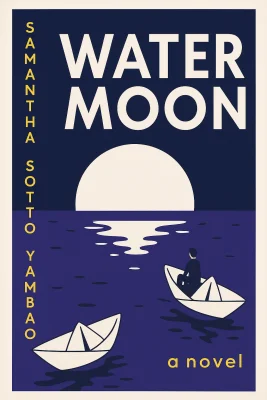
# Reflections in the Water Moon: Between Worlds of Choice and Fate The copper bell chimes as Keishin pushes through what should be a ramen shop door, but instead finds a young woman bleeding among shattered glass. Hana Ishikawa kneels in the wreckage of her family's pawnshop, dark eyes holding secrets that make his physicist's mind reel. This isn't an ordinary robbery. The shop deals in choices, not trinkets, trading regret for peace one cup of tea at a time. Someone has stolen the brightest choice ever seen, and the masked creatures called Shiikuin are coming to collect what belongs to them. What Keishin doesn't know is that he himself is that stolen choice, a fragment of someone else's abandoned decision given flesh and consciousness twenty-eight years ago. In a world where fate is tattooed onto skin in glowing blue ink and prayers whisper from temple candles, his very existence threatens the cosmic order. As Hana's father vanishes and the truth about her supposedly dead mother begins to surface, they must navigate realms where time folds like paper and love becomes the most dangerous choice of all.
Chapter 1: The Pawnshop of Stolen Souls: When Physics Meets Magic
The ransacked shop tells its story in overturned furniture and broken glass. Hana's father Toshio has vanished, leaving behind only clues, a playing card depicting the full moon and her mother's gold-rimmed glasses. Through those special lenses, Hana sees what Keishin truly is. Not a man seeking breakfast, but a choice so bright it could rewrite history itself. She explains their world's terrible truth while he bandages her wounded foot. Here, visitors from his reality come to trade their painful memories for peace. Her family transforms these regrets into caged birds that sing of roads not taken. But the Shiikuin, creatures that were once soulless children, hunt those who stray from predetermined paths with metal talons and cypress masks. Keishin's scientific mind catalogs each impossibility, yet something deeper than curiosity roots his feet in her world. He learns he was born from Takeda Izumi's moment of hesitation twenty-eight years ago, when she stood pregnant at a bus stop choosing between love and dreams. Her abandoned decision became his entire existence. The Shiikuin's shrieks echo through the night. Hana grabs his hand and dives into a courtyard puddle, using rainwater as a portal. As they fall through liquid darkness, she whispers the truth she cannot yet speak aloud. She had planned to trade him to the creatures all along. But something in his eyes is already changing her mind, pulling her toward a choice that could destroy everything she's ever known.
Chapter 2: Flight Through Paper Doors: Hunted Across Impossible Realms
They surface in the underground cathedral of Super-Kamiokande, where fifty thousand tons of purified water surround them like an artificial ocean. Golden light detectors dot the darkness like stars, and Keishin realizes his borrowed memories have created this sanctuary. Here, in this temple to invisible particles, Hana begins to understand what her family has stolen from his world. But refuge is temporary. The Shiikuin can follow any trail, their hunger for order driving them across realms. Hana leads him through a paper door, one of many hidden passages between worlds, seeking answers from Haruto, the origami master who has loved her since childhood. His name is tattooed on her skin as her destined husband, but her heart pulls toward the impossible man beside her. They travel through the Museum of Education, where paper cranes made from fragments of history fill the air like living memories. Each crane contains a moment that changed everything. Fifteen seconds when someone forgot to hand over keys. Thirteen minutes when a speech ended early. Clouds that redirected destruction from one city to another. The museum argues against freedom, cataloging chaos to justify control. At a mountain inn, the Shiikuin find them again. Hana pulls Keishin into a well that serves as another portal, diving into darkness while shrieks echo behind them. They emerge in his own memories, a convenience store where instant ramen and blue slushies become doorways to other moments. In this space between memory and reality, he begins to understand their connection. Both are prisoners, he of someone else's abandoned decision, she of fate tattooed onto skin before birth.
Chapter 3: The Origami Master's Sacrifice: Folding Time to Reveal Truth
In the Village of Stars, paper kites carrying human hopes float in the night sky like constellations. Haruto waits in his mother's house, hands wrapped in bloodied bandages, the price of loyalty written in broken bones. The Shiikuin found him, shattering his fingers one by one until he gave them a lie convincing enough to buy Hana time to escape. But Haruto had seen what forbidden magic revealed. Using stolen fragments of Shiikuin bone, he folded time itself like paper, witnessing the truth about Hana's mother twenty-one years ago. Chiyo Ishikawa had indeed stolen a choice from the vault, not for gain but in desperate longing for the child she carried. The choice she consumed belonged to another, condemning an innocent baby to be born without a soul. The Shiikuin's punishment was elegant cruelty. Instead of swift death, they sentenced Chiyo to eternal exile caring for the soulless children buried beneath a field of wildflowers. There she would spend forever tending monsters, reminded of the daughter she abandoned and could never hold again. Haruto's revelation comes at terrible cost. To heal his hands and create the paper crane army that rescued them, he made a deal at the Night Market. The price was not gold or years, but all his memories of Hana. Soon he will forget he ever loved her, forget her face, her voice, her name. It is, he says, the only way to find peace. As they prepare to seek the field where Chiyo is imprisoned, Hana realizes the cosmic irony. The choice her mother stole, the one that became Keishin, was meant for Haruto. Her mother's crime created the man she loves while dooming her destined husband to soulless existence. The weight of this knowledge threatens to crush what fragile hope they've built between stolen moments.
Chapter 4: Underground Gardens: Where Monsters Tend the Soulless
The Night Market hangs in clouds like a fever dream, suspended by massive chains. Vendors sell impossible things, bottled laughter and crystallized tears, but the porters hold the information they need. Their price is steep, a memory of perfect happiness carved from living flesh and crystallized into pearl. Keishin insists on paying, lying still as Hana uses a fishing knife to extract the glowing orb from his wrist. Inside swirls their night together at the ghost-haunted inn, where they finally admitted love. The porters accept greedily, but Keishin wins their dice game through desperation, reclaiming both memory and information. The truth is worse than imagined. The children beneath the wildflowers are not dead but something more terrible, soulless husks that grow and change but never die. Some become Shiikuin themselves, humanity stripped away until only duty remains. It is a cycle of horror perpetuated for generations, fed by the pawnshop's theft of souls. Following directions purchased with pain, they travel by rumor itself, whispering secrets into strangers' ears. The truth of Keishin's otherworldly origin spreads like wildfire, carrying them across vast distances until the rumor deposits them at their destination. The field stretches to the horizon, beautiful and terrible under autumn sun. But beneath blue petals, something stirs. Children's laughter echoes from underground, and when they begin to dig, pale hands burst from earth to drag them down into tunnels that should not exist. In the darkness below, they find a garden that mimics the surface world, artificial sunlight and sculpted trees, streams flowing in impossible directions. The children who pulled them down are indeed monsters, eyes like black voids, fingers ending in claws, playing eternal games while their caretaker watches with the devotion of a mother who has nothing left to lose.
Chapter 5: The Mother's Prison: Twenty Years of Madness and Flowers
Toshio Ishikawa emerges from shadows aged decades in months, carrying one of the soulless children, a little girl with flowers in her hair who calls Hana sister and speaks of their mother with innocent love. The reunion Hana dreamed of becomes nightmare of recognition and regret. Chiyo has survived exile, but years fractured her mind. She remembers her daughter as baby, not the grown woman standing before her. The underground pawnshop she created from memory is perfect in every detail except the most important, built from madness and longing, a shrine to life that can never be reclaimed. When Shiikuin finally track them to this hidden sanctuary, Keishin's nature can no longer be hidden. Hana carries her mother's glasses and a mirror, tools that reveal his true form as stolen choice. She planned from the beginning to trade him for her parents' safety, but love complicated everything. Now, faced with creatures that were once children like those her mother tends, she must choose between duty and desire. The choice her mother stole twenty-one years ago belonged to Takeda Izumi, seventeen and pregnant, standing at a bus stop choosing between love and independence. When Chiyo consumed that choice, she gave birth to Hana and somehow transformed the abandoned decision into the man now ready to sacrifice himself for her safety. Toshio reveals his own sacrifice, skin flayed from his back to provide soul for Haruto, the boy who should have received what Chiyo stole. Their world's cosmic balance demands payment for every theft, and Toshio paid in flesh and years. Now, as Shiikuin batter down their door, he prepares one final payment. But Hana learned something from her journey through worlds of choice and consequence. She is not bound by the map tattooed on her skin, not trapped by fate others wrote. When the moment comes to trade Keishin for family safety, she chooses instead to save the man she loves. Together they dive into rainwater as the underground pawnshop collapses, carrying her parents into whatever lies beyond duty and regret.
Chapter 6: The Final Choice: Love Against the Weight of Worlds
The Shiikuin's assault tears through the underground sanctuary like cosmic judgment. Metal talons scrape stone as masked figures pour through tunnels, their cypress faces reflecting nothing but duty. Hana stands between them and Keishin, her mother's glasses in one hand, the revealing mirror in the other. The tools that would expose his true nature as stolen choice, the payment that could buy her family's freedom. Chiyo clutches the flower-crowned child, her fractured mind unable to process the violence erupting around her makeshift pawnshop. She sees only customers who need help, lost souls seeking peace from choices that broke their lives in two. Toshio positions himself between the creatures and his wife, knowing his flayed back and sacrificed years have bought them only moments, not salvation. The lead Shiikuin extends its hand, waiting. The transaction is simple. Return the stolen choice, restore cosmic balance, accept the predetermined path tattooed in blue ink across Hana's skin. Marry Haruto, inherit the pawnshop, trade regrets for peace until her own death adds another soul to their collection. But Keishin steps forward, ready to surrender himself. He understands now what he truly is, the abandoned decision of a frightened girl transformed into flesh and consciousness. His existence disrupts their world's order, his love for Hana a deviation from paths set before either drew first breath. The logical choice is sacrifice, trading one life for many. Hana's hand trembles as she raises the mirror. In its surface, Keishin's human form wavers, revealing the brilliant choice beneath. But instead of showing it to the Shiikuin, she turns the mirror on herself. Her own reflection fractures, showing not the dutiful daughter mapped in ink, but the woman who chooses love over fate, hope over certainty. The mirror shatters against stone. Hana grabs Keishin's hand and dives toward the last puddle of rainwater as the underground world collapses around them. Behind them, Toshio's final sacrifice holds the creatures back just long enough for love to escape through liquid darkness toward whatever waits beyond the reach of predetermined destiny.
Chapter 7: Rain Returns: A Portal Home After Five Years Apart
Five years pass before Keishin sees her again. In that time, he revolutionizes physics, discovers the true nature of neutrinos, even reconciles with Takeda Izumi, the woman whose abandoned choice gave him life. But success feels hollow without the person who taught him some mysteries matter more than their solutions. He returns to the convenience store countless times, hoping to find the door back to her world. But the pawnshop is gone, torn down by Hana herself as she works to free her people from cycles of stolen souls and predetermined fates. The Shiikuin's reign has ended, the buried children freed, a new world born from ashes of the old. When Hana finally appears, stepping on his foot in the exact spot where they first met, she carries a small bottle of rainwater, the last portal between worlds. She comes not as visitor but as someone choosing to stay. The woman who spent her life collecting others' regrets has finally made a choice of her own. The rain that followed them throughout their journey was not curse but blessing, a reminder that some connections transcend boundaries between worlds. As they stand together in the downpour, Keishin realizes the weather never hated him. It was trying to bring him home. Their love story began with broken glass and ends with falling rain, but the space between contains entire universes of possibility. They learned that choices, like neutrinos, can pass through any barrier if they carry enough truth. Sometimes, if you're very lucky, the choice you make chooses you back.
Summary
In the end, the greatest discovery was not about ghost particles or stolen souls, but about the courage to write your own story in a universe determined to write it for you. Hana and Keishin had each been prisoners, she of fate, he of someone else's abandoned decision, but together they found freedom that transcended the laws of both their worlds. The rain continues to fall, connecting earth to sky, one world to another, carrying whispered promises of lovers who refused to let cosmic forces dictate the geography of their hearts. Some mysteries are not meant to be solved but lived, not captured in equations but held in the space between one heartbeat and the next, where all choices become possible and every ending is also a beginning. They stand together in the storm, two souls who learned that love itself is the brightest choice of all, worth any price, even when the cost is everything they thought they knew about the nature of destiny itself.
Best Quote
“Books do not find value when they are written. They find value when they are read. Every book here is both worthless and priceless at the same time. It depends on who you ask.” ― Samantha Sotto Yambao, Water Moon
Review Summary
Strengths: The review highlights the book's magical, creative, and dream-like adventure, comparing its storytelling style to Studio Ghibli and anime. The narrative is praised for its emotional depth, philosophical exploration of choices and regrets, and the blend of fantasy with scientific elements. The visual and emotional beauty of the story is emphasized, alongside its potential for adaptation. Weaknesses: The review notes that the story becomes somewhat confusing towards the end. Additionally, the audiobook narrator's style was not favored by the reviewer. Overall: The reviewer expresses a highly positive sentiment, recommending the book for its imaginative storytelling and rich thematic exploration, despite minor narrative confusion and audiobook narration issues.
About Author

Samantha Sotto Yambao
Sotto Yambao reflects on the intricacies of human emotion through the lens of speculative fiction, crafting narratives that blend magical realism with themes of memory and regret. Her purpose as a writer is to explore the boundaries of reality and imagination, using speculative elements like time travel and dreamlike worlds to delve into profound human experiences. In her acclaimed book "Water Moon", a physicist embarks on a magical quest involving a pawnshop that trades in regrets, reflecting her penchant for melding fantasy with emotional depth. \n\nThroughout her career, Sotto Yambao has developed a unique method of storytelling that resonates with readers who appreciate the interplay between fantasy and human emotion. By focusing on imaginative and speculative narratives, she bridges the gap between magical quests and the introspection of personal journeys. Her early book, "Before Ever After", set the stage for this approach, while subsequent works like "Love and Gravity" and "The Beginning of Always" have solidified her place in contemporary speculative fiction. Therefore, her narratives serve as a vehicle for readers to explore complex emotions in a fantastical context.\n\nHer recognition in the literary world, particularly for "Water Moon", underscores her impact within speculative fiction circles. While she has not been noted for major literary awards, the starred reviews and high praise from sources such as "Booklist" and "Library Journal" highlight her influence and the compelling nature of her work. Sotto Yambao's bio paints the picture of an author who continues to captivate audiences, inviting them to journey through worlds where imagination and emotion are intricately intertwined.
Read moreDownload PDF & EPUB
To save this Black List summary for later, download the free PDF and EPUB. You can print it out, or read offline at your convenience.

Water Moon
by Samantha Sotto Yambao
