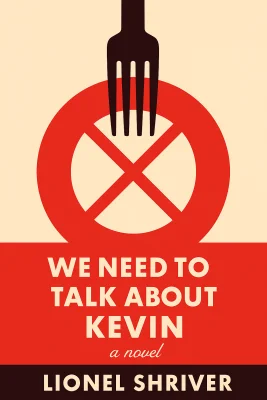
We Need to Talk About Kevin
Categories
Psychology, Fiction, Horror, Thriller, Adult, Book Club, Contemporary, Crime, Literary Fiction, Drama
Content Type
Book
Binding
Paperback
Year
2006
Publisher
Harper Perennial
Language
English
ASIN
006112429X
ISBN
006112429X
ISBN13
9780061124297
File Download
PDF | EPUB
We Need to Talk About Kevin Plot Summary
Introduction
# We Need to Talk About Kevin: A Mother's Reckoning Eva Khatchadourian sits in her cramped duplex apartment, fingers hovering over laptop keys as snow falls on a town that still whispers her name with venom. She writes letters to Franklin, her estranged husband, about their son Kevin—letters that will never be sent, letters about the Thursday that tore their world apart. Three years have passed since Kevin walked into his high school gymnasium and murdered nine people with a crossbow, yet Eva continues her ritual of correspondence, excavating the terrible arithmetic of motherhood gone wrong. These are not letters seeking forgiveness. They are archaeological digs into the soil of family destruction, unearthing the uncomfortable truth that some children arrive broken, already hungry for violence. Eva traces the fault lines that ran through their suburban existence from Kevin's first breath—his calculated cruelties, his hollow performances of normalcy, his cold intelligence that fooled everyone except the one person who mattered least to him. In the aftermath of unthinkable tragedy, when neighbors cross streets to avoid her, these letters become her only honest conversation with the life she once knew.
Chapter 1: The Reluctant Mother: Seeds of Disconnection
The decision to have Kevin came on a night when Franklin was stranded in the New Jersey pine barrens, his car broken down twelve miles from nowhere. Eva paced their Tribeca loft until midnight, terror mounting with each unanswered call. When Franklin finally reached her from a gas station payphone, relief flooded through her like revelation. That night, as he collapsed exhausted beside her, Eva made a choice that would haunt them both. She didn't insert her diaphragm. For the first time in their marriage, she gambled with fate, driven by desperate need to create something permanent from their love. At thirty-six, Eva had chased stories across continents, but even foreign countries felt familiar now. She craved transformation, a page turn that would rewrite her carefully constructed life. When the pregnancy test came back positive, Eva nearly fainted in Dr. Rhinestein's office. She had expected fireworks, some mystical maternal awakening. Instead, she found only cold recognition that she'd crossed a line with no return. That evening, toasting with cranberry juice while Franklin beamed, Eva felt the first stirrings of resentment. She was no longer Eva the adventurer. She was simply a vessel. Kevin entered the world after thirty-seven hours of labor that left Eva feeling defeated before motherhood began. When the doctor placed the damp, disgruntled infant on her chest, Eva waited for the legendary flood of maternal love. Instead, she felt absent, watching someone else's life through glass. Kevin's mouth found her nipple and turned away in what seemed like distaste. Even at birth, he was rejecting her. The screaming began once they brought Kevin home. For hours each day, he would unleash torrents of rage that seemed to have no cause and accept no comfort. Eva tried everything—feeding, changing, rocking, singing—but nothing soothed him. Worse, the moment Franklin walked through the door, Kevin would fall silent, leaving Eva feeling like a liar when she tried to explain the daily ordeal.
Chapter 2: A Child Apart: Early Signs of Darkness
By age four, Kevin had perfected the art of selective communication. He would chatter normally with Eva during the day, then fall silent the moment Franklin arrived home, creating a conspiracy that excluded his father. His vocabulary was sophisticated but specialized—he had genius for expressing what he didn't like, which was nearly everything. The squirt gun incident revealed the depth of his strategic thinking. When Eva confiscated the toy after he'd soaked their movers, Kevin waited, watched, and planned. He constructed an elaborate ladder from moving boxes to reach the kitchen cabinet where Eva had hidden his prize. When she discovered him three shelves up, his hand inches from the gun, Kevin posed like a mountaineer claiming his summit. Eva began recognizing a pattern. Kevin would push boundaries precisely to the point of consequence, then retreat with satisfied air of someone who'd learned exactly what he needed to know. When he filled his squirt gun with grape juice and stained Eva's favorite white caftan, his apology was perfectly crafted and completely hollow. He was studying them, mapping their weaknesses like a general planning campaign. The most disturbing aspect wasn't Kevin's defiance but his indifference. Traditional punishments meant nothing to a child who seemed to want nothing. Eva found herself longing for normal childhood misbehavior, the kind that stemmed from desire rather than this cold experimentation with cause and effect. At kindergarten, Miss Fabricant reported that Kevin was "somewhat undersocialized." What she meant was that Kevin spent his days sitting motionless in the classroom center, watching classmates with detached interest of an anthropologist studying primitive tribes. He found their games pointless, their enthusiasm baffling, their very existence an irritation.
Chapter 3: Family Fractures: Love, Hate, and Growing Distance
When Celia arrived, Eva felt the universe shift back into alignment. This baby nursed contentedly, slept peacefully, and gazed at the world with wonder instead of resentment. Eva finally understood what other mothers meant when they spoke of overwhelming love—the fierce protectiveness that made her want to shield this perfect creature from every harm. Kevin observed his sister's arrival with cool assessment of a general studying enemy troop movements. At seven, he had perfected his performance for Franklin, greeting each day with manufactured enthusiasm and boyish charm. His voice pitched higher than natural, his smile too wide and practiced. But Eva saw how he watched Celia during vulnerable moments—sleeping in her crib, taking tentative first steps, playing with beloved stuffed animals. His gaze held focused intensity of a predator calculating the best angle of attack. The accidents began immediately. Celia would be found tied up with her own hair ribbons, mouth taped shut, while Kevin claimed they were "playing kidnapping." Her favorite toys would break in increasingly creative ways—heads twisted off dolls, puzzle pieces fed down drains, crayons melted into colorful puddles on radiators. Each incident had Kevin's fingerprints all over it, yet he maintained innocence with skill of a seasoned politician. Franklin refused to see the pattern. His devotion to Kevin had calcified into something impermeable to evidence or reason. When Eva tried discussing her concerns, Franklin would accuse her of favoritism, of being unable to love their difficult son the way she obviously adored their easy daughter. The accusation stung because it contained enough truth to wound. The family dinner table became theater where Kevin performed his greatest role. He would ask Franklin about photography work with genuine-seeming interest, laugh at his father's jokes with perfectly timed enthusiasm, and treat Celia with protective fondness of an ideal big brother. Eva would watch this performance with growing nausea, knowing that within hours, Kevin would find some way to terrorize his sister when no witnesses were present.
Chapter 4: Escalating Shadows: Warning Signs and Willful Blindness
At fourteen, Kevin had grown into his cruelty like a snake shedding skin. His body stretched tall and lean, features sharpening into angular handsomeness that made teachers comment on what a striking young man he was becoming. But Eva saw the predator beneath the surface, coiled and patient, waiting for the perfect moment to strike. The tiny clothes became Kevin's signature—shirts that strained across his broadening chest, pants that ended at mid-calf, everything deliberately undersized to create impression of barely contained violence. He moved through the house like a panther in a cage, all fluid grace and suppressed energy, his presence making the air itself feel dangerous. School became another stage for his performances. His essays were masterpieces of calculated emptiness, technically perfect but devoid of genuine thought or feeling. Teachers praised his intelligence while privately noting something unsettling about his work, a quality they couldn't name but that left them vaguely disturbed. The incident with the overpass should have been a wake-up call. Police officers brought Kevin and his pathetic sidekick Lenny Pugh home after catching them throwing rocks at cars from a pedestrian bridge. But Kevin had already crafted his story, painting himself as reluctant accomplice to Lenny's dangerous game, the noble friend who took responsibility to protect his weaker companion. Franklin believed every word. Eva listened to Kevin's smooth lies and felt something cold settle in her stomach. This wasn't teenage rebellion or momentary lapse in judgment. This was a glimpse of something much darker, a preview of the violence that Kevin carried inside him like a loaded weapon. The archery range in their backyard became Kevin's obsession. He would spend hours practicing, his arrows finding targets with mechanical precision. Eva would watch from the kitchen window as he drew back the bowstring, his face serene with concentration, and wonder what he was really aiming at in his mind.
Chapter 5: The Calm Before: Final Preparations for Tragedy
The final months before the massacre were marked by eerie calm in the Khatchadourian household. Kevin seemed almost serene, his usual sullen antagonism replaced by something that looked like anticipation. He began wearing clothes that actually fit, abandoning his signature too-small outfits for more conventional teenage attire. Eva found this change more unsettling than his previous defiance. Franklin and Eva's marriage was disintegrating under the weight of their fundamental disagreement about Kevin's nature. They had agreed to separate after the school year ended, a decision Kevin overheard from the hallway. Rather than seeming upset by his parents' impending divorce, Kevin appeared energized, as if their mutual destruction had been his goal all along. Kevin's preparations for Thursday were methodical and patient. He ordered bicycle locks through the mail, claiming he planned to resell them at school for profit. He stockpiled arrows for his crossbow, never ordering enough at once to attract attention. He forged official school letterhead to create fake awards, luring his victims to the gymnasium with promises of recognition they desperately craved. The drama teacher incident provided Kevin with another opportunity to demonstrate his manipulative skills. Vicki Pagorski, an earnest woman who tried to connect with her students, became the target of elaborate sexual harassment accusations orchestrated by Kevin and his followers. Eva watched the school board hearing with growing horror, recognizing Kevin's performance as masterful theater designed to destroy an innocent woman's career. On the morning of April 8th, Kevin dressed carefully in flowing white shirt and black pants, telling Eva he woke up "with a sense of occasion." He packed his locks and chains into his backpack while the family ate breakfast, his movements deliberate and unhurried. When Eva kissed him goodbye, she noticed his forehead was damp and cold, but attributed it to typical teenage awkwardness. She had no idea she was witnessing final preparations for mass murder.
Chapter 6: Thursday's Reckoning: The School Massacre Unfolds
Eva was working late at her office when news broke of a shooting at Gladstone High School. Her first instinct was maternal worry for Kevin's safety, never imagining that her son could be the perpetrator. She raced to the school to find the parking lot filled with ambulances and police cars, the gymnasium cordoned off with yellow tape. The sight of Kevin being led away in handcuffs hit her like a physical blow. Through the police car window, his expression was calm, almost satisfied. He looked directly at her with clear, untroubled eyes, searching her face for something specific. When he didn't find whatever he was looking for, he seemed pleased, as if her reaction confirmed something he had suspected all along. Kevin's plan had been executed with chilling precision. Using forged letters on school stationery, he had lured nine exceptional students and their English teacher to the gymnasium for a fake awards ceremony. He chained all the exits with Kryptonite bicycle locks, trapping his victims inside while he positioned himself in an upper alcove with his crossbow and a hundred arrows. The massacre unfolded methodically. Kevin picked off his targets one by one, starting with Laura Woolford, the beautiful girl who had rejected his advances. Each victim had been chosen for a specific reason—they possessed something Kevin lacked, whether talent, popularity, or simple joy in living. He killed them not in a frenzy of rage, but with cold precision of an archer at target practice. But Kevin's most devastating performance was yet to come. While Eva was at the police station learning details of the school shooting, Kevin was staging the final act of his drama at home. Franklin and Celia had been in the backyard when Kevin arrived from school. Franklin, seeing his daughter pinned to the archery target with arrows, had rushed to help her. Kevin cut him down with multiple shafts, leaving both father and daughter to bleed out slowly while he waited for Eva to discover their bodies. Eva returned home to find floodlights illuminating a scene from hell. Celia hung against the archery target like a broken doll, held in place by five arrows. Franklin lay crumpled at the base of the hill, his body bristling with shafts, his face frozen in expression of profound disappointment. The man who had believed so deeply in the possibility of goodness had been destroyed by his own son.
Chapter 7: Living in the Aftermath: Guilt, Grief, and Understanding
Two years after Thursday, Eva lives in a cramped apartment and works at a travel agency, her former life completely dismantled. She visits Kevin every Saturday at the Claverack juvenile facility, their conversations stilted and hostile. Kevin maintains that her visits are unwelcome, but Eva suspects he would be devastated if she stopped coming. The legal proceedings had been a blur of media attention and public condemnation. Kevin was tried as an adult despite being three days shy of his sixteenth birthday, a timing Eva realized was no coincidence. He had researched the law carefully, planning his massacre to occur while he could still benefit from more lenient juvenile sentencing guidelines. Eva found herself the target of civil lawsuits brought by victims' families, accused of negligent parenting and failure to recognize warning signs. The trial became public dissection of her maternal failures, with expert witnesses testifying about her coldness toward Kevin and her preference for Celia. Eva's own testimony was clinical and unrepentant, refusing to play the role of grieving mother seeking sympathy. The anniversary of the massacre brings an unexpected breakthrough. Kevin, now facing transfer to adult prison in three days, appears genuinely frightened for the first time since Eva has known him. The swagger and condescension have fallen away, revealing something that looks almost like a lost child. When Eva asks him directly why he committed the murders, his answer surprises her: "I used to think I knew. Now I'm not so sure." Kevin presents Eva with a wooden box he has crafted in shop class, warning her not to open it. Inside, she realizes, is Celia's glass eye, which Kevin has kept as a talisman for two years. His decision to give it up represents a form of surrender, an acknowledgment that his sister deserves to rest in peace rather than serve as his trophy. For the first time, Kevin allows Eva to embrace him, clinging to her with desperate need. She thinks she hears him whisper an apology, and she responds with her own. The moment feels like a beginning rather than an ending, the first genuine connection they have ever shared.
Summary
Eva's journey through the aftermath of unthinkable tragedy reveals the complex relationship between maternal love and moral responsibility. Her unflinching examination of Kevin's development from difficult infant to mass murderer offers no easy answers or comfortable explanations. Instead, it presents the disturbing possibility that some children are born with a capacity for evil that no amount of love or intervention can prevent. The story's power lies not in its resolution but in its refusal to provide closure. Eva's final realization that she loves Kevin despite everything he has done represents not forgiveness but a kind of exhausted surrender to the mystery of human nature. In a world where parents are expected to shape their children's destinies, Eva's story suggests that some forces are beyond our control, and that the most profound act of love may be simply refusing to abandon someone who has proven themselves unworthy of it. The letters to Franklin will never be answered, but they serve their purpose—bearing witness to the unbearable complexity of loving a monster, and the terrible arithmetic of a mother's reckoning with her own creation.
Best Quote
“...You can only subject people to anguish who have a conscience. You can only punish people who have hopes to frustrate or attachments to sever; who worry what you think of them. You can really only punish people who are already a little bit good.” ― Lionel Shriver, We Need to Talk About Kevin
Review Summary
Strengths: The review highlights the novel as a significant work of literature, emphasizing its ability to provoke thought long after reading. The epistolary format and the depth of character exploration, particularly through Eva's perspective, are praised. The narrative's complexity, with its focus on the unwritten and implied elements, is noted as a hallmark of great literature. Weaknesses: The review mentions the novel's challenging nature, describing it as a slow read with a focus on unpleasant themes, which may deter some readers. Overall: The reviewer expresses a strong appreciation for the novel, recommending it for its literary depth and thought-provoking content, despite its challenging and dark subject matter.
About Author

Lionel Shriver
Shriver interrogates complex social and familial issues through incisive and often provocative narratives, engaging readers with themes of parental responsibility, societal collapse, and health care critique. Her breakthrough book, "We Need to Talk About Kevin," exemplifies her fearless exploration of controversial topics, delving into the psychological aftermath of a school massacre and the complexities of maternal guilt. Her writing challenges conventional expectations, much like her choice to adopt the name Lionel at age 15. \n\nHer novels, such as "The Mandibles: A Family, 2029–2047," employ speculative settings to examine economic and societal challenges, offering sharp social satire and psychological depth. Meanwhile, her journalistic background informs her fiction with rigor and credibility, making her a unique voice in literary circles. Readers of Shriver's works gain insights into the nuanced intersections of personal and societal issues, benefiting from her ability to highlight under-explored topics. Her diverse body of work, including award-winning titles like "We Need to Talk About Kevin," and acclaimed entries such as "So Much for That," showcases her commitment to thoughtful and daring storytelling. \n\nThroughout her career, Shriver has garnered recognition for her literary contributions, including the Orange Prize for Fiction, further establishing her as an influential author whose narratives resonate globally. Her bio reflects a life dedicated to exploring and challenging the status quo, with a keen eye for the intricacies of human behavior and societal norms.
Read moreDownload PDF & EPUB
To save this Black List summary for later, download the free PDF and EPUB. You can print it out, or read offline at your convenience.
We Need to Talk About Kevin
by Lionel Shriver
