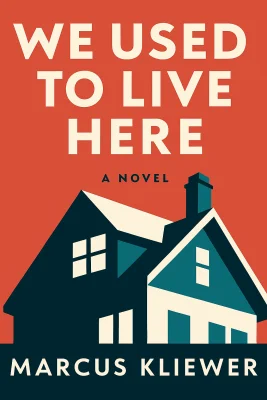
We Used to Live Here
Categories
Fiction, Audiobook, Horror, Mystery, Thriller, Adult, Book Club, LGBT, Paranormal, Mystery Thriller
Content Type
Book
Binding
Hardcover
Year
2024
Publisher
Atria/Emily Bestler Books
Language
English
ISBN13
9781982198787
File Download
PDF | EPUB
We Used to Live Here Plot Summary
Introduction
Eve Palmer's first mistake was opening the door. The family of five stood on her porch that chilly Friday night—Thomas Faust, his wife Paige, and their three children—claiming Thomas had grown up in the Victorian house Eve and her girlfriend Charlie had just bought. They seemed harmless enough: middle-class, bundled in winter coats, the kind of wholesome family that would cap Sunday service with brunch at Applebee's. Thomas just wanted to show his kids around his childhood home. Fifteen minutes, he promised. But houses have memories, and some memories refuse to stay buried. What began as an act of neighborly kindness would spiral into a nightmare that would tear reality itself apart at the seams. In the isolated mountains of Oregon, where fog clings to ancient pines and cell towers fear to tread, Eve would discover that some visitors never really leave—and some houses are hungry for more than just guests.
Chapter 1: Unwelcome Visitors: The Family's Return
The doorbell's chime echoed through 3709 Heritage Lane like a death knell. Eve Palmer peered through the blinds at the family clustered on her porch, their breath forming ghostly clouds in the mountain air. Thomas Faust looked every inch the suburban patriarch—broad shoulders, movie-star smile, that particular brand of confidence that came from never doubting your place in the world. His wife Paige clutched her silver cross necklace like armor, cold blue eyes scanning the property with barely concealed disapproval. Their children stood arranged by height: Jenny, the youngest, bounced on her toes with manic energy, clutching a bright green pen-light and Blue's Clues notebook. The middle boy, Newton, twitched nervously behind wire-rimmed glasses, looking like anxiety had been bred into his bones. Kai, the eldest, radiated that special brand of teenage disdain that could wither flowers at fifty paces. "I grew up in this house," Thomas explained, his voice carrying the warm authority of a youth pastor. "Just wanted to show the kids where their dad came from." Eve's girlfriend Charlie was late returning from town, leaving Eve alone to face the strangers. Every instinct screamed *don't let them in*, but Eve's pathological people-pleasing won out. She'd spent her life perfecting the art of never saying no, even when saying yes might cost her everything. The family filed into the foyer, their winter boots tracking snow across the hardwood. Thomas moved through the space with unsettling familiarity, sliding open the coat closet without looking. He pointed to where a deer antler chandelier once hung, describing how his father had killed every animal on it personally. Jenny scribbled notes with religious fervor while Paige examined the walls like a health inspector finding violations. When Thomas knocked out that peculiar rhythm on a support beam—*duh, duh-duh-duh, duh*—and explained it was a game he'd played with his sister, Eve felt the first cold finger of unease trace her spine. Something about the way he paused before mentioning Alison, something about the hollow echo that answered from deep within the house's bones.
Chapter 2: Shifting Walls: First Signs of Reality Breaking
The tour moved upstairs, Thomas narrating memories that felt both intimate and rehearsed. He showed them his father's study, now empty of everything save dust motes dancing in winter light. The stained glass window depicted a gnarled apple tree against the forest—beautiful and somehow predatory. But it was in the hallway that the first crack appeared in reality's facade. Thomas stopped before a section of yellow wallpaper, his fingers finding an oval bump beneath the surface. "There used to be a dumbwaiter here," he said, voice carrying a tremor of something deeper than nostalgia. "They must have covered it up." Jenny bounced beside him, peppering every statement with wide-eyed questions. When Eve mentioned that "dumb" once meant "unable to speak," the child beamed and called her Emma. A small mistake, easily corrected, but Thomas's sharp glance suggested it wasn't a mistake at all. The family's dynamic felt wrong in ways Eve couldn't articulate. Paige's barely restrained anger. Newton's haunted flinches. Kai's performative cruelty toward his younger brother. And through it all, Thomas maintained his paternal warmth while his eyes grew increasingly distant, as if watching events unfold from somewhere else entirely. When they reached the door to what Thomas called his sister's room, he froze with his hand on the knob. For a moment, his mask slipped, revealing something raw and haunted beneath. "Your aunt Alison's room," he told the children, but he couldn't bring himself to open it. Eve's dog Shylo watched the proceedings from the stairs, whining softly. Animals, Eve knew, could sense things humans missed. The way Shylo's fur stood on end whenever Thomas spoke about the past should have been warning enough.
Chapter 3: The Doppelgänger Effect: Two Charlies, One Truth
The winter storm arrived like divine intervention, trapping the family overnight. What should have been fifteen minutes stretched into an eternity of small, wrong details accumulating like snowflakes. Paige's laser-removed tattoo that matched the strange symbol carved under the banister. Newton's suggestion that they put a harness on Jenny like a dog. Kai's dead-eyed stare that belonged on something much older and crueler. But it was Thomas's midnight breakdown that shattered the thin veneer of normalcy. Eve found him kneeling in the yard, snow-covered and weeping, whispering apologies to someone who wasn't there. When she tried to help, his terror was so profound it seemed infectious, as if fear itself were a living thing that could leap from host to host. He spoke of night terrors that had plagued him as a child, of parents who blamed demonic possession rather than seeking medical help. "When I learned what actually caused my sleep disorders," he said, "it all just went away." But here, in this house, the old patterns were reasserting themselves with vengeance. The next morning brought fresh horrors. Eve woke to find the stained glass window had been replaced with plain glass—seamlessly, impossibly, as if it had always been that way. When she questioned it, Charlie confirmed seeing the original window, but her voice carried a strange detachment, like someone reciting lines they'd never learned. Standing in their bedroom, studying this woman who looked exactly like her partner of eight years, Eve felt the ground shift beneath her feet. Charlie's movements were right, her voice familiar, but something essential was missing—the unconscious intimacy of two lives intertwined. The phone call came at 3 AM, Charlie's voice crackling through static: "She isn't me. Whoever's with you, she isn't me. Shylo is—" The line went dead, but the message was clear. The woman sleeping beside her was a perfect copy, and the real Charlie was trapped somewhere in that hungry house.
Chapter 4: Descent into the Labyrinth: The House's Hidden Passages
Eve fled the motel where she'd taken refuge, racing back through the mountain storm to save Charlie and Shylo. The house loomed against the night sky like a Gothic cathedral, its windows dark and secretive. Inside, she found the dinner table set for six, place settings arranged with careful precision as if awaiting guests who might never come. The basement called to her with its promise of answers and threat of damnation. Down in the concrete maze, she discovered rooms that shouldn't exist—hospital corridors with pale green walls, chambers lined with paintings of the house in various states of decay and construction. The trail of ants led deeper, always deeper, into passages that seemed to reshape themselves between glances. In a corner, a red gas lantern hissed and flickered, illuminating boxes of photographs. The images showed Thomas's family as Eve had never seen them—relaxed, genuinely happy, with a father covered in tattoos and a mother whose pixie-cut hair framed impish green eyes. The daughter laughed with pure joy, holding up the camera for a three-person selfie. There was no trace of the severe religious zealots who'd visited upstairs. But it was the crumpled note that stopped Eve's heart: "Thomas is not your brother. He has been living here since before the house was built, before the trees were planted. Your name is not Alina. It is ALISON." The handwriting shook with desperation, the words of someone fighting to remember who they really were. The note detailed a plan of terrible necessity: make Thomas angry, make him show his true face, then strike. It ended with a chilling observation: "It's like quicksand; the more you fight the charade, the worse it gets."
Chapter 5: Violent Confrontation: Blood and Broken Identity
The confrontation came over Charlie's locket, hanging above the fireplace like a trophy. When Eve demanded answers, the family's carefully maintained facade cracked. They insisted she was Emma Faust, Thomas's sister, living with them for three years after a messy breakup with someone named Charlotte. The gaslighting was so complete, so seamless, that for moments Eve doubted her own memories. But rage burned away doubt. When Paige wore Charlie's locket and claimed she'd bought it at an antique store, something primal snapped inside Eve. The corkscrew found its way to Paige's throat with deadly precision, and suddenly the suburban kitchen became a crime scene painted in arterial red. Thomas's grief transformed him into something inhuman. His perfect teeth shattered under the hammer's claw, his matinee idol face split open like rotten fruit. But as he writhed on the floor, choking on his own blood, he whispered Eve's real name with a knowing smile that chilled her more than any scream. The arrival of the police should have brought salvation, but they saw only Emma Faust, the disturbed woman who'd brutally attacked her caring family. As they dragged her away, Eve caught a glimpse of the real Alison standing at the forest's edge—gaunt, hollow-eyed, finally free of whatever hold the house had maintained over her for decades. In the back of the police van, handcuffed and broken, Eve understood the terrible truth. She wasn't the first to be caught in this web. The house collected people like butterflies pinned to cork, perfect specimens trapped behind glass while something else wore their faces in the world above.
Chapter 6: Institutional Nightmare: Becoming Emma Faust
Greenwood Asylum squatted beside a dairy farm and Dollar General, its sky-blue walls hiding horrors that Gothic castles could never match. Eve—now legally Emma Faust according to every document that mattered—spent three years learning to play the game. She swallowed pills that dulled her edges, attended group therapy sessions where she pretended to accept the official version of events. The other inmates called her lucky. Not guilty by reason of insanity was better than a murder conviction, they said. But Eve knew the truth: this was her punishment for seeing too clearly, for refusing to accept the new reality that had been constructed around her. Dr. Karver, tall and severe as a Victorian undertaker, measured her progress in careful increments. Delusions subsiding. Acceptance of guilt increasing. Medication compliance excellent. He never asked why a woman with no history of violence had suddenly become capable of such brutality, or how someone could forget their own name so completely. The phone call to Charlotte—the thing wearing Charlie's face—confirmed the depth of the deception. This woman remembered a different relationship, a different breakup, a different life entirely. When Eve mentioned the locket, Charlotte's confusion was genuine. That piece of evidence, like everything else that might prove Eve's story, had been erased from existence. Late at night, lying on her narrow bed and watching a single ant trace meaningless patterns on the ceiling, Eve wondered if madness might be a mercy. It would be easier to surrender, to let Emma Faust subsume whatever remained of Eve Palmer. But somewhere in that house, Charlie and Shylo might still be trapped, waiting for rescue that would never come.
Chapter 7: Fragments of Evidence: Searching for Eve Palmer
The library became Eve's sanctuary, its computers offering ten minutes of daily contact with the outside world. She researched cases similar to hers, finding threads of stories that vanished as quickly as they appeared. Old House forums filled with cryptic warnings about places that remake reality to suit their hunger. Police reports describing missing persons who were never missing, who had simply been edited out of existence. The most chilling discovery was a forum post: "My partner went missing, but everyone is telling me she never existed to begin with." Someone else had experienced the same impossible loss, the same gaslighting on a cosmic scale. But when Eve tried to contact the poster, the message vanished, along with any trace it had ever existed. Thomas's visit came three years into her imprisonment. He wore his scars like medals, his rebuilt face a testament to surgical skill and inhuman resilience. The children had grown, he said. They were doing well in school. Paige was at peace—a euphemism that carried the weight of graveyards. "I forgive you," he said with infinite compassion, and Eve understood this was the final twist of the knife. He would be remembered as the saintly brother who forgave his sister's psychotic break. She would remain the monster who destroyed a loving family's peace. The envelope he left contained Charlie's locket, restored to pristine condition. Inside was the photograph Eve remembered—herself turning away from the camera, hiding her face, captured in that moment of shy refusal. The only known photo of Eve Palmer, trapped forever behind brass and glass like a pressed flower in a book of the dead.
Summary
In the end, the house had won with surgical precision. It had taken Eve Palmer and fed her piece by piece to Emma Faust, leaving behind only fragments of memory and a brass locket that no one else remembered. The family that had knocked on her door that winter night had been collectors, gatherers of lives to fuel whatever hungry intelligence dwelt in those Victorian bones. The real tragedy wasn't the violence or the imprisonment—it was the perfect erasure of a life lived. Charlie Bastion, who had loved photography and shy girlfriends, had been replaced by Charlotte, who remembered only a failed relationship with a troubled woman. Shylo, the rescue dog who trusted only two people in the world, had been replaced by a perfect replica who cowered from her former owner's touch. Even Eve's parents, who had raised and loved her for thirty-two years, now stared at her photograph with genuine confusion, insisting they had never seen her before. The house still stands on Heritage Lane, patient and eternal, waiting for the next car to round that final bend. Somewhere in its depths, the real Charlie might still be wandering hospital corridors that lead nowhere, following trails of ants through labyrinths that exist between the cracks of reality. And in a psychiatric ward three states away, Emma Faust counts days on a calendar that no longer belongs to her, the only living witness to a crime that officially never happened—the murder of Eve Palmer, who never existed at all.
Best Quote
“Even when the event was completely out of her control, even when the other party was blatantly overstepping her bounds, she always found a way to blame herself. Always felt this nagging sense of guilt for everything, as if her very existence was a violation of some stone-etched decree.” ― Marcus Kliewer, We Used to Live Here
Review Summary
Strengths: The book is described as one of the most terrifying horror stories the reviewer has encountered, effectively scaring even a seasoned horror enthusiast. The vivid portrayal of scenes, such as one in the attic, is highlighted for its lasting impact. The story's ability to blend horror with reality, incorporating phenomena like sleep paralysis and the Mandela effect, is praised for grounding the horror in believability. Weaknesses: The reviewer notes a significant number of unanswered questions, expressing a desire for a sequel to clarify these ambiguities. This lack of resolution detracts from the overall experience. Overall: The reader finds the book gripping and exceptionally scary, warranting a high rating despite unresolved plot points. The recommendation is strong for those seeking a genuine horror experience.
About Author

Marcus Kliewer
Kliewer delves into the intersection of psychological horror and suspense, revealing how trauma and identity influence the uncanny in his narratives. His storytelling seamlessly combines visual and written elements, allowing readers to experience a creeping dread that stems from both external and internal fears. This unique approach is exemplified in his debut book, "We Used to Live Here", which began as a serialized short story on Reddit’s r/Nosleep forum and won the Scariest Story of 2021 award. The narrative’s success not only caught the attention of Netflix for a film adaptation but also secured a publication deal with Simon & Schuster before it was even expanded into a full-length novel.\n\nKliewer's work engages readers who appreciate a slow build-up of tension, using techniques inspired by thriller movies and classic horror literature. His method of integrating found document subchapters adds layers of realism and depth, appealing to fans of immersive storytelling. The anticipated release of his upcoming novel, "The Caretaker", is expected to continue exploring these themes, further establishing his influence in the horror genre. The impact of Kliewer's narratives is not only recognized by audiences but also by notable authors like Freida McFadden and Alma Katsu, who have praised his ability to craft genuinely scary and inventive stories. This bio highlights how his innovative blending of formats and themes has garnered critical acclaim, making him a distinctive voice in contemporary horror literature.
Read moreDownload PDF & EPUB
To save this Black List summary for later, download the free PDF and EPUB. You can print it out, or read offline at your convenience.
We Used to Live Here
by Marcus Kliewer
