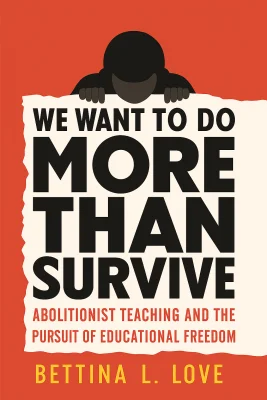
We Want to Do More Than Survive
Abolitionist Teaching and the Pursuit of Educational Freedom
Categories
Nonfiction, History, Education, Audiobook, Social Justice, School, Book Club, Race, Anti Racist, Teaching
Content Type
Book
Binding
Hardcover
Year
2019
Publisher
Beacon Press
Language
English
ASIN
0807069159
ISBN
0807069159
ISBN13
9780807069158
File Download
PDF | EPUB
We Want to Do More Than Survive Plot Summary
Introduction
In a classroom in South Florida, a young teacher watched her third-grade students struggle through another standardized test. These brilliant children, fluent in multiple languages and rich with cultural knowledge, were being labeled as failures by a system designed to measure them against impossible odds. Their teacher realized she wasn't educating these children—she was merely helping them survive an educational system that viewed their darkness, their language, their very existence as deficits to overcome rather than gifts to celebrate. This scene captures the heart of a profound crisis in American education. We live in a nation where dark children are taught to endure rather than thrive, where survival becomes the ceiling rather than the foundation for growth. But what if education could be something more transformative? What if classrooms could become spaces of liberation rather than sites of oppression? This book challenges us to move beyond the rhetoric of reform toward the radical imagination of abolition—not just tearing down harmful systems, but building new ones rooted in love, joy, and the full humanity of every child. Through powerful stories of resistance and hope, we discover how teachers, parents, and communities can create the conditions for all children to flourish.
Chapter 1: Dark Bodies: The Struggle for Identity and Recognition
The concept of intersectionality comes alive in the story of Anita Hill's 1991 testimony against Supreme Court nominee Clarence Thomas. When Hill accused Thomas of sexual harassment, she faced a unique form of dismissal that revealed how America sees Black women. Thomas's strategic invocation of "high-tech lynching" forced observers to choose between supporting a Black man against racism or believing a Black woman's experience of sexual trauma. The country's response illuminated how Black women's voices are systematically erased—they are neither fully protected by racial solidarity nor by gender-based movements. This erasure manifests daily in schools where Black girls are suspended at rates six times higher than their white peers, not because of their behavior, but because of how their very existence is perceived as threatening. A twelve-year-old named Vanessa VanDyke faced expulsion for wearing her natural hair in an afro, labeled a "distraction" by school officials who could not see the beauty in her authentic self. These stories reveal a troubling pattern: dark bodies are constantly navigating spaces where their full identity cannot exist safely. The educational system forces children to fragment themselves, hiding aspects of who they are to survive in institutions that should celebrate their wholeness. True educational freedom requires recognizing that dark children bring multiple, intersecting identities that cannot be separated or simplified. When we embrace the complexity of who our students are—their race, gender, sexuality, language, and culture—we begin to see the richness they offer rather than the problems we imagine them to be.
Chapter 2: The Educational Survival Complex: Racism and White Rage
In Homestead, Florida, a young teacher encountered the harsh reality of what she would later call the "educational survival complex." Her students, many from migrant families, were brilliant and resilient, yet they were trapped in a school labeled as "failing" by the state. These children spoke multiple languages fluently, navigated complex cultural worlds, and demonstrated remarkable adaptability. Yet because they couldn't perform well on tests administered in English, they were retained, labeled, and pushed through a system designed to sort rather than nurture. The teacher watched as her students were measured against standards that had nothing to do with their actual intelligence or potential. Children who had never missed a full year of school due to their parents' seasonal work were held accountable for gaps they had no power to control. The system wasn't failing these children by accident—it was working exactly as designed, creating a permanent underclass through the machinery of standardized testing and punitive accountability measures. This educational survival complex represents something far more sinister than mere institutional failure. It reflects a calculated system where dark children are educated just enough to function as workers but never enough to challenge the structures that oppress them. The tragedy isn't that these children can't learn—it's that we've built a system that profits from their struggle. Breaking free requires recognizing that educational reform isn't enough; we need educational abolition that tears down these harmful structures and builds something entirely new in their place.
Chapter 3: Finding Homeplace: Community Support and Mattering
Growing up in Rochester, New York, a young girl discovered what it meant to matter through the powerful influence of Mrs. Johnson, her fourth-grade teacher. Mrs. Johnson was tall, commanding, and came from New Orleans. She didn't just teach her students—she believed in them fundamentally. She understood that caring for her students meant caring for herself, that their fates were intertwined. When the girl entered Mrs. Johnson's classroom struggling and behind, she found something she had never experienced in school before: someone who saw her full humanity. Mrs. Johnson shared stories of her own childhood, called parents to discuss children as whole people rather than just students, and created a classroom culture where everyone was responsible for everyone else's success. She demanded excellence while providing the emotional support needed to achieve it. For the first time, school became more than a place to endure—it became a homeplace where the girl could find her voice and discover her power. But Mrs. Johnson couldn't do this work alone. The same girl found additional homeplace in a youth empowerment program called FIST, where she learned about Angela Davis, Malcolm X, and other freedom fighters. In this space, she discovered that being Black was beautiful, that her darkness had a history of resistance and pride. She learned to love her Blackness not in spite of the world's hatred, but because of her inherent worth. The combination of Mrs. Johnson's classroom and the FIST program created the conditions for this young girl to thrive. They showed her that mattering isn't just about individual achievement—it's about being part of a community that sees your full humanity and invests in your liberation. True educational transformation happens when we create multiple spaces where dark children can find homeplace, where they are loved for who they are and supported to become who they're meant to be.
Chapter 4: Beyond Grit: Challenging Character Education Narratives
On a February evening in 2012, seventeen-year-old Trayvon Martin demonstrated every character trait that schools claim to measure in dark children. He showed social intelligence by recognizing that George Zimmerman posed a threat. He demonstrated problem-solving skills by choosing to run when he sensed danger. He displayed grit when he fought for his life against his attacker. Yet none of these celebrated characteristics could save him from white rage, from a system that saw his very existence as threatening. The tragedy of Trayvon's death exposes the cruel irony of character education programs that focus on developing "grit" and "perseverance" in dark children without addressing the systems that make survival so difficult in the first place. Schools measure these children's character while ignoring the historical trauma embedded in their DNA, the toxic stress created by poverty and racism, and the structural barriers that no amount of individual determination can overcome. This focus on character becomes even more troubling when we understand that dark communities already possess incredible grit—four hundred years of it. The question isn't whether dark children have enough character to succeed; it's whether we have the courage to dismantle the systems that require superhuman effort just to survive. The real work lies not in measuring children's grit but in protecting their potential. Every child who thrives does so because of a community that surrounds them with love, resources, and opportunities. We need to stop asking dark children to bootstrap their way out of oppression and start building educational environments that nurture their inherent brilliance. Character education that ignores structural racism isn't education at all—it's a form of gaslighting that blames children for the failures of the system designed to contain them.
Chapter 5: Abolitionist Teaching: Freedom Dreaming and Black Joy
In the heart of Boston stands Beacon Hill, a neighborhood that once housed one of the most vibrant abolitionist communities in American history. Here, Black and white freedom fighters worked together to imagine and create a different world. The African Meeting House served as a gathering place where Frederick Douglass, William Lloyd Garrison, and Maria Stewart delivered speeches that would reshape America. The Hayden House operated as an Underground Railroad station, with Lewis Hayden keeping gunpowder by his door, declaring he would rather blow up his home than allow slave catchers to capture the freedom seekers he sheltered. These abolitionists understood something crucial: freedom isn't just the absence of oppression—it's the presence of conditions that allow people to thrive. They combined radical imagination with concrete action, theoretical understanding with grassroots organizing. They created schools, established newspapers, formed vigilance committees, and recruited soldiers. Most importantly, they never forgot that the work of liberation must be joyful, because joy is what sustains us through struggle. Modern abolitionist teaching draws from this same spirit. It means creating classrooms that function as freedom schools, where students learn not just to read and write, but to analyze their world and envision something better. It means teachers who refuse to be complicit in systems that harm children, who stand up to racist policies even when it's risky. It means curricula that celebrate the full humanity and complex history of dark people, not just their trauma but their brilliance, creativity, and resistance. Abolitionist teaching recognizes that we cannot reform our way to justice—we must imagine and build entirely new educational structures. This work requires what the ancestors called "freedom dreaming," the ability to envision radical possibilities even in the midst of oppression. When we combine this visionary thinking with concrete action and unshakeable joy, we create the conditions for true educational transformation.
Chapter 6: Theory as North Star: Moving Beyond Educational Gimmicks
A young teacher education professor noticed a disturbing pattern among her overwhelmingly white students. When asked to estimate the percentage of Black people in America, their guesses ranged from 20 to 40 percent—nearly triple the actual figure of 14 percent. Despite having minimal meaningful interactions with Black people, these future teachers held strong opinions about Black families, Black communities, and what Black children needed. Their one required diversity course had taught them about the problems in dark communities without providing any historical context or analysis of how whiteness creates and maintains those conditions. This represents what the author calls the "teacher education gap"—the systematic failure to prepare educators with the knowledge and tools they need to serve diverse student populations effectively. These teachers enter classrooms armed with good intentions but lacking the theoretical frameworks necessary to understand how systems of oppression function in schools and society. Theory becomes essential as a navigation tool—a North Star that helps educators understand not just what they're seeing, but why it exists and how it can be changed. Critical race theory explains how racism adapts and persists despite civil rights legislation. Intersectionality illuminates how multiple forms of oppression compound each other. Settler colonialism reveals how Indigenous peoples face a unique form of violence centered on land theft. Black feminism provides frameworks for understanding how dark women and girls experience multiple, intersecting forms of marginalization. Without these theoretical tools, well-meaning educators fall back on individual explanations for systemic problems. They blame students, families, and communities for outcomes created by centuries of structural violence. Theory doesn't solve problems by itself, but it provides the language and analysis necessary to fight effectively. It helps us size up our opponent—systems of injustice—and develop strategies that address root causes rather than symptoms. Most importantly, theory offers healing by helping us understand that the pain we experience isn't random or deserved—it's the predictable result of systems designed to harm us, systems that can and must be dismantled.
Chapter 7: From Survival to Wellness: The Journey to Healing
After becoming a mother to twin children, a successful professor found herself experiencing panic attacks. Despite achieving what appeared to be the American dream—a beautiful family, a thriving career, and financial stability—she couldn't shake the feeling that everything could be taken away at any moment. Her mind constantly raced with scenarios of loss and death. She had spent so many years focused on survival, on making no mistakes and controlling every variable, that she had forgotten how to simply live. In therapy, she learned that she was stuck in survival mode—a state that had served her as a child navigating poverty and racism, but now prevented her from enjoying the life she had worked so hard to build. Her therapist, a Black woman who understood the particular burdens of carrying America's racism, helped her see that she had never allowed herself to thrive, only to endure. This personal revelation connects to a broader truth about dark people in America: we are often so focused on surviving systems of oppression that we forget to live. The constant vigilance required to navigate hostile environments takes a toll on our bodies, minds, and spirits. We develop what researchers now understand as trauma responses that can be passed down through generations, embedding themselves in our very DNA. Healing becomes an essential component of liberation work. We cannot build new worlds while carrying the unprocessed trauma of the old ones. This doesn't mean ignoring injustice or becoming complacent—it means doing the inner work necessary to show up fully to the struggle for freedom. As the ancestors knew, joy is not frivolous but essential to resistance. When we heal ourselves and our communities, when we remember how to play and celebrate and dream, we become more powerful agents of change. The journey from survival to wellness is not selfish—it's revolutionary, because healed people heal people, and free people free people.
Summary
The stories woven throughout this exploration reveal a fundamental truth: education as we know it was never designed to liberate dark children, but to sort and contain them. From the young teacher in Florida watching brilliant multilingual children fail English-only tests, to Trayvon Martin whose character couldn't save him from white rage, to the professor learning to move from survival to wellness, we see how systems of oppression masquerade as systems of opportunity. Yet within each story lies seeds of possibility—Mrs. Johnson's transformative classroom, the freedom fighters of Beacon Hill, the students walking out to demand their safety, the communities creating spaces where dark children can discover their own beauty and power. The path forward requires more than reform—it demands the radical imagination to envision and build entirely new educational structures rooted in love, justice, and the full humanity of every child. This means teachers who refuse to be complicit in systems that harm students, curricula that celebrate the brilliance and resistance of dark communities, and schools that function as freedom spaces rather than sorting mechanisms. Most crucially, it requires that we heal ourselves and our communities, remembering that joy is not the opposite of justice but its necessary companion. When we combine theoretical understanding with grassroots organizing, when we pair critical analysis with visionary dreaming, when we insist on wellness alongside resistance, we create the conditions for all children not merely to survive, but to thrive in their full, magnificent humanity.
Best Quote
“Abolitionist teaching is not just about tearing down and building up but also about the joy necessary to be in solidarity with others, knowing that your struggle for freedom is constant but that there is beauty in the camaraderie of creating a just world.” ― Bettina L. Love, We Want to Do More Than Survive: Abolitionist Teaching and the Pursuit of Educational Freedom
Review Summary
Strengths: The book is praised for its powerful and thought-provoking content, encouraging slow and reflective reading. It is highlighted for its direct approach to addressing injustices faced by African Americans and its relevance to educators. The concept of being a "co-conspirator" rather than an "ally" is particularly appreciated, as is the idea of "abolitionist teaching" that challenges existing educational systems. The book is compared to influential works by bell hooks and Audre Lorde, indicating its depth and impact. Overall: The review conveys a highly positive sentiment, recommending the book as essential reading for educators. It is described as inspiring, moving, and energizing, with a strong call to action for dismantling oppressive systems in education. The book is seen as a valuable resource for ongoing reflection and community engagement.
About Author

Bettina L. Love
Love interrogates the deep-rooted systemic racism in American education, aiming to transform traditional teaching into a practice that prioritizes abolitionist methods and Black joy. Her work critiques how educational reform often fails marginalized communities, advocating instead for an educational framework that empowers these groups through civic engagement and intersectional justice. This philosophy is vividly illustrated in her influential book "We Want to Do More Than Survive: Abolitionist Teaching and the Pursuit of Educational Freedom," which remains a key text in educational settings. Her scholarship often focuses on Hip Hop education, exploring how urban youth utilize Hip Hop culture to navigate their social and political identities, thereby creating innovative ways to address and dismantle systemic barriers in education.\n\nFor readers and educators alike, Love's contributions serve as both a critique and a roadmap for enacting meaningful change within the education system. Her book "Punished for Dreaming: How School Reform Harms Black Children and How We Heal," a New York Times bestseller, delves into the historical and contemporary policies that continue to disadvantage Black children, offering pathways for healing and transformation. This narrative is not only a bio of the author's intellectual journey but also a call to action for those invested in educational equity. Her efforts have been recognized with numerous accolades, including the Stowe Prize for Literary Activism, highlighting her influence as both an author and a changemaker in the realm of educational justice.
Read moreDownload PDF & EPUB
To save this Black List summary for later, download the free PDF and EPUB. You can print it out, or read offline at your convenience.
We Want to Do More Than Survive
by Bettina L. Love
