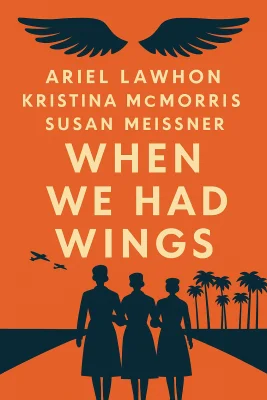
When We Had Wings
Categories
Fiction, Audiobook, Historical Fiction, Romance, Adult, Book Club, Historical, World War II, War, Womens Fiction
Content Type
Book
Binding
Hardcover
Year
2022
Publisher
Harper Muse
Language
English
ASIN
0785253343
ISBN
0785253343
ISBN13
9780785253341
File Download
PDF | EPUB
When We Had Wings Plot Summary
Introduction
# When Wings Were Bound: Three Nurses in War's Shadow Manila Bay shimmered like molten gold in the August heat of 1941, where three women raised their glasses in a toast that would bind their fates forever. Eleanor Lindstrom, fleeing heartbreak from Minnesota's dairy farms. Penny Franklin, carrying shadows from a marriage that ended in tragedy. Lita Capel, caught between two worlds as a mestiza nurse dreaming of distant shores. They christened their monthly gatherings "HAM Day" and sealed their friendship with promises to meet again, never imagining that within months their tropical paradise would become a battlefield. The Japanese attack on Pearl Harbor would transform these healers into prisoners, these nurses into survivors. Their bond, forged over daiquiris and shared stories, would be tested by starvation, brutality, and the constant shadow of death. For nearly four years, they would discover that sometimes the greatest act of resistance is simply refusing to surrender hope, even when hope seems like the cruelest joke of all.
Chapter 1: Paradise Found: Three Hearts Meet in Manila
The Army Navy Club buzzed with jazz and easy laughter that first evening in August 1941. Eleanor gripped her daiquiri, still dizzy from the ship's crossing, watching the Philippines emerge from Pacific haze like something from a fever dream. At twenty-three, she had never seen an ocean before leaving Minnesota's wheat fields and the minister who chose another woman over her broken heart. Penny Franklin slouched against the bar with practiced indifference, her Texas drawl cutting through the tropical humidity. At thirty-two, she carried herself like someone who had learned that life could shatter without warning. The death of her infant daughter and the collapse of her marriage had left her hollow, seeking distance from memories that clung like shadows. The Philippines felt like sanctuary, a place where strangers knew nothing of her losses. Lita Capel moved between the American officers and Filipino staff with the fluid grace of someone who belonged to both worlds and neither. Born on Leyte to an American missionary father and Filipino mother, she navigated colonial society's complex hierarchies while dreaming of joining her sisters in New York, away from a village that never quite felt like home. The three women might never have crossed paths if not for Helen Cassiani's birthday celebration. The veteran Army nurse had somehow procured a bottle of Johnnie Walker Red and declared her twenty-fifth worthy of proper commemoration. The party spilled from the nurses' quarters to the club, where protocol relaxed and friendships bloomed over carefully rationed whiskey. They discovered unexpected common ground despite their different wounds. Penny's dry humor balanced Eleanor's earnest optimism, while Lita's insider knowledge opened doors beyond the typical American military bubble. They explored Manila's markets together, sampled local delicacies, and spent lazy afternoons on Bataan Peninsula's beaches, where jungle met sea in tangles of green so lush it seemed painted. The work proved rewarding in ways none had anticipated. Sternberg General Hospital bustled with challenging cases but manageable rhythms. Eleanor found purpose in healing that had nothing to do with romance. Penny discovered structure that kept darker thoughts at bay. Lita built bridges between American medicine and Filipino traditions, earning respect that transcended her mixed heritage. Yet beneath surface pleasures, tensions simmered. Japanese expansion dominated headlines and mess hall conversations. Military exercises increased in frequency and intensity. Supply shipments arrived with unusual urgency, and veteran officers spoke in hushed tones about contingency plans and evacuation routes. The three nurses chose to focus on their immediate reality, patients to heal, skills to master, friendships to nurture. They had found something precious in each other and in this place suspended between worlds, where tomorrow seemed full of promise rather than threat.
Chapter 2: The Sky Falls: Pearl Harbor Shatters Peace
The radio crackled with static before the announcer's voice cut through Manila's morning calm on December 8th, 1941. Pearl Harbor had been attacked. The Pacific Fleet lay in ruins. America was at war. The words hit like physical blows, transforming their tropical paradise into the front line of a conflict none had imagined possible. Eleanor was inventorying medical supplies when the announcement came, her hands stilling on morphine vials as implications crashed over her. War meant casualties, shortages, and the kind of chaos she had hoped to leave behind in her previous life. Around her, other nurses stood frozen, their faces reflecting the same mixture of disbelief and dawning terror. Penny had been writing duty reports when the world changed, her pen hovering over half-finished sentences that now seemed to belong to another lifetime. She understood geography better than most, knew that the Philippines sat like a cork in Japan's expansion bottle. They were trapped on an island chain with nowhere to run and reinforcements an ocean away. Within hours, Japanese bombers appeared over Clark Field and Nichols Field, destroying American air power with surgical precision. The sound of explosions rolled across Manila like thunder, but this storm brought destruction instead of rain. Hospital routines shattered as the first casualties arrived, burns and shrapnel wounds and the glazed shock of men who had watched their aircraft disappear in balls of flame. The three nurses worked side by side as their peacetime training proved inadequate for war medicine's reality. They learned to triage by severity rather than comfort, to conserve supplies that might not be replaced, to offer hope when their own reserves ran dangerously low. Eleanor's gentle bedside manner hardened into efficient competence. Penny's cynicism transformed into protective determination. Lita's cultural sensitivity became tactical advantage as she translated between panicked patients and overwhelmed staff. General MacArthur's strategy became clear as Japanese forces landed on Luzon's beaches. American and Filipino defenders would retreat to Bataan Peninsula, where they could hold defensive positions while awaiting reinforcements from the United States. It was sound planning with one critical flaw, the reinforcements would never come. Manila's evacuation began with organized precision but quickly devolved into barely controlled chaos. Civilians fled south while military personnel destroyed anything that might prove useful to the enemy. The harbor filled with smoke from burning fuel depots, and streets echoed with retreating vehicles' rumble. Sternberg General Hospital became a way station for the wounded and staging area for medical personnel being reassigned to jungle field hospitals. The last night in Manila, they sat together on the hospital roof, watching fires burn across the city they had learned to love. The Army Navy Club stood dark and empty, its windows reflecting orange glow of a world ending. Tomorrow would bring new challenges, new dangers, and the test of bonds forged in peacetime but tempered now by approaching hardship. They made a pact that felt both solemn and desperate, whatever came next, they would find each other again.
Chapter 3: Scattered by Storm: Capture and Separation
The retreat to Bataan Peninsula transformed the three nurses into combat medics operating under impossible conditions. In makeshift hospitals carved from jungle clearings, they worked eighteen-hour shifts with dwindling supplies while Japanese artillery grew closer each day, tightening the noose around American and Filipino defenders who had been abandoned by their government's promises. Penny found herself performing surgery by candlelight in Hospital Number Two, using kitchen knives when scalpels ran out and boiled water when antiseptic disappeared. The constant thunder of shells mixed with screams of wounded soldiers who arrived in endless waves, their bodies shattered by modern weapons while she treated them with medieval tools. She learned to amputate limbs with carpenter's saws and cauterize wounds with heated metal, her hands steady even as her heart broke. Eleanor worked at Hospital Number One, where conditions proved marginally better but still nightmarish. Malaria struck down nurses and patients alike, adding fever dreams to the reality of endless casualties. She found unexpected comfort in Lon McGibbons, a quiet medic from Illinois who sat by bedsides through delirium, speaking of farms and futures that seemed impossibly distant in the jungle's green hell. When Bataan fell in April 1942, the net closed with bureaucratic precision. Lita watched helplessly as Japanese officers separated Filipino medical staff from their American colleagues, branding them traitors rather than prisoners of war. The distinction could mean torture or death, but she couldn't abandon the patients who depended on her skills, couldn't leave the wounded soldiers who had fought alongside her people. The final evacuation to Corregidor Island felt like descending into hell's antechamber. The fortress's Malinta Tunnel became their underground world, concrete corridors lit by flickering bulbs while Japanese shells pounded rock above their heads. In the suffocating darkness, they treated casualties in a hospital ward that reeked of gangrene and disinfectant, the air thick with dying men's moans. Penny discovered an unexpected ally in Charley Russell, the gruff quartermaster who had once made her life miserable with bureaucratic demands. Now, as their world crumbled, he revealed different depths, bringing stolen moments of conversation and eventually a kiss that tasted of desperation and hope. Before Corregidor's final surrender, he pressed his unit's battle flag into her hands, silk wrapped around promises neither could guarantee. The surrender came with Japanese efficiency that left no room for heroic gestures. American flags were lowered and replaced with white sheets while officers marched through tunnels, their boots echoing against concrete walls. They photographed the nurses among corpses outside, creating propaganda images to send to MacArthur, proof that his abandoned garrison had finally fallen. Lieutenant Akibo's attention fixed on Penny with predatory interest, his Harvard education making him more dangerous than common soldiers. He claimed her gold necklace, a gift from her father, wearing it like a trophy while promising she would soon belong to him as well. The separation at Manila harbor cut like a blade when Lita and other Filipina nurses were herded onto separate buses, their destination unknown, while American nurses were taken to Santo Tomas Internment Camp.
Chapter 4: Behind Barbed Wire: Survival in Prison Camps
Santo Tomas Internment Camp sprawled across sixty acres of former university grounds, now ringed with barbed wire and guard towers where four thousand civilian prisoners struggled to create normalcy within captivity. Eleanor found herself among businessmen, teachers, missionaries, and children, all learning that survival required more than just staying alive, it demanded preserving humanity in circumstances designed to destroy it. The internees had formed their own shadow government, complete with committees, black markets, and secret communication networks. Eleanor worked in the camp hospital, treating everything from malnutrition to tropical diseases while navigating an elaborate system of coded messages, smuggled radios, and package lines that maintained contact with the world beyond the walls. Filipino vendors brought supplies each morning, sometimes hiding messages in hollowed fruit or folded into clothing seams. Life settled into strange rhythms that felt almost normal until hunger reminded everyone of their true situation. Classes were taught in former lecture halls, gardens grew in courtyards, and a thriving black market traded everything from cigarettes to medical supplies. Eleanor learned to navigate this shadow economy, trading nursing skills for extra food while watching fellow internees grow gaunt and hollow-eyed as rations provided barely enough calories to survive. Penny's world contracted to Malinta Tunnel's confines as Corregidor endured its final siege, the underground hospital becoming a charnel house of broken bodies and desperate surgery. She worked eighteen-hour shifts in stifling heat, air thick with blood, disinfectant, and fear while power failures plunged operations into darkness, forcing surgeons to work by flashlight as shells thundered overhead. The Japanese seemed puzzled by military women, unsure whether to treat them as soldiers or curiosities. Midnight raids became routine terror as guards swept through nurses' quarters, taking whatever caught their fancy while making intentions clear through leering grins and whispered threats. They stopped short of rape but left no doubt about their power over women who had nowhere to run. Lita faced the full brutality of Japanese military justice at Bilibid Prison, where concrete cells reeked of human waste and fear while screams of tortured prisoners echoed through the night. The loyalty oath arrived like a poisoned gift, sign allegiance to Emperor Hirohito and walk free, or refuse and face execution. The paper trembled in her hands as she read words that would brand her a collaborator, knowing that some choices offered no right answers. Through bribery and desperate courage, Lon arranged a midnight meeting in a prison cell, his body grown gaunt and hollow-eyed but his love burning bright as ever. Their kiss tasted of salt tears and impossible promises, three words she couldn't speak hanging in the air between them. When guards dragged her away, Lita carried the weight of decisions that would haunt her dreams, understanding that survival sometimes required betraying everything you believed in. The systematic starvation was more than cruelty, it was a weapon designed to break prisoners' will to resist. As bodies weakened and minds clouded with hunger, the line between survival and surrender grew ever thinner, forcing choices that would echo long after the war ended.
Chapter 5: Silent Resistance: Hope in the Darkest Hours
By 1944, the camps had become laboratories of human endurance where the line between life and death narrowed to the width of a grain of rice. The Japanese, sensing their empire's approaching collapse, abandoned any pretense of humane treatment while food rations dropped to starvation levels and guards grew increasingly brutal as their own situation deteriorated. Eleanor watched fellow internees waste away with clinical detachment that masked deeper horror, bodies that had once been robust now resembling walking skeletons with eyes too large for sunken faces. She had learned to recognize approaching death's signs, the peculiar translucence of skin, the way voices grew thin and distant, the gradual withdrawal from human connection that preceded final surrender. The camp's social structure adapted to scarcity in ways that revealed both humanity's best and worst aspects. Some internees hoarded resources while others shared last crumbs with strangers, black markets flourishing in corners where guards couldn't see, trading jewelry for vegetables and family photographs for extra portions of watery soup. Eleanor found herself caring for Newt, a young war orphan whose attachment filled some emptiness left by losses she couldn't name. Penny's situation grew more desperate as Japanese control tightened around Manila, her resistance activities becoming increasingly dangerous as the Kempeitai military police increased surveillance and arrests. She continued smuggling supplies to camps while caring for orphaned children at Santa Catalina Convent, creating makeshift family from war's casualties while knowing that discovery meant torture and execution. The work required constant vigilance and split-second decisions that could mean the difference between life and death. A wrong word to the wrong person, a suspicious movement noticed by a guard, a package discovered during random search, any of these could trigger arrest and destroy not only herself but everyone connected to her activities. She learned to compartmentalize fear, to function normally while carrying secrets that felt like lead weights in her chest. Lita's freedom in Manila came with its own form of imprisonment as she navigated the complex world of collaboration and resistance. Her signed loyalty oath had bought her life but cost her sleep, haunted by faces of patients abandoned and friends who had chosen death over dishonor. She worked at Philippine General Hospital while secretly maintaining contact with underground networks, using her medical knowledge to treat wounded guerrilla fighters. The three women survived through different strategies but shared the same fundamental refusal to surrender hope. Eleanor found purpose in caring for others, particularly Newt, whose resilience reminded her that life could continue even in darkest circumstances. Penny discovered strength in her medical calling, treating patients with determination that transcended available resources. Lita channeled energy into resistance work that gave meaning to suffering and purpose to survival. They adapted to a world where normal human needs became luxuries beyond reach, learning to find sustenance in small victories, comfort in brief moments of human connection, and hope in the possibility that tomorrow might bring news of liberation or at least another day of survival. The war had reduced their existence to its most elemental components, stripping away everything except core determination to endure.
Chapter 6: Liberation's Dawn: Freedom After Four Years
The sound of American tank treads crushing through Santo Tomas gates on February 3, 1945, marked the end of one nightmare and the beginning of another kind of struggle. Liberation came not as the joyous celebration prisoners had imagined, but as a complex transition from one form of uncertainty to another, the war ending but its scars proving more permanent than anyone anticipated. Eleanor stood in the courtyard as Sherman tanks rolled past the main building, their crews emerging to cheers of skeletal internees who could barely believe their ordeal was over. The soldiers looked shocked at the condition of people they had come to rescue, walking scarecrows in tattered clothing with eyes too large for faces that had forgotten what adequate nutrition looked like. She felt disconnected from the celebration, as if watching events unfold from a great distance. Penny's liberation from Los Baños came through a daring rescue mission that saved internees from planned execution, Japanese forces having dug mass graves and prepared for final vengeance before retreating. American paratroopers and Filipino guerrillas arrived just hours before the massacre was scheduled to begin, their timing the difference between survival and becoming another war statistic buried in unmarked graves. The physical recovery proved easier than emotional adjustment as military hospitals provided adequate food, clean beds, and medical care that seemed miraculous after years of deprivation. But the nurses found themselves struggling with different imprisonment, the expectation that they should be grateful, heroic, and ready to resume normal lives as if nothing had changed, as if four years of hell could be erased by hot meals and clean sheets. Lita's experience of liberation was complicated by her decision to remain in the Philippines rather than accept offers to immigrate to the United States. The war had destroyed much of Manila and left thousands of orphaned children who needed care, her work with the resistance showing her the depth of her country's wounds and her own capacity to help heal them. She chose purpose over comfort, staying to rebuild rather than seeking easier paths elsewhere. The three friends managed brief reunions during the chaotic months following liberation, but their paths were already diverging toward different futures. Penny would return to the United States to confront family relationships damaged by her departure and to build a new life with Charley Russell, whose flag she had protected throughout imprisonment. Eleanor would go home to Minnesota and the minister who had waited, discovering that love could survive separation and grow stronger through adversity. Their final meeting in Manila before the Americans departed was both celebration and farewell, they had survived the war, kept their promise to find each other again, and proven that friendship could endure even the most extreme circumstances. But they were different people now, shaped by experiences that could never be fully shared with those who hadn't lived through them. The war had taken much from all three women, years of their lives, their health, their innocence about human capacity for both cruelty and kindness. But it had also given them something precious, the knowledge that they possessed strength they never suspected and bonds that could survive any test, learning that survival was not just about staying alive but about maintaining hope, compassion, and connection to others even when circumstances seemed designed to destroy all three.
Chapter 7: Homeward Bound: Rebuilding Shattered Lives
The journey home proved more difficult than the war itself as Penny stood on the transport ship's deck watching California coastline emerge from morning fog, feeling like a stranger returning to a country that had moved on without her. The America she remembered had been transformed by four years of war, prosperity, and change that made her own experiences feel increasingly irrelevant to a nation eager to forget darker chapters of recent history. The military's handling of returning nurses revealed the government's discomfort with their story, officials more interested in controlling the narrative than celebrating their survival and service. The women were required to sign agreements limiting what they could say about their experiences, ostensibly for national security but actually to avoid uncomfortable questions about why they had been abandoned in the Philippines while other personnel were evacuated. Eleanor found herself caught between the military's desire for heroic stories and the complex reality of what survival had actually required. The press wanted tales of noble suffering and patriotic endurance, not messy truth about starvation, disease, and moral compromises that keeping people alive sometimes demanded. She learned to give interviews that satisfied public curiosity while revealing nothing of substance about the actual experience of imprisonment. The reunion with her parents in Minnesota carried the weight of years of silence and misunderstanding, they had maintained her house and property with meticulous care but had never written letters or acknowledged her service until she returned. The gulf between them had widened during her absence, filled with unspoken resentments and fears that neither side knew how to address, rebuilding relationships requiring the same patience and determination that had sustained her through imprisonment. John Olson, the minister who had waited for her, proved more perceptive than most, recognizing that love would need to be rebuilt rather than simply resumed where it had been interrupted. Their courtship proceeded slowly, both understanding that the people they had become during war years needed time to know each other again. Eleanor discovered that her feelings had been preserved but also transformed by her experiences, particularly her relationship with David Mathis, learning that love could take different forms and that loss could deepen rather than diminish the capacity for future connection. Penny's homecoming to Houston brought different challenges but similar emotional complexity as her family welcomed her as a hero while struggling to understand the woman who had returned in place of the young nurse who had left four years earlier. The physical recovery continued long after emotional adjustment began, years of malnutrition leaving lasting effects that military doctors were only beginning to understand. Dental problems, digestive issues, and psychological symptoms that would later be recognized as post-traumatic stress disorder were dismissed as temporary adjustments that time would heal. The women learned to manage these challenges privately, adding them to the list of experiences they were expected to overcome without complaint, carrying invisible wounds that would never fully heal. The correspondence between the three friends became a lifeline connecting them across distances and different life circumstances, letters carrying news of marriages, children, career changes, and the gradual process of building new lives from the foundation of shared experience, maintaining bonds forged in wartime while adapting to peacetime realities that often felt more challenging than the clear-cut struggles of survival.
Chapter 8: Promise Fulfilled: Reunion in a New World
August 8, 1951, marked exactly ten years since three young nurses had first met at the Army Navy Club in Manila, raising glasses in a toast that had bound their fates together. The city that welcomed them back bore little resemblance to the paradise they remembered, but it was free, independent, and rebuilding itself with the same determination that had carried them through the war years. Eleanor stepped off the plane carrying her two-year-old son David, named for the Navy officer who had died trying to feed starving children at Los Baños, her husband John insisting on making the journey because he understood that some promises transcended the comfortable boundaries of ordinary life. The boy who bore a war hero's name would grow up knowing the story of courage that had inspired his parents' love and his own existence. Penny arrived with Charley Russell, whose quartermaster's flag she had protected through three years of imprisonment, walking with the limp that reminded them both that survival always carried a price. Newt, now seventeen and beautiful, had insisted on coming to see the place that had shaped the woman she considered her true mother, while Penny's parents accompanied her on this pilgrimage to understanding, having learned to bridge the silence that had separated them during war years. The reunion took place at the same café where Lita had once lived, now transformed into a celebration space filled with orchids and the aroma of Filipino delicacies that had sustained them through memories of better times. Lita had built a new life around children orphaned by war, creating family from necessity and love from shared survival, her choice to remain in the Philippines vindicated by the community she had helped rebuild and the lives she had saved. The three women who embraced in that café were different from the nurses who had made their promise ten years earlier, carrying the weight of experience that had aged them beyond their years but also given them wisdom about what truly mattered in life. The war had taken much from each of them, but it had also revealed strengths they never knew they possessed and bonds that proved stronger than time or distance. They spent hours sharing stories that could only be told to those who had lived through similar experiences, the details of daily survival, the small acts of kindness that had meant the difference between hope and despair, the friends who had not survived to see this reunion. They laughed at memories that had seemed tragic at the time and wept for losses that time had not diminished. The celebration expanded to include the families they had built and the communities they had joined, but the core remained the friendship forged in crisis and tempered by separation. They had kept their promise to find each other again, to meet in better times when the world made sense and friendship could flourish without the shadow of war hanging over every moment. As evening progressed and stories were told, they made a new promise, not to wait another ten years before gathering again, but to maintain the connection that had sustained them through the darkest period of their lives. They would write more letters, make more visits, and ensure that the bond created in wartime would continue to enrich their peacetime lives, proving that some relationships transcend even the most devastating circumstances.
Summary
The three nurses who had met as strangers in paradise and parted as sisters in war had fulfilled their promise to each other and to themselves, surviving not just the physical challenges of imprisonment and starvation, but the deeper test of maintaining their humanity in circumstances designed to destroy it. Their reunion in Manila represented more than personal triumph, it was proof that love, friendship, and hope could endure even the most extreme circumstances. Their individual paths after the war reflected different ways people process trauma and rebuild their lives. Eleanor had returned to America to heal family relationships and build new ones, finding love with a man who understood the cost of survival. Penny had discovered that interrupted love could be resumed and strengthened by shared understanding of loss and resilience. Lita had chosen to stay and rebuild, creating family from war's orphans and finding purpose in healing her homeland's wounds. The legacy of these Angels of Bataan extends beyond their individual stories to represent the countless women whose service and sacrifice were minimized or forgotten by a society uncomfortable with the complexity of their experiences. They had served with distinction, survived with dignity, and returned to build meaningful lives from the foundation of shared trauma and mutual support. Their friendship became a testament to the power of human connection to transcend even the most devastating circumstances, proving that some bonds are indeed stronger than the forces that seek to destroy them, and that sometimes the greatest victory is simply refusing to let darkness extinguish the light of hope.
Best Quote
“It had also been a wonderful life. Not a life entirely full of wonderful events. No, not by a long shot. But a wonderful life in its own way. She’d seen in this war the very worst one human could do to another. But she’d also seen the very best. Perhaps only the people who see the very worst get to see the very best.” ― Ariel Lawhon, When We Had Wings
Review Summary
Strengths: The novel provides a unique perspective on WWII by focusing on the experiences of three nurses in Manila, highlighting themes of friendship and love amidst war. It offers insight into the brutal treatment of Allied forces and civilians by Japanese soldiers, particularly emphasizing the plight of Filipina nurses. The book is based on first-hand accounts, adding authenticity to the narrative. Weaknesses: The review notes issues with the pacing of the novel, suggesting that it lacked a certain "spark" and did not maintain a dynamic flow throughout. Overall: The reviewer appreciates the novel for its educational value and unique perspective on historical events, recommending it to fans of historical fiction and those interested in strong female characters. Despite pacing concerns, the book is seen as a valuable addition to WWII literature.
About Author

Ariel Lawhon
Lawhon reinvestigates historical narratives through a unique blend of fact and fiction, focusing on overlooked perspectives and voices. Her books, such as "The Wife, the Maid, and the Mistress" and "I Was Anastasia," dive deep into the intricate lives of women who have often been sidelined in traditional histories. By intertwining meticulously researched details with vivid storytelling, she invites readers to question the boundaries of history and fiction, thereby enriching their understanding of the past.\n\nHer narrative approach emphasizes emotional depth and complexity, portraying characters whose personal journeys are set against momentous historical events. For example, in "Code Name Hélène," Lawhon explores the courageous exploits of a female spy during World War II, highlighting themes of bravery and resilience. Meanwhile, "Flight of Dreams" takes readers on a suspenseful journey aboard the Hindenburg, blending real-life events with speculative fiction. This method allows readers to engage with history on a personal level, fostering a deeper connection to the stories she tells.\n\nReaders of Lawhon's work gain a multi-dimensional view of historical events, appealing to those who enjoy rich, character-driven narratives. Her books have been selected for various reading lists, such as Library Reads and Book of the Month Club, reflecting her wide appeal. This short bio captures Lawhon's ability to captivate an audience by offering them a lens through which to view history from a fresh perspective. With her residence in the rolling hills outside Nashville, Tennessee, she finds inspiration in the everyday, balancing her life between her family and writing.
Read moreDownload PDF & EPUB
To save this Black List summary for later, download the free PDF and EPUB. You can print it out, or read offline at your convenience.
When We Had Wings
by Ariel Lawhon
