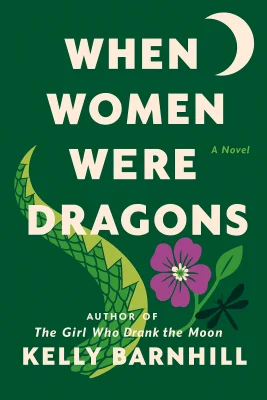
When Women Were Dragons
Categories
Fiction, Audiobook, Feminism, Historical Fiction, Fantasy, Book Club, Historical, Magical Realism, LGBT, Dragons
Content Type
Book
Binding
Hardcover
Year
2023
Publisher
Doubleday /Anchor Books Edition
Language
English
ASIN
0385548222
ISBN
0385548222
ISBN13
9780385548229
File Download
PDF | EPUB
When Women Were Dragons Plot Summary
Introduction
# When Women Take Flight: A Story of Dragons and Letting Go The dragon sat in Mrs. Kowalski's garden, staring at its clawed hands with wonder. Four-year-old Alex watched through the gate as her neighbor—the kind Polish woman who gave her cookies and fresh eggs—examined her transformed body with childlike amazement. The creature winked, pressed a scaled finger to its lips, then launched into the sky with a grunt of effort. Alex never saw the old woman again. No one spoke of her disappearance. It was 1951, and dragons were unmentionable. This moment of enforced silence would shape Alex's entire life. In a world where women's transformations into dragons were systematically erased from memory, Alex learned that some truths were too dangerous to speak. When her beloved Aunt Marla dragoned during the Mass Dragoning of 1955, abandoning her infant daughter Beatrice to take flight, the family's response was swift and absolute. Marla had never existed. Beatrice became Alex's sister overnight, and any mention of dragons became forbidden territory. Years later, as Alex struggles to raise Beatrice alone after their mother's death, she must confront the terrible choice between protecting her sister and allowing her to claim her true nature.
Chapter 1: The Weight of Silence: Growing Up in a World of Forbidden Truths
The old woman's garden had been Alex's sanctuary until the day everything changed. Mrs. Kowalski spoke with a heavy Polish accent and called Alex her little żabko—little frog—because she was always jumping about. Her yard overflowed with vegetables and herbs, tended with the fierce attention of someone who understood that growing things required both patience and protection. On that sweltering July afternoon, Alex heard the sounds first. A man's roar from the neighboring yard. A woman's scream. A panicked gasping, then a scrabble and thud. The cicadas fell silent. Even the chickens stopped their murmuring. When Alex opened the back gate, she discovered something impossible. A dragon sat among the tomatoes, its enormous form dwarfing the garden beds. Scales caught the afternoon light like scattered coins. The creature stared at its hands, then craned its neck to examine its wings, wearing an expression of pure astonishment. The dragon noticed Alex and held one clawed finger to its mouth—the same gesture Mrs. Kowalski used when she wanted quiet about extra cookies. Then it gathered its legs, unfurled wings that blocked the sun, and pushed away from earth with a force that shook the ground. Alex watched it disappear over the elm trees, carrying away the only adult who had ever given her unconditional kindness. The house was boarded up within days. Mrs. Kowalski's husband vanished too—devoured, Alex would later understand. The garden grew wild, tended only by feral cats and surviving chickens. Alex learned her first lesson in the architecture of silence: some truths were too dangerous to acknowledge, so they were simply erased from existence.
Chapter 2: Becoming the Guardian: Loss, Abandonment, and Reluctant Responsibility
Aunt Marla was everything Alex's delicate mother was not. Tall and broad-shouldered, she wore men's trousers and military boots, her short curls pinned back from a face that could launch into laughter or fury with equal intensity. She had flown planes during the war until they grounded her, then became a mechanic, her magic hands coaxing life from broken engines. She was the only person who called Alex by her chosen name instead of the formal Alexandra her parents preferred. On April 25, 1955, the world split open. Alex was eight, practicing long division when the principal arrived with his face tight and pale. They pulled the blinds and commanded the children to keep their eyes on their papers. Don't look up. Don't look at the sky. Alex heard sirens, smelled smoke, saw shadows streak across the ground outside the covered windows. When she came home, her mother waited with baby Beatrice on her hip. The infant's hair was covered in ashes, her eyes wide and solemn. Alex reached for her aunt, but her mother's face went blank as stone. "Where's Auntie Marla?" Alex asked. "I'm sure I don't know what you're talking about," her mother replied, her voice carrying the finality of a closing door. "There's no such person." From that moment forward, Beatrice was Alex's sister. She had always been Alex's sister. Photographs disappeared. Marla's name was struck from family prayers. The world rearranged itself around the absence, and everyone pretended the rearrangement was natural, inevitable, the way things had always been. Alex's mother began dying slowly after Marla's dragoning, though no one acknowledged the connection. She grew smaller each day, as if grief were eating her from inside.
Chapter 3: The Return of the Dragons: When the Past Demands Reckoning
The sirens wailed across town as Alex sat in calculus class, watching her teacher fumble through problems she could solve in her sleep. Through the window, she glimpsed something massive and gleaming arc across the sky, too large for a bird, too graceful for an aircraft. She followed her instincts and the emergency vehicles to a familiar street—her old neighborhood, the house where she'd lived before everything changed. There, sitting in the front yard like she'd never left, was a dragon. Enormous and magnificent, with scales that shifted from black to green to silver in the afternoon light. She rummaged through a purse with delicate claws, tears streaming down her elongated face. "Alex," the dragon said, and Alex's world tilted. The voice was unmistakable, even filtered through fangs and fire. Aunt Marla. The woman who had helped raise Alex until that terrible day in 1955 when she'd screamed her way out of her human skin and disappeared into the sky. "You're too late," Alex heard herself say, surprised by the venom in her own voice. "She's dead. Mom's dead." Marla collapsed into sobs that turned to steam when they hit the ground. She'd returned expecting to find her sister, to somehow repair the damage of nine years' absence. Instead, she found only Alex—angry, exhausted Alex, who had been forced to become mother and father and sister all at once. The reunion was not tender. Alex threw rocks at her aunt's impervious hide, screaming about abandonment and loneliness and the weight of raising Beatrice alone. But even as she raged, she felt something loosening in her chest. For the first time in years, she wasn't the only adult in the room. Marla had returned with companions—other dragons who had found ways to build new kinds of families, new forms of connection that transcended the boundaries between human and dragon worlds.
Chapter 4: Love and Transformation: Watching Others Claim Their True Selves
College brought unexpected gifts and devastating losses. At the University of Wisconsin, Alex threw herself into advanced mathematics and astrophysics, finally free to pursue the life of the mind she'd always craved. The dragons had created a home for their small family in an old warehouse, complete with bread ovens and workshops and rooms designed for both human and dragon occupants. But the greatest gift was Sonja. Alex's childhood friend, lost when Alex's father evicted her family years earlier, reappeared at a campus protest like a miracle. Sonja Blomgren, with her pale hair and paint-stained fingers, her grandmother's Norwegian folk songs and her artist's eye for beauty. They fell into each other's lives with the desperate intensity of first love. Alex learned to share her carefully guarded world. Sonja joined family dinners, helped with the bread-making, played games with Beatrice in her shifting forms. The warehouse filled with laughter and the smell of Sonja's oil paints. For the first time since her mother's death, Alex felt complete. But love could not hold back the tide of transformation. Sonja began drawing dragons obsessively, her eyes growing distant as she gazed at the sky. She spoke of her mother, who had dragoned when Sonja was small, disappearing into the cosmos to explore the stars. She spoke of feeling larger than her own skin, of yearning for something beyond human boundaries. On a frozen February night, as they lay stargazing on the observatory roof, Sonja finally spoke the words Alex had been dreading. The call had come to her too, late but undeniable. She wanted to shed her human form, to seek her mother among the stars. "Come with me," she whispered, her skin already beginning to shimmer with scales. But Alex could only watch as her first love stepped out of her life and into the sky, leaving behind only the memory of burned lips and the ache of a love too large for one world to contain.
Chapter 5: The Choice to Stay Human: Finding Purpose in Supporting Others' Flight
Alex never transformed. Through all the years of living among dragons, of watching friends and family shed their human skins, she remained stubbornly, completely herself. She built a career in astrophysics, mapping the movements of stars and galaxies, finding her own way to touch the infinite without leaving her human form behind. The dragons had been patient with Beatrice's transformations, but Alex's fear had made them all conspirators in containment. Every time golden scales appeared on Beatrice's arms or her eyes flashed with inner fire, the adults would coax her back to human form. "Not yet," they would say. "Wait until you're older. Think of school. Think of your future." But Dr. Gantz, the elderly researcher who had studied dragons for decades, challenged Alex's assumptions during a visit to his cramped laboratory. "What makes you think you'll lose your sister?" he asked, surrounded by dragon scales and ancient texts. "Look around you. Human and dragon families live together every day. The only thing you're accomplishing is making that child miserable." The truth hit Alex like a physical blow. Beatrice was withering under the constant suppression of her nature. At school, she trudged through her days like a prisoner. At home, she watched the sky with longing that made Alex's heart ache. The partial transformations were becoming more frequent, more exhausting. Alex married Camilla, a fierce Italian ceramic artist who loved the dragon aunties and cooked enormous meals and filled their house with beautiful, impossible sculptures. They built a life together in the shadow of transformation, proving that love could take many forms. Alex learned that family was not about shared biology or even shared species, but about the choice to care for one another across all differences.
Chapter 6: Letting Go: Learning That Love Means Freedom, Not Control
On Christmas Day, surrounded by family and friends, Beatrice finally let go. The transformation was beautiful and terrible—light pouring from her skin, her human form falling away like discarded clothes. She roared with joy that rattled the windows and shook the foundations of their warehouse home. Alex held her sister's burning hands throughout the change, her own skin blistering from the heat, whispering reassurances and love. When it was over, Beatrice was magnificent. Scales like jewels, eyes like molten gold, wings that could carry her to the edge of the atmosphere. She was still Beatrice—still curious, still mischievous, still devoted to her family. But she was also something more, something larger than the small human form could contain. Alex wept with relief and grief and overwhelming love for this sister who had finally claimed her true self. The fear that had driven her for so many years—the terror of abandonment, of being left alone—dissolved in the face of Beatrice's radiant joy. This was not loss. This was completion. The warehouse became a hub of activity as more dragons returned from their wanderings, bringing news of the wider world. Some had traveled to distant countries, others had explored the depths of oceans or the heights of mountains. They shared stories of wonder and discovery, of finding their place in a world that was slowly learning to accommodate beings of all forms. Alex found her role in this new world. She became a bridge between human and dragon communities, using her scientific training to help others understand the biological and astronomical aspects of transformation. She wrote papers on dragon physiology, consulted with governments on integration policies, and helped establish schools that could accommodate students of all species. Her work earned respect in both worlds, proving that transformation was not the only path to significance.
Chapter 7: Family Unbound: Building New Forms of Connection Across Species
Beatrice grew into her dragon nature with characteristic enthusiasm. She learned to shift between forms at will, though it became more difficult as she aged and her dragon self became dominant. She founded Guardian Dragons, an organization dedicated to protecting civilians in war zones, using her abilities to intercept bullets and defuse bombs. Her work earned international recognition and a Nobel Peace Prize, though she kept her identity secret for years to protect her family. The world changed around them. Dragons integrated into society, attending universities and taking jobs and running for office. The initial fear and rejection gave way to grudging acceptance and eventually celebration. Dragon-human families became commonplace. Schools adapted to accommodate students of all forms. The future that had once seemed impossible became simply another way of being in the world. Alex aged gracefully in her chosen form, tending her garden and feeding her chickens and watching the sky where dragons and birds shared the air in easy companionship. She never regretted her choice to remain human, just as she never regretted supporting others in their choices to transform. Her mother's obsession with knots had been prophetic—love, like rope, was strongest when it was flexible enough to bend without breaking. The warehouse remained the heart of their extended family. Dragons would arrive without warning, folding their massive forms into spaces designed for human comfort, sharing meals and stories and the deep contentment of being truly known. Alex learned that family was not a cage to be maintained through fear and control, but a knot that grew stronger when its individual threads were allowed to find their own paths. Even Sonja, lost to the cosmos, found ways to maintain connection. She would appear in the night sky above their home, a distant star that pulsed with familiar warmth, sending messages through radio telescopes that Alex monitored at the university. Love, Alex discovered, was not diminished by distance or difference in form. It simply learned new languages, new ways of expressing the unbreakable bonds between souls who had chosen to care for one another.
Summary
In the end, Alex Green's story was not about the magic she didn't possess, but about the love she chose to give freely. She learned that transformation came in many forms—not just the dramatic shedding of human skin for dragon scales, but the quieter metamorphosis of fear into acceptance, control into trust, isolation into connection. Her journey from a frightened child hiding from dragons to a woman who built bridges between worlds proved that heroism was not about power, but about the courage to love without conditions. Beatrice became exactly who she was meant to be, a bridge between worlds and a force for peace. The dragon aunties lived full lives surrounded by chosen family. Alex built a career among the stars and a home filled with art and laughter. Each of them claimed the life they needed, supported by the unbreakable bonds of love that transcended species and form. The Mass Dragoning had torn families apart, but it also taught the world a deeper truth about transformation and acceptance. Some changes could not be prevented or controlled, only embraced. And in that embrace, in the willingness to love without limitations, lay the real magic—not in the ability to grow wings and breathe fire, but in the courage to let those we love become who they truly are, even when it means watching them fly beyond our reach into skies we cannot follow.
Best Quote
“What is grief, but love that’s lost its object?” ― Kelly Barnhill, When Women Were Dragons
Review Summary
Strengths: The book is praised for its surprising and engaging narrative, with themes of self-discovery and acceptance. It is noted as a fantastic read by one reviewer who appreciated the unexpected journey it offered. Weaknesses: The book is criticized for its lack of complexity in addressing feminist issues, with an overemphasis on second-wave feminism. It is seen as ideologically driven, with characters and plot elements serving primarily to make political points. The narrative is described as redundant and lacking in diversity of perspectives, particularly regarding intersectional feminism. Overall: The general sentiment is mixed. While one reviewer found it engaging and thought-provoking, others criticized it for being overly ideological and lacking depth in its feminist discourse. The recommendation level varies, with some readers expressing disappointment and others expressing enthusiasm.
About Author

Kelly Barnhill
Barnhill reframes the world of children's and young adult literature through her masterful blend of fantasy and profound themes, intertwining magic with explorations of identity and resilience. Her imaginative storytelling is enriched by her varied life experiences, from teaching and bartending to working as a park ranger and volunteer firefighter. Such diverse roles have not only influenced her narrative style but also allowed her to build rich, fantastical worlds that resonate with both children and adults. This unique approach is evident in works like "The Girl Who Drank the Moon", which won the Newbery Medal, and "The Unlicensed Magician", recognized with the World Fantasy Award.\n\nHer books captivate readers by weaving lyrical prose with emotional depth, as seen in titles like "Iron Hearted Violet" and "When Women Were Dragons". These stories do more than entertain; they provide insights into the human condition, using elements of fairy tales to delve into complex themes. Readers are therefore offered both whimsy and wisdom, engaging their imagination while prompting reflection on personal and societal challenges.\n\nAs an accomplished author, Barnhill has received numerous accolades, underscoring her significant contributions to the genre. Beyond her award-winning books, she has made her mark as a teaching artist with COMPAS, enriching Minnesota's community arts program. Her literary bio not only highlights her storytelling prowess but also her ability to connect deeply with audiences through her thoughtful, imaginative narratives.
Read moreDownload PDF & EPUB
To save this Black List summary for later, download the free PDF and EPUB. You can print it out, or read offline at your convenience.
When Women Were Dragons
by Kelly Barnhill
