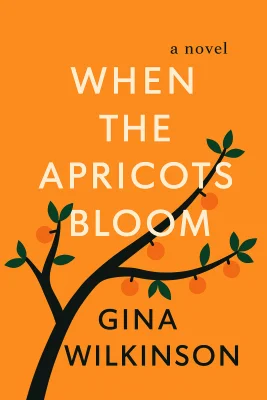
When the Apricots Bloom
Categories
Fiction, Audiobook, Historical Fiction, Adult, Book Club, Historical, Contemporary, Literary Fiction, Australia, Middle East
Content Type
Book
Binding
Paperback
Year
2021
Publisher
Kensington Publishing Corp.
Language
English
ISBN13
9781496729354
File Download
PDF | EPUB
When the Apricots Bloom Plot Summary
Introduction
# When the Apricots Bloom: Mothers and Daughters Under Baghdad's Watchful Eyes The doorbell's metallic shriek cuts through Baghdad's suffocating heat like a blade through flesh. Huda al-Basri freezes in her kitchen, watching gas flames pierce the night sky above al-Dora refinery. Two men in leather jackets stride down her driveway, bolt cutters glinting in their pockets like surgical instruments. The secret police have come calling, and in Saddam's Iraq, such visits never end well. Abu Issa fills her foyer with the casual menace of a predator, his sharp-edged ring bearing the president's eagle crest catching the light as he settles into her chair like he owns it. The larger man, silent as death, scrapes dirt from his nails with her letter opener. They want something simple yet impossible: for Huda to befriend the Australian diplomat's wife, to watch and listen, to become the regime's eyes and ears. The price of refusal hangs unspoken in the air—her thirteen-year-old son Khalid's future, perhaps his life. When the front door rattles and her boy appears clutching fragments of their destroyed padlock, confusion and terror warring in his young face, Huda understands that motherhood itself has become a weapon pointed at her heart.
Chapter 1: The Recruit: A Mother's Impossible Choice
The broken padlock lies in chunks on Huda's driveway, metal fragments catching the harsh glare of floodlights like scattered teeth. Abu Issa and his bolt-cutting partner push oxygen from her sitting room with their bulk and menace, sand crunching beneath their boots as they make themselves comfortable in her home. The desert goes where it wants, just like the officers of the mukhabarat. "Sister, my apologies for a visit at the dinner hour," Abu Issa's voice carries the false courtesy of a snake preparing to strike. His leather jacket hangs loose despite the scorching heat, and when Huda returns with trembling hands carrying the tea tray, he's already seated in her favorite chair as if he owns the house, owns her. The tea glasses rattle against their saucers like chattering teeth as Abu Issa sips delicately, his partner scraping dirt from his nails with surgical precision. They know everything already—her salary, her duties at the Australian embassy, her boss Tom Wilson and his young wife Ally. What they want is simpler and more terrible than information. "We want you to befriend the diplomat's wife," Abu Issa continues, his breath hot with the stench of authority. "If the West strikes us again, your boss will receive warning. He may let it slip to his wife. She may give us early warning, like a dog that howls before the sharqi blows in from the desert." The front door rattles. Khalid's sneakers squelch over the tiles, and Huda's heart constricts like a fist around broken glass. Her thirteen-year-old son appears in the hallway, clutching fragments of the destroyed padlock, confusion and fear warring in his young face. She steers him away with desperate urgency, her fingernails digging into his shoulders hard enough to leave marks that will fade slower than the memory of this night. When Abu Issa finally leaves, his parting words hang in the air like smoke from a funeral pyre: "Your son is your most precious possession, is he not?" The threat needs no elaboration. In Baghdad, children disappear into the regime's machinery—the Lion Cubs, the fedayeen, the unmarked graves that dot the desert like punctuation marks in a sentence written in blood.
Chapter 2: Searching for Ghosts: Ally's Dangerous Quest
Ally Wilson stares at the yellowed postcard of Mutanabbi book market, her mother's faded handwriting mocking her from across three decades of silence. "Who would have guessed that Baghdad possesses the world's biggest, bluest, most flawless sky? It's paradise!" The words taste like ash in her mouth as she surveys the city of checkpoints and surveillance that greets her arrival. The cursor blinks on her laptop screen like a metronome counting empty time. She's come to Baghdad to write her mother's story, to trace the path of a pioneering nurse who worked in the city's golden years before fleeing under mysterious circumstances. But the hospital where Bridget had served is renamed after Saddam Hussein, its records sealed behind armed guards and bureaucratic walls. The apartment building is demolished, the riverside cafe burned to ash and memory. At Miriam Pachachi's cluttered rooftop studio, destiny reveals itself in bronze and bitter truth. The old sculptor's weathered hands tremble as she unlocks a cabinet filled with photographs that should have been destroyed decades ago. Bridget Wilson stares back from the prints, young and radiant beside a dark-eyed Iraqi nurse whose smile could light up the Tigris at midnight. "Your mother moved in dangerous circles," Miriam whispers, her voice barely audible above the city's distant rumble. "Communist meetings, radical politics, the kind of idealism that gets people killed." The photographs show a generation that believed they could reshape the world with art and revolution, before the world reshaped them with bullets and betrayal. The key to it all is Yusra Hussain, the nurse with dramatic eyes and a truth-telling smile, captured in photographs that Miriam guards like state secrets. But when Ally presses for Yusra's address, the old woman's face closes like a door slamming shut. "Some things are best left in the past," she says, echoing the words Ally's father used to silence her questions for twenty years. Miriam locks away the photographs and ushers Ally out, leaving her with more questions than answers and the growing certainty that her mother's story is buried beneath layers of danger and deceit. The address written on the back of one photograph burns in her memory: "82nd Street, by the river." It becomes her holy grail, the key to understanding why her mother spent her final years in a darkened bedroom, medicating herself into oblivion rather than face whatever truth she'd left behind in Baghdad's dust.
Chapter 3: Blood Sisters and Bitter Truths: When Friendship Becomes Betrayal
The fortune teller's granddaughter and the sheikh's daughter had sworn their blood oath by the river twenty years ago, pressing their cut thumbs together while promising loyalty unto death. Now Rania Mansour and Huda al-Basri face each other across Rania's withered garden like generals before a battle, their childhood bond transformed into a weapon of mutual destruction. Rania has fallen far from her aristocratic heights. The gallery that once showcased Baghdad's finest artists now survives on the charity of foreign diplomats and the sale of her father's precious books. Her fourteen-year-old daughter Hanan is safely hidden in Basra, but for how long? The city's predators have long memories and longer reaches, and Uday Hussein's appetites are legendary. When Huda arrives at the copper gate, desperation carved into her features like scars, Rania knows their reckoning has come. The village girl who once sailed the marshes in her grandfather's mashoof now works as a secretary at the Australian embassy—and as an informant for the mukhabarat. The regime has chosen their leverage well: threaten a mother's child, and she will betray anyone, even a blood sister. "I need a passport for Khalid," Huda whispers beneath the eucalyptus trees, her words barely audible above the wind that carries the stench of burning gas from the refineries. "The mukhabarat say they'll put him in the fedayeen." The death squad's reputation precedes them—boys trained to kill without conscience, to display severed heads on family gates as warnings to others. Rania's refusal comes swift and sharp: "I can't help you." But Huda has not come to beg. She has come to collect a debt written in blood and sealed with childhood promises. "If you don't help," she says, her voice steady as stone, "I will tell my handler that you are inciting dissent. I will tell him that I heard you insult the president." The threat hangs between them like a blade suspended by spider's silk. Rania knows the mukhabarat's methods—the power tools, the branding irons, the electrical cables that turn human flesh into screaming meat. She is no martyr, no saint willing to die for principle. When the torture begins, she will break, and names will spill from her lips like water from a cracked dam. The blood oath they'd sworn as children had promised sorrow for any who broke it, sorrow for the generation that followed. Now, as they glare at each other across the ruins of their friendship, both women understand that the curse has already begun to unfold.
Chapter 4: The Informant's Burden: Truth and Lies in a Surveillance State
The Rashid Hotel's marble lobby gleams like a mausoleum, its crystal chandeliers casting fractured light across the faces of government minders and secret police. Huda's heels click-clack against the floor where George H.W. Bush's face is embedded in the tiles, trampled by every visitor who enters Saddam's palace of surveillance. Ally Wilson moves through the lobby with the brittle confidence of a diplomat's wife, her long dark hair catching the light as men whisper "Russee" and make crude gestures. She's meeting a journalist to collect books about pioneering professional women—innocent enough, yet in Baghdad, innocence is a luxury no one can afford. The mukhabarat descend on Huda like vultures on carrion, dragging her to a back office where the scarred interrogator wraps his fingers around her throat and demands answers. "Go out there and tell the foreign bitch you have completed the guest registry," he hisses, his breath hot with menace and stale cigarettes. "And put a smile on your face." At Rania's gallery that evening, the reception brings together the last remaining diplomats in Baghdad—a collection of cynics and survivors who speak in coded whispers about nerve gas and human shields. The Chinese chargé d'affaires steers conversations away from dangerous topics while the French diplomat slices his hand across his throat, recounting the fate of a British journalist who deviated from his approved itinerary. When Huda arrives with Ally, the reunion between the former blood sisters crackles with tension. They exchange ritual greetings while measuring each other for weaknesses, their shared past a minefield of buried secrets. Rania's warning comes wrapped in maternal concern: "It is quite likely that your car's numberplate has been taken down. You may be followed home and interviewed." But Huda is no longer the village girl who once sailed the marshes in her grandfather's boat. She works at the embassy now, she declares with newfound pride, fulfilling her duties. The mukhabarat might question her, but she can explain it to them. What she cannot explain is how friendship has become a performance, how every shared laugh and casual touch is now choreographed for an audience of invisible watchers. The evening ends with Ally clutching a small bronze sculpture—a mother curled protectively around her child—while Huda calculates the price of every word spoken, every gesture observed. In Saddam's Iraq, even art becomes evidence, and friendship itself is just another form of surveillance.
Chapter 5: Desperate Alliances: Planning Escape from a Tyrant's Grip
In the ancient Khan Murjan, shadows dance beneath star-shaped skylights as Huda and Rania descend into Baghdad's underground resistance. The inn has sheltered travelers for centuries, but now it harbors a different kind of journey—one that leads not to Mecca but to freedom, purchased with American dollars and sealed with blood. Kareem waits in the kerosene-lit chamber, his thick glasses magnifying eyes that have seen too much. Beside him sits a white-bearded cleric whose black turban marks him as a man of God, though his judgmental stare suggests a deity more interested in punishment than mercy. The price of salvation comes with conditions that taste like poison: seven hundred dollars for a passport, two hundred for an exit visa, and complete obedience to their commands. "You will need to keep us updated on your instructions from the mukhabarat," Kareem explains, his voice echoing off stones that have absorbed centuries of desperate whispers. "Tell them that the Australian woman you're monitoring has been behaving suspiciously. Tell them you think she's hiding something." The resistance needs double agents, and Huda's position makes her valuable—a pawn in a game where the stakes are measured in children's lives. The cleric's final words drip with contempt: "If we meet again, make sure you cover your hair like respectable women." Even in rebellion, the old hierarchies persist, men dictating terms to women who risk everything for their children's futures. Huda touches her uncovered head and says nothing, swallowing her pride like broken glass. Back at the embassy, Abu Issa materializes at the ice cream parlor like a djinn summoned by fear. His performance incentive—a wad of bills thick enough to choke on—comes with strings attached. Abdul Amir has reported Ally's visits to the UN compound, spinning innocent aerobics classes into suspicious intelligence gathering. The money feels dirty in Huda's hands, but it's clean enough to buy Dutch beer and rosewater pastries for a husband who's forgotten how to look her in the eye. At the photography studio, she commissions passport photos of Khalid—not for a locket, as she tells the curious photographer, but for a journey that might save his soul. The boy's unsmiling face stares back from the prints, serious as a mug shot, ready for whatever future his mother can buy him with her betrayal.
Chapter 6: Blood on the Shore: The Price of Freedom at Lake Habbaniyah
Lake Habbaniyah shimmers under the merciless sun, its waters deceptively peaceful as the Land Cruiser approaches the abandoned resort. What should have been a simple handoff becomes a nightmare when the Bolt Cutter's yellow Chevrolet blocks their path, the mukhabarat agent's predatory grin visible through the dusty windshield. His knuckles are scraped raw, his shirt stained with blood that isn't his own—evidence of his latest victim, a taxi driver whose only crime was befriending Ally. The Bolt Cutter has come alone, freed from Abu Issa's restraining influence, and his intentions are written in the hungry gleam of his eyes. He wants more than information now—he wants to taste the power of life and death. The confrontation moves to the beach, where cattails whisper secrets to the wind and waterbirds watch from the safety of the reeds. Huda tries to buy time with Ally's wedding ring, spinning tales about Uday's claim on Hanan, but the Bolt Cutter's patience has limits. His hands close around her throat as he drags her toward the water, promising to make her drowning last long enough for him to enjoy it. The gunshots crack across the lake like thunder, shattering the afternoon silence and sending birds exploding from their roosts in clouds of panic. Khalid emerges from the scrub with Rania's old service revolver, his young face transformed by an expression that no fifteen-year-old should ever wear. The first shot spins the Bolt Cutter around, the second drops him to his knees, and the third silences him forever. In the aftermath, as pink blood fans across the pale sand like spilled paint, Khalid stares at his trembling hands while childhood dies by the shore of Lake Habbaniyah. The boy who loved Star Wars and Harry Potter is gone, replaced by someone harder, colder, marked forever by the weight of necessary violence. Huda holds her son as he shakes, whispering that it wasn't his fault, but they both know the truth—in Saddam's Iraq, innocence is a luxury that few survive, and the price of freedom is always paid in blood. The Bolt Cutter's body sinks beneath the surface, taking with it any chance of return, any possibility of the life they once knew.
Chapter 7: Crossing Into Tomorrow: New Lives Built from Ashes
The desert highway stretches endlessly toward Jordan, the Land Cruiser's headlights carving tunnels through darkness as thick as tar. Behind them, Baghdad burns in the distance, its oil refineries painting the night sky orange with industrial fire. Ahead lies nothing but sand and stars and the faint hope of sanctuary beyond the border. They cross into Jordan as the sun rises, the transition marked not by fanfare but by the simple absence of Saddam's portraits along the roadside. At the border checkpoint, Ally's diplomatic passport opens doors that remain forever closed to others, but she uses her privilege like a key, unlocking safe passage for the women who saved her life and taught her the true meaning of friendship. In Amman's refugee camps, they join the tide of Iraqis who have traded everything for freedom—doctors driving taxis, professors selling vegetables, children learning new languages while trying to forget old nightmares. The camps smell of dust and desperation, but also of hope, that most dangerous of emotions in a world built on despair. Months pass like pages turning in a book written in a foreign script. Hanan reaches London safely, her scholarship a lifeline thrown by Rania's old connections. Rania follows when her mother finally succumbs to her stroke, the funeral providing cover for her escape through the smuggling networks that honeycomb the desert like termite tunnels. Huda finds work at the Australian embassy in Amman, her skills as a secretary translating across borders even as her heart remains anchored to the Tigris. Khalid attends school and learns to smile again, though shadows still move behind his eyes when he thinks no one is watching. The weight of what he did at Lake Habbaniyah will follow him forever, but perhaps that is the price of becoming a man in a world that devours innocence. At Amman's bus station, the three women reunite under a sky that stretches endlessly blue above the limestone city. They are different now—scarred, wiser, bound together by shared trauma and the terrible intimacy of survival. The future remains unwritten, but they face it together, three women who learned that friendship can survive even the deepest betrayals when it is forged in the crucible of a dictator's rage.
Summary
In the end, the apricot trees of Baghdad bloom without them, their fragrant blossoms falling on empty gardens where children once played. The portrait of Saddam Hussein remains unfinished in Rania's abandoned studio, the dictator's eyes forever incomplete, staring blindly at walls that no longer echo with laughter. Their friendship, tested by betrayal and tempered by blood, endures across continents and time zones like a river that finds the sea no matter how many dams are built to stop it. Years later, when the regime finally falls and the statues topple, they will watch on television screens in London and Amman and Sydney, remembering the weight of fear that once pressed down on their lives like a stone slab on a tomb. They will think of the children they saved and the prices they paid, of the blood oath sworn by two girls beside an ancient river and the way love can survive even when trust cannot. The apricots may bloom in gardens they will never see again, but their roots run deeper than borders, stronger than fear, more enduring than the tyrants who rise and fall like seasons in the desert wind.
Best Quote
“Don’t feel guilty, my dear. Living a full life, not dwelling in sorrow, that’s the best way to honor the dead.” ― Gina Wilkinson, When the Apricots Bloom
Review Summary
Strengths: The review highlights the novel's suspenseful nature and its vivid portrayal of life under Saddam Hussein's regime. The characters are described as independent and well-developed, with their secrets gradually unveiled, adding depth to the narrative. The story is praised for its realistic depiction of the time and place, inspired by the author's personal experiences in Iraq. Overall: The reviewer expresses a positive sentiment, recommending the novel as a gripping and harrowing read. The book is commended for its engaging storytelling and the author's ability to bring the historical context to life, making it a compelling debut novel.
About Author

Gina Wilkinson
Wilkinson reflects on the human condition through narratives shaped by her experiences in geopolitically tense regions. Her work as a journalist and foreign correspondent has profoundly influenced her literary focus, highlighting themes of resilience and the psychological impact of living under oppressive regimes. This background is vividly reflected in her debut novel, "When the Apricots Bloom", which delves into the intricacies of friendship and trust amidst the turmoil of Baghdad during Saddam Hussein's rule. By drawing from her firsthand experiences, Wilkinson crafts a narrative that is both authentic and emotionally resonant, offering readers a deep dive into the moral dilemmas faced by individuals in extreme circumstances.\n\nHer writing style is marked by suspense and emotional depth, with a keen attention to detail that brings settings to life. Beyond storytelling, Wilkinson’s books offer a nuanced perspective on survival and loyalty, which can engage readers interested in historical fiction and contemporary global issues. The emotional pull of her narratives extends to a wide audience, from those curious about international politics to readers who appreciate rich, character-driven stories. Through her work, Wilkinson aims to shed light on the human experiences behind news headlines, fostering a greater understanding of diverse cultures and the struggles endured by people around the world.\n\nAs an Australian author and former journalist now residing in Melbourne, Gina Wilkinson continues to balance her literary endeavors with her commitment to humanitarian causes. Her transition from reporting to writing novels exemplifies a shift in storytelling mediums while maintaining a focus on themes that resonate with her experiences. This bio highlights her journey from a foreign correspondent navigating complex geopolitical landscapes to an author whose work captivates and informs, offering a window into the resilience of the human spirit amidst adversity.
Read moreDownload PDF & EPUB
To save this Black List summary for later, download the free PDF and EPUB. You can print it out, or read offline at your convenience.
When the Apricots Bloom
by Gina Wilkinson
