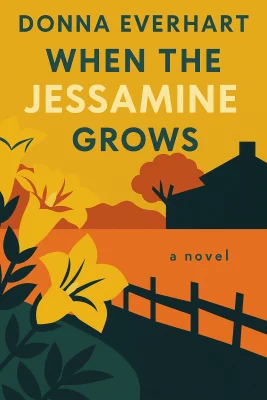
When the Jessamine Grows
Categories
Fiction, Audiobook, Historical Fiction, Family, Book Club, Historical, Adult Fiction, War, Southern, Civil War
Content Type
Book
Binding
Paperback
Year
2024
Publisher
Kensington
Language
English
ASIN
149674070X
ISBN
149674070X
ISBN13
9781496740700
File Download
PDF | EPUB
When the Jessamine Grows Plot Summary
Introduction
# When the Jessamine Grows: A Family's Survival Through Civil War The morning Henry McBride pinned a Confederate cockade to his overalls, his mother Joetta knew their world was about to shatter. It was 1861 in Nash County, North Carolina, and the sweet scent of jessamine drifted across their farm like a funeral shroud. Her fifteen-year-old son stood defiant in their kitchen, his grandfather Rudean's war stories burning bright in his eyes, while his father Ennis watched with the quiet desperation of a man watching his family tear itself apart. When Henry vanished into the pre-dawn darkness to enlist, Ennis followed to drag him home. But the war was a trap that snapped shut on both father and son, leaving Joetta alone with twelve-year-old Robert and the bitter old man whose tales of glory had poisoned everything. The McBrides had tried to stay neutral in a conflict that demanded absolute loyalty, but neutrality was a luxury their neighbors wouldn't allow. As Confederate riders trampled their crops and Union soldiers begged for water at their well, Joetta faced an impossible choice: betray her principles to save her family, or watch everything she loved burn in the fires of a war that cared nothing for conscience.
Chapter 1: Seeds of Division: A Family Torn by War
The blood oath cut deep into Robert's palm as Henry pressed their jackknives together in the barn. For days, the older boy had been stockpiling hardtack and bacon, whispering plans of Confederate glory while swearing his younger brother to secrecy. When Robert finally broke and confessed through his tears, Joetta found Henry's bed cold and empty, nothing left but a hastily scrawled note about duty and honor. Ennis stood in the doorway like carved stone, refusing to chase after their wayward son. "Let him learn what war really means," he said, but Joetta saw the fear behind his anger. For ten agonizing days she begged and pleaded until finally her husband's resolve cracked. He saddled their mare with movements sharp as broken glass, his departure cold and bitter. Old Rudean McBride limped around the farm, muttering about the boy's courage while avoiding Joetta's accusing stare. His war stories had done this. His constant complaints about their simple farming life had planted seeds of discontent that bloomed into rebellion. Now he whittled his wooden birds and pretended innocence while the family he'd helped destroy struggled to survive. Robert grew sullen and distant, blaming his mother for forcing his father away. The boy who once brought her wildflowers now barely spoke, his eyes holding the same resentment that had consumed Henry. Joetta worked the fields alone, her hands blistering as she guided the plow through rows that seemed to stretch toward an uncertain horizon. The jessamine still climbed their porch, but its sweetness had turned bitter in her mouth.
Chapter 2: The Price of Neutrality: Standing Alone
Ennis's letter arrived like a death sentence wrapped in brown paper. He'd enlisted with the 10th Regiment to gain access to information about Henry, trading three years of his life for the chance to find their son. The words on the page were clipped and formal, nothing like the tender man who'd shared her bed. Joetta read it twice before the reality sank in, both her husband and eldest son now trapped in a war they'd never wanted to fight. The community turned against them like a pack of wolves scenting weakness. At church, Preacher Rouse called out their names on a list of volunteers, forcing Joetta to stand and explain they hadn't volunteered willingly. The congregation's murmurs turned hostile, decades of friendship evaporating in the heat of wartime suspicion. When Union soldiers stopped at their farm requesting water, Joetta's Christian compassion sealed their fate. The men were North Carolinians like themselves, young and far from home, their faces gaunt with thirst. She allowed them to drink from their well while old Rudean raged and threatened from the porch. To her neighbors watching from behind curtained windows, this act of mercy marked her as a traitor to the Confederate cause. Bess Caldwell arrived the next day with a sewing circle invitation and a Confederate cockade, her smile sharp as winter wind. The other women wore their symbols of allegiance like armor, their conversations filled with talk of Southern righteousness and Northern aggression. Joetta tried to explain that the war wasn't her fight, but her words fell on deaf ears. In a world demanding absolute loyalty, neutrality was seen as betrayal.
Chapter 3: Fields of Ruin: Persecution and Loss
The riders came at dawn like the four horsemen of apocalypse, their faces masked, Confederate flags snapping in the wind. They thundered through the McBride fields with the purposeful violence of men convinced of their righteousness, their horses' hooves crushing months of backbreaking work into the mud. Joetta ran after them screaming, her apron flapping as she tried to drive them away, but Robert grabbed her arm and pulled her back. In minutes it was over. The corn lay flattened, the sorghum broken and dying. A year's worth of food and seed for the next planting destroyed because Joetta had shown mercy to thirsty soldiers. The men rode off laughing, leaving behind the sweet stench of crushed grain and the bitter taste of retribution. Old Rudean blamed her for bringing this destruction on them, his cane thumping against the porch boards like a judge's gavel. Robert stared at the ruined fields with hollow eyes, his childhood faith in his mother's wisdom cracking like drought-parched earth. All she'd had to do was declare for the Confederacy, and none of this would have happened. That night Joetta sat in her kitchen holding Henry's crumpled cockade, the one Ennis had torn from their son's chest in anger. The red and gold ribbon felt like a snake in her palm, beautiful and venomous. She pinned it to her collar with trembling fingers, the first compromise in a war that demanded her soul as payment for her family's safety. Outside, the jessamine bloomed on, indifferent to human suffering.
Chapter 4: Depths of Grief: When Hope Dies
The wagon arrived on a summer morning in 1862, carrying a pine box stamped with Ennis's name like a brand on cattle. Joetta's world collapsed as she stared at her husband's remains, his body bloated and blackened by death's cruel work. He wore a Union coat taken from some battlefield necessity, but the blue cloth couldn't disguise the man she'd loved for seventeen years. Her screams echoed across the farm as they lowered him into the ground beside their lost babies. Grief swallowed her whole. She took to her bed, lost in a fog of sorrow that lasted weeks while voices came and went like ghosts. Bess, Mary, old Rudean, all speaking words that meant nothing in the face of such loss. She sleepwalked through the house at night, searching for Ennis in empty rooms, her bare feet silent on the cold floorboards. When she finally emerged from her mourning stupor, Robert was gone. The boy had chosen to live with the Caldwells rather than face his mother's grief and the farm's haunted memories. He stood in their yard wearing a mock Confederate uniform, his eyes hard as flint when she came to bring him home. Thirteen years old and already a man by his own reckoning, he refused to return to a house where sorrow lived in every corner. Joetta and old Rudean faced each other across the kitchen table like survivors of a shipwreck, bound together by necessity and mutual resentment. The farm fell into disrepair around them. Weeds choked the garden where she'd once grown prize tomatoes. The sorghum withered in fields that had once fed the county. She'd lost her husband, her sons, and her will to fight. Only stubbornness kept her breathing, that and the old man's grudging admission that he didn't want to bury her beside Ennis.
Chapter 5: Tender Mercies: Finding Light in Darkness
The boy emerged from the springhouse like a ghost made flesh, his Union uniform hanging loose on his skeletal frame. Charlie Hastings couldn't be older than Robert, his orange hair dulled by grime and his eyes holding the hollow stare of someone who'd seen too much death. Joetta kept her musket trained on him while he stammered his story, a deserter from Sherman's army, lost and starving, hiding among her milk jugs like a wounded animal. Something in his youth, his obvious terror, touched the mother's heart that grief had tried to kill. Against all wisdom she lowered her weapon. The boy was someone's son, far from home and facing death if caught. She thought of Henry somewhere in the Confederate ranks, perhaps just as lost and frightened. Mercy had destroyed her crops and divided her family, but she couldn't abandon it entirely. She burned his uniform in the kitchen stove, watching the blue cloth curl and blacken like her hopes. Charlie worked with desperate gratitude, chopping wood and hauling water despite his illness, his presence filling the silence that had settled over the farm like dust. Old Rudean grumbled about harboring the enemy, but even he seemed to soften at the sight of the boy's hollow cheeks. Winter brought soldiers marching past in endless columns, their boots beating time on the hard-packed road. Joetta hid Charlie in the root cellar when they passed, her heart hammering as officers questioned her about deserters and spies. The war was a beast that devoured everything in its path, but somehow this one boy had escaped its jaws. In caring for him, she found a reason to keep breathing, to keep hoping that mercy might yet triumph over the madness that had consumed their world.
Chapter 6: Roots of Renewal: Journey Toward Tomorrow
The miracle came on a spring morning in 1865 when a familiar figure appeared in their yard, too thin and weathered to be real. Joetta thought she was hallucinating until he spoke her name, and she knew. Ennis had returned from the dead, or more accurately from the hell of Fort Delaware prison where he'd spent three years believing his family thought him dead. The reunion was everything she'd dreamed and nothing like she'd imagined. This wasn't the man who'd left to search for Henry, but a stranger wearing her husband's face, marked by experiences too terrible to share. The war had carved away everything soft in him, leaving only the essential core of who he was. The body in the coffin had been another man entirely, a case of mistaken identity in the chaos of war. Henry was still missing, probably dead, though they would never stop hoping. Robert returned home slowly, drawn by the miracle of his father's resurrection and the quiet presence of Charlie, who had become the brother he'd lost. The farm was ruined, the community hostile, their future uncertain. But they were together again, and that gave them strength to face whatever came next. When Ennis proposed they sell the farm and head west to Texas, Joetta felt a mixture of terror and relief. This land held too many ghosts, too much pain. The jessamine that had once climbed their porch was gone, burned away with everything else they'd loved. But perhaps in Texas they could plant new vines, build new memories, create a life free from the hatred that had consumed North Carolina. Charlie would come with them, no longer a deserter but simply their son, part of a family that had chosen love over loyalty to any cause but their own conscience.
Summary
As their wagon rolled west in the spring of 1866, Joetta McBride carried with her a small pot containing a cutting from the jessamine vine that had once adorned their home. The original plant had been destroyed along with everything else they'd built in North Carolina, but this fragment survived, ready to take root in new soil. The war had taken Henry, scattered their community, and burned their home to ashes, but it had also revealed the unshakeable strength of their convictions and the power of love to transcend the artificial divisions that set neighbor against neighbor. Charlie Hastings, the boy they had saved, had become the son who saved them in return, his presence a reminder that families are made not just by blood but by choice and commitment. The road to Texas stretched endlessly ahead, full of unknown dangers and uncertain promises, but Joetta faced it without fear. In a world determined to force them to choose sides, they had chosen something better. They had chosen each other, and in that choice lay the seeds of whatever new life awaited them in the vast territories of the American West, where the jessamine might bloom again.
Best Quote
“sorghum.” ― Donna Everhart, When the Jessamine Grows
Review Summary
Strengths: The review highlights the captivating writing style of Donna Everhart, particularly her ability to make historical Southern fiction engaging even for those not typically interested in history. The protagonist, Joetta, is portrayed as a strong and relatable character, and the book's research on the Civil War era is noted as impeccable. Weaknesses: The review criticizes the book for being slow-paced and lacking in character development. It also mentions that the writing lacks depth and is overly repetitive, which detracts from the overall experience. Overall: The reader expresses mixed feelings, appreciating the historical accuracy and character strength but feeling let down by the pacing and depth. The recommendation level appears moderate, with some reservations.
About Author

Donna Everhart
Everhart delves into the intricate tapestry of Southern life, capturing the emotional depth and cultural nuances that define the region. Her novels, such as "The Education of Dixie Dupree" and "The Forgiving Kind," explore the struggles and resilience inherent in Southern heritage. Everhart's work is grounded in the complexities of human emotion and societal expectations, offering readers an authentic glimpse into the American South. Her storytelling method often combines rich character development with immersive settings, creating narratives that resonate deeply with those interested in personal and cultural transformation.\n\nThrough her writing, Everhart provides readers with a means to understand and empathize with the challenges faced by her characters. Her books have been recognized with accolades like the SIBA Okra Pick and an Indie Next Pick, reflecting their impact on audiences and critics alike. Moreover, Everhart's connection to her roots in Raleigh, North Carolina, informs her narratives, grounding them in genuine experiences. Readers who engage with her work benefit from a profound exploration of identity and place, gaining insight into the diverse and often tumultuous landscape of Southern life.\n\nAs a USA Today bestselling author, Everhart continues to enrich the literary world with her evocative prose. Her novel "The Moonshiner’s Daughter" stands as a testament to her ability to intertwine personal conflict with broader cultural themes. This short bio encapsulates the essence of an author who not only writes compelling stories but also contributes meaningfully to the understanding of the South’s complex legacy. Her books serve as a valuable resource for those seeking to explore themes of heritage, belonging, and the enduring power of human connection.
Read moreDownload PDF & EPUB
To save this Black List summary for later, download the free PDF and EPUB. You can print it out, or read offline at your convenience.
When the Jessamine Grows
by Donna Everhart
