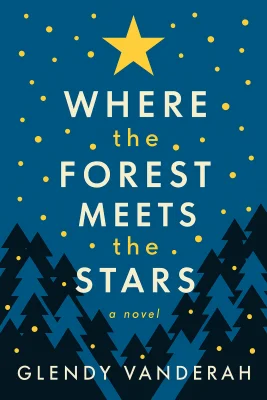
Where the Forest Meets the Stars
Categories
Fiction, Audiobook, Mystery, Romance, Fantasy, Adult, Book Club, Contemporary, Magical Realism, Adult Fiction
Content Type
Book
Binding
Hardcover
Year
2019
Publisher
Lake Union Publishing
Language
English
ASIN
154204006X
ISBN
154204006X
ISBN13
9781542040068
File Download
PDF | EPUB
Where the Forest Meets the Stars Plot Summary
Introduction
# The Infinite Nest: Finding Home Among the Stars The girl emerged from the Illinois woods like something conjured from starlight and shadow. Barefoot, wearing pajamas covered in moons and stars, she appeared at Jo Teale's isolated cottage claiming to be an alien visitor from the constellation Ursa Major. Her story was impossible—a graduate student from another galaxy, sent to Earth to witness five miracles before returning home. But the bruises on her throat told a different truth, one that Jo recognized from her own battles with pain and survival. What began as a chance encounter between a bird researcher and a strange child spiraled into something far more dangerous when Gabriel Nash, the enigmatic neighbor who sold eggs by the roadside, joined their unlikely constellation. Together, they formed a fragile family bound not by blood but by their shared need for healing. Yet as summer deepened and the child's past threatened to surface, they faced the question that haunted them all: how do you protect someone who refuses to be saved, and what price are you willing to pay for love that was never meant to last?
Chapter 1: The Alien Child in the Woods
The child stood motionless by the walnut tree, watching Jo's car with eyes too large and knowing for her pale face. Jo had just returned from tracking indigo bunting nests when she spotted the figure blending into the forest shadows—a girl of perhaps nine, her dark clothing making her nearly invisible against the gathering dusk. "I can see you," Jo called out, gathering her research equipment. The girl didn't move, didn't speak, just observed with that unnatural stillness of something wild and wary. When Jo approached, the child finally broke her silence with words that made no earthly sense. "I was trying to pet your puppy, but he wouldn't let me." She gestured toward the half-grown stray that haunted the property, begging for scraps but never allowing human touch. The dog kept its distance, suspicious and feral despite its obvious hunger. Jo studied the girl more carefully. Long blonde hair framed a heart-shaped face marked by a deep dimple when she smiled. She wore what looked like pajama pants covered in stars and moons, her feet caked with forest dirt. Everything about her suggested neglect, abandonment, or worse. When Jo suggested she go home while there was still light, the girl shook her head with surprising firmness. "I don't have a home on Earth," she replied matter-of-factly. "I came from there." She pointed toward the darkening sky. "From Ursa Major. I'm from the Pinwheel Galaxy." The words came with practiced confidence, as if she'd rehearsed this story countless times. When pressed about her real identity, she simply repeated her alien origins, explaining that she was a graduate student sent to Earth to observe five miracles before returning to the stars. As night fell and the girl showed no signs of leaving, Jo found herself trapped in an impossible situation. The child was clearly in need of help, but every attempt to learn her real name or address was met with elaborate tales of interstellar travel. When Jo threatened to call the police, the girl's composure cracked just enough to reveal the fear beneath her fantastical facade. "They'll make me go back," she whispered, and Jo heard in those words the echo of every child who had ever run from something too terrible to name.
Chapter 2: Reluctant Guardians and Five Miracles
Gabriel Nash appeared the next morning like an answer to a prayer Jo hadn't known she was praying. The bearded young man who sold eggs at the crossroads had always been something of a mystery, but when Jo sought his help with the strange child, she discovered depths beneath his quiet exterior that surprised her. Gabriel was the son of a literature professor, a man who quoted Shakespeare while tending his chickens and pigs, whose gentle manner with the girl suggested he understood something about damaged souls seeking refuge. The child, who called herself Ursa Major after her supposed home constellation, had spent the night in the abandoned shed behind Jo's cottage. She emerged at dawn hungry and defiant, still spinning her tales of alien origins while devouring the breakfast Jo provided. When Gabriel arrived with fresh eggs, Ursa studied him with the intensity of a scientist observing a new species, then announced that he would be part of her Earth education. Gabriel's property became Ursa's second sanctuary. His mother Katherine, a poet suffering from Parkinson's disease, welcomed the child with the warmth of someone who recognized kindred loneliness. Gabriel showed Ursa the barn cats and their newborn kittens, which she declared her first miracle on Earth. She named each kitten after Shakespearean characters, turning the simple act of caring for animals into an elaborate literary exercise that delighted Gabriel and gave her a sense of purpose she had clearly been missing. But it was Gabriel's telescope that truly captured Ursa's imagination. On a clear night, he showed her the Pinwheel Galaxy, that distant spiral of stars she claimed as home. Through the lens, it looked remarkably like a bird's nest viewed from above, with bright stars scattered like eggs in its cosmic embrace. "The Infinite Nest," Gabriel called it, and Ursa nodded as if he had finally understood something important about her journey. Jo found herself drawn into their strange constellation despite her better judgment. Her research on bird nesting patterns provided the perfect cover for Ursa's daily presence, and the girl proved to be a surprisingly capable field assistant. She learned to identify bird calls, track nesting behaviors, and record data with the precision of a trained scientist. More importantly, she began to show glimpses of the intelligent, curious child hidden beneath her alien persona, moments when her guard dropped and her real personality shone through like starlight breaking through clouds.
Chapter 3: Healing Bonds and Hidden Wounds
The bruises told a story Ursa refused to speak aloud. Jo discovered them during the child's first bath at the cottage, dark fingerprints on her throat and arms that spoke of violence and terror. When confronted, Ursa simply claimed they belonged to the dead human girl whose body she had borrowed, but her fear was too real, too immediate to be part of any fantasy. Gabriel's sister Lacey arrived like a storm cloud, bringing with her the kind of bitter resentment that poisoned everything it touched. Nineteen years older than Gabriel, she had spent her life competing for their father's approval and losing to her younger brother's natural intelligence and gentle nature. She saw Ursa as a threat, a complication that might expose Gabriel to legal trouble or emotional pain he couldn't handle. The tension in Gabriel's household became unbearable when Lacey began making veiled threats about calling the authorities. She accused Gabriel of inappropriate behavior with Ursa, weaponizing society's suspicions against any man who showed kindness to a child not his own. Her cruelty was surgical in its precision, designed to isolate Gabriel from the connections that might heal his damaged spirit. Jo watched Gabriel retreat into himself under his sister's assault, recognizing the pattern from her own battles with depression and loss. She had seen the same withdrawal in her mother during the final stages of cancer, the way pain could make someone disappear even while their body remained present. But where her mother had fought to stay connected to life and love, Gabriel seemed determined to sever every tie that might cause him pain. Ursa, meanwhile, continued her careful cataloging of earthly miracles. The barn kittens were followed by baby birds in their nests, creatures so small and vulnerable that Jo had to remind herself they were part of the natural order, not fragile symbols of hope that needed protection from the world's casual cruelty. Ursa's delight in these discoveries was infectious, reminding both adults of what it felt like to see wonder in ordinary things. The child's presence began to work changes in all of them. Jo found herself thinking less about her own losses and more about the future they might build together. Gabriel emerged from his depression long enough to teach Ursa about the natural world, sharing his father's knowledge of aquatic insects and forest ecology. Even Katherine seemed revitalized by the child's energy, her trembling hands steadying as she helped Ursa with art projects and storytelling.
Chapter 4: The Storm's Revelation and Close Calls
The thunderstorm struck without warning, turning their peaceful afternoon at Summers Creek into a desperate race for shelter. Jo had taken Ursa and Gabriel to her favorite research site, a magical stretch of forest where clear water tumbled over moss-covered rocks and ancient trees created cathedral spaces filled with green light. They had been swimming in the deep pool, laughing and splashing like a real family, when the sky turned black and the wind began to howl. The falling branch caught Ursa in the head as they ran for the car, dropping her unconscious to the forest floor with blood streaming from her scalp. Gabriel scooped her up without hesitation, his face white with terror as he carried her toward safety. Jo drove through the storm while Gabriel held pressure on the wound, all of them knowing they should head straight to the hospital but dreading what would happen when they arrived. Ursa regained consciousness in the backseat, immediately understanding the implications of their situation. "The police will come," she said with the flat certainty of a child who had learned to expect the worst from authority figures. When they reached the outskirts of Marion, she made her choice with the swift decisiveness that had kept her alive this long. The car door slammed, and she vanished into the roadside brush like smoke. They found her hiding in a drainage culvert, soaked and shivering but unrepentant. She had calculated the risks and decided that whatever dangers lurked in the storm were preferable to the known threat of being returned to wherever she had come from. Her terror was so palpable that Jo and Gabriel found themselves making promises they knew they shouldn't keep, agreeing to take her home instead of seeking proper medical care. The deputy sheriff arrived three days later, summoned by Lacey's vindictive phone call. Officer Dean was everything Jo had feared in a rural law enforcement officer, dismissive of her concerns about Ursa's welfare and more interested in clearing his paperwork than protecting a vulnerable child. He searched the cottage with perfunctory thoroughness while Ursa hid in the woods, her survival instincts once again proving superior to adult planning. When the police car finally disappeared down the gravel road, they found Ursa exactly where they expected her to be, curled up with the barn kittens in Gabriel's hay loft. She had known the hiding spot would be discovered eventually, but she had also known that Gabriel would come looking for her. Her faith in their bond was absolute, even when the adults themselves doubted what they were building together.
Chapter 5: Constellations of Truth Under the Night Sky
Gabriel's telescope revealed more than distant galaxies that night. As they stood together in the darkness, watching Ursa chase fireflies across the moonlit meadow, Jo felt the careful walls she had built around her heart beginning to crumble. The surgery scars that marked her chest were invisible in the starlight, but the deeper wounds left by loss and fear seemed to glow like constellations against her skin. She had told herself that caring for Ursa was temporary, a brief detour from her real life that would end when the summer research season concluded. But watching Gabriel teach the child to identify star patterns, seeing the gentle patience with which he answered her endless questions, Jo realized that some bonds transcend logic and planning. They had become a family not through intention but through necessity, three damaged souls finding healing in their shared orbit. Gabriel's own scars ran deeper than Jo had imagined. His depression wasn't just a chemical imbalance or genetic predisposition, but the result of a childhood spent watching his mother's secret affair with their neighbor, George Kinney. The discovery had shattered his faith in the adults he trusted most, leaving him unable to believe in the permanence of any relationship. His retreat from the world wasn't cowardice but a learned response to betrayal, a way of protecting himself from further disappointment. Ursa seemed to understand their pain in ways that defied her apparent age. She had begun drawing pictures that revealed more about her past than her carefully constructed alien mythology ever could. The images were disturbing in their emotional honesty: a woman lying in a grave, flowers scattered on dark earth, words of love and apology written in a child's careful script. Whatever had happened to bring her to their door, it involved loss and guilt that no nine-year-old should have to carry. The night sky above them was vast and indifferent, filled with light that had traveled impossible distances to reach their small corner of Illinois. But in that immensity, Jo found not loneliness but connection. They were all made of star stuff, as Carl Sagan had written, temporary arrangements of cosmic dust that had somehow learned to love and fear and hope. Ursa's alien fantasy wasn't entirely wrong; they were all visitors on this planet, trying to make sense of their brief time in the light. When Gabriel finally kissed her in the darkness of his childhood treehouse, Jo felt something shift in the fundamental structure of her universe. The careful distance she had maintained since her diagnosis dissolved like morning mist, replaced by a hunger for connection that surprised her with its intensity. They were both damaged, both afraid, but in their shared vulnerability they found a strength neither had possessed alone.
Chapter 6: The Whispering Grave and Family Secrets
The cemetery held secrets that explained everything and nothing. Hidden in the woods between the Nash and Kinney properties, the old burial ground contained the grave of Hope Lovett, a young woman who had died in 1899 at the age of eighteen. Her weathered headstone bore a simple cross, white stone against dark earth, exactly like the image Ursa had drawn in her disturbing artwork. Gabriel led Jo through the forest paths he had known since childhood, his flashlight beam dancing across moss-covered tombstones and forgotten names. This was where he had discovered the truth about his parentage, crouched behind a pile of stones at age twelve while his mother and George Kinney met for their clandestine encounters. The revelation had poisoned his relationship with both men he might have called father, leaving him adrift in a family built on lies and unspoken resentments. Katherine Nash and George Kinney had chosen the grave site for its symbolism as much as its privacy. Hope's early death represented all the dreams that had been buried by marriage and responsibility, while her name suggested the possibility of renewal that their affair represented. They had made love on the grave itself, using the dead girl's memory as a blessing on their stolen moments of passion. The discovery had triggered Gabriel's first serious depression, though he was too young at the time to understand what was happening to him. He had simply stopped eating, stopped leaving his room, stopped engaging with a world that had revealed itself to be built on deception. His family had dismissed it as a phase, never suspecting that their twelve-year-old son had witnessed their most intimate secrets. Lacey's hatred made perfect sense in this context. She had inherited their father Arthur's heavy features while Gabriel possessed George Kinney's refined bone structure, making his true parentage obvious to anyone who cared to look. Her cruelty toward him wasn't just sibling rivalry but a lifetime of resentment over the living proof of her parents' failures. Jo understood now why Gabriel had been so reluctant to let himself care for Ursa, why he pulled away whenever their makeshift family began to feel too real. He had learned early that the adults who claimed to love him were capable of profound betrayal, that the safest course was to expect nothing and trust no one. His depression wasn't a character flaw but a survival mechanism, a way of numbing himself to disappointment. But standing in that moonlit cemetery, surrounded by the graves of people who had loved and lost and died long before any of them were born, Jo felt the weight of impermanence settling over her like a blessing rather than a curse. They were all temporary, all fragile, all destined to become nothing more than names on weathered stones. The only choice was whether to spend their brief time hiding from connection or embracing it despite the inevitable pain.
Chapter 7: Love Blossoming in the Treehouse
The treehouse had been Gabriel's sanctuary as a child, a place where he could escape the complicated dynamics of his family and lose himself in books and dreams. Built around the massive trunk of an ancient oak, it rose thirty feet above the forest floor, its windows offering views of the canopy that stretched toward the horizon like a green ocean. Now it became the setting for a different kind of escape, as Jo and Gabriel finally acknowledged the attraction that had been building between them since their first meeting. Their first kiss was tentative, exploratory, the careful touching of two people who had been hurt too often to trust easily. But in the darkness high above the ground, with only the stars as witnesses, they found the courage to be vulnerable with each other. Gabriel's inexperience with intimacy was matched by Jo's uncertainty about her changed body, creating a tenderness between them that neither had expected. Jo had spent two years learning to see herself as damaged, incomplete, less than fully female after her preventive surgeries. The removal of her breasts and ovaries had been medically necessary, but the psychological impact had been devastating. She had convinced herself that no man would want her, that her scarred chest and artificial hormones made her somehow less worthy of love. But Gabriel's gentle acceptance of her body, his obvious desire despite her missing parts, began to heal wounds she hadn't realized were still bleeding. They talked through the night, sharing stories of loss and disappointment that had shaped them both. Gabriel spoke of his father's death, the way Arthur Nash had collapsed from an aneurysm while still believing his son belonged to him. Jo described her mother's final months, the way cancer had slowly stolen Eleanor Teale's strength while leaving her spirit intact until the very end. They were both orphans in their way, both searching for a place to belong in a world that seemed designed to disappoint. Ursa's drawings scattered around the treehouse told their own story of loss and longing. The child had been using Gabriel's childhood refuge as her own private space, filling it with artwork that revealed more about her past than her alien mythology ever could. The grave she had drawn wasn't just symbolic but literal, representing someone she had loved and lost, someone whose death had left her alone in a world that no longer felt safe. When they finally climbed down from the treehouse as dawn approached, Jo and Gabriel had crossed a threshold they couldn't uncross. They were no longer just two damaged people thrown together by circumstance, but partners in the truest sense, committed to protecting each other and the strange child who had brought them together. The summer that had begun as a simple research project had become something far more complex and precious, a chance at the kind of family none of them had dared to hope for.
Summary
In the end, love proved to be the most alien concept of all. Ursa's fantasy of interstellar travel was just elaborate camouflage for a simpler, more human truth: sometimes the only way to survive unbearable loss is to imagine yourself as someone else entirely, someone from a place so distant that earthly pain cannot reach them. Her five miracles were never about cataloging wonders for some cosmic dissertation, but about learning to trust again, to believe that the universe might contain more kindness than cruelty. Jo and Gabriel became her teachers in this curriculum of hope, showing her that families could be chosen rather than inherited, that love could bloom even in the darkest soil. The infinite nest Gabriel had shown her through his telescope was real after all, not in the distant Pinwheel Galaxy but here in the Illinois woods where three broken souls had found each other. Like the indigo buntings Jo studied, they had built something fragile and precious from whatever materials they could find, creating a shelter that might not last forever but was perfect for the season they had been given. The stars that had guided Ursa to their door would continue their ancient dance long after all of them were gone, but for now, in this moment, they had found their place in the vast constellation of love that connects all living things across the darkness between worlds.
Best Quote
“People think they have to say something, and it never makes me feel better.” “I know. I’ve decided language isn’t as advanced as we think it is. We’re still apes trying to express our thoughts with grunts while most of what we want to communicate stays locked in our brains.” ― Glendy Vanderah, Where the Forest Meets the Stars
Review Summary
Strengths: The reviewer appreciates the unique premise and well-developed characters, particularly relating to the protagonist Jo and the character Gabe. The initial part of the book is engaging and relatable, especially for those with a background in biology. Weaknesses: The ending is criticized for being disorganized, rushed, and fantastical, which detracts from the overall experience. The portrayal of mental illness is seen as lacking empathy and understanding, which is particularly troubling for the reviewer. Additionally, the integration of biology into the story is considered insufficient, given the author's background. Overall: The reader expresses disappointment with the book's conclusion and handling of sensitive topics, despite initial promise. The book's portrayal of mental illness and its rushed ending significantly impact the reviewer's overall impression, leading to a mixed recommendation.
About Author

Glendy Vanderah
Vanderah explores the profound connections between humanity and the natural world, infusing her books with themes of healing, resilience, and interdependence. Drawing from her experiences as a field biologist specializing in endangered birds, she merges scientific insight with personal narratives. Her background not only informs the environmental aspects of her stories but also shapes her exploration of trauma and recovery, often seen through the lens of her own childhood challenges. Vanderah's literary style blends emotional depth with magical realism, creating vivid natural settings that evoke a sense of wonder and interconnectedness.\n\nHer debut novel, "Where the Forest Meets the Stars", exemplifies her unique approach, intertwining a mysterious child's story with elements of grief and healing, achieving significant acclaim and a Wall Street Journal bestseller status. Meanwhile, "The Light Through the Leaves" delves into themes of forgiveness and self-discovery, continuing her exploration of nature as a catalyst for personal transformation. These narratives highlight her belief in the restorative power of nature, providing readers with stories that emphasize emotional growth and ecological awareness. Her work resonates with audiences seeking narratives rich in emotional complexity and environmental consciousness.\n\nAs an author, Vanderah captivates readers by situating human stories within the broader tapestry of the natural world, encouraging a deeper appreciation for ecological systems. Her bio reflects an individual who seamlessly bridges the gap between science and literature, offering insight into the healing potential of nature. Her books are especially appealing to those interested in the interplay between emotional struggles and the environment, providing a thoughtful exploration of how nature can facilitate human recovery and understanding.
Read moreDownload PDF & EPUB
To save this Black List summary for later, download the free PDF and EPUB. You can print it out, or read offline at your convenience.
Where the Forest Meets the Stars
by Glendy Vanderah
