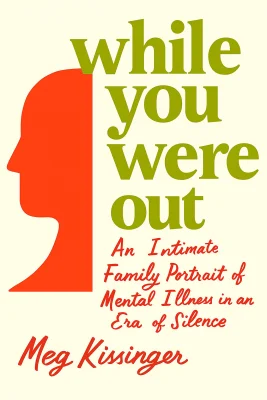
While You Were Out
An Intimate Family Portrait of Mental Illness in an Era of Silence
Categories
Nonfiction, Psychology, Biography, Memoir, Mental Health, Audiobook, Mental Illness, Family, Biography Memoir, Book Club
Content Type
Book
Binding
Hardcover
Year
2023
Publisher
Celadon Books
Language
English
ISBN13
9781250793775
File Download
PDF | EPUB
While You Were Out Plot Summary
Introduction
# Shadows and Resilience: A Family's Battle with Mental Illness In the manicured suburbs of 1960s Chicago, the Kissinger family appeared to embody the American dream perfectly. Eight children filled their spacious home with laughter and energy, while their father's successful career in pharmaceutical advertising provided the comfortable lifestyle that defined middle-class aspiration. Yet beneath this carefully maintained facade, a darker reality was taking shape—one that would ultimately claim two young lives and forever alter the trajectory of an entire family. Mental illness moved through their household like an invisible predator, striking without warning and leaving devastation in its wake. This is more than a story of family tragedy; it is a profound examination of how silence, shame, and societal stigma can become as deadly as the diseases they seek to hide. Through the intimate lens of one family's decades-long struggle with depression, bipolar disorder, and suicide, we witness both the devastating cost of untreated mental illness and the extraordinary resilience required to survive when those you love most become their own worst enemies. Readers will discover how trauma ripples through generations like stones thrown into still water, how the courage to break silence can become a pathway to healing, and how love—when combined with understanding and professional help—can indeed triumph over even the darkest chapters of human experience.
Chapter 1: The Kissinger Household: Seeds of Silence and Shame
The Kissinger home on Greenwood Avenue operated on a delicate balance of controlled chaos and unspoken rules that would shape eight young lives in profound ways. Bill Kissinger, known affectionately as Holmer to his family, brought home more than just his pharmaceutical advertising paycheck each evening—he carried the volatile energy of a man struggling with his own demons. His mood swings could transform a peaceful dinner into a minefield, his explosive temper erupting over spilled milk or forgotten homework with an intensity that left his children walking on perpetual eggshells. Jean Kissinger, their mother, floated through her days in an increasingly fragile state, the demands of raising eight children in twelve years having stretched her emotional resources beyond their breaking point. Her mysterious disappearances to what the children later learned were psychiatric facilities became as predictable as the changing seasons, yet were never discussed or explained. The family developed an elaborate mythology around these absences, creating stories and explanations that protected them from confronting the uncomfortable truth of their mother's mental illness. The children learned early to become emotional meteorologists, reading the atmospheric pressure of their household with the keen sensitivity of survivors. They developed their own coping mechanisms—humor became armor, deflection became an art form, and silence became the family's most sacred rule. Nancy, the eldest daughter, emerged as the family's canary in the coal mine, her artistic sensitivity making her particularly vulnerable to the toxic undercurrents swirling through their home. The Catholic faith that anchored the family provided both comfort and additional burden, its teachings about suffering as redemptive and mental illness as moral failing adding layers of shame to an already complicated situation. The children learned to "offer up" their pain rather than examine or address it, a spiritual practice that would prove both sustaining and ultimately limiting. This foundation of secrecy and shame would become the family's default response to crisis, creating a legacy of unprocessed trauma that would echo through generations. The house itself seemed to absorb the family's unspoken tensions, its rooms filled with the kind of careful normalcy that requires constant vigilance to maintain. Visitors saw a bustling household full of bright, articulate children, but the family members themselves lived with the constant awareness that something fundamental was wrong, even if they lacked the vocabulary or permission to name it.
Chapter 2: Nancy's Descent: A Brilliant Mind Lost to Darkness
Nancy Kissinger embodied all the promise and contradiction of her generation—a brilliant, beautiful teenager caught between the rigid expectations of 1960s femininity and the emerging possibilities of women's liberation. Her intelligence was undeniable, her artistic talents remarkable, and her capacity for empathy so profound that teachers and friends alike recognized her as someone destined for greatness. Yet beneath this shining exterior, something was fundamentally fracturing, though the family lacked both the knowledge and the courage to recognize the warning signs. The first cracks appeared during her high school years, manifesting as rebellious behavior that went far beyond typical teenage acting out. Nancy began drinking heavily, experimenting with dangerous drugs, and engaging in increasingly reckless activities that seemed designed to court disaster. Her family interpreted these behaviors through the lens of their era's understanding—character flaws, moral weakness, or perhaps just a phase that would pass with time and proper discipline. The possibility that these were symptoms of emerging mental illness never seriously entered their consideration. Nancy's descent accelerated dramatically in college, where the combination of academic pressure and newfound freedom created a perfect storm. Despite her obvious intelligence, she struggled to concentrate on her studies, formed destructive relationships, and began the first of what would become numerous suicide attempts. Each crisis was met with temporary interventions—emergency room visits, brief hospitalizations, medication trials that seemed to help for a while before losing their effectiveness—but no comprehensive understanding of her condition or long-term treatment plan ever emerged. The impact on the family was both profound and largely unacknowledged, as Nancy's illness became the organizing principle around which everything else revolved. Family gatherings were shadowed by her unpredictable moods, financial resources were quietly drained by medical bills, and the other children learned to make themselves invisible during the frequent crises. The family's response oscillated between hypervigilance and exhausted resignation, creating an atmosphere of chronic stress that affected everyone's mental health while remaining largely unspoken. Her parents, products of their generation's approach to mental health, found themselves trapped between love and frustration, seeking the best care available while remaining limited by their own understanding and the medical establishment's incomplete knowledge of psychiatric conditions. The stigma surrounding mental illness meant that Nancy's struggles were often hidden from the outside world, adding isolation to an already overwhelming burden and preventing the family from accessing the support they desperately needed.
Chapter 3: Danny's Downfall: From Hate Crime to Mental Collapse
Danny Kissinger's path to destruction began with what seemed like a simple business dispute but quickly revealed the dangerous intersection of untreated mental illness, family shame, and catastrophically poor judgment. As a nineteen-year-old college freshman running a small lawn care business, Danny felt cheated by a tire shop owner who charged him four hundred dollars for brake repairs. What started as legitimate frustration over a bill escalated into something far more sinister when Danny and two friends launched a campaign of harassment that would define and ultimately destroy the rest of his life. The hate mail campaign they orchestrated was breathtakingly cruel and calculated in its cruelty. They sent magazine subscriptions in the names of Nazi war criminals to the tire shop owner, a Jewish man whose family had been murdered in the Holocaust. They placed fake advertisements in newspapers and sent threatening Mailgrams to his customers, impersonating him and claiming he wouldn't serve people of certain ethnicities. The campaign continued for months, causing immense psychological pain to a man who had already suffered unimaginable losses and trauma. When the scheme was finally uncovered by postal investigators, Danny became the public face of the crime. His photograph appeared on the front page of the Chicago Tribune on his nineteenth birthday, forever linking his name with hatred and bigotry in the public consciousness. The media coverage was relentless and unforgiving, painting him as a privileged North Shore teenager who had committed an act of pure evil. The family's phone rang constantly with death threats, and police had to provide protection for their home as public outrage reached fever pitch. Danny's response to the crisis revealed the depth of his psychological fragmentation and his complete inability to process the magnitude of what he had done. Rather than accepting responsibility, he denied his involvement and attempted to blame his co-conspirators, his lies to reporters only making the situation worse and transforming him from a perpetrator into a symbol of entitled youth refusing to face consequences. The shame of his actions, combined with his inability to process Nancy's recent suicide, created a toxic psychological brew that would poison the rest of his life. The legal proceedings dragged on for months, keeping the family's humiliation in the public eye and preventing any possibility of moving forward or healing. Danny's trial became a cause célèbre for anti-hate crime advocates, who saw it as an opportunity to send a strong message about the consequences of bigotry. When he was finally convicted and sentenced to four weekends in jail plus community service, Danny had already been transformed from a confused teenager into a pariah whose actions would follow him forever, making redemption or recovery nearly impossible.
Chapter 4: The Weight of Stigma: Society's Role in Family Tragedy
The societal response to both Nancy's mental illness and Danny's hate crime conviction revealed the devastating impact of stigma and misunderstanding on families already struggling with overwhelming challenges. In the 1970s and 1980s, mental illness carried a shame that extended far beyond the individual sufferer, marking entire families as somehow defective or morally compromised. This stigma prevented the Kissingers from seeking help early, discussing their struggles openly, or accessing the community support that might have made a crucial difference in both Nancy's and Danny's outcomes. The mental health system of the era was woefully inadequate, operating more on hope and guesswork than on scientific understanding of brain chemistry and psychiatric conditions. Nancy cycled through various treatments and medications, but doctors prescribed heavy doses of drugs without fully understanding their effects, and therapy often focused more on conformity and adjustment than on genuine healing or recovery. The family watched helplessly as their daughter seemed to slip further away with each failed intervention, their faith in professional help gradually eroding. Danny's experience with the criminal justice system highlighted how mental illness was criminalized rather than treated, with judges and prosecutors viewing his erratic behavior as evidence of moral failing rather than symptoms of untreated bipolar disorder. His inability to accept responsibility for his actions, while clearly pathological, was interpreted as defiance and entitlement rather than as a sign of severe psychological disturbance requiring medical intervention. The system's punitive approach only deepened his shame and paranoia, making recovery even more unlikely. The media's role in both tragedies cannot be understated, as sensationalized coverage of Danny's hate crime and the family's subsequent struggles turned private pain into public spectacle. The constant scrutiny made it impossible for the family to heal or move forward, while the stigma attached to their name affected everything from employment opportunities to social relationships. The children learned to hide their family history, adding another layer of secrecy and shame to an already overwhelming burden. Perhaps most tragically, the combination of societal stigma and family shame prevented the Kissingers from connecting with other families facing similar challenges, isolating them at precisely the moment when community support might have provided crucial perspective and hope. Their story illustrates how stigma becomes a self-perpetuating cycle, preventing the very openness and connection that could break the patterns of silence and suffering that claim so many lives.
Chapter 5: Breaking the Silence: Journalism as Pathway to Healing
The decision to write publicly about the family's tragedies marked a crucial turning point in the Kissinger family's journey from shame to healing, though it came at considerable personal cost and required tremendous courage to overcome decades of ingrained secrecy. When Meg Kissinger first wrote about Nancy's suicide for a newspaper magazine, her father was furious, believing that family secrets should remain buried and that public exposure would only bring more pain and humiliation. However, her mother, drawing on her hard-won experience in Alcoholics Anonymous, understood the healing power of truth-telling and supported her daughter's decision to break the silence. The response to that first article was overwhelming and transformative, with hundreds of readers reaching out to share their own stories of loss, struggle, and survival. Families who had been isolated by shame and secrecy discovered they were not alone in their pain, while mental health professionals praised the honest portrayal of suicide's devastating impact on survivors. Most importantly, the article began a conversation that had been suppressed for too long, creating space for others to speak their truth and seek the help they needed without shame. When Danny died by suicide nearly twenty years after Nancy, the decision to write about his death was easier but no less painful, as the family had learned that silence serves no one and that speaking truth can prevent other tragedies. The second article revealed the full scope of the family's losses and the systemic failures that had contributed to both deaths, exposing how mental illness had been criminalized rather than treated, how shame had prevented healing, and how society's indifference had allowed preventable deaths to occur. These articles became the foundation for decades of investigative journalism focused on mental health system failures, as Meg discovered through her reporting that her family's story was not unique but representative of thousands of families across the country struggling with similar challenges. The personal had become political, and the political had become a calling to use journalism as a tool for systemic change and advocacy for better mental health care and reduced stigma. The journalism served multiple crucial purposes beyond personal catharsis—it honored the memory of Nancy and Danny by ensuring their deaths had meaning and could prevent other tragedies, it provided a voice for countless other families trapped in similar circumstances, and it created pressure for systemic change in how society approaches mental illness. Most importantly, it demonstrated that breaking the silence around mental health is not just therapeutic for individual families but essential for society's progress in addressing these challenges and saving lives.
Chapter 6: Surviving Siblings: Finding Light After Devastating Loss
The surviving Kissinger siblings each found their own unique path through the darkness left by Nancy's and Danny's deaths, developing coping mechanisms and support systems that allowed them to build meaningful lives despite their traumatic past. Their individual journeys illustrate both the lasting impact of childhood trauma and the remarkable human capacity for resilience, growth, and the creation of meaning from even the most devastating experiences. Each sibling's story became a testament to the possibility of healing and hope, even after unimaginable loss. Mary Kay channeled her pain into artistic expression, finding in painting and creativity a way to process emotions that words couldn't adequately capture or contain. Her artwork became windows into her soul, expressing the complex feelings of grief, guilt, survivor's guilt, and eventual acceptance that marked her long journey toward healing. Jake, despite his ongoing struggles with depression and anxiety, found purpose in work and community involvement, building a life that honored his limitations while celebrating his strengths and contributions to others. Patty pursued a career in public health and epidemiology, transforming her personal experience with family trauma into professional expertise that could help prevent similar tragedies for other families. Her work studying patterns of disease and suffering from a scientific perspective provided a way to make sense of senseless loss while contributing to the greater good. Billy found solace in music and journalism, using his talents to tell important stories and create beauty in a world that had shown him too much ugliness and pain. Molly sought healing in nature and physical challenges, discovering in mountains, oceans, and wilderness the peace and perspective that had eluded her throughout her troubled childhood. Her journey to remote places became both literal and metaphorical, representing the emotional and psychological distance she needed to travel from her traumatic past to find her authentic self and build a healthy future. The family's gradual evolution from silence to openness became their greatest collective achievement and their most important legacy. They learned to talk about their losses without shame, to support each other through difficult times and anniversaries, and to recognize the warning signs of mental health crises in the next generation. Their story demonstrates that while trauma can indeed be transmitted across generations like a genetic inheritance, so too can wisdom, resilience, and the hard-won determination to break destructive cycles and create healthier patterns for the future.
Summary
The Kissinger family's harrowing journey through multiple generations of mental illness offers a powerful testament to both the devastating cost of silence and shame and the transformative potential of courage, honesty, and professional help. Their story reveals how untreated mental health conditions can ripple through families like stones thrown into still water, creating waves of trauma that touch every member across decades, while also demonstrating the remarkable possibility of breaking destructive cycles through truth-telling, mutual support, and the willingness to seek help without shame. Most profoundly, their experience shows that love and understanding can indeed conquer even the most severe mental illness, but only when combined with proper medical treatment, community support, and the courage to speak honestly about struggles that too many families still face in isolation. The lessons extracted from their painful experience extend far beyond their personal tragedy to illuminate crucial truths about the importance of early intervention, the necessity of reducing stigma around mental health, and the critical role that families, communities, and society as a whole play in either supporting or abandoning their most vulnerable members. Their story challenges each of us to examine our own attitudes toward mental illness and to consider how our responses to those who are struggling can either contribute to their isolation and despair or become part of their healing and recovery. For anyone touched by mental illness, whether personally or through a loved one, the Kissinger family's journey offers both a sobering reminder of what can be lost when we remain trapped in silence and an inspiring example of how speaking our truth and seeking help can light the way for others still struggling in darkness.
Best Quote
“But I was learning that you can’t fast-forward through grief or read a CliffsNotes version of your life and expect to make peace with it.” ― Meg Kissinger, While You Were Out: An Intimate Family Portrait of Mental Illness in an Era of Silence
Review Summary
Strengths: The memoir's premise is intriguing, focusing on mental illness awareness, education, and acceptance. The author's background in journalism suggests a thorough investigation into the nature vs. nurture debate regarding mental health. Weaknesses: The narrative starts slowly with an exhaustive family history, including potentially irrelevant details about the grandparents. The writing lacks emotional depth, making it difficult for the reader to connect with the author and her family. The detailed storytelling feels long-winded and fails to evoke strong emotions, possibly due to the author's journalistic style. Overall: The reader found the memoir less engaging than anticipated, feeling more like an observer than a participant in the story. The book may not resonate with those seeking an emotional connection, but it offers factual insights into the author's life and mental health challenges.
About Author

Meg Kissinger
Kissinger interrogates the complexities of mental health systems in the United States through her investigative journalism. Her work blends personal memoir with rigorous reporting to address the systemic failures affecting mental health care, therefore illuminating the impact on families and society. As a Pulitzer Prize finalist with numerous awards, including the George Polk and Robert F. Kennedy Journalism Awards, she leverages her family's experiences with mental illness, alcoholism, and suicide to bring depth and empathy to her narratives. Her stories, notably in the Milwaukee Journal Sentinel, have not only raised awareness but also inspired legislative changes and the creation of new housing units for people with mental illness.\n\nHer book, "While You Were Out: An Intimate Family Portrait of Mental Illness in an Era of Silence," combines a personal narrative with her investigative insights, earning recognition as one of the best memoirs of 2023 by several outlets, including the New York Times. This dual focus on personal experience and societal critique allows readers to grasp the pervasive issues within mental health care. Furthermore, Kissinger's teaching roles at Columbia University and her public speaking engagements expand her influence, equipping new generations of journalists with the skills to tackle complex social issues. Her body of work not only informs but also advocates for change, offering readers a deeper understanding of mental health challenges and inspiring systemic reform.
Read moreDownload PDF & EPUB
To save this Black List summary for later, download the free PDF and EPUB. You can print it out, or read offline at your convenience.
While You Were Out
by Meg Kissinger
