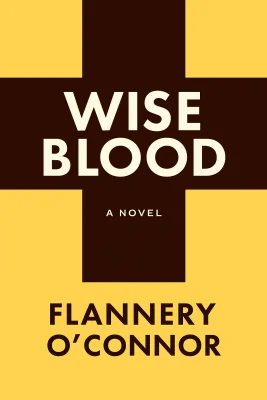
Wise Blood
Categories
Fiction, Religion, Classics, Literature, American, Novels, Southern Gothic, Literary Fiction, Southern, Gothic
Content Type
Book
Binding
Paperback
Year
2007
Publisher
Farrar Straus & Giroux
Language
English
ASIN
0374530637
ISBN
0374530637
ISBN13
9780374530631
File Download
PDF | EPUB
Wise Blood Plot Summary
Introduction
The train rattled through the Tennessee countryside, carrying a young man whose black hat sat on his head like a dark prophecy. Hazel Motes pressed his face against the window, watching the familiar landscape slip away forever. Behind those pale eyes burned a fierce determination—to escape the Jesus that had haunted him since childhood, to preach a church without Christ, to prove that salvation was nothing but a cruel joke played on the desperate. But the harder Hazel ran from faith, the deeper it seemed to sink its claws into his soul. In the neon-lit streets of Taulkinham, he would encounter blind prophets who weren't truly blind, false disciples who mocked his message, and a shriveled mummy that promised to be his new messiah. Every step toward damnation would only illuminate the path to redemption he desperately sought to avoid. The blood that ran through his veins was wise enough to know what his mind refused to accept—that some truths cannot be escaped, only embraced or destroyed along with the one who carries them.
Chapter 1: The Reluctant Prophet Returns
The war had scraped the faith clean out of Hazel Motes, or so he told himself as the Essex coughed through the empty streets of Taulkinham. The city sprawled before him like a neon promise, electric signs blinking their lies about peanuts and salvation with equal fervor. At twenty-two, he carried himself with the rigid posture of a man who had seen enough to know that God was either absent or cruel. His first night in the city led him to Mrs. Watts, a woman whose yellow hair and greasy skin seemed to glow in the dim light of her rented room. She had been advertised in a bathroom stall as the friendliest bed in town, and Hazel needed to prove something to himself about sin and its supposed consequences. When she reached for his fierce black hat and placed it mockingly on her head, he laughed—three sharp barks that sounded more like pain than pleasure. The next morning brought him face to face with the blind street preacher Asa Hawks and his fifteen-year-old daughter. Hawks wore dark glasses that hid scars running down his cheeks, evidence of what he claimed was self-inflicted blindness in service to Jesus. The man's presence irritated Hazel like a splinter working deeper into infected flesh. Here was everything he had come to destroy—the theatrical suffering, the public display of faith, the manipulation of the desperate. But the girl, Sabbath Hawks, watched him with green eyes that seemed to catalog his every weakness. She handed him a religious tract with the casual cruelty of someone offering poison disguised as candy. When Hazel tore it into confetti and let the pieces fall like dirty snow, she marked him as prey worth stalking. The city had accepted his challenge, and the war for his soul had officially begun.
Chapter 2: Preaching the Void in Taulkinham
Night after night, Hazel climbed onto the nose of his Essex and preached his anti-gospel to whoever would listen. His voice cut through the movie theater crowds like a rusty blade, proclaiming the Church Without Christ to anyone foolish enough to stop. The words poured out of him with the fervor of a true believer, which was exactly what terrified him most. His message was pure negation wrapped in the language of salvation. There was no fall because there was nothing to fall from. No redemption because there had been no fall. No judgment because the first two were lies. Jesus was a liar, he declared, and the only truth was that there was no truth. The people who gathered around his car looked at him with the same blank curiosity they might show a man eating glass for entertainment. Among his listeners lurked Enoch Emery, an eighteen-year-old who worked at the city zoo and claimed to have wise blood running in his veins. Enoch watched Hazel with the devotion of a dog that has finally found its master, though he understood nothing of what he heard. His blood told him something important was happening, but his brain remained helpfully empty of explanations. He had been waiting his whole life for someone to follow, and this fierce young preacher with his message of beautiful emptiness seemed like destiny made flesh. The irony wasn't lost on Hazel that the only person interested in his church without Christ was a boy who couldn't stop talking about Jesus. Enoch's enthusiasm felt like another trap, another way the universe conspired to drag him back toward the faith he was trying to murder. Every night he preached brought him no closer to the peace he sought, only deeper into the maze of his own contradictions.
Chapter 3: False Prophets and Hollow Mirrors
The competition arrived in the form of Hoover Shoats, a man whose smile looked like it had been painted on by a mortician with a sense of humor. He had heard Hazel preach and recognized opportunity in the young man's intensity. Within days, he had hired his own prophet, a consumptive named Solace Layfield, dressed him in a blue suit identical to Hazel's, and set up shop preaching the Holy Church of Christ Without Christ for a dollar admission. Watching his doppelganger perform his message for money sent something violent coursing through Hazel's veins. The copycat prophet coughed up white fluid between sermons, his body betraying the same weakness that Hazel felt creeping through his own chest. Here was his gospel transformed into a carnival act, complete with guitar music and testimonials about finding sweetness through spiritual emptiness. The confrontation came on a dark road outside the city limits. Hazel followed Solace in his Essex until the moment felt right, then rammed the false prophet's car into a ditch. What followed was less execution than exorcism—Hazel demanding that the man remove the costume of faith, strip naked before God and judgment. When Solace tried to run, his pale body glowing in the headlights like a ghost, the Essex caught him and crushed him into the asphalt. As the false prophet lay dying, he whispered confessions about stealing and lying and never giving anyone peace. Hazel leaned close to hear the litany of small sins that had led to this moment. When Solace whispered Jesus's name like a prayer, Hazel told him to shut up. But the damage was done—the name hung in the air between them, refusing to be silenced even by death.
Chapter 4: The Blood That Won't Wash Away
Enoch's wise blood had been building toward revelation for weeks, and when it finally arrived, it came in the form of a shriveled mummy displayed in the city museum. Three feet long and dried to the color of old leather, the figure had once been a man before being shrunk by some distant tribe into a perfect representation of mortality made manageable. Enoch knew immediately that this was what Hazel needed—a new jesus to replace the old one. The theft required elaborate planning and a disguise of brown shoe polish that left Enoch looking like a minstrel show refugee. He crept past the sleeping guard and smashed the glass case, liberating what he was sure would be his salvation. But when he finally presented his prize to the shriveled figure in his gilded cabinet, expecting some cosmic transformation, he received only a violent sneeze that bloodied his nose and left him feeling emptier than before. Meanwhile, Sabbath Hawks had moved into Hazel's room with the persistence of a plague. Her father had abandoned her for the bottle and the streets, leaving her free to pursue her obsession with the young preacher who radiated sin like heat from a fever. She found in his rejection the same irresistible force that drew moths to destructive light. When she finally crawled naked into his bed, it was less seduction than surrender to the inevitable. The morning brought Enoch to their door with his horrible gift wrapped in newspapers and dripping from the rain. Sabbath opened the bundle to find the mummified figure staring up at her with its single functioning eye, its face frozen in a grimace that might have been terror or ecstasy. Something about its expression reminded her of everyone she had ever known, as if all human suffering had been distilled into this one small, preserved form.
Chapter 5: Violence as Failed Redemption
Sabbath cradled the mummy like the child she would never have, rocking it and whispering endearments to its dried flesh. She had always known she was a bastard, but this thing seemed to understand what that meant in ways that no living person could. When Hazel emerged from the bathroom wearing his mother's glasses, the three of them formed a grotesque holy family—the reluctant messiah, the devoted whore, and their impossible child. The sight of his own blurred reflection merged with theirs drove something fundamental loose in Hazel's mind. He snatched the mummy from Sabbath's arms and hurled it against the wall, watching it explode in a cloud of ancient dust and disappointment. The head popped like a rotten fruit, spraying its contents across the room while Sabbath screamed that he had murdered her baby. Opening the door that led to where a fire escape had once been, Hazel flung the remains into the rain and watched them disappear into the gray emptiness below. The gesture felt less like disposal than baptism—washing away the false hope that anything could replace the Christ he was trying to escape. The rain struck his face like a blessing he didn't want, and he jerked back from the threshold as if it might drag him out into the void he claimed to embrace. That night he drove to the city limits and abandoned the Essex by the roadside, walking into the darkness with a bucket of lime and the certainty that sight had become his enemy. If his eyes insisted on showing him reflections of his own damnation, then he would take away their power to betray him. The lime hissed as it met his corneas, burning away the last pretense that he could see his way clear of the truth that hunted him.
Chapter 6: Blinding the Self to See Truth
Mrs. Flood, Hazel's landlady, watched her blind tenant with the fascination of someone studying an exotic animal. She had seen him pour the lime into his eyes without flinching, had heard his explanation that he was paying for something he couldn't name. Now he walked through her house like a man following a map only he could read, his face turned always toward some invisible destination. His daily routine became a meditation on pain. He lined his shoes with broken glass and small stones, transforming every step into an act of penance. Wrapped around his chest were three strands of barbed wire that left rust-colored stains on his shirts. When Mrs. Flood discovered these instruments of self-torture, he explained simply that he wasn't clean, though he refused to clarify what kind of cleanness he sought through suffering. The government check that arrived each month for his war injuries meant nothing to him now except as something to dispose of. He threw away money like a man scattering seeds he never intended to harvest. Mrs. Flood watched these displays of waste with the horror of someone who had never had enough of anything, trying to understand what invisible economy he was participating in that made dollars worth less than pain. Winter came early and vicious, with winds that cut through the old house like knives seeking specific targets. Hazel grew thinner and more remote, his cough deepening until it sounded like something breaking apart in his chest. When Mrs. Flood suggested he should marry her, that two people approaching death shouldn't face it alone, he dressed carefully and walked out into the storm as if she had reminded him of an appointment he couldn't postpone.
Chapter 7: The Ascetic Path to Nowhere
The police found Hazel three days later in a drainage ditch, his body curled around itself like a question mark drawn in the mud. The rain had soaked through his clothes and skin, but his face carried an expression of such perfect peace that the officers hesitated before disturbing what looked less like death than arrival. His journey toward the darkness he claimed to seek had finally reached its destination. Mrs. Flood sat with his body through the night, studying the face that had haunted her thoughts for months. She had never understood what he was running toward or away from, only that his movement had been as inevitable as water finding its level. The burned eye sockets seemed to hold secrets she would never possess, tunnels leading into territories she lacked the courage to explore. In death, his features had arranged themselves into an expression of stern tranquility that made him look younger and infinitely old simultaneously. The skull was clearly visible beneath his skin now, as if his flesh had finally surrendered its pretense of permanence. Mrs. Flood leaned closer and closer to his face, trying to see into those empty sockets, hoping to glimpse whatever truth had driven him to such extremes. She closed her own eyes and tried to imagine what he had seen in his self-imposed darkness. Behind her lids, she caught a glimpse of something like a pinpoint of light, so distant she could barely hold it steady in her mind. For a moment, she felt as if she stood at the entrance of something vast and incomprehensible. When she opened her eyes again, Hazel seemed to be moving farther and farther away from her, shrinking into that tiny point of illumination until he became indistinguishable from the light itself.
Summary
Hazel Motes had spent his life running from a God he claimed not to believe in, only to discover that disbelief required as much faith as its opposite. His journey through the neon wilderness of Taulkinham became a reverse pilgrimage, each step toward damnation revealing another aspect of the grace he sought to deny. The Church Without Christ he preached was simply another way of acknowledging Christ's power, and the violence he committed in service to his anti-gospel only proved how deeply the old gospel had marked his soul. In the end, his self-imposed blindness became a form of vision, his suffering a path to the peace that had always waited just beyond his comprehension. The tragedy of Hazel Motes was not that he lacked faith, but that he possessed too much of it to live with comfortably. His blood was indeed wise, wise enough to know that some truths cannot be reasoned away or murdered into silence. They can only be embraced or fled from, and flight inevitably leads back to the very thing one sought to escape. In choosing blindness, he finally learned to see; in choosing death, he discovered the only life that had ever been offered to him. The pinpoint of light that Mrs. Flood glimpsed in his empty sockets was the same star that had called to him from childhood, patient and unchanging, waiting for him to stop running long enough to come home.
Best Quote
“Where you come from is gone, where you thought you were going to never was there, and where you are is no good unless you can get away from it” ― Flannery O' Connor, Wise Blood
Review Summary
Strengths: The review highlights Flannery O’Connor’s "Wise Blood" as an evocative and detailed exploration of foolishness, adding depth to a timeless theme. The book is praised for its scornful wit and the complexity of its protagonist, who embodies strong beliefs and faith. The narrative’s engagement with cognitive dissonance and its rich symbolism, particularly religious, are noted as significant elements. Weaknesses: The review suggests that the book's heavy symbolism, especially its religious undertones, can become overwhelming and distracting. The complexity of the themes may lead to confusion, making interpretation challenging and potentially leading to ambiguous conclusions. Overall: The review conveys a mixed sentiment, appreciating the depth and wit of O’Connor’s work while cautioning about its dense symbolism and interpretative challenges. It suggests that "Wise Blood" is a complex read that may not suit everyone, particularly those seeking straightforward narratives.
About Author

Flannery O'Connor
O'Connor interrogates the complexities of human nature and faith through her masterful use of Southern Gothic literature, combining stark realism with profound religious themes. Her work often delves into the interplay between morality and alienation, set against the backdrop of the American South. Notably, her novels "Wise Blood" and "The Violent Bear It Away" reflect her interest in the individual's relationship with God, while her short story collections such as "A Good Man Is Hard to Find" are marked by their exploration of grace and redemption. O'Connor's writings stand out for their macabre elements and sudden violent revelations, inviting readers to question the nature of sin and salvation.\n\nFor those interested in the intersections of spirituality and storytelling, O'Connor's body of work provides a rich landscape for exploration. Readers can gain insights into the human condition through her characters' journeys, characterized by unexpected moments that challenge their understanding of faith and morality. Her posthumous collection "The Complete Stories," awarded the National Book Award, further cements her influence, offering a comprehensive view of her literary achievements. Her bio, filled with notable milestones such as her education at the Iowa Writers' Workshop and her residence at Andalusia farm, reflects a life dedicated to crafting stories that resonate on both a spiritual and existential level.\n\nWhile battling lupus, O'Connor's productivity and depth of insight continued to flourish, ensuring her place as a pivotal figure in American literature. Her recognition extends beyond awards, as she became the first postwar writer honored by the Library of America with a "Collected Works" edition. The author's ability to intertwine dark humor with profound theological inquiry makes her works essential reading for those seeking to understand the dualities of grace and human frailty.
Read moreDownload PDF & EPUB
To save this Black List summary for later, download the free PDF and EPUB. You can print it out, or read offline at your convenience.
Wise Blood
by Flannery O'Connor
