
Wish You Were Here
Categories
Fiction, Audiobook, Historical Fiction, Romance, Adult, Book Club, Contemporary, Adult Fiction, Realistic Fiction, Literary Fiction
Content Type
Book
Binding
Hardcover
Year
2021
Publisher
Ballantine Books
Language
English
ISBN13
9781984818416
File Download
PDF | EPUB
Wish You Were Here Plot Summary
Introduction
# Between Breaths: A Journey Through Reality and Dreams Diana O'Toole's life shatters in the space between heartbeats. One moment she's standing in a Manhattan penthouse, negotiating the sale of a priceless Toulouse-Lautrec painting that could make her career at Sotheby's. The next, she's waking up on a ferry approaching the Galápagos Islands with no memory of how she got there, her luggage lost, her phone dead, and the world collapsing into pandemic chaos behind her. What begins as a carefully planned vacation becomes something far more dangerous when Ecuador seals its borders, trapping Diana on a volcanic island at the edge of the world. As New York burns with COVID-19 and her surgeon boyfriend Finn fights an impossible war in the ICU, Diana finds herself pulled into the lives of strangers who feel more real than anything she's left behind. But when she wakes up in a hospital bed with tubes down her throat and no memory of being sick, everyone insists her island adventure was nothing more than a fever dream born from a dying brain.
Chapter 1: The Carefully Ordered Life: Plans Interrupted by Pandemic
The Tiffany box sits in Finn's underwear drawer like a loaded gun. Diana discovered it weeks ago while looking for batteries, the velvet surface worn smooth from his nervous handling. She knows what's coming during their Galápagos trip, can already picture the proposal on some pristine beach, the Instagram photos that will follow, the comfortable slide into marriage and suburban predictability. At twenty-nine, Diana has orchestrated her life with surgical precision. Art history degree from Williams, check. Master's from Sotheby's Institute, check. Steady climb up the auction house ladder while Finn completes his residency at New York-Presbyterian. Their relationship runs on autopilot, white noise that makes everything easier. She's learned from her parents' mistakes, choosing stability over passion, planning over spontaneity. The Kitomi Ito meeting should have been her triumph. The widow of murdered rock star Sam Pride finally ready to sell the masterpiece that hung behind their bed during that infamous album cover shoot. Diana's intimate auction approach wins over the client, bypassing her boss Eva's flashy public spectacle. The promotion she's worked toward for years suddenly within reach. But the city starts whispering about a virus. Broadway theaters shutter. Nineteen cases scattered across Manhattan like dropped pins on a map. When Finn gets called back to the hospital, his face carries a weight Diana's never seen before. "You should still go," he insists when she offers to cancel. "I don't know what I might bring home from the hospital." The words hang between them like a challenge neither wants to acknowledge. The last normal moment happens at JFK, Finn kissing her goodbye through a surgical mask. "Two weeks," he promises. "This will all be over in two weeks." Diana boards the plane alone, her future mapped out like Manhattan's grid system, predictable and safe. She has no idea she's about to disappear completely.
Chapter 2: Stranded in Paradise: Finding Home Among Strangers
Diana wakes on the ferry with salt spray stinging her face and no memory of the flight. Her luggage is gone, her phone dead, and the other passengers eye her with the wariness reserved for plague carriers. The backpacker beside her explains the situation with grim satisfaction. "Island's closing. Last boat off before they seal the borders. You sure you want to stay?" The question feels like a dare. Diana's not the type to run from challenges, is she? She's adaptable, adventurous. She can handle two weeks on a tropical island. The words surprise her with their conviction as she watches the water taxi pull away with its cargo of fleeing tourists, her only escape route disappearing into the Pacific. Puerto Villamil hits her like a ghost town. The hotel she booked doesn't exist, at least not the way she remembered it. Instead of boutique luxury, she finds locked doors and broken windows. Marine iguanas bask on empty streets while she drags her carry-on through volcanic dust, the weight of her mistake settling on her shoulders like ash. Salvation comes in the form of Abuela, an elderly woman who emerges from the shadows like she's been waiting. Without sharing a common language, she somehow understands Diana's predicament and leads her through empty streets to a basement apartment behind her house. The space is sparse but clean, with a sliding glass door that opens directly onto the beach. That first night, Diana sits on black lava rocks watching Sally Lightfoot crabs scuttle across the shore, the ocean spreading rumors in a language she doesn't understand. Her phone shows no signal, no connection to the world she's abandoned. The silence feels absolute, terrifying in its completeness. She's nobody's daughter now, nobody's girlfriend, just a woman alone at the edge of the world with no schedule to keep and no carefully constructed identity to maintain.
Chapter 3: Unlikely Family: Healing Beatriz, Loving Gabriel
The girl appears at dawn like a mirage, dragging a trash bag filled with plastic bottles across the beach. Beatriz calls herself, fourteen years old with sharp features and bottomless eyes, speaking perfect English with the weight of someone much older. She's Abuela's granddaughter, though she speaks of family with the wariness of someone expecting disappointment. Diana catches a glimpse of thin red lines on Beatriz's wrists before the girl pulls her sleeves down, ladder rungs of cuts some still healing. The sight sends ice through Diana's veins, memories of a classmate who carved her pain into skin when words weren't enough. "Why do you do it?" Diana finally asks one day. Beatriz is quiet for so long Diana thinks she won't answer. Then: "Because it's the kind of hurt that makes sense." Gabriel Fernandez arrives like a storm front, all dark eyes and barely contained fury. He's Beatriz's father, a former tour guide whose business collapsed with the tourism shutdown. Their first encounter is a disaster, Diana nearly poisoning herself on manchineel apples, Gabriel tackling her away from the deadly fruit, both of them bristling with mutual antagonism. "Maldita turista," he mutters. Damned tourist. But as days blur into weeks, something shifts between them. Gabriel brings vegetables from his highland farm, fixes the wobbly table in Diana's apartment, shows her secret swimming holes where flamingos feed in pink lagoons. He tells her about his father, a beloved guide who died saving a tourist, swept away by currents that turned heroism into tragedy. The guilt drove Gabriel from the water, from his calling, from any future that required risking loss. They build an unlikely family from the flotsam of their shared isolation. Diana helps with cooking and cleaning, learns to tend Gabriel's small farm, slowly draws Beatriz out of her shell. When Diana's mother dies of COVID in a New York memory care facility, she's alone in her grief, connected to the funeral by a crackling video call that cuts out before goodbye. Gabriel finds her drunk on cane liquor, sobbing into the darkness. "You're not broken," he whispers, pulling her into his arms. "You can feel." When he kisses her, it feels like coming home to a place she's never been.
Chapter 4: The Drowning: Where One Reality Ends and Another Begins
The perfect day arrives like a gift wrapped in sunlight. It's Diana's birthday, and Gabriel has planned a trip to a secluded beach where sea turtles nest. The lagoon spreads before them like liquid crystal, so clear Diana can see her shadow on the sandy bottom twenty feet below. She's never felt more herself than in this moment, more alive than in all her carefully planned New York years combined. Beatriz builds sandcastles from driftwood while Gabriel prepares lunch, and Diana floats on her back watching frigatebirds wheel overhead. The water is warm, welcoming, perfect. She doesn't notice the current until it's too late, doesn't realize she's been pulled far from shore until the beach becomes a distant line of white sand. Panic hits like a physical blow. Diana tries to swim back but the riptide is stronger, dragging her further into open ocean. Gabriel appears beside her, his powerful strokes cutting through the water, but the current has them both now. She can see the terror in his eyes, the recognition that they're both going to die. In a moment of crystalline clarity, Diana realizes the truth. If she keeps clinging to him, they'll both drown. She has to let go, has to sacrifice herself so he might survive, so Beatriz won't lose the father she's just learned to trust. "I love you," she whispers, then releases his hand and lets the ocean take her. The water closes over her head like a benediction. She sinks into blue darkness, her lungs burning as she fights the instinct to breathe. This is how she dies, not in a hospital bed surrounded by machines, but in the clear water of a place that taught her what it meant to truly live. The last thing she sees is sunlight fracturing through waves, beautiful and final. But death, it turns out, is not the end.
Chapter 5: Hospital Awakening: Confronting the Life That Never Was
Diana's eyes open to blinding white light and the mechanical wheeze of ventilators. A tube slides from her throat like a snake, leaving her gasping and raw. The world comes into focus slowly, antiseptic and alien. A man in full PPE stands beside her bed, tears streaming down his face behind his plastic shield. It takes her a moment to recognize Finn, but he looks older, marked by something terrible. "You're going to be okay," he says, but his voice carries the weight of someone who's watched too many people die to believe his own words. The doctors explain that she's been unconscious for five days, fighting COVID-19 on a ventilator while her lungs forgot how to breathe. She was one of the lucky ones, they say. Eighty percent of ventilator patients don't make it home. But Diana's memories tell a different story. Two months on Isabela Island, falling in love with a place and people who felt more real than anything in her carefully constructed New York life. Gabriel's hands on her skin, Beatriz's laughter echoing off volcanic walls, the taste of papaya warm from the sun. When she tries to explain this to the medical staff, they nod knowingly and talk about ICU psychosis, about how the brain creates elaborate fantasies to protect itself from trauma. "You never went to the Galápagos," Finn says gently when she asks about Gabriel. "You collapsed in our bathroom the morning you were supposed to leave. I thought I'd lost you." His words feel like erasure, like someone has taken a cloth to a painting and wiped away everything that mattered. The rehabilitation is brutal. Diana has to relearn basic functions, sitting up, standing, walking to the bathroom. Her body has been ravaged by the virus and weeks of immobility. Physical therapists push her through exercises that leave her exhausted and frustrated, while she struggles to reconcile the woman who drowned in a Pacific lagoon with the one who survived a ventilator in Manhattan.
Chapter 6: Choosing Transformation: Letting Go of Who She Used to Be
Recovery becomes an existential battleground. Diana finds herself caught between two versions of reality, unable to fully accept that her months on Isabela were fever dreams. She connects with other COVID survivors online, discovering that many experienced incredibly vivid alternate lives while unconscious. Some lived for years in their dreams, building relationships that felt completely real. Her relationship with Finn strains under the weight of her transformation. He wants to pick up where they left off, to return to their carefully planned future of marriage and suburban dreams. But Diana has changed in ways she can't explain to someone who's never drowned in clear water or watched a teenage girl carve her pain into flesh. The woman who fell in love with stability now feels trapped by those very qualities. The final test comes when Finn proposes in Carl Schurz Park, offering Diana the ring and the future they had always planned together. It should be the perfect moment, she's survived, they're together, and life can return to normal. But sitting there looking at Peter Pan frozen in bronze, Diana realizes that some transformations can't be undone. She turns down the proposal, not because she doesn't love Finn, but because she's no longer the person who made those plans. The woman who went to sleep in March dreaming of promotions and suburban houses has awakened to find herself someone else entirely, someone who understands that security isn't worth sacrificing growth. Diana enrolls in graduate school to become an art therapist, inspired by her work with Beatriz and her own journey through trauma. She moves in with her best friend Rodney, starts a new life built on uncertainty rather than plans, slowly learning to trust the person she's become. The island may have existed only in the space between heartbeats, but the transformation it catalyzed was undeniably real.
Chapter 7: Return to the Islands: Finding Truth in Both Worlds
Three years later, Diana finally makes the trip that started it all. Standing on the dock at Puerto Villamil, she sees that the island is nothing like her dreams, more touristy, more developed, populated by strangers rather than the family she remembered. The disappointment cuts deep until she realizes she wasn't looking for the island from her dreams, she was looking for proof that the woman who lived there was real. At a tortoise breeding center, watching baby tortoises struggle to right themselves when they flip over, Diana slips while trying to help one. A hand catches her wrist, and she turns to see a face that's both familiar and impossible. Gabriel, exactly as she remembered him, as if he's been waiting for her return. "I know you," he says in accented English, his dark eyes searching her face. "I dreamed of you. For three years, I dreamed of a woman who drowned saving my life." His daughter Beatriz appears beside him, older now but with the same sharp features, the same bottomless eyes. The scars on her wrists have faded to thin white lines, evidence of pain survived rather than pain inflicted. The moment crystallizes everything Diana has learned about the nature of reality and love. Perhaps consciousness isn't bound by the physical brain. Perhaps the connections we make transcend the boundaries of what we think is possible. Perhaps the woman who drowned in that lagoon and the woman who survived COVID are both real, both true, both worthy of the love they found and lost and found again.
Summary
Diana's journey between realities becomes a meditation on the stories we tell ourselves about who we are and who we might become. Whether her time on Isabela was fever dream or parallel existence, it served as a crucible that burned away the careful constructions of her old life. The woman who wakes up in the hospital is not the same one who boarded that plane, she's been changed by love and loss, by the recognition that safety is often just another word for sleepwalking through life. In the end, Diana's story suggests that sometimes we need to lose ourselves completely to discover who we really are. Her island may have existed only in the space between breaths, in the pause between one heartbeat and the next, but the transformation it catalyzed was undeniably real. She learned that evolution requires letting go, that moving forward means leaving something behind, and that the strongest among us are not those who never fall, but those who find the courage to swim toward an uncertain shore. The question that remains is not whether her experience was real, but whether she'll have the courage to live as if it was, to trust that love can exist in multiple realities simultaneously, and that the heart is the most reliable compass we have for navigating between worlds.
Best Quote
“Busy is just a euphemism for being so focused on what you don’t have that you never notice what you do. It’s a defense mechanism. Because if you stop hustling—if you pause—you start wondering why you ever thought you wanted all those things.” ― Jodi Picoult, Wish You Were Here
Review Summary
Strengths: The review highlights the book's emotional impact, describing it as a powerful and cathartic experience. It praises the novel's exploration of philosophical, metaphysical, and psychological themes, particularly in the context of life choices during a pandemic. The plot's unexpected twists and the emotional depth of the story are commended, along with a satisfying and heartfelt conclusion. Overall: The reader expresses a highly positive sentiment, recommending the book for its gripping narrative and emotional resonance. The review suggests that the book is a must-read, likening its conclusion to an epic movie scene, and awards it a perfect score.
About Author
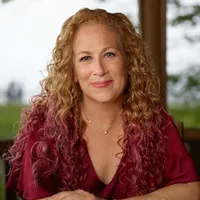
Jodi Picoult
Picoult interrogates the moral complexities and emotional depth of human relationships, drawing from the rich tapestry of real-life experiences to inspire her work. Her writing delves into pressing social issues, such as medical ethics in "My Sister's Keeper" and racial prejudice in "Small Great Things," inviting readers to explore and challenge their own beliefs. By crafting stories that blend narrative with social critique, she offers a unique lens through which to view the human condition.\n\nThrough eloquent prose and emotional resonance, Picoult's books serve as a conduit for understanding multifaceted themes like justice, inequality, and familial love. Her collaborative effort with Jennifer Finney Boylan on "Mad Honey" exemplifies her skill in addressing contemporary social topics with nuanced storytelling. As a bestselling author, she continues to captivate a global audience by transcending cultural and geographical boundaries.\n\nReaders of Picoult's work benefit from her ability to engage with complex issues in a manner that is both thought-provoking and accessible. Her stories not only entertain but also encourage introspection, providing a mirror through which individuals can examine their own values. This bio highlights her enduring impact on contemporary fiction, as she continues to leave a lasting mark on the literary landscape.
Read moreDownload PDF & EPUB
To save this Black List summary for later, download the free PDF and EPUB. You can print it out, or read offline at your convenience.

Wish You Were Here
by Jodi Picoult
