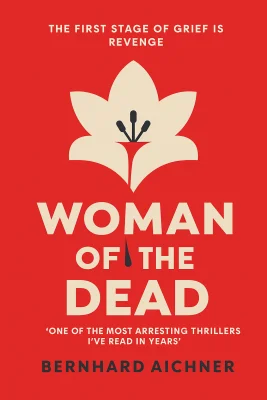
Woman of the Dead
Categories
Fiction, Audiobook, Mystery, Thriller, German Literature, Suspense, Crime, Mystery Thriller, Thriller Suspense, European Literature
Content Type
Book
Binding
Hardcover
Year
2015
Publisher
Orion Publishing Ltd
Language
English
ASIN
0297608479
ISBN
0297608479
ISBN13
9780297608479
File Download
PDF | EPUB
Woman of the Dead Plot Summary
Introduction
The white Cadillac hearse cuts through the Austrian countryside like a ghost from another era, carrying death in its wake. Blum operates her family's funeral business with clinical precision, but beneath her composed exterior lies a woman forged by unimaginable cruelty. When a hit-and-run driver shatters her carefully constructed life, killing her police detective husband Mark in broad daylight, the careful balance she has maintained begins to crumble. What starts as grief transforms into something far more dangerous when Blum discovers recordings on Mark's phone - conversations with a homeless woman named Dunya who speaks of unspeakable horrors. Five masked men, a hidden cellar, years of torture and abuse that the authorities dismissed as delusion. As the recordings reveal their dark secrets, Blum realizes her husband's death was no accident. The same monsters who destroyed Dunya orchestrated Mark's murder, and now they believe they are safe. They are wrong.
Chapter 1: The Shattered Life: A Widow's Grief
The morning sun catches the apple blossoms in the garden of the Blum Funeral Institute, where life and death have always existed in delicate balance. Blum moves through her daily routine with the precision of someone who has spent decades preparing the deceased for their final journey. Her daughters Uma and Nela play in the shadows of the old villa while her father-in-law Karl watches over them, their laughter a stark contrast to the somber business conducted below. Eight years earlier, Blum had been a different woman entirely. The boat drifted silently off the Croatian coast, her parents' voices growing fainter as they treaded water beside the hull. She lay naked on the deck, music drowning out their desperate cries, waiting for the sun to burn her skin as thoroughly as her hatred had burned away any trace of filial love. Hagen and Herta Blum had made her life a laboratory of cruelty, forcing her to handle corpses from the age of seven, locking her in coffins when she resisted. When the coastguard finally arrived, they found only a grief-stricken daughter and two bodies that would never tell their secrets. Mark had been there when she needed him most, a police detective on holiday who pulled her from the wreckage of her old life and helped her build something beautiful. They transformed the funeral home from a place of horror into something approaching normal, filled it with love and laughter and the sound of children's feet on old wooden floors. For eight years, Blum had believed she could leave her darkness behind. That belief died with Mark on a quiet residential street, crushed beneath the wheels of a black Rover that never stopped, never hesitated, never looked back. As Blum knelt in the spreading pool of blood, cradling her husband's broken body while their daughters watched from the window, she felt the old darkness stirring. The protective shell she had built around her new life cracked like an eggshell, revealing the weapon that had always lived beneath.
Chapter 2: Uncovering the Truth: Mark's Secret Investigation
The study smells of Mark's cologne and old leather, untouched since his death three weeks ago. Blum sits in his chair, wine loosening the knots in her chest as she scrolls through his phone. She expects to find mundane police business, perhaps a few forgotten photos of the children. Instead, she finds Dunya. The woman's voice emerges from the phone's speaker like a ghost made of static and pain. She speaks with the careful diction of someone who has learned to make every word count, describing horrors that should not exist in their quiet Austrian city. A hotel in Sölden. Three people smuggled in from Moldova, promised work and safety. Instead, they found themselves in cages, property of five masked men who treated them like animals bred for entertainment. Mark's voice on the recordings is gentle but persistent, coaxing details from Dunya that the other police dismissed as drug-fueled fantasy. He believes her completely, following leads that his colleagues abandoned, meeting her in secret locations around Innsbruck. Blum listens to hours of conversation, watching her husband's obsession grow with each recorded session. Dunya describes the photographer who documented their suffering, the priest who quoted scripture while he raped them, the huntsman with his tranquilizer darts, the chef who fattened them like livestock. The final recording chills Blum's blood. Mark tells Dunya he may have found the photographer, promises to return with answers. His voice carries an excitement that Blum recognizes, the thrill of a hunter closing in on his quarry. He never came back from that hunt. The next morning, a black Rover turned him into roadkill while his family watched from their breakfast table. As dawn breaks over Innsbruck, Blum makes a decision that will stain her hands with blood. She will find Dunya. She will learn the truth about the five masked men. And she will make them pay for taking away everything she loved, one body at a time.
Chapter 3: The Five Men: Monsters Behind Masks
Dunya sits in the children's bedroom, surrounded by pink stuffed animals and fairy tale books, her beauty a testament to the resilience of the human spirit. Blum found her in a supermarket, arguing with a clerk over fifty cents, and brought her home like a wounded bird. Now, wrapped in Nela's flowered comforter, Dunya tells her story in full for the first time. The cellar existed beneath a restaurant in Kitzbühel, a playground for monsters who shed their human masks along with their inhibitions. The photographer captured their agony in artistic compositions, claiming their terror would make him famous. The priest administered savage beatings as penance for imagined sins, his belt leaving permanent scars on their backs and souls. The huntsman treated them like wild game, stalking them through the confined space before bringing them down with tranquilizer darts and his own perverted version of the hunt. The chef, Dunya explains, was obsessed with nutrition, force-feeding them gourmet meals while they lived in filth. He kept detailed records of their weight and health, ensuring his livestock remained in prime condition. The clown arrived later, the worst of them all, a creature of pure sadistic joy who beat pregnant Ilena until she lost her baby and bled to death in Dunya's arms. He laughed while he worked, treating their suffering as the greatest joke ever told. For five years, Dunya endured this nightmare alongside Ilena and a seventeen-year-old boy named Youn. She watched her friend die giving birth to a child that was immediately taken away, felt Youn's small body trembling as the monsters took turns with him. Only a miracle and an unlocked door allowed her escape, and even then, she ran straight into the hands of police who refused to believe her story. Blum listens with growing fury, watching Dunya shrink into herself with each revelation. When the woman shows her the scars that map her torment, Blum makes a silent promise. These men will not live to see another sunrise. They took Mark from her, destroyed Dunya's life, and filled a cellar with screams that echoed for half a decade. They have forgotten that some debts can only be paid in blood.
Chapter 4: The Hunt Begins: Justice by Her Own Hands
The Ducati Monster roars to life beneath Blum, Mark's motorcycle responding to her touch like a living thing. She has never ridden alone before, but grief is a powerful teacher. The machine carries her through the Austrian countryside toward Sölden, where her investigation begins in earnest among the Alpine hotels and their dark secrets. The former doorman of the Annenhof hotel lives in squalor, carving devil masks while drinking away his knowledge of the past. Sebastian Hackspiel's apartment reeks of alcohol and wood shavings, but his memory remains sharp enough to provide the first link in Blum's chain of vengeance. Yes, there was a brothel in the hotel's wellness center. Yes, the village priest was a regular customer. And yes, the owner's son Edwin Schönborn was a photographer with expensive tastes and unlimited access. Blum trades two hundred euros for information that would have cost the police months to uncover. Hackspiel describes Edwin as a spoiled brat who spent weekends at the hotel with his friends, parties that the staff learned not to ask about. The old doorman's devils leer down from the walls as he speaks, wooden faces frozen in eternal mockery of human weakness. The bourbon burns Blum's throat as she pieces together the connections. A photographer son with access to his father's hotel, a priest who enjoyed more than spiritual comfort, a network of powerful men who believed their position made them untouchable. She drinks with Hackspiel until the room spins, then accepts his offer to sleep on his filthy couch rather than risk the mountain roads drunk. When she wakes, two hundred euros poorer but infinitely richer in purpose, Blum knows where to find her first target. Edwin Schönborn has a studio in Innsbruck's old town, a pristine white space where he creates art from human suffering. She will visit him very soon, and when she does, she will bring the tools of her trade.
Chapter 5: The Photographer and the Priest: First Blood
Edwin Schönborn's studio occupies prime real estate in Innsbruck's historic district, its white walls and expensive equipment testimony to a successful career built on hidden foundations. Blum poses as a potential client, spinning lies about nude photography while recording every word. His eagerness betrays him completely – he has done this before, many times, and her suggestions about outdoor photography and facial close-ups light fires in his eyes. The trap springs in an underground garage where Schönborn climbs willingly into a coffin, believing he will emerge to photograph Blum's ecstasy in a forest clearing. Instead, he finds himself in a preparation room, bound to an aluminum table while hypothermia and head trauma steal his life away. Blum watches him die with the same detachment she once reserved for her parents' drowning. Some people, she reflects, simply deserve to stop breathing. The old skills return as if she had never put them aside. Her scalpel parts flesh with surgical precision, the bone saw reduces Schönborn to manageable pieces, the formalin preserves evidence of justice served. She distributes his remains between two coffins, hiding a monster's corpse alongside innocent dead. At the cemetery, Blum delivers eulogies for the departed while mentally composing obituaries for the photographer who lies beneath six feet of Austrian soil. Herbert Jaunig proves more challenging prey. The beloved priest maintains his facade of sanctity even as Blum's hearse carries him toward the Croatian coast, bound and broken in the boot of her car. The old yacht becomes a floating confessional where Jaunig speaks of lost souls and divine mercy even as gasoline soaks his cassock. His sermons end abruptly when Blum's lighter transforms him into a human torch, his screams lost in the Mediterranean wind. The priest's head hangs from the cathedral door like a medieval warning, terror made manifest in the heart of God's house. Blum watches from a park bench as teenagers discover her gift, their horrified faces reflecting a truth the authorities refuse to acknowledge. Herbert Jaunig was no man of God. He was a predator who quoted scripture while he ravaged the innocent, and his congregation deserves to know what manner of devil led their prayers.
Chapter 6: The Chef and the Actor: No Turning Back
Bertl Puch's Vienna apartment tells the story of a man drunk on his own success, carelessly storing videos of his victims alongside cooking shows and celebrity interviews. The celebrity chef's computer yields a treasure trove of evidence that would convict him a thousand times over, footage of torture sessions filed under "pig-breeding" like recipes for his television audience. The confrontation in the underground garage proceeds exactly as Blum planned until a highway patrol officer nearly discovers her cargo screaming from inside a coffin. Quick thinking and quicker lies save her from exposure, but the near-miss shatters her confidence. She silences Puch with a tire iron, reducing Austria's most beloved chef to a bleeding mass of unconscious flesh somewhere between Salzburg and home. A witness to the killing haunts Blum's nightmares until Johannes Schönborn arrives with photographs and demands. The deputy governor's political ambitions crumble when Blum shows him what his son truly was, trading mutual destruction for mutual silence. The old man drives away diminished, his dreams of higher office buried alongside his monstrous child. Benjamin Ludwig's perfect family life makes for compelling television, but the actor's real performance took place in a Kitzbühel cellar where he sang opera while committing atrocities. Blum and Reza track him to his Munich mansion, kidnap him at gunpoint, and extract the truth in a lakeside boathouse where his screams echo off the water like applause. The huntsman's confession reveals the network's true scope and the identity of their leader. The clown, Ludwig gasps as Blum's bullet punches through his skull, was not just another member of their sick fraternity. He was the mastermind, the one who ordered Mark's death, the monster who wore a police badge while he tortured innocents in his spare time. His name burns in Blum's memory like a brand: Massimo.
Chapter 7: The Final Betrayal: The Clown Unmasked
The truth arrives like a physical blow, doubling Blum over with its weight. Massimo Dollinger, Mark's best friend and partner, the man who comforted her in grief and shared her bed in weakness, wore the clown's mask in that underground hell. He was the worst of them all, the sadistic puppet master who orchestrated their games and silenced anyone who threatened to expose them. Every kindness becomes a mockery in retrospect. Massimo's gentle touches after Mark's funeral, his offers to help with the children, his careful positioning as protector and potential replacement – all calculated moves in a game Blum never knew she was playing. He killed Dunya when she appeared in the children's bedroom, held her head underwater until her stories died with her. He murdered Mark to protect his secrets, and he would have killed Blum too when the time was right. The crematorium provides the perfect execution chamber, its industrial furnaces designed to leave no trace of their contents. Massimo awakens bound in a coffin, his police training useless against restraints applied by an expert in handling the dead. His confession tumbles out in desperate gasps, admitting to years of torture, rape, and murder while begging for mercy he never showed his victims. Blum listens to his justifications with the patience of a priest hearing final confession. His marriage was failing, he explains. His wife's desperate need for children emasculated him. The cellar offered an escape from domestic disappointment, a place where he could exercise absolute power over helpless victims. He speaks of Dunya and the others as if they were therapeutic tools rather than human beings, resources provided for his psychological healing. The furnace door opens with mechanical indifference, accepting its offering without judgment. Massimo's screams last exactly forty-seven seconds before the flames steal his voice forever. Blum and Reza watch through the viewing window as justice reduces itself to ash, 700 degrees of purification erasing five years of accumulated sin. When morning comes, they scatter his remains in a roadside toilet, flushing the monster away with the waste he always was.
Summary
The white hearse returns to Innsbruck carrying the weight of completed vengeance, its driver transformed by blood and fire into something both more and less than human. Blum has dismantled a network of monsters piece by piece, feeding their remains to Austrian soil while their families mourn shadows they never truly knew. The cellar beneath the Kitzbühel restaurant stands empty now, its cages removed and its secrets buried with the men who built them. In the garden of the Blum Funeral Institute, Uma and Nela play beneath the apple trees while their mother watches from the kitchen window. They will grow up without knowing how close evil came to touching their lives, protected by a woman who crossed every line to keep them safe. Blum has paid the ultimate price for their innocence, trading her soul for their security in a bargain she would make again without hesitation. The dead sleep peacefully in their graves, and the living sleep peacefully in their beds, never knowing that sometimes the only way to stop a monster is to become something worse.
Best Quote
Review Summary
Strengths: The book is praised for being a gripping and concise mystery, with a shocking and engaging storyline that holds the reader's attention until the end. The translation from German to English is noted as flawless. The character of Blum is highlighted as interesting, and the book's ability to evoke strong reactions is acknowledged. Weaknesses: Some readers find the protagonist unlikable and the storyline improbable and predictable. The violence is perceived by some as excessive and included for shock value. The book's graphic nature may not appeal to all readers. Overall: The general sentiment is mixed. While some readers highly recommend it for fans of violent crime fiction and revenge-driven plots, others find it unappealing due to its graphic content and character portrayal.
About Author

Bernhard Aichner
Aichner delves into the complexities of human behavior through the lens of crime and mystery, creating narratives that delve into psychological depths. His novels, audio plays, and stage plays collectively explore themes of tension and intrigue, capturing a raw and thoughtful essence often associated with Scandinavian crime fiction. This approach allows readers to engage deeply with the characters and their motivations, making his work resonate on an emotional level. For instance, "Woman of the Dead", a title that inspired a Netflix drama, exemplifies Aichner's ability to weave gripping narratives that intrigue and captivate audiences globally.\n\nIn parallel with his narrative style, Aichner’s commitment to authentic storytelling is evident in his hands-on research methods. While preparing for "Woman of the Dead", he worked for six months at a funeral home, an experience that enriched his portrayal of the intricacies of death and mourning. Such dedication to realism not only enhances the narrative authenticity but also provides readers with a vivid, immersive experience. His works have been translated into twelve languages, underscoring their international appeal and the universal themes they address.\n\nThe impact of Aichner's work extends beyond mere entertainment; his stories invite readers to confront moral ambiguities and the darker facets of human nature. As an award-winning author, his contributions to literature are recognized for their intensity and depth, although the specifics of his accolades remain undisclosed. Aichner's works are particularly appealing to those who appreciate the nuanced storytelling of crime fiction, offering both suspense and insight into the human psyche. This brief bio captures the essence of Aichner’s literary endeavors, illustrating his unique position within contemporary fiction.
Read moreDownload PDF & EPUB
To save this Black List summary for later, download the free PDF and EPUB. You can print it out, or read offline at your convenience.

Woman of the Dead
by Bernhard Aichner
