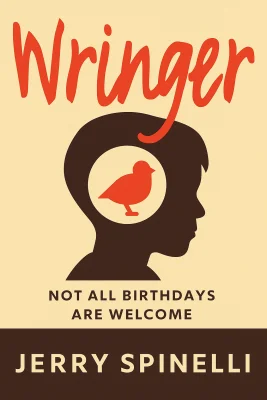
Wringer
Categories
Fiction, Animals, Young Adult, School, Contemporary, Coming Of Age, Realistic Fiction, Childrens, Middle Grade, Juvenile
Content Type
Book
Binding
Paperback
Year
2005
Publisher
HarperTrophy
Language
English
ASIN
0060739487
ISBN
0060739487
ISBN13
9780060739485
File Download
PDF | EPUB
Wringer Plot Summary
Introduction
In the small town of Waymer, every August brings Family Fest—a week of carnival rides, cotton candy, and culminating horror. The final Saturday transforms the soccer field into a killing ground where five thousand pigeons are released from wooden crates, only to meet the barrels of waiting shotguns. Boys who turn ten earn the right to become wringers, racing onto the blood-soaked grass to snap the necks of wounded birds with their bare hands. Palmer LaRue has dreaded this destiny since childhood. Unlike other boys who count down days to their tenth birthday with eager anticipation, Palmer feels only a growing terror in his stomach—a constant reminder of what he must become. But when a gray pigeon arrives at his bedroom window after a winter blizzard, Palmer discovers that some bonds transcend the brutal traditions of his hometown. His secret friendship with the bird he names Nipper sets him on a collision course with everything his community holds sacred, forcing him to choose between belonging and his own conscience.
Chapter 1: The Dread of Becoming Ten
Nine-year-old Palmer LaRue awakens each morning to the same gnawing fear—in one year, he will become a wringer. The feeling lives in his stomach like hunger, but worse, because no amount of food can satisfy it. While other boys his age dream of joining the ranks at Pigeon Day, Palmer shivers at the memory of his first encounter with the annual tradition. He was only four when he watched a wounded pigeon hobble across the grass, dragging one wing, heading straight toward the cheering crowd. A boy no older than Palmer now snatched the bird up, twisted his hands in opposite directions, and the pigeon's head dangled limp. The crowd applauded. Palmer clapped too, not understanding, asking his mother why the boy had done that. "To put the pigeon out of its misery," she replied, but the answer never quite made sense to him. Now, as nine burns toward ten, Palmer finds himself caught between two worlds. His father's golden Sharpshooter trophy gleams from the mantel—a testament to his skill at killing pigeons. Yet Palmer cannot reconcile the loving man who tucks him into bed with the marksman who pulls the trigger. The contradiction gnaws at him through sleepless nights, where dreams of orange pigeon eyes and snapping necks wake him gasping. The countdown has begun, and Palmer knows that time itself is his enemy. Every sunrise brings him one day closer to his tenth birthday, one day closer to the moment when he must pick up a wounded pigeon and twist its neck. The thought makes his hands shake, but in this town, becoming a wringer is as inevitable as breathing.
Chapter 2: Finding Acceptance Among the Pack
Palmer's salvation seems to arrive in the unlikely form of Arthur Dodds, better known as Beans—a gap-toothed tyrant whose green and yellow teeth tell the story of a boy who has forsaken all hygiene. Beans rules the neighborhood kids with casual cruelty, flanked by his lieutenants Mutto and the gangly Henry. For years, they have dismissed Palmer as too young, too small, too strange with his unusual first name. But ninth birthdays change things. When Palmer finally receives his invitation to join the gang, it comes with a price—The Treatment. He finds himself face to face with Farquar, the legendary wringer whose knuckle has baptized every boy in town. Nine sharp raps to the arm, one for each year of life, delivered with surgical precision to a spot that will throb for weeks. As Farquar's hammer-hard knuckle crashes into his flesh, Palmer bites back screams and forces himself not to cry. The pain shoots through his entire body, but he endures. When it ends, he has earned something precious—acceptance. The bruise on his arm becomes a badge of honor, drawing crowds of younger children who gasp and ask to touch it. For the first time in his life, Palmer belongs. He walks the streets with Beans, Mutto, and Henry, basking in the reflected glory of their notoriety. They give him a nickname—Snots—and he wears it proudly. The gang becomes his shield against the approaching terror of his tenth birthday. If he can stay in their good graces, perhaps becoming a wringer will not be so frightening after all. Perhaps, surrounded by friends, he can find the courage to do what must be done.
Chapter 3: An Unexpected Visitor at the Window
Winter arrives with unprecedented fury, dumping snow that transforms Palmer's ordinary world into something magical. He spends the day sledding down Valentine's Hill with his new friends, feeling truly happy for the first time in months. But happiness in Palmer's life never lasts long without complication. The tapping at his bedroom window the next morning changes everything. Palmer expects to find Beans or one of the guys outside, but instead discovers a plump gray pigeon perched on his windowsill. The bird pecks persistently at the glass, head cocked, one orange eye fixed on the boy inside with what seems like deliberate intent. Palmer's first instinct is terror. In a town that murders five thousand pigeons each year, harboring one is tantamount to treason. He waves frantically, trying to shoo the bird away, but it refuses to leave. The pigeon seems remarkably stupid or remarkably stubborn—perhaps both. It taps again, as if requesting entry to the very house where a Sharpshooter trophy gleams in the den below. When Palmer finally feeds the bird some breakfast cereal scattered on the snow, he tells himself it is just to make it go away. But even as he makes this excuse, he knows he is lying. The pigeon eats eagerly, and Palmer cannot look away from the surprising beauty of its simple act of survival. Eight different colors shimmer across its feathers in the morning light, and Palmer realizes he has never really looked at a pigeon before—only at targets. The next morning, the tapping returns.
Chapter 4: Nurturing a Forbidden Friendship
Against every instinct for self-preservation, Palmer opens his window. The pigeon walks inside—not hops, but walks like a person—strolls up Palmer's arm onto his head, nips his earlobe sharply, and begins exploring the room with the confidence of a new tenant inspecting his quarters. Palmer names him Nipper and watches in amazement as the bird establishes routines. Each morning, Nipper wakes Palmer with gentle pecks to the ear, far more reliable than any alarm clock. The pigeon surveys the room like a general reviewing troops, invariably tumbling off Palmer's comic book stack in a clumsy display that never fails to make Palmer laugh. By evening, Nipper roosts contentedly on the closet shelf, settling into sleep as the sun sets. The secret transforms Palmer's existence. He becomes an expert at deception, buying boxes of Honey Crunchers cereal and hiding them in his closet. He learns to clean up the telltale white droppings, to open and close windows silently, to maintain the fiction that nothing has changed in his carefully ordered world. When his mother asks to knock before entering his room, Palmer concocts an elaborate story about modesty and growing maturity. But the greatest transformation is emotional. In Nipper's presence, Palmer discovers a capacity for tenderness he never knew he possessed. The bird's trust is absolute—he perches on Palmer's head, allows himself to be gently stroked, responds to his voice. Palmer finds himself talking to Nipper about everything: his fears, his dreams, his growing dread of the approaching birthday that will make him a killer. The friendship feels like the most natural thing in the world, yet Palmer knows it is also the most dangerous secret he has ever kept.
Chapter 5: The Growing Weight of Tradition
As Palmer's tenth birthday approaches, the gang's conversations increasingly turn to their future roles as wringers. Beans boasts endlessly about how many pigeons he plans to kill, demonstrating his technique on imaginary birds with relish. Even gentle Henry seems caught up in the anticipation, though Palmer notices he often looks away during Beans's more graphic displays. The boys attend wringer school, where a man in a neon pink baseball cap teaches them the mechanics of their trade. Palmer watches in horror as kids line up to practice neck-twisting on a stuffed sock, each one trying to impress the instructor with their enthusiasm for the task ahead. When Palmer's turn comes, he forces himself to participate, knowing that any hesitation will mark him as suspect. Meanwhile, Nipper's daily presence grows more precious and more perilous. The pigeon has learned Palmer's schedule, arriving at the window each afternoon with clockwork precision. Their games become more elaborate—Nipper perches on the basketball rim while Palmer shoots, nipping at the ball as it passes. The bird's personality emerges through his many sounds: chuckles, grumbles, and woofs that seem to comment on Palmer's activities. But Palmer's careful deceptions begin to fray. His increasingly bizarre behavior at school—spitting on floors, tickling teachers, wearing winter coats in spring—draws attention even as it keeps him safely in detention past Nipper's arrival time. The gang grows suspicious when Palmer refuses to let them visit his room, and their questions about pigeons become more pointed and persistent. The approaching collision between Palmer's two worlds—the boy with his secret pet and the boy who must soon become a killer—creates a tension that threatens to tear him apart. Each day brings both joy and terror in equal measure.
Chapter 6: A Choice Between Belonging and Belief
The crisis arrives with shocking suddenness during Palmer's tenth birthday party. As he celebrates with Beans, Mutto, and Henry, Palmer's father delivers words that shatter his assumptions about inevitability. When Beans assumes Palmer will automatically become a wringer, Palmer's father quietly states that Palmer can decide for himself—it is up to him. The revelation that choice exists where Palmer had seen only destiny changes everything, but it also complicates everything. The next day, seeking The Treatment that will officially mark his passage into wringer-hood, Palmer stands before Farquar with his sleeve rolled up. But as the legendary knuckle-rapper prepares to deliver the ritual ten blows, something inside Palmer rebels. The word bursts from his lips before he can stop it: "No." Then louder, clearer, more definite: "No!" And finally, at the top of his lungs, the declaration that will change his life forever: "No nothing! No Treatment! No wringer! No Snots! My name is Palmer!" The gang's pursuit through the streets that follows is terrifying, but Palmer's legs carry him faster than they ever have before. Hidden behind a dumpster for hours, he finally understands that he has crossed a line from which there is no return. He is no longer one of them, and they will never forgive him for choosing to be human over being accepted. When Palmer returns home, he finds Panther—Beans's vicious yellow cat—sitting on his bed, staring at Nipper through the window screen with predatory patience. The message is clear: they know about his secret, and they will not let it survive. Palmer's act of defiance has signed his pigeon's death warrant.
Chapter 7: Standing Alone in the Field of Feathers
Palmer's mother's gentle confession that she and his father have known about Nipper all along provides momentary comfort, but cannot change the fundamental problem: in this town, there is no room for both Palmer and his pigeon to exist safely. With Dorothy's help—his across-the-street neighbor who has become his most trusted ally—Palmer makes the heartbreaking decision to release Nipper far from town. But their plan goes tragically wrong. Dorothy's family releases the pigeon in railroad yards during their vacation, not knowing these are the very places where pigeons are trapped for Pigeon Day. Palmer realizes with growing horror that his beloved friend may be among the five thousand birds crated and waiting for the annual slaughter. On the morning of Pigeon Day, Palmer finds himself drawn to the soccer field despite every instinct for self-preservation. The carnival atmosphere nauseates him—families picnicking while shotguns boom, children cheering as birds plummet from the sky, wringers racing across the feathered battlefield with their gruesome harvest. Then it happens. A gray pigeon circles the field, breaks from its flight pattern, and lands directly on Palmer's head. Palmer knows instantly, with absolute certainty, that this is Nipper—returned to the one place in the world where he feels safe, oblivious to the horror that surrounds him. As Beans snatches the bird away and a shooter raises his gun, Palmer has no choice left but to act. He runs onto the field, slides through the carpet of gray feathers, and curls his body around his friend just as the shotgun aims at them both. The boom he expects never comes. In the sudden silence, Palmer rises to his feet, holding Nipper close, and faces the crowd. For one shining moment, suspended between earth and sky in a field of fallen feathers, he feels the strange lightness that comes from finally choosing love over fear, compassion over belonging.
Summary
Palmer LaRue's journey from fearful boy to unlikely hero reveals the terrible cost of traditions built on cruelty and the extraordinary courage required to stand alone against an entire community. His love for a single pigeon transforms him from someone who follows to someone who leads, even when leadership means walking a path no one else will take. In saving Nipper, Palmer saves something essential in himself—the capacity to choose conscience over conformity. The story resonates beyond its specific setting to speak to anyone who has ever faced the choice between belonging and being true to themselves. Palmer's final act in the field of feathers is not just about one boy and one bird, but about the moment when we must decide what kind of person we will be when the test comes. In that moment of terrifying clarity, surrounded by those who would destroy what he loves, Palmer discovers that the greatest victory is not in winning, but in refusing to participate in someone else's definition of what it means to be strong.
Best Quote
“They stood staring at each other’s face, the only place their eyes were safe.” ― Jerry Spinelli, Wringer
Review Summary
Strengths: The reviewer appreciates Spinelli's ability to realistically capture the thoughts and actions of children and parents, highlighting a memorable moment between Palmer and his mother. The portrayal of friendship between Palmer and Dorothy, as well as the character of the pet pigeon Nipper, is noted positively. The historical accuracy of the pigeon shoot event adds depth to the narrative. Weaknesses: The review criticizes the lack of consequences for the bullies, the stressful nature of Palmer's character, and the setting's incongruence with the 1990s. The absence of adult intervention and a confusing, unsatisfying ending are also highlighted as significant drawbacks. Overall: The review presents a mixed sentiment, with some appreciation for character portrayal and historical context, but significant criticism of character development, setting, and plot resolution. The recommendation level is low, with the reviewer unlikely to suggest or revisit the book.
About Author

Jerry Spinelli
Spinelli delves into the complex experiences of youth, interweaving themes of identity, belonging, and societal challenges within his body of work. His early aspiration to become either a cowboy or a baseball player gave way to a successful writing career, which took shape after he chose to write a poem about a football victory rather than joining his classmates in celebration. This pivotal moment, coupled with the poem's publication, steered Spinelli toward a lifelong exploration of childhood and adolescence in his writing. His initial attempts at adult novels met with failure, leading him to shift his focus to writing from a child's perspective, thus launching his career as an author with the book "Space Station Seventh Grade." \n\nSpinelli's works often draw from his own life experiences, as well as those of his children, creating a sense of authenticity and empathy that resonates with readers. His notable book "Maniac Magee," which won the Newbery Medal, addresses homelessness and racial divides, demonstrating his commitment to tackling serious social issues through accessible storytelling. Meanwhile, "Stargirl" explores themes of nonconformity and has been praised for its realistic portrayal of adolescent life, further exemplified by its adaptation into a Disney film. Spinelli's narrative style often incorporates humor and realism, appealing to young readers who are navigating the complexities of growing up.\n\nReaders benefit from Spinelli's ability to transform personal and societal challenges into engaging narratives that offer both entertainment and insight. His exploration of difficult topics such as peer pressure in "Wringer," which received a Newbery Honor, provides a platform for young readers to confront and understand these issues within a safe and relatable context. Spinelli's contributions to children's literature have earned him numerous accolades, reinforcing his impact on the genre and underscoring the lasting relevance of his themes. Through his books, Spinelli continues to inspire and educate, offering readers both a mirror to their own lives and a window into the broader human experience.
Read moreDownload PDF & EPUB
To save this Black List summary for later, download the free PDF and EPUB. You can print it out, or read offline at your convenience.
Wringer
by Jerry Spinelli
