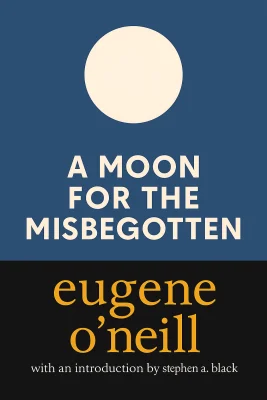
A Moon for the Misbegotten
Categories
Fiction, Classics, Plays, Romance, Literature, American, 20th Century, Nobel Prize, Drama, Theatre
Content Type
Book
Binding
Paperback
Year
2006
Publisher
Yale University Press
Language
English
ASIN
0300118155
ISBN
0300118155
ISBN13
9780300118155
File Download
PDF | EPUB
A Moon for the Misbegotten Plot Summary
Introduction
Connecticut, September 1923. On a ramshackle farm where broken fences and bitter schemes define daily life, Phil Hogan watches his last son flee into the morning mist. The old Irish tenant farmer has spent decades perfecting the art of survival through cunning and bluster, but now he faces his greatest gamble yet. His daughter Josie, a towering woman whose strength masks profound loneliness, waits unknowingly at the center of a web that will either save or destroy the man she loves. James Tyrone Jr. carries death in his eyes and whiskey on his breath. The Broadway wastrel has returned to this corner of nowhere, haunted by memories that claw at his soul with each dawn. Tonight, under a moon that promises absolution, three damaged souls will collide in a reckoning that strips away every lie they've told themselves. What begins as manipulation will become something far more dangerous: the truth.
Chapter 1: The Hogan Farm: Schemes and Desires
The September sun beats down mercilessly on the weathered clapboard house that Phil Hogan calls home. The structure seems ashamed of itself, propped up on timber blocks like a drunk leaning against a lamppost. Paint peels in leprous patches, and cardboard squares replace missing windowpanes. This is where dignity comes to die, slowly and without ceremony. Josie Hogan emerges from her makeshift bedroom, ducking her head to clear the low doorframe. At twenty-eight, she stands nearly six feet tall, her body carrying the kind of strength that makes grown men step aside. The map of Ireland marks her face with freckles and dark blue eyes that hold both tenderness and steel. She moves with the fluid power of someone who has learned that survival requires both muscle and cunning. Her brother Mike scurries up from the barn, clutching a pitchfork like a weapon against his own fear. The boy has inherited none of his sister's courage, only their father's capacity for self-righteousness wrapped in Catholic guilt. When he speaks of Josie's reputation with the local men, her hand connects with his jaw in a slap that sends him stumbling. The sound echoes across the stubble field like a gunshot. Phil Hogan appears at a dead run, his stumpy legs pumping with surprising speed. At fifty-five, he resembles nothing so much as an angry pig in overalls, his little blue eyes gleaming with malice and calculation. His fury at finding Mike absent from work transforms into grudging respect when he learns the boy has finally found the spine to run away. Three sons gone now, fled like rats from a sinking ship. Only Josie remains, his greatest asset and his deepest shame. Father and daughter settle into their familiar dance of insults and affection. Hogan mourns the theft of his money to fund Mike's escape, but his complaints ring hollow. He has always known that Josie is worth more than all his sons combined. She matches his cunning scheme for scheme, his temper blow for blow. They are two predators who have learned to hunt as a pack, and neither would survive long without the other. The conversation turns, as it always does, to James Tyrone Jr. Hogan watches his daughter's face soften when the name is spoken, sees the vulnerability she tries so hard to hide. Here is leverage, raw and powerful as dynamite. The old schemer begins to weave his web with the patience of a spider who has trapped many flies before.
Chapter 2: A Betrayal in the Making: Phil's Manipulative Plan
The whiskey has done its work by the time Phil Hogan stumbles home from the Inn, but his performance of drunkenness is as calculated as everything else he does. His voice wavers with false emotion as he spins his web of lies, each strand designed to ensnare his daughter's fierce heart. James Tyrone has betrayed them all, he claims. The farm will be sold to their hated neighbor Harder for ten thousand dollars in cash. Josie's world tilts on its axis. The man she has loved from a careful distance, the one person who seemed to see beauty in her ungainly frame, has chosen money over loyalty. The pain cuts deeper than any physical blow she has ever received. Hogan watches her face crumble and knows his hook has found its mark. Now comes the delicate work of reeling in his catch. The old man's story unfolds with the practiced ease of a con artist who has perfected his craft. Jim Tyrone, drunk and desperate, has agreed to meet with Harder's representatives in the morning. The estate money calls to him like a siren song, promising escape from this backwater existence and return to the Broadway lights he craves. Hogan claims he tried to stop the betrayal, even threw a punch at Harder's slimy superintendent, but arrived too late to prevent the deal. Josie's grief transforms into something far more dangerous: cold fury wrapped in calculating intelligence. If Jim Tyrone thinks he can use and discard the Hogans, he has badly underestimated the woman he believes loves him. Hogan feeds her anger carefully, adding fuel to the fire while pretending to pour water on the flames. He speaks of shotguns and witnesses, of schemes that could trap a man in compromising circumstances and force him to honor his commitments. The plan takes shape between them like a twisted prayer. Josie will lure Jim to the farm under cover of darkness, get him drunk enough to be compromised, then arrange for her father and witnesses to discover them together. The scandal would force Jim's hand, compel him to marry her or face public humiliation. But Josie has her own amendments to the scheme. She will take his money and give him nothing in return, the ultimate revenge against a man who has made her believe in love only to crush it underfoot. Hogan plays his part to perfection, alternating between encouragement and false reluctance. He knows his daughter better than she knows herself, understands that her pride will demand she prove she can best any man at his own game. What he does not tell her is that his true plan runs deeper than revenge or money. In his twisted way, he genuinely believes he is saving them both.
Chapter 3: Moonlight Revelations: Jim's Haunted Soul
James Tyrone Jr. walks the country road like a man attending his own funeral. At forty-two, his once-handsome face bears the ravages of a decade's worth of dissipation. His expensive suit hangs wrong on his softened frame, and his eyes hold the peculiar glassy quality of someone who has learned to function while dying inside. He moves with the careful precision of a practiced drunk, each step a small victory over the poison in his blood. The Hogan farm appears before him like a mirage of normalcy, its shabby buildings somehow comforting in their honest decay. Here, at least, no one pretends to be anything other than what they are. Phil Hogan greets him with their usual ritual of mock hostility and theatrical negotiation over drinks. The old Irishman plays the tightwad landlord while Jim performs the role of the suffering tenant. Both men know it is a game, but games can be more honest than truth. Josie emerges from the house transformed, her rough work clothes replaced by her Sunday best, her wild hair tamed into something approaching elegance. She has pinned a white flower to her breast like a bride preparing for her wedding, though Jim cannot know this is exactly what she believes tonight might bring. Her calculated seduction begins with practiced ease, all bold innuendo and brazen suggestion, but something in Jim's manner stops her cold. He looks at her with a mixture of desire and reverence that no man has ever shown her before. His compliments carry the weight of genuine feeling rather than drunken lust. When he speaks of her beauty, her strength, her kindness, Josie feels the careful walls around her heart beginning to crack. This is not the callous betrayer her father described, but a man who seems to find in her something precious and fragile. The bottle passes between them as the moon rises, its silver light transforming the shabby farm into something magical. Jim's stories flow like wine, tales of his college days and his father's theatrical tours, memories seasoned with wit and self-deprecation. But beneath the surface charm, Josie senses something darker lurking. His laughter never quite reaches his eyes, and his hands shake slightly when he thinks no one is watching. As the night deepens, Jim's mask begins to slip. He speaks of dawns creeping gray over dirty windows, of mornings that bring only shame and the promise of more poison. He tells her she deserves better than the corruption he carries like a disease, that her innocence should be protected from men like him. Josie listens with growing confusion, for this is not the script her father has written. This is not betrayal speaking, but something that sounds dangerously like love.
Chapter 4: The Confession: Guilt, Grief, and a Mother's Death
The whiskey has done its work too well, stripping away Jim Tyrone's defenses like acid eating through steel. He sits in the moonlight beside Josie, his head heavy on her breast, and feels the words rising from some poisoned well deep in his soul. The story comes out in fragments, each piece sharp enough to draw blood. His mother's death, the train ride east with her body in the baggage car, and the blonde whore who shared his drawing room for fifty dollars a night. Josie recoils as if struck, her arms falling away from him as the ugly truth unfolds. This is the man she has loved from afar, the one she believed might see past her rough exterior to something worth cherishing. Now she learns that while his mother's corpse lay in the darkness ahead, he rutted with a prostitute whose face reminded him of nothing so much as an overfed pig. The betrayal cuts deeper than her father's scheming, for this wound is carved by her own expectations. Jim's voice continues its relentless confession, each word falling like a stone into still water. He describes how he could not cry at his mother's funeral, how he knelt by her coffin and performed grief like a bad actor in a worse play. The guilt has eaten at him like cancer, leaving him hollow and desperate for something that might fill the void where his soul used to be. Alcohol no longer works, women provide only momentary distraction, and each dawn brings fresh evidence of his damnation. The story reaches its crescendo as Jim recites the lyrics that haunted him during those nightmare nights on the train: "And baby's cries can't waken her in the baggage coach ahead." The words become a chant, a prayer to a god who has long since stopped listening. Josie listens in horror as the man she loves reveals himself to be something far more damaged than she ever imagined. This is not weakness or selfishness, but a kind of spiritual suicide that has been years in the making. Yet as the confession ends, something shifts in the moonlit air between them. Jim's self-hatred is so complete, so genuinely tormented, that it becomes almost pure. He has stripped himself bare before her, offering up his worst sins like a penitent before an altar. In his very degradation, Josie glimpses something that might still be saved. The man who can suffer this deeply for his failures has not lost his humanity entirely. Jim finishes his tale and waits for her judgment, his face turned away as if he cannot bear to see disgust replace whatever feeling she once held for him. The night hangs suspended between them, pregnant with possibilities that neither dares to name. In the distance, Phil Hogan's drunken singing drifts on the wind, a reminder that there are other games being played, other schemes set in motion that must still reach their conclusions.
Chapter 5: A Night of Absolution: Josie's Gift of Comfort
The transformation happens in a heartbeat. One moment Josie is recoiling from Jim's confession, the next she is pulling him back into her arms with fierce tenderness. She understands now what he truly needs from her, and it is not the physical passion she had planned to weaponize against him. He needs something far more precious and dangerous: forgiveness from someone who knows the worst of him and loves him still. Her arms enfold him like a sanctuary, her voice soft with maternal compassion as she soothes his tormented spirit. This is love of a different order entirely, the kind that demands everything and expects nothing in return. Jim surrenders to her embrace like a drowning man accepting rescue, his defenses finally crumbling under the weight of her acceptance. For the first time in months, perhaps years, he allows himself to believe that he might be worthy of grace. The moonlight bathes them both as Josie cradles his head against her breast, her fingers running through his hair with infinite gentleness. She tells him that his mother understands, that the dead do not judge as harshly as the living, that love can transcend even the worst failures of character. Her words work like balm on wounds that have festered for too long, and slowly Jim's rigid body begins to relax. As the hours pass, Jim's breathing deepens into the rhythm of genuine sleep. Josie holds him motionless, afraid that any movement might shatter this fragile peace. Her body cramps and aches, but she endures the discomfort willingly. This is her gift to him, this one night of rest without nightmares, without the parade of ghosts that usually haunt his dreams. She has become his guardian angel, standing watch against the darkness. The irony is not lost on her. She had planned to seduce and betray him, to take his money and leave him humiliated. Instead, she finds herself offering him the most precious thing she possesses: her love without conditions or expectations. He sleeps in her arms like a child who has finally found safety, his ravaged face peaceful in the silver light. She knows this moment cannot last, that dawn will bring him back to his torments and her to her lonely existence. Yet she also knows that something sacred has passed between them, something that neither money nor revenge could have purchased. She has seen into the depths of another human soul and found it worthy of salvation, even if he cannot save himself. In giving him this night of peace, she has discovered reserves of compassion she never knew she possessed. The woman who thought herself capable only of rough passion has learned to offer something infinitely more powerful: mercy.
Chapter 6: Dawn's Awakening: Remembrance and Farewell
The eastern sky blushes with the first hints of sunrise as Josie sits motionless on the farmhouse steps, her body numb from hours of holding Jim's sleeping form. Phil Hogan creeps from the barn like a guilty child, hay sticking to his clothes and shame written across his weathered face. He had expected to find his scheme in full flower, with witnesses and shotguns and the sweet smell of blackmail money in the air. Instead, he discovers something that makes him feel smaller than he has in years. Jim stirs slowly, consciousness returning like a tide creeping up a beach. His first words are those of a man expecting to find himself in familiar degradation, another nameless woman in another anonymous bed. But as his eyes focus on Josie's face, memory floods back in a rush that leaves him gasping. He remembers everything: the confession, the tears, the absolute acceptance she offered without asking anything in return. The dawn light reveals the truth of their night together with pitiless clarity. Josie has given him something no amount of money could buy: a glimpse of what redemption might feel like. Her clothes are wrinkled but intact, her virtue technically preserved even as she has offered him her soul. They have shared an intimacy deeper than flesh, and both are changed by it in ways they are only beginning to understand. Jim struggles with the magnitude of what has passed between them. Part of him wants to flee, to return to the familiar hell of his Broadway existence rather than confront the possibility that he might still be worth saving. But Josie's eyes hold him fast, demanding that he acknowledge what she has given him. She has seen him at his worst and loved him anyway, and that knowledge cuts through his cynicism like sunlight through fog. The conversation that follows is halting, each of them protecting the other from truths too fragile to bear full examination. Jim speaks of beautiful dawns and peaceful hangovers, of nights that feel different from all the others. Josie responds with gentle teasing, her tone carefully light even as her heart breaks with the knowledge that this man will leave her and probably die of his own accumulated poisons. When he finally remembers their night together completely, the knowledge hits him like a physical blow. He tries to flee, horrified at what he believes he has taken from her, but she calls him back with words that ring like cathedral bells. She is proud to have given him her love, proud that her comfort could offer him even temporary peace. In her fierce generosity, he glimpses what unconditional love might look like, and for a moment the weight of his sins feels almost bearable.
Chapter 7: Finding Peace: The Aftermath of Truth
The moment of parting arrives with the cruel inevitability of sunrise. Jim Tyrone walks away from the Hogan farm with Josie's blessing ringing in his ears, her final kiss still warm on his lips. He has been forgiven by someone whose opinion matters more than his own, and that knowledge will have to sustain him through whatever darkness lies ahead. Behind him, Josie watches his retreating figure with tears she refuses to shed, knowing she has given him the greatest gift in her power to bestow. Phil Hogan emerges from his hiding place like a chastened child, expecting his daughter's wrath but finding instead a woman transformed by her night of service. She knows now what he had truly hoped to accomplish with his scheming, understands that beneath his greed and manipulation lay a genuine desire to save two people he loved. The knowledge does not excuse his methods, but it tempers her anger with something approaching forgiveness. The old farmer tries to explain his actions, his voice cracking with emotion as he describes his desperate hope that Jim and Josie might find happiness together. He had seen the way they looked at each other, had recognized the possibility of salvation in their connection, and had tried to force what should have happened naturally. His schemes had backfired spectacularly, but perhaps they had also created something beautiful that might never have existed otherwise. Josie listens to her father's justifications with a patience born of exhaustion and hard-won wisdom. She understands now that they are all flawed creatures struggling toward something resembling grace, and that judgment is a luxury none of them can afford. The night has taught her that love is not about possession or manipulation, but about giving freely what another person needs to survive. She has loved James Tyrone completely, and in doing so has discovered depths of compassion she never knew she possessed. As the sun climbs higher, transforming the shabby farm into something almost beautiful in the morning light, Josie makes her peace with what has passed. She will not marry Jim Tyrone, will not share his money or his bed or his slow journey toward self-destruction. But she has given him something more valuable than any of those things: one night of perfect acceptance, one dawn without shame, one moment of believing that redemption might still be possible.
Summary
The night ends as it began, with three broken people on a failing farm, but something fundamental has shifted in the space between darkness and dawn. James Tyrone carries with him the knowledge that he has been loved completely despite his worst failures, a grace note that may be the closest thing to salvation a damned soul can hope to achieve. Josie Hogan discovers that her capacity for love runs deeper than her appetite for revenge, that mercy can be more powerful than any scheme her father's cunning mind might devise. Even Phil, for all his manipulation and greed, has been transformed by witnessing the genuine connection between two people he thought he could control but who ultimately controlled themselves. In Eugene O'Neill's masterpiece of American theater, the promise of redemption shines like moonlight on troubled water, beautiful and elusive and heartbreakingly brief. The characters return to their separate purgatories changed but not saved, carrying with them the memory of one night when love proved stronger than despair. It is a small victory in the face of enormous defeat, but sometimes small victories are all that stand between us and the darkness that waits to claim us all. In the end, perhaps the moon does shine for the misbegotten after all, offering not escape from their sins but the possibility that someone, somewhere, might understand and forgive them anyway.
Best Quote
“There is no present or future-only the past, happening over and over again-now.” ― Eugene O'Neill, A Moon for the Misbegotten
Review Summary
Strengths: The review highlights the play's unique blend of humor and poignancy within Eugene O'Neill's body of work. It praises the forgiving spirit of the narrative, particularly in granting the character Jamie absolution. Josie Hogan is noted as one of O'Neill's greatest female roles, characterized by her strong presence and complexity. Overall: The review conveys a positive sentiment towards "A Moon for the Misbegotten," appreciating its emotional depth and character development. It suggests that the play stands out in O'Neill's repertoire for its compassionate approach, making it a recommended read for those interested in character-driven narratives and classic American theater.
About Author

Eugene O'Neill
O'Neill delves into the human condition through plays that delve into the complexities of psychological and social issues, utilizing dramatic realism. He uniquely incorporates vernacular speech, influenced by European playwrights like Henrik Ibsen and Anton Chekhov, to add authenticity and emotional depth. His works, including "Mourning Becomes Electra" and "Long Day's Journey into Night," focus on themes of disillusionment, addiction, and familial conflict, which resonate deeply with audiences. His play "Ah, Wilderness!" stands as his sole comedic work, contrasting the generally tragic tones of his other writings.\n\nHis method of intertwining personal and societal despair with poetic language creates a rich tapestry of human experience. This approach not only captures the nuances of individuals on society's fringes but also reflects their struggles and aspirations. Readers and theater enthusiasts benefit from O'Neill's ability to portray the darker aspects of life, offering profound insights into the search for identity and the pervasive struggle between hope and despair.\n\nO'Neill's legacy as a transformative figure in American theater is solidified through his numerous awards, including four Pulitzer Prizes and the Nobel Prize in Literature. His plays continue to be studied and performed, providing a lasting impact on the literary world. By challenging conventional narratives and exploring taboo subjects with honesty and intensity, O'Neill's bio serves as a testament to his pioneering role in shaping modern drama and cementing his place as a significant author in the canon of American literature.
Read moreDownload PDF & EPUB
To save this Black List summary for later, download the free PDF and EPUB. You can print it out, or read offline at your convenience.

A Moon for the Misbegotten
by Eugene O'Neill
